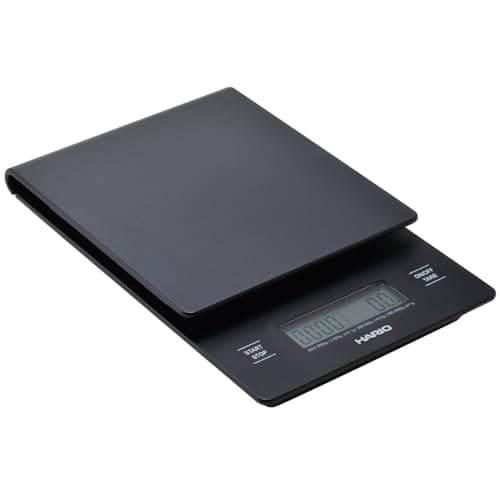
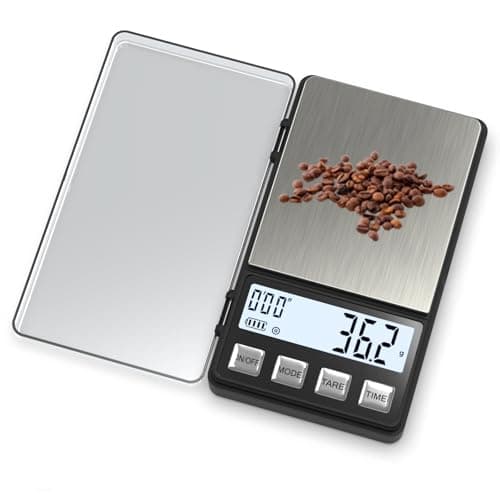
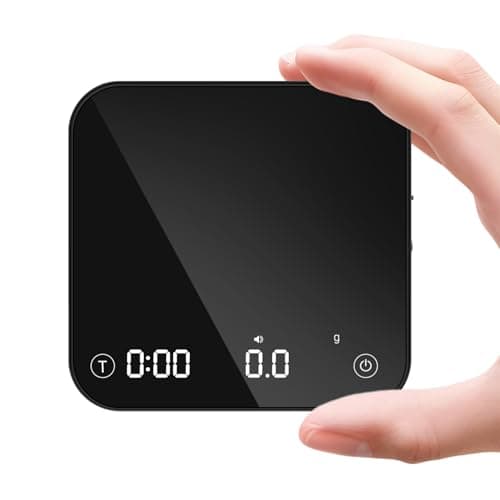
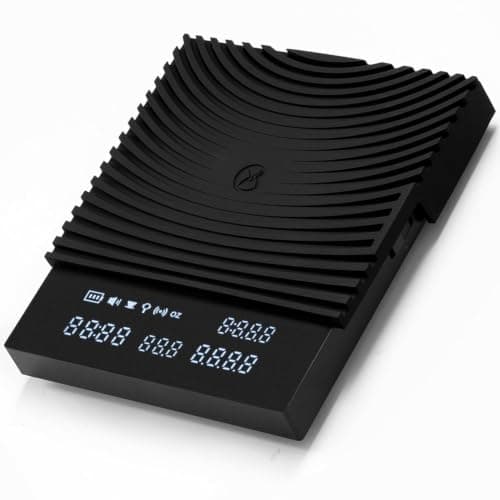
A scale is the cheapest upgrade that makes your coffee consistent. Espresso lives and dies by ratio — a couple of grams in the dose or out in the cup changes the whole shot — and a scale that reads to 0.1 gram with a built-in timer turns guesswork into a recipe you can repeat.
Two numbers matter most. Resolution of 0.1g is the espresso standard, because a half-gram error on an 18-gram dose is real and shows up in the cup. Response speed — how fast the readout keeps up as liquid pours in — is what separates a coffee scale from a kitchen scale; a slow scale lags behind the shot and you over-pour before the number catches up. A built-in timer then lets you watch grams and seconds together, which is exactly how you dial a shot in: so many grams out, in so many seconds.
There is one physical constraint for espresso: the scale has to fit under the portafilter in a cramped drip tray, so a small footprint and a low profile matter. For pour-over, a larger platform is fine and often preferable. Weigh your dose in with a good grinder and your shot out, and you will fix more bad shots than any other gadget can.
How to choose a coffee scale
A coffee scale is not a kitchen scale with a timer bolted on — three things set the good ones apart.
Resolution: 0.1g for espresso
For espresso, buy 0.1g resolution. The dose is small — often 18 grams — so a half-gram error is a meaningful percentage of the whole, and it moves the ratio enough to taste. For pour-over and drip you can get away with 1g, but a 0.1g scale does both, so there is little reason to buy coarser. Resolution is the one spec you should not compromise on if espresso is in the picture.
Response speed and a built-in timer
Response speed is the difference you feel every day. As the shot or the pour flows, the number has to keep up in real time; a laggy scale reports a weight that is already out of date, so you overshoot. A built-in timer then lets you read weight and time together, which is how recipes are written — for example, a 1:2 ratio pulled in the high-twenties of seconds. Watching both at once is how you turn a lucky shot into one you can reproduce tomorrow.
Footprint, battery and durability
For espresso, the scale must physically fit in the drip tray under the portafilter, so a small, low-profile body wins; for pour-over, a larger platform that steadies a dripper and server is better. A rechargeable battery is convenient, and a water-resistant top survives the inevitable drips. Match the scale to how you brew, then use it on everything — weigh the dose from your grinder and the coffee in the cup, whether you are pulling espresso or brewing a pour-over. Consistency comes from measuring, and this is the tool that lets you.
If the scale is a present
A 0.1g scale is one of the better coffee gifts precisely because almost nobody buys one for themselves until someone explains why it matters. If that is what brought you here, the rest of the shortlist — and the honest notes on what not to give someone who already has a setup — is on best gifts for coffee lovers, with the under-$50 bracket broken out on best coffee gifts under $50.
What to actually do with one
A scale is only worth owning if you have numbers to hit. For brewed coffee the working figure is 1 gram of coffee to 16 grams of water — about 60g per litre — with French press stronger at 1:12 to 1:15 and cold brew stronger again; because 1ml of water weighs 1g, the same scale measures both sides and you never need a jug. The full set by brewer, with the arithmetic to scale any of them, is in coffee to water ratio. For espresso the measure is a brew ratio instead — about 18g in and 36g out in 25 to 30 seconds — which is set out in how many grams of coffee for a double shot.
How we picked
We did not lab-test this gear
Everyone in this category says they tested twenty machines. We have not lab-tested any of these, and we say so. What we did instead: compiled the published manufacturer specifications, read the manuals, ran the math where there was math to run (heat-up time, pressure, dose capacity, grind range, cost per cup), and scored each pick against a published rubric. The scores are judgments from documented research — not measurements we took, because we do not have a lab and we will not pretend we do. Where a number came from someone else's work, we name them in Sources.