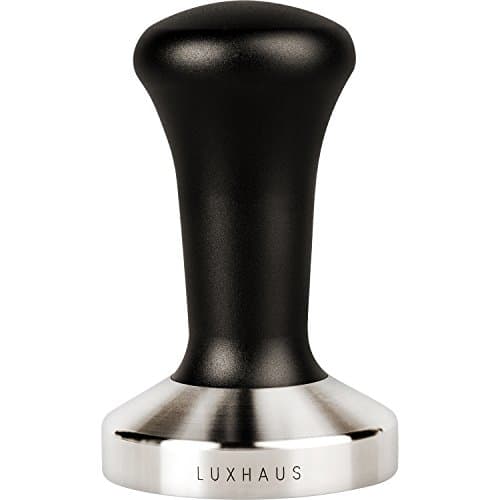
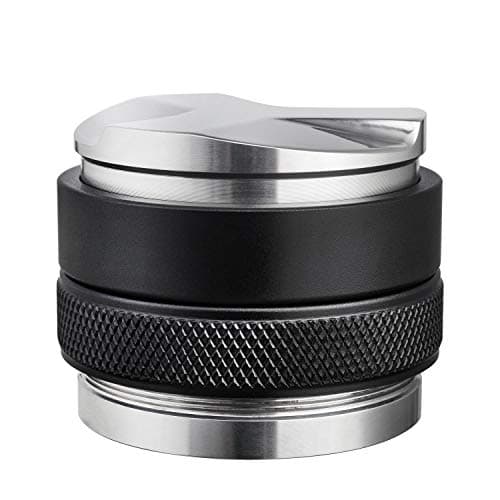
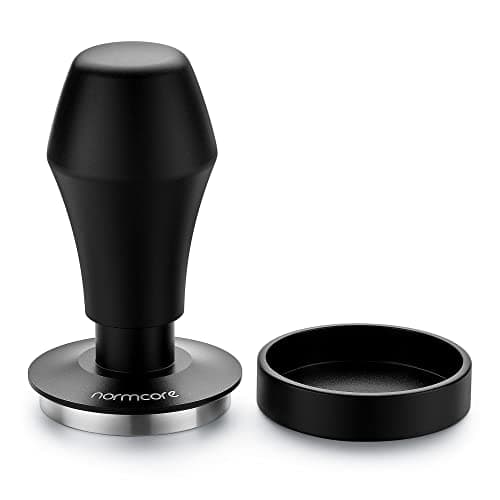
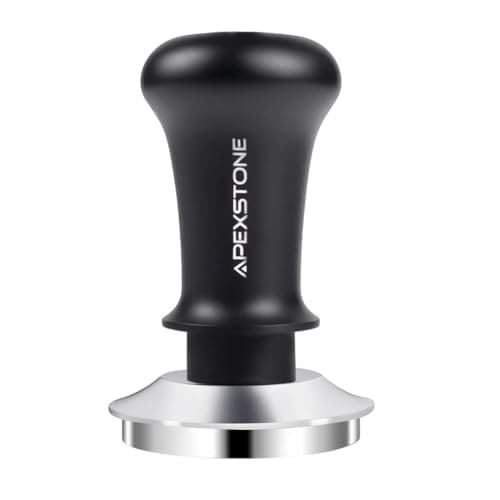
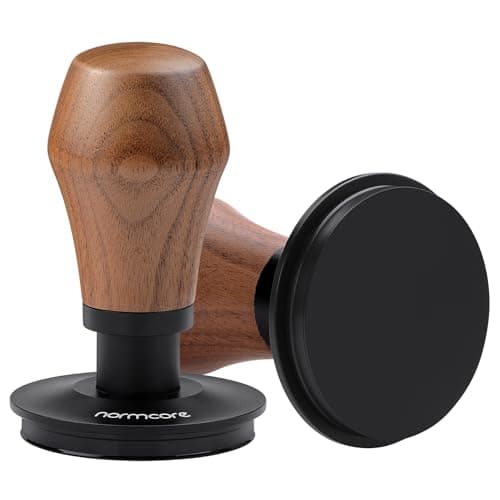
A tamper is the cheapest accessory that can make or break your espresso — but only if you buy the right size. The single most important fact about any tamper is its base diameter: it has to match your portafilter basket almost exactly. Get that wrong and nothing else on the spec sheet matters.
Most home baskets fall into three sizes. Commercial machines and the Gaggia Classic use a 58mm basket; Breville machines use a 54mm basket (a 53.3mm tamper is the snug fit); and many De'Longhi models use a 51mm basket. A tamper that is too small leaves a ring of loose grounds the water blasts straight through — that is channeling — while one that is too big will not seat at all. Measure the inside of your basket, or check your machine's spec, before you read another word about handles or springs.
Once the size is right, the rest is about consistency. A calibrated, spring-loaded tamper clicks at a set pressure so every puck is packed the same, which matters far more than the raw pounds of force you apply. Pair a matched tamper with a real espresso grinder and a scale and your shots become dramatically more repeatable.
How to choose an espresso tamper
Three things decide a tamper, and they are not equally important — the first one outranks the other two combined.
1. Match the size to your basket — nothing else comes first
A tamper only works if its base nearly fills the basket. Measure the inside diameter of your portafilter basket, or look up your machine. The common sizes are 58mm (commercial machines and the Gaggia Classic), 54mm (Breville, where a 53.3mm tamper is the snug fit) and 51mm (many De'Longhi models). A base that is too small leaves a gap the pressurized water exploits — it channels around the puck instead of through it — and a base that is too big simply will not seat. No amount of build quality or spring calibration fixes a wrong size.
2. Calibrated (spring-loaded) vs flat
A flat tamper is just a weighted disc: it works, but the pressure is whatever your hand decides that morning. A calibrated, spring-loaded tamper compresses to a set pressure and clicks, so every puck is packed the same. That consistency matters more than the exact number of pounds — the classic “30 pounds” advice is less important than applying the same pressure, level, every time. If you struggle to tamp consistently, the spring is worth the premium; if you have a steady, repeatable feel already, a good flat tamper saves money for a better grinder.
3. Base flatness, weight and feel
After size and calibration, look at the contact face. A machined-flat stainless base packs an even puck; a convex or rippled base does not. Weight helps you find pressure without forcing it, and a handle that fits your palm makes a level tamp easier to hold. These are real but secondary — a heavy, beautiful tamper in the wrong size is still the wrong tamper. Once you have the right one, the biggest remaining gains come from the grind and the dose, so weigh every shot on a scale and treat the tamp as the one variable you have finally locked down.
How we picked
We did not lab-test this gear
Everyone in this category says they tested twenty machines. We have not lab-tested any of these, and we say so. What we did instead: compiled the published manufacturer specifications, read the manuals, ran the math where there was math to run (heat-up time, pressure, dose capacity, grind range, cost per cup), and scored each pick against a published rubric. The scores are judgments from documented research — not measurements we took, because we do not have a lab and we will not pretend we do. Where a number came from someone else's work, we name them in Sources.