The French press is the best value in coffee: no paper filters to buy, no power, and a full-immersion brew that keeps the oils a paper filter strips out, for a heavier, richer cup. Because the method is so simple, the presses themselves differ in only a few ways that matter — how much sediment ends up in your cup, how long the coffee stays hot, and whether the thing survives being dropped. That is exactly what the ranking below weighs.
Grit is the classic French-press complaint, and it comes from two places: too fine a grind, and a single mesh screen that lets fines through. You fix the first with a burr grinder set coarse; the presses here fix the second to varying degrees, with a double micro-filter design cutting the most sediment. After that it comes down to glass versus insulated steel — a trade of looks and price against heat retention and durability. Whichever you pick, the cup quality still starts with fresh beans, and if you want a cleaner, brighter style instead, our pour-over guide is the other direction to go.
The short answer
Quick picks
| # | Product | Best for | Score | Price |
|---|
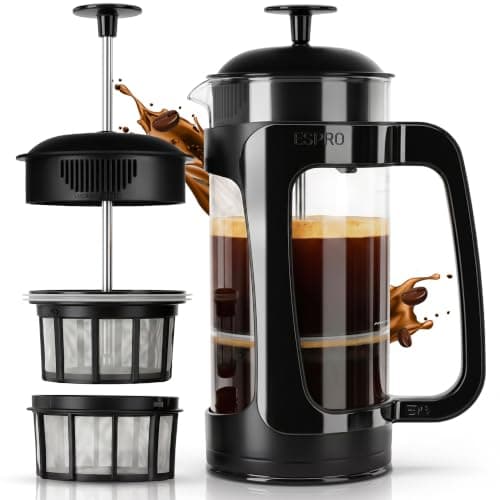
| 01 | Espro P3 French Press (32oz)The grit-free winner: a patented double micro-filter traps the fines a single screen lets through, so the cup is dramatically cleaner than a standard press — and it seals the grounds so the coffee stops extracting when you plunge. | Best for a grit-free cup | | $39.94·Amazon |
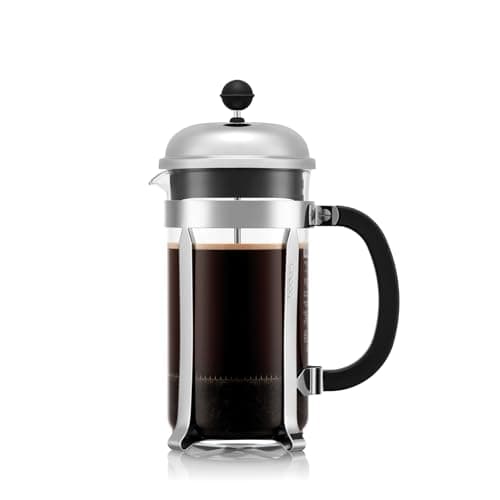
| 02 | Bodum Chambord (34oz)The iconic classic and the value pick most people should buy: borosilicate glass in a chromed steel frame, made in Portugal, with the clean lines that defined what a French press looks like. | Best value classic | | $39.69·Amazon |
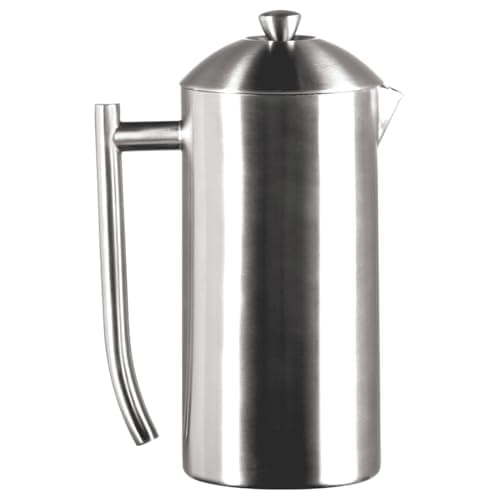
| 03 | Frieling Double-Wall (36oz)The near-indestructible one: 18/10 double-wall stainless that keeps coffee hot far longer than glass and shrugs off drops — the press to buy if yours takes abuse or your kitchen runs cold. | Best for durability and heat | | $139.95·Amazon |
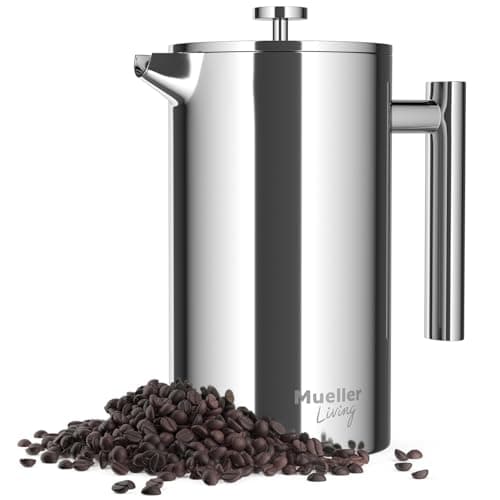
| 04 | MuellerLiving French Press (34oz)The budget insulated option: double-wall stainless with a four-level filtration stack for well under the premium presses — most of the heat retention for a fraction of the price. | Best cheap insulated press | | $46.74·Amazon |
#ad · Live prices from the Amazon Product API, as of Jul 19, 2026. Where we have no verified live price, we show none — a gap beats a number that has rotted.
In detail
The picks, in full
Best for a grit-free cup
Espro P3 French Press (32oz)
Double micro-filterBorosilicate glass carafe32 oz capacityPlunge seals the grounds
The grit-free winner: a patented double micro-filter traps the fines a single screen lets through, so the cup is dramatically cleaner than a standard press — and it seals the grounds so the coffee stops extracting when you plunge.
- Brew quality
- 9
- Filtration (grit-free)
- 9.5
- Heat retention
- 6.5
- Build
- 8.5
- Value
- 8.5
Pros
- +Two-stage micro-filter removes far more sediment than any single-mesh press
- +Sealing the grounds at the bottom stops over-extraction and bitterness
- +Borosilicate glass carafe resists thermal shock and shows the brew
- +A genuinely cleaner cup that converts French-press skeptics
Cons
- −Single-wall glass doesn't hold heat like double-wall steel
- −The finer filter needs a thorough rinse to clear trapped fines
Don't buy this if…
…you want your coffee to stay piping hot for an hour — this is glass, so if heat retention is your priority, the double-wall Frieling is the better press.
The Espro's double filter is the real innovation in an otherwise unchanged brewer: coffee passes through two fine micro-filters instead of one coarse screen, so the muddy sediment that settles in the bottom of an ordinary press cup mostly stays out of yours. The other quiet benefit is that the filter basket seals against the carafe as you plunge, isolating the grounds so the brew stops developing — no creeping bitterness if you sip slowly. It is the press to buy if grit is the reason you gave up on French press. Grind coarse on a quality burr grinder and the cup is remarkably clean for full immersion.
Best value classic
Bodum Chambord (34oz)
Borosilicate glass beakerStainless steel frame34 oz / 8-cup capacityMade in Portugal
The iconic classic and the value pick most people should buy: borosilicate glass in a chromed steel frame, made in Portugal, with the clean lines that defined what a French press looks like.
- Brew quality
- 8.5
- Filtration (grit-free)
- 7
- Heat retention
- 6
- Build
- 7.5
- Value
- 9.5
Pros
- +The reference-standard design — simple, beautiful and easy to live with
- +Borosilicate glass and a sturdy metal frame at an approachable price
- +Three-part stainless mesh plunger is easy to clean and rebuild
- +Replacement beakers and screens are widely available
Cons
- −Single mesh screen lets more fines through than a double filter
- −Glass beaker is exposed — it will break if you knock it hard
Don't buy this if…
…you want the cleanest possible cup or maximum durability — a coarse grind helps, but the Espro filters better and the steel Frieling survives more abuse.
The Chambord is what most people picture when they hear “French press,” and it earns the number-two spot as the sensible default rather than on raw specs. It filters less finely than the Espro and holds heat worse than the steel presses below it, but it is the one to recommend to most buyers: it looks the part, brews a genuinely good full-bodied cup, costs the least of the presses here, and parts are everywhere when the glass finally meets the floor. If you want the classic experience and nothing clever, this is it.
Best for durability and heat
Frieling Double-Wall (36oz)
18/10 double-wall stainless36 oz capacityDual-screen filterDishwasher safe
The near-indestructible one: 18/10 double-wall stainless that keeps coffee hot far longer than glass and shrugs off drops — the press to buy if yours takes abuse or your kitchen runs cold.
- Brew quality
- 8.5
- Filtration (grit-free)
- 7.5
- Heat retention
- 9.5
- Build
- 9.5
- Value
- 6.5
Pros
- +Double-wall steel holds brewing heat dramatically better than glass
- +Effectively unbreakable — no glass beaker to shatter
- +Polished 18/10 stainless resists stains and cleans up in the dishwasher
- +Dual-screen filter cuts sediment better than a single mesh
Cons
- −You can't see the brew or the level through steel
- −Premium price for what is still a simple press
Don't buy this if…
…you want the absolute cleanest cup or the lowest price — the Espro filters finer and the Bodum costs less; this earns its keep on toughness and heat, not grit removal.
Best cheap insulated press
MuellerLiving French Press (34oz)
Double-wall stainless steel34 oz capacity4-level filtration structureDishwasher safe
The budget insulated option: double-wall stainless with a four-level filtration stack for well under the premium presses — most of the heat retention for a fraction of the price.
- Brew quality
- 7.5
- Filtration (grit-free)
- 7.5
- Heat retention
- 8.5
- Build
- 7
- Value
- 9
Pros
- +Insulated steel keeps coffee hot far longer than a glass press at this price
- +Four-layer filter stack traps more fines than a single screen
- +Rugged and drop-tolerant — a good choice for camping or a busy office
- +Costs a fraction of the premium stainless presses
Cons
- −Fit and finish aren't in the Frieling's league
- −Opaque steel hides the brew and the fill level
Don't buy this if…
…you want a lifetime heirloom or the cleanest cup — this is a smart budget buy, not the last press you'll own, and the Espro still filters finer.
How to choose a French press
The brewing method is the same in every press here — coarse grounds, hot water, four minutes, plunge. What you are actually choosing between is the filter and the material.
Filtration: why grit gets into your cup
Two things cause a muddy cup. The first is grind: a blade grinder or too fine a setting creates “fines” that slip past any screen, which is why a coarse, even grind from a burr grinder is the single biggest upgrade to press coffee. The second is the filter itself. A standard press uses one mesh screen; a double micro-filter (the Espro) or a multi-layer stack catches far more sediment. If a gritty cup is what put you off French press, the filter design matters more than the brand name.
Glass vs double-wall steel
Glass presses are cheaper, let you watch the brew, and look classic — but a single wall of glass loses heat quickly and breaks when dropped. Double-wall stainless holds brewing heat far longer and is close to indestructible, which suits a cold kitchen, an office, or the outdoors, at the cost of hiding the brew and charging more. Neither is “better” — pick for how long your coffee sits and how rough your kitchen is.
Getting a better cup out of any press
Technique beats hardware here. Grind coarse and even, use a fresh medium or dark roast, pour water just off the boil, stir the crust, and plunge slowly at about four minutes. Then decant — don't leave brewed coffee sitting on the grounds, or it turns bitter (a problem the Espro's sealing filter sidesteps). A cheap press with good technique beats an expensive one used carelessly.
How we picked
We did not lab-test this gear
Everyone in this category says they tested twenty machines. We have not lab-tested any of these, and we say so. What we did instead: compiled the published manufacturer specifications, read the manuals, ran the math where there was math to run (heat-up time, pressure, dose capacity, grind range, cost per cup), and scored each pick against a published rubric. The scores are judgments from documented research — not measurements we took, because we do not have a lab and we will not pretend we do. Where a number came from someone else's work, we name them in Sources.
Questions
Frequently asked
Why is my French press coffee gritty?+
Usually the grind. Fine or unevenly ground coffee makes “fines” that slip through the mesh — a coarse, even grind from a burr grinder fixes most of it. After that, the filter design matters: a double micro-filter like the Espro P3’s traps far more sediment than a single screen.
Is a stainless steel or glass French press better?+
Glass is cheaper and lets you see the brew but loses heat fast and can break. Double-wall stainless keeps coffee hot much longer and is nearly unbreakable, which is why the Frieling and MuellerLiving suit offices, cold kitchens and travel. Choose by how long your coffee sits before you finish it.
How coarse should I grind for a French press?+
Coarse — think sea salt or coarse breadcrumbs. Full immersion for four minutes over-extracts fine grounds into a bitter, gritty cup, so coarser is both cleaner and smoother. This is one place a
burr grinder clearly beats a blade one.
How long should coffee steep in a French press?+
About four minutes for a standard coarse grind, then plunge. Pour water just off the boil, give the crust a stir, and steep. Just as important: decant the coffee off the grounds once you plunge, or it keeps extracting and turns bitter.
Is French press coffee stronger than drip?+
It tastes bolder and heavier because the metal filter lets the coffee oils and some fine particles through, where a paper drip filter traps them. It isn’t necessarily more caffeinated — that depends on dose and ratio — but the body and richness are why people love it.
Receipts
Sources
We do not run a testing lab, and we do not pretend to. Where a measured number came from someone else's work, we name them and link them. Where we could not verify something, we say so on the page rather than quietly leaving it out. Read our full method.