Manual grinders have quietly caught up. A good modern hand grinder now matches — or beats — electric grinders at several times the price, because you’re paying for burrs and machining instead of a motor and housing. They’re quiet, need no power, pack down for travel, and for a single person brewing a cup or two, they’re often the smartest value in coffee.
The catch is honest and simple: you turn the handle yourself. That’s a pleasant ritual for one pour over and a real chore if you grind espresso-fine for several drinks a day. So the ranking below weighs grind quality and adjustment against portability and effort. If you brew filter at home and don’t need portability, an electric grinder in our best coffee grinders ranking may suit you better; if you love a hands-on pour over ritual, read on. New to why the grinder matters at all? See burr vs blade grinder.
How to choose a manual coffee grinder
A hand grinder is a small machine you operate by arm, so three things decide how much you enjoy it.
Burr material: steel beats ceramic
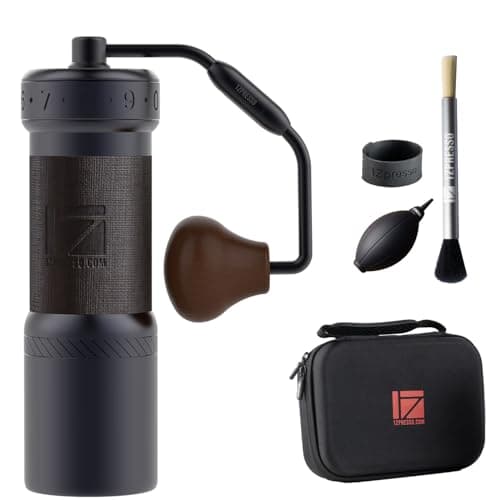
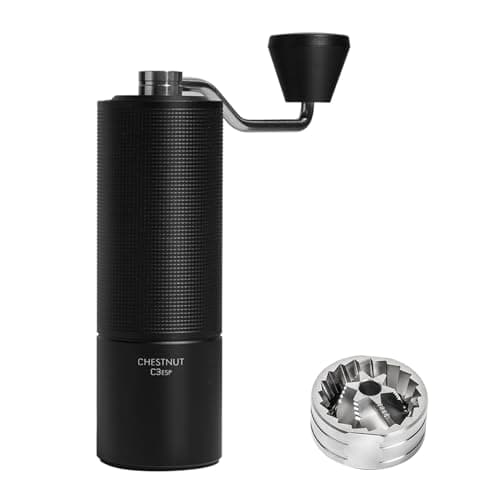
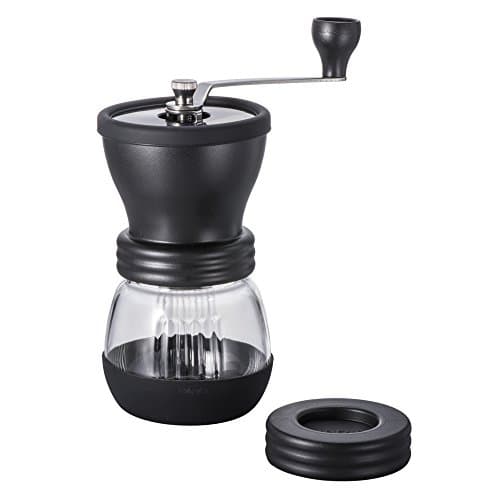
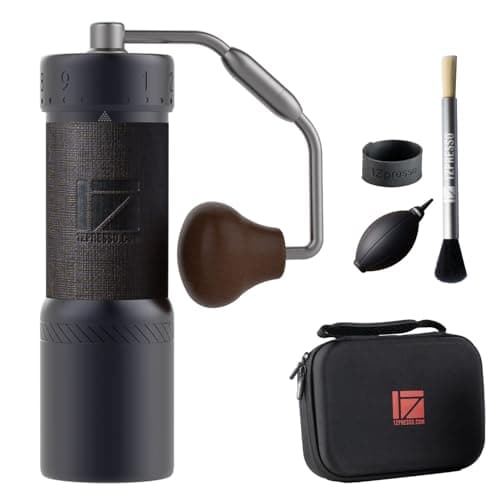
Budget mills like the Skerton Pro and JavaPresse use ceramic burrs — cheap, corrosion-proof and fine for coarse brewing, but slower and less uniform at the fine end. Stainless steel burrs, as on the Timemore C3 ESP and the 1Zpresso grinders, cut faster and hold a more even grind, which is why they climb this list. If you can stretch the budget, steel is the single upgrade you’ll feel most.
Adjustment: external dials are easier to live with
Cheaper grinders adjust by a nut under the burr, which you count by feel; better ones use an external numbered ring you can read and return to exactly. For espresso especially, that repeatability matters — the K-Ultra’s external dial and the J-Ultra’s numbered adjustment make dialing in far less fiddly than an internal nut. If you only brew filter, internal adjustment is livable; for espresso, prioritize a clear external scale.
Capacity, portability and effort
Manual grinders hold one or two cups’ worth of beans, so they suit individuals more than households. Espresso-fine grinding takes noticeably more effort and time than coarse filter, so if you make several shots a day, be honest about whether you want that workout — an electric grinder from our coffee grinder ranking may serve you better. For one careful pour over a day, or for travel, a good hand grinder is hard to beat on value.
How we picked
We did not lab-test this gear
Everyone in this category says they tested twenty machines. We have not lab-tested any of these, and we say so. What we did instead: compiled the published manufacturer specifications, read the manuals, ran the math where there was math to run (heat-up time, pressure, dose capacity, grind range, cost per cup), and scored each pick against a published rubric. The scores are judgments from documented research — not measurements we took, because we do not have a lab and we will not pretend we do. Where a number came from someone else's work, we name them in Sources.