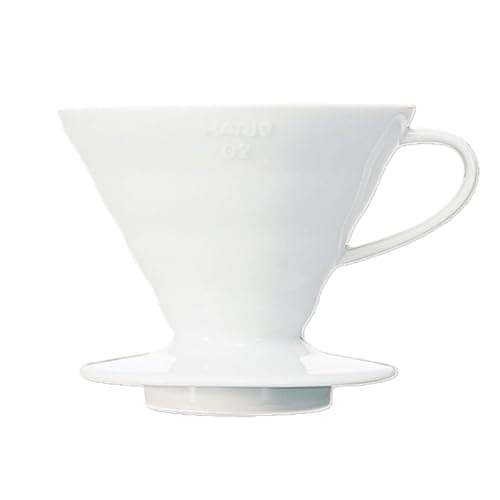
Pour-over makes the cleanest cup in coffee: hot water passes through a bed of grounds and a paper filter once, taking the bright, delicate flavors and leaving the oils and sediment behind. The catch is that you are the machine — the pour rate, the grind and the timing are all on you. That is why these are ranked on a spectrum: at one end, drippers that reward skill with total control; at the other, ones that hold your hand so a shaky pour still lands a good cup.
Two things decide more than the dripper you choose. First is the pour itself, which is why a gooseneck kettle and a scale to track your ratio and time matter as much as the cone. Second is the grind: pour-over is unforgiving of inconsistency, so an even burr grinder is doing quiet work in every cup. Get those right and the difference between drippers is one of style and forgiveness. If standing over a kettle isn’t your idea of a morning, a certified drip machine automates all of this — the honest alternative for anyone who wants clean coffee without the ritual.
How to choose a pour-over
Every dripper here makes a clean cup. The choice is about geometry — which shapes the flavor — and about how much of the work you want to do yourself.
Cone vs flat-bottom
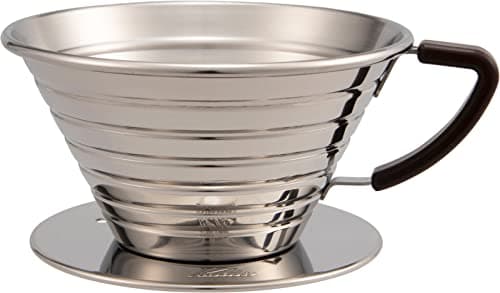
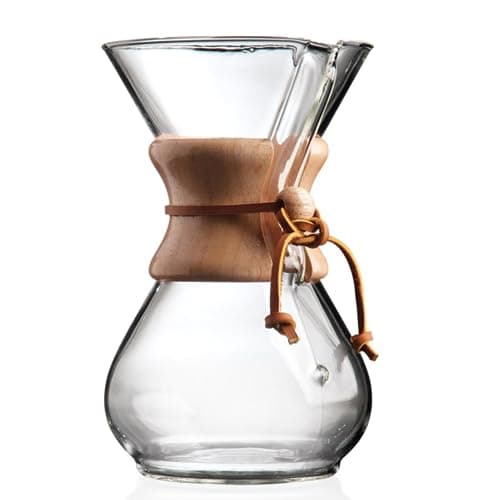
A cone (the V60) funnels water to a single point, so the flow is fast and driven by your pour — more control, a more pointed and vivid cup, and less margin for error. A flat bottom (the Kalita Wave, and the Chemex in its own way) spreads the water across an even bed and meters it through small holes, which is more forgiving and more repeatable at the cost of some brightness. Neither is better; they suit different temperaments. If you love dialing things in, go cone. If you want a reliable cup, go flat.
How much technique do you want to bring?
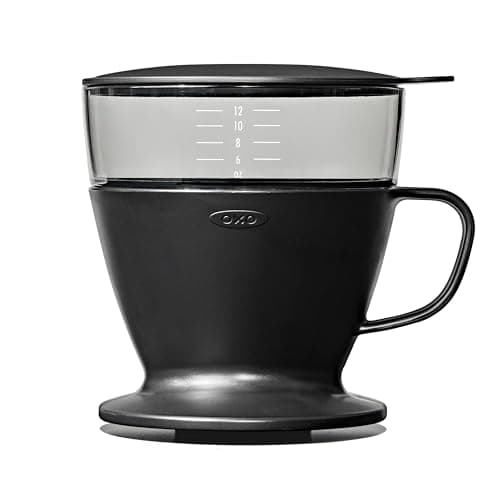
This is the real question, and it maps straight onto the ranking. The V60 rewards a good pour and punishes a bad one; the OXO’s water tank removes the pour entirely; the Kalita sits sensibly in between. Whatever you choose, two tools do more than the dripper: a scale to hold your coffee-to-water ratio and time steady, and a consistent grinder, because pour-over is merciless toward an uneven grind. A gooseneck kettle is the third, for any of the manual drippers.
Filters matter as much as the dripper
Most of these use proprietary filters, and it is a real ownership cost. The V60 takes its own cone filters, the Kalita takes wavy ones that are pricier and less common, and the Chemex uses thick bonded filters that make its famously clean cup but cost more and brew slowly. Buy the dripper knowing you are also committing to its filters — and if that recurring cost or a hands-on ritual isn’t for you, a certified drip machine or a filter-free French press may fit your life better.
The machine that automates this
Everything on this page is manual control of three variables: how much water, how fast, and how hot. One drip machine lets you set all three and then repeat them without standing over a kettle — Breville’s current brewer exposes bloom volume, bloom time, brew temperature and flow rate, and remembers what you set. Our Breville Luxe Brewer review covers what each of those controls actually does to the coffee, and is honest that they only pay off once your grind is consistent. It costs many times what a V60 does; what you buy is not a better cup but the same cup without the ten minutes.
How we picked
We did not lab-test this gear
Everyone in this category says they tested twenty machines. We have not lab-tested any of these, and we say so. What we did instead: compiled the published manufacturer specifications, read the manuals, ran the math where there was math to run (heat-up time, pressure, dose capacity, grind range, cost per cup), and scored each pick against a published rubric. The scores are judgments from documented research — not measurements we took, because we do not have a lab and we will not pretend we do. Where a number came from someone else's work, we name them in Sources.