A milk pitcher is the tool between a decent shot and a cafe-quality latte. The spout shape controls your pour, the size has to match the drink, and the stainless steel has to read heat fast enough to steam without scorching. Get those three right and latte art becomes possible; get them wrong and you fight the milk every morning.
Size is the quiet decision most people get wrong. A 12oz pitcher is the barista standard for one or two drinks, because you want milk filled to roughly the base of the spout for the best whirlpool — too much headroom and the steam wand cannot build a proper vortex, too little and it climbs over the top. Bigger 20oz pitchers make more milk but are clumsy for a single latte. The other half is the spout: a tapered, pointed spout gives you the fine control that pours rosettas and hearts, while a rounded spout is more forgiving but blunter.
If milk drinks are the whole point, pair the right pitcher with a machine that has a real steam wand — see our best espresso machines — and a thermometer or a pitcher you can feel heat through, so you stop steaming at the right temperature. Then practice with cheap milk; the pitcher helps, but the hands do the art.
The short answer
Quick picks
| # | Product | Best for | Score | Price |
|---|
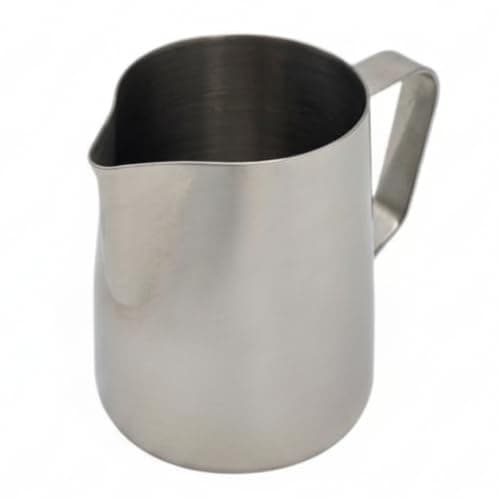
| 01 | Rattleware 12oz Latte Art PitcherThe barista-standard 12oz pitcher: a tapered, well-defined spout and the right size for one or two drinks make it the easiest pitcher to learn latte art on and the one most cafes actually use. | Best overall for latte art | | $16.95·Amazon |
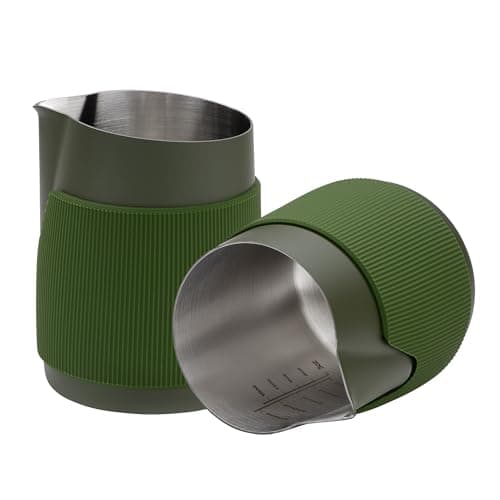
| 02 | Normcore Handleless Milk Pitcher (20oz)For the advanced free-pourer: a handleless 600ml/20oz pitcher with a sharp, precise spout that lets you hold the body directly and feel the milk temperature as you pour. | Best for advanced free-pour | | $32.99·Amazon |
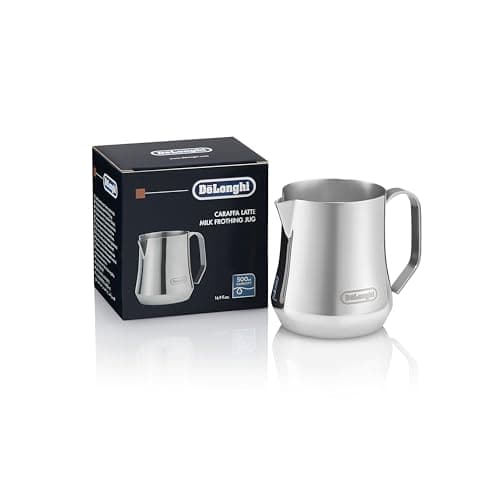
| 03 | De'Longhi Milk Frothing Pitcher (17oz)The versatile all-rounder: a mid-size 17oz stainless pitcher that steams enough milk for a cappuccino or two without being unwieldy, from a brand that knows milk drinks. | Best all-rounder | | $19.95·Amazon |
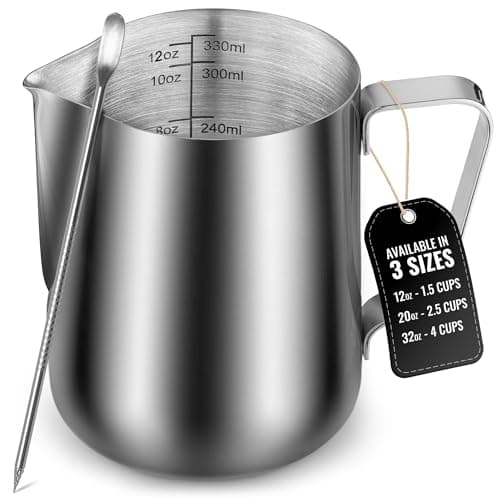
| 04 | Zulay Milk Frothing Pitcher (12oz)The budget starter kit: a 12oz stainless pitcher with interior measurement markings and a latte art pen thrown in, so a beginner gets the right size and a decorating tool cheaply. | Best budget starter | | $12.99·Amazon |
#ad · Live prices from the Amazon Product API, as of Jul 19, 2026. Where we have no verified live price, we show none — a gap beats a number that has rotted.
In detail
The picks, in full
Best overall for latte art
Rattleware 12oz Latte Art Pitcher
12oz capacity (1-2 drinks)Tapered latte-art spoutPolished stainless steelRolled rim, weighted base
The barista-standard 12oz pitcher: a tapered, well-defined spout and the right size for one or two drinks make it the easiest pitcher to learn latte art on and the one most cafes actually use.
- Spout & pour control
- 9
- Build
- 8.5
- Size fit
- 9
- Feel
- 8.5
- Value
- 8
Pros
- +12oz is the sweet spot for a single or double latte, filling to the spout for a clean whirlpool
- +Tapered spout gives the precise cutoff that pours defined hearts and rosettas
- +Durable polished stainless that reads heat quickly and lasts for years
Cons
- −Too small if you routinely steam milk for three or more drinks at once
- −No frills — measurement markings and gimmicks are absent by design
Don't buy this if…
…you regularly steam milk for three or more drinks at once — 12oz is sized for one or two, so a larger pitcher will save you refilling and re-steaming.
This is the pitcher a lot of working baristas reach for, and the reasons are unglamorous: it is the right size and the spout is right. At 12oz you fill the milk to about the base of the spout, which is exactly where the steam wand can spin a tight vortex to stretch and texture it. The tapered spout then gives you a clean, controllable cutoff so the pour lands where you aim it. It does nothing clever — no markings, no gadget — and that is the point: it gets out of the way while you learn the actual skill.
Best for advanced free-pour
Normcore Handleless Milk Pitcher (20oz)
600ml / 20oz capacityHandleless bodySharp precision spoutStainless steel
For the advanced free-pourer: a handleless 600ml/20oz pitcher with a sharp, precise spout that lets you hold the body directly and feel the milk temperature as you pour.
- Spout & pour control
- 9
- Build
- 8.5
- Size fit
- 7.5
- Feel
- 8
- Value
- 7.5
Pros
- +Holding the body directly lets you feel milk temperature and control the pour intuitively
- +Sharp, fine spout is built for detailed free-pour latte art
- +20oz capacity handles larger drinks or two at once
Cons
- −Handleless design is a real adjustment and gets hot — not beginner-friendly
- −20oz is oversized for a single small latte, leaving too much headroom
Don't buy this if…
…you're a beginner or you want a handle — a handleless 20oz pitcher is built for advanced free-pour and holds more milk than a single latte needs.
This is a specialist tool, and it is happy to admit it. Going handleless puts your hand on the body of the pitcher, so you feel the milk heat up and stop at the right moment by touch rather than by a thermometer — a technique advanced pourers prefer. The spout is sharp and precise for the fine detail work that comes after you have the basics down. It is not the pitcher to learn on: it holds more milk than a single latte needs and the hot handleless body punishes hesitation. Buy it once free-pouring already feels natural.
Best all-rounder
De'Longhi Milk Frothing Pitcher (17oz)
17oz / ~500ml capacityStainless steelRounded pouring spoutErgonomic handle
The versatile all-rounder: a mid-size 17oz stainless pitcher that steams enough milk for a cappuccino or two without being unwieldy, from a brand that knows milk drinks.
- Spout & pour control
- 7.5
- Build
- 8
- Size fit
- 8
- Feel
- 8
- Value
- 8
Pros
- +17oz suits cappuccinos and larger milk drinks without constant refilling
- +Comfortable handle and a forgiving, rounded spout that is easy to pour from
- +Solid stainless build from an established espresso brand
Cons
- −Rounded spout is less precise than a tapered latte-art pitcher
- −Mid-size means it is neither the smallest for detail nor the largest for volume
Don't buy this if…
…you want the sharpest possible spout for detailed latte art — 17oz is a versatile all-rounder, not a specialist latte-art pitcher.
Best budget starter
Zulay Milk Frothing Pitcher (12oz)
12oz capacityInterior measurement markingsIncludes latte art / decorating penStainless steel
The budget starter kit: a 12oz stainless pitcher with interior measurement markings and a latte art pen thrown in, so a beginner gets the right size and a decorating tool cheaply.
- Spout & pour control
- 7
- Build
- 7
- Size fit
- 8.5
- Feel
- 7
- Value
- 9
Pros
- +Right 12oz size for one or two drinks at a starter price
- +Interior markings help you measure milk consistently while you learn
- +Bundled decorating pen lets you practice etched designs from day one
Cons
- −Spout is less precise than a barista-standard pitcher
- −Lighter build and finish than the premium picks
Don't buy this if…
…you're already chasing refined free-pour latte art — this is a solid starter, but the spout isn't as precise as the barista-standard pitcher you'll want next.
How to choose a milk frothing pitcher
A pitcher is simpler than it looks — get the size and spout right and the rest is practice.
Size: match the pitcher to the drink
The classic mistake is buying too big. You steam milk best when it is filled to about the base of the spout, because that gives the steam wand room to spin a vortex without the milk overflowing. A 12oz pitcher is the standard for one or two drinks; go to 17-20oz only if you routinely make several at once. Steaming a small amount of milk in a huge pitcher leaves so much headroom that you never build a proper whirlpool, which is why the barista standard is smaller than beginners expect.
Spout shape and pour control
The spout is what turns steamed milk into latte art. A tapered, pointed spout releases a thin, controllable stream that lets you draw defined patterns; a rounded spout pours a wider, more forgiving flow that is easier for a beginner but harder to make crisp art with. Neither is wrong — a sharp spout rewards skill, a rounded one forgives its absence. If your goal is latte art, lean tapered; if you just want a tidy pour, a rounded all-rounder is fine.
Material and build
Stainless steel is the standard for good reasons: it conducts heat quickly so you can feel the temperature through the metal and stop before you scald the milk, and it survives daily use. A weighted base and a comfortable handle help you pour steadily. None of this matters, though, without a machine that can actually steam — a strong steam wand does most of the work, so pair the pitcher with a capable machine like the ones in our espresso machine roundup and, if you are new, start with the friendliest options for beginners.
How we picked
We did not lab-test this gear
Everyone in this category says they tested twenty machines. We have not lab-tested any of these, and we say so. What we did instead: compiled the published manufacturer specifications, read the manuals, ran the math where there was math to run (heat-up time, pressure, dose capacity, grind range, cost per cup), and scored each pick against a published rubric. The scores are judgments from documented research — not measurements we took, because we do not have a lab and we will not pretend we do. Where a number came from someone else's work, we name them in Sources.
Questions
Frequently asked
What size milk pitcher should I buy?+
For one or two drinks, a 12oz pitcher is the barista standard — it fills to the spout for a proper whirlpool. Only step up to 17-20oz if you regularly steam milk for several drinks at once, because a big pitcher with a little milk in it will not texture well.
Why does the spout shape matter?+
The spout controls your pour. A tapered, pointed spout gives the thin, precise stream that latte art needs, while a rounded spout pours wider and is more forgiving but blunter. If you want to pour hearts and rosettas, choose a tapered spout.
Do I have to use a stainless steel pitcher?+
It is strongly recommended. Stainless steel conducts heat fast, so you can feel the milk temperature through the metal and stop before it scorches, and it stands up to daily use. It is the standard for a reason.
How full should I fill the pitcher with milk?+
To roughly the base of the spout. That leaves enough room for the milk to expand and spin into a vortex as it steams, without climbing over the top. This is exactly why pitcher size should match your drink size.
Do I need a special pitcher for latte art?+
A tapered-spout pitcher makes latte art much easier, but the pour itself is a skill you build with practice. A good pitcher plus a machine with a real steam wand — see our
best espresso machines — gets you the tools; the rest is repetition.
Receipts
Sources
We do not run a testing lab, and we do not pretend to. Where a measured number came from someone else's work, we name them and link them. Where we could not verify something, we say so on the page rather than quietly leaving it out. Read our full method.