Skip to content
Tamp & Pour

Roundups & reviews · Espresso Machines

The best home espresso machines, ranked

From a $150 first machine to a serious daily driver — ranked on the specs that decide the shot, with live prices and a plain 'don't buy this if' on every pick.

By Stephen V.Updated How we review
#ad

We earn a commission when you buy through our Amazon links, at no extra cost to you. It never changes a verdict, and we say so when the cheaper product is the better buy. How this works.

A home espresso machine is a bet on how involved you want to be. At one end is a $150 box that makes a passable milk drink at the push of a button; at the other is a machine that rewards a grinder, a scale and a few weeks of practice with café-quality shots. The picks below span that whole range, and the ranking is honest about which is which.

Two things decide more than any spec sheet, so read them first. One: the machine is half the setup — a great machine paired with a bad grinder makes bad espresso, so if your budget is fixed, spend less here and put the difference into a real espresso grinder. Two: a “15-bar pump” is a marketing number; the useful figure is the ~9 bars actually applied during the shot, which every machine here delivers. What separates them is boiler type (thermoblock vs single boiler vs dual boiler), whether the temperature is digitally controlled (PID), portafilter size (54mm Breville vs 58mm commercial vs pressurized starters), and how much the machine helps you versus how much it leaves to you. If the whole idea is fuzzy, our what is espresso guide explains the mechanism first.

The short answer

Quick picks

#ProductBest forScorePrice
01
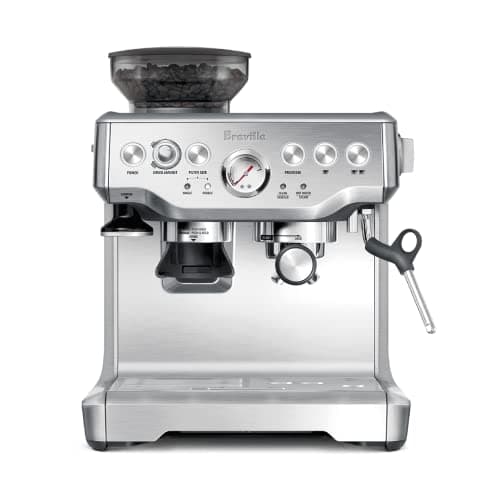
Breville Barista Express (BES870XL)

The default first 'real' espresso machine for a reason: grinder, PID and a 54mm portafilter in one box, so you can pull genuine shots on day one without buying a separate grinder.

Best all-in-one starter
8.2
$549.95Amazon
02
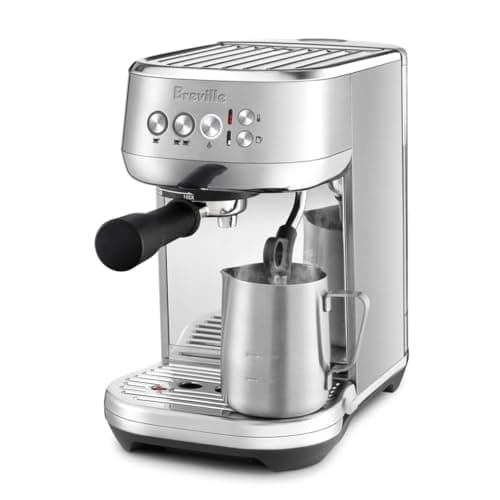
Breville Bambino Plus (BES500)

The best shots-plus-automatic-milk experience in the least counter space. ThermoJet heats in seconds and the automatic steam wand textures milk for you — ideal if lattes are the goal.

Best for small kitchens & milk drinks
8.2
$499.95Amazon
03
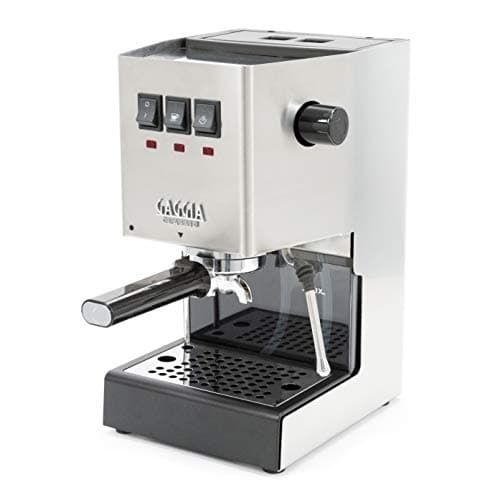
Gaggia Classic Pro

The enthusiast's tinker-friendly classic: a commercial 58mm portafilter and a real steam wand on a single-boiler machine that mods beautifully (PID, etc.) as your skills grow.

Best to grow into
7.7
$449.00Amazon
04
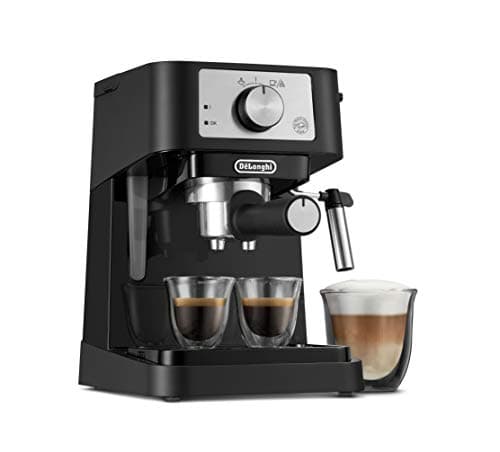
De'Longhi Stilosa (EC260)

The honest 'is home espresso for me?' machine. Around a hundred bucks, a real steam wand and a tamper included — pressurized basket, so it flatters any grind but caps how far you can go.

Best budget try-it
6.9
$149.95Amazon
05
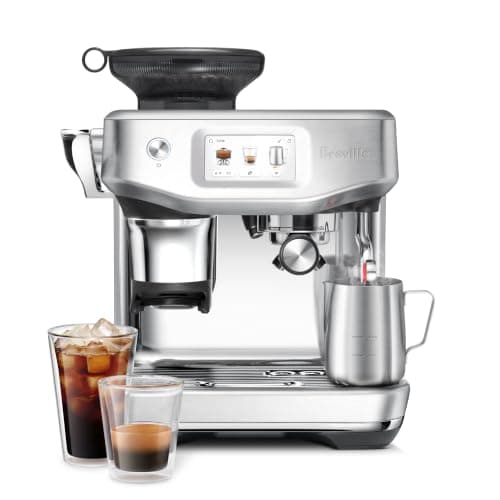
Breville Barista Touch Impress (BES881)

The 'I want café results with the least fuss and money is not the constraint' pick. Touchscreen guidance, assisted tamping and automatic milk take most of the skill out of it.

Best hand-holding (premium)
8.1
$1,429.99Amazon
06
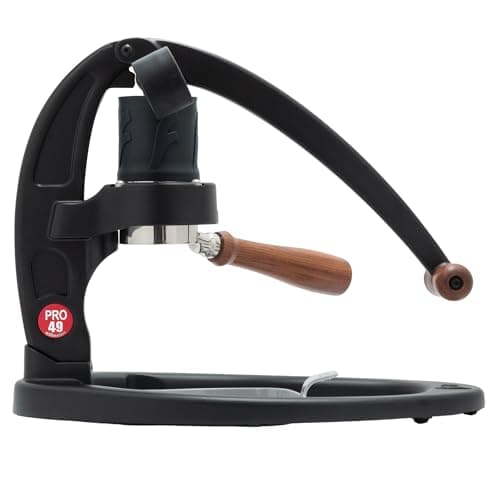
Flair 49 Pro (manual lever)

No electricity, no pump — you are the pump. A manual lever maker that pulls a genuinely excellent shot for people who want maximum control and total portability.

Best manual / travel
6.9
$359.00Amazon

#ad · Live prices from the Amazon Product API, as of Jul 19, 2026. Where we have no verified live price, we show none — a gap beats a number that has rotted.

In detail

The picks, in full

01
Breville Breville Barista Express (BES870XL)

Best all-in-one starter

Breville Barista Express (BES870XL)

54mm portafilterBuilt-in conical burr grinderDigital PID temp1600W thermocoil
8.2/10

The default first 'real' espresso machine for a reason: grinder, PID and a 54mm portafilter in one box, so you can pull genuine shots on day one without buying a separate grinder.

Shot quality
8.5
Steam power
7.5
Build
8
Ease of use
8
Value
9

Pros

  • Integrated grinder means one purchase gets you brewing genuine, non-pressurized shots
  • PID temperature control holds a consistent brew temp shot to shot
  • Huge owner community, guides and parts — easy to learn on and repair

Cons

  • Single thermocoil: you can't pull and steam at the exact same time
  • The built-in grinder is good, not great — serious users often add a standalone later

Don't buy this if…

you want a one-button machine you never think about — this rewards dialing in, and if you won't, the Bambino or a super-automatic suits you better.

The Barista Express earns the top spot on completeness and value, not because it is the best-performing machine here — it is the machine that gets the most people to a genuinely good shot for the least total money. Because the grinder is built in, you skip a separate $150–$300 purchase, and the 54mm non-pressurized portafilter means you are pulling real espresso, not the pressurized-basket approximation cheaper machines rely on. Read the full Barista Express review for the deep breakdown.

$549.95View on Amazon

$689.9920% off

Price as of Jul 19, 2026. Prices change — Amazon's at checkout is the one that counts.

#ad · we may earn a commission from this link to Breville Barista Express (BES870XL)

02
Breville Breville Bambino Plus (BES500)

Best for small kitchens & milk drinks

Breville Bambino Plus (BES500)

54mm portafilterThermoJet 3s heat-upAutomatic milk texturingNo built-in grinder
8.2/10

The best shots-plus-automatic-milk experience in the least counter space. ThermoJet heats in seconds and the automatic steam wand textures milk for you — ideal if lattes are the goal.

Shot quality
8
Steam power
8
Build
7.5
Ease of use
9
Value
8.5

Pros

  • Near-instant heat-up — from cold to shot in seconds
  • Automatic steam wand sets milk temperature and texture hands-free
  • Tiny footprint; genuine 54mm shots despite the size

Cons

  • No grinder — you must budget for a separate one
  • Small machine means a small drip tray and water tank to refill often

Don't buy this if…

you don't already own (or plan to buy) a real grinder — the Bambino assumes you bring your own, and pairing it with a blade grinder wastes it.

$499.95View on Amazon

Price as of Jul 19, 2026. Prices change — Amazon's at checkout is the one that counts.

#ad · we may earn a commission from this link to Breville Bambino Plus (BES500)

03
Gaggia Gaggia Classic Pro

Best to grow into

Gaggia Classic Pro

58mm commercial portafilterSingle aluminum boiler3-way solenoid valveRotary steam wand
7.7/10

The enthusiast's tinker-friendly classic: a commercial 58mm portafilter and a real steam wand on a single-boiler machine that mods beautifully (PID, etc.) as your skills grow.

Shot quality
8
Steam power
7.5
Build
8.5
Ease of use
6.5
Value
8

Pros

  • Full-size 58mm portafilter shares accessories with commercial gear
  • Legendary modding platform — add a PID later for precise temperature
  • Simple, repairable, and built to last for years

Cons

  • No PID out of the box — temperature surfing takes practice
  • Single boiler; a pause between pulling and steaming

Don't buy this if…

you want it to work perfectly out of the box with no learning curve — the reward here comes from practice (and, for many owners, mods).

$449.00View on Amazon

Price as of Jul 19, 2026. Prices change — Amazon's at checkout is the one that counts.

#ad · we may earn a commission from this link to Gaggia Classic Pro

04
De'Longhi De'Longhi Stilosa (EC260)

Best budget try-it

De'Longhi Stilosa (EC260)

Pressurized portafilter15-bar pumpManual steam wandTamper included
6.9/10

The honest 'is home espresso for me?' machine. Around a hundred bucks, a real steam wand and a tamper included — pressurized basket, so it flatters any grind but caps how far you can go.

Shot quality
6
Steam power
6
Build
6
Ease of use
8
Value
8.5

Pros

  • The cheapest legitimate way to find out if you like making espresso
  • Pressurized basket forgives a mediocre grinder while you learn
  • Compact and genuinely usable for milk drinks

Cons

  • Pressurized basket limits how good the shot can get
  • Plastic-heavy build; not a machine you grow into

Don't buy this if…

you already know you're serious — you'll outgrow the pressurized basket fast and wish you'd bought the Barista Express instead.

$149.95View on Amazon

Price as of Jul 19, 2026. Prices change — Amazon's at checkout is the one that counts.

#ad · we may earn a commission from this link to De'Longhi Stilosa (EC260)

05
Breville Breville Barista Touch Impress (BES881)

Best hand-holding (premium)

Breville Barista Touch Impress (BES881)

54mm portafilterImpress assisted tampingTouchscreen guidanceAuto milk texturing
8.1/10

The 'I want café results with the least fuss and money is not the constraint' pick. Touchscreen guidance, assisted tamping and automatic milk take most of the skill out of it.

Shot quality
8.5
Steam power
8
Build
8
Ease of use
9.5
Value
6.5

Pros

  • Assisted tamping fixes the puck-prep step most beginners struggle with
  • Touchscreen walks you through each drink; automatic milk is excellent
  • All-in-one: grinder, guidance and milk in a single machine

Cons

  • Expensive — you pay a large premium for the automation
  • So much is automated that you learn less about the craft

Don't buy this if…

you're price-sensitive or you actually want to learn espresso by hand — the Barista Express does 90% of this for a fraction of the price.

$1,429.99View on Amazon

$1,499.955% off

Price as of Jul 19, 2026. Prices change — Amazon's at checkout is the one that counts.

#ad · we may earn a commission from this link to Breville Barista Touch Impress (BES881)

06
Flair Flair 49 Pro (manual lever)

Best manual / travel

Flair 49 Pro (manual lever)

49mm portafilterManual lever, no electricityPressure gaugeNo plastics in brew path
6.9/10

No electricity, no pump — you are the pump. A manual lever maker that pulls a genuinely excellent shot for people who want maximum control and total portability.

Shot quality
8.5
Steam power
4
Build
8
Ease of use
6
Value
8

Pros

  • Total control over pressure and profile — capable of exceptional shots
  • No electronics to fail; packs down for travel
  • Pressure gauge teaches you what a good shot feels like

Cons

  • No steam wand — you froth milk separately
  • You must supply hot water and a good grinder; there's a real learning curve

Don't buy this if…

you want convenience or you make milk drinks daily — this is a hands-on, single-shot ritual, not a one-button morning machine.

$359.00View on Amazon

Price as of Jul 19, 2026. Prices change — Amazon's at checkout is the one that counts.

#ad · we may earn a commission from this link to Flair 49 Pro (manual lever)

How to choose an espresso machine

Work through four questions in order and the choice usually makes itself.

1. Which drink do you actually make?

If it is milk drinks — lattes, cappuccinos, flat whites — steam power and milk automation matter more than absolute shot perfection, which points to the Bambino Plus or a Breville with automatic milk. If it is straight espresso, prioritize temperature stability and a non-pressurized basket (Barista Express, Gaggia). A great flat white forgives a lot; a naked shot hides nothing.

2. Do you want to dial in, or push a button?

Espresso is a skill. Machines like the Gaggia reward practice; machines like the Barista Touch Impress or the Bambino automate the hard parts. Be honest with yourself — a “serious” machine you never learn to use makes worse coffee than a simple one you master.

3. Do you already have a grinder?

The single most common and expensive mistake in home espresso is spending the whole budget on the machine and pairing it with a bad grinder. If you do not have one, either buy an all-in-one (Barista Express) or budget separately for a real espresso grinder. Grind consistency controls the shot more than the boiler does.

4. What is the total budget — machine plus grinder plus a scale?

Price the whole setup, not just the machine. A $150 machine that needs a $200 grinder is a $350 decision. A scale that reads to 0.1g is the cheapest consistency upgrade you can add. Budget for the system and you will be happier than someone who blew it all on one shiny box.

How we picked

We did not lab-test this gear

Everyone in this category says they tested twenty machines. We have not lab-tested any of these, and we say so. What we did instead: compiled the published manufacturer specifications, read the manuals, ran the math where there was math to run (heat-up time, pressure, dose capacity, grind range, cost per cup), and scored each pick against a published rubric. The scores are judgments from documented research — not measurements we took, because we do not have a lab and we will not pretend we do. Where a number came from someone else's work, we name them in Sources.
Questions

Frequently asked

Do I need a separate grinder for an espresso machine?
Unless the machine has one built in (like the Barista Express), yes — and it needs to be a burr grinder that can go fine and adjust precisely. Pre-ground coffee and blade grinders can't produce a good espresso shot. See our best espresso grinders.
What's the difference between a single boiler and a dual boiler?
A single boiler (or thermoblock) heats water for either brewing or steaming, so you wait a moment to switch between them. A dual boiler has separate boilers, letting you pull a shot and steam milk at the same time — convenient for back-to-back milk drinks, and the main reason prosumer machines cost more.
Is a 15-bar pump better than a 9-bar machine?
No. Espresso is brewed at about 9 bars at the puck. “15 bars” is the pump's maximum, not the brewing pressure — nearly every home machine advertises it and it tells you almost nothing about shot quality.
Are cheap espresso machines under $200 any good?
For milk drinks and for finding out if you enjoy the process, yes — something like the De'Longhi Stilosa is genuinely usable. The catch is the pressurized basket, which flatters a poor grind but caps how good the shot can get. If you already know you're serious, buy once and skip the entry model.
What espresso machine doesn't need a separate grinder?
The Breville Barista Express and Barista Touch Impress have integrated grinders, so they work out of the box. Every other machine here assumes you bring your own grinder.

Keep reading

Receipts

Sources

We do not run a testing lab, and we do not pretend to. Where a measured number came from someone else's work, we name them and link them. Where we could not verify something, we say so on the page rather than quietly leaving it out. Read our full method.