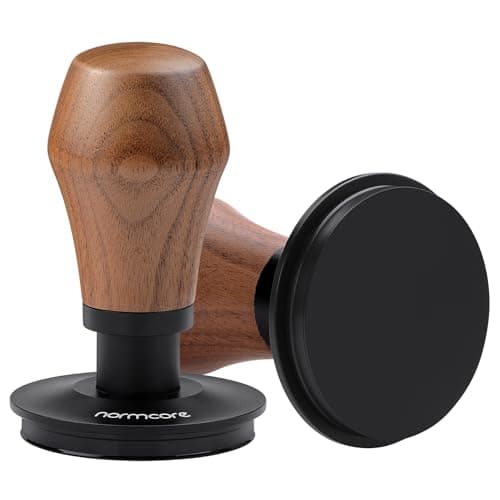
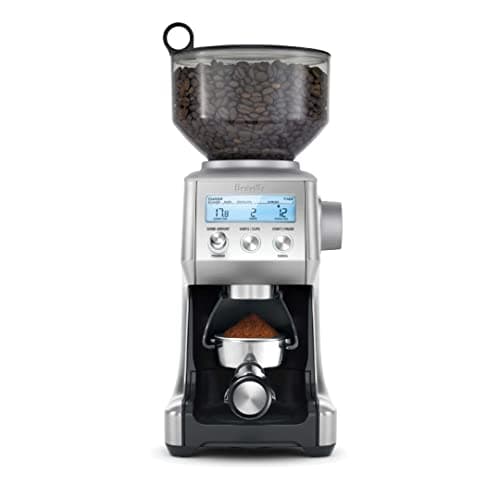
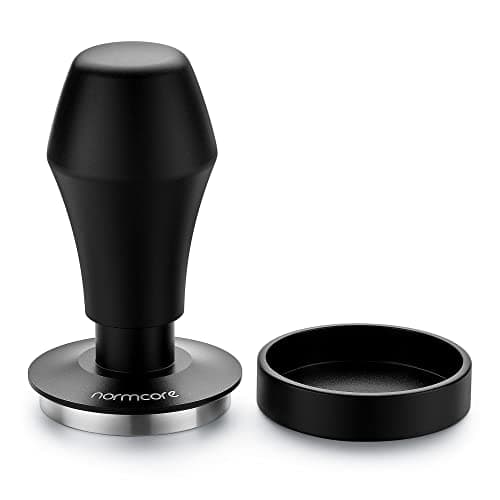
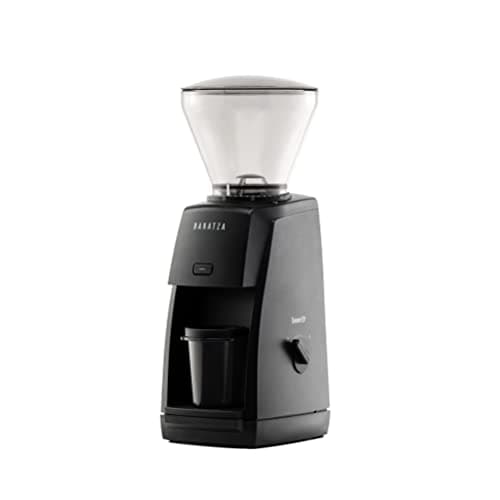
A grinder and a tamper are usually bought together, and they are usually bought as two unrelated items. They are not unrelated: they are the two halves of one job, which is getting an even, evenly-packed bed of coffee into the basket. The grinder decides what the particles are like; the tamper decides how they sit. Get one right and the other wrong and you still get a bad shot.
There is also a hard constraint that decides the pairing before taste does: the tamper must match your basket diameter, and the grinder does not care at all. So the correct way to buy the pair is to fix the tamper size from your machine first, then choose the grinder on budget and burr quality. That is why the four picks below are two matched pairs rather than a ranked list of grinders — one pair for 58mm machines, one for Breville and Sage 54mm machines.
If you only have money for one half right now, buy the grinder. A cheap correctly sized tamper does 90 percent of what an expensive one does, whereas a grinder that cannot reach espresso fineness has no path to a good shot at any price. If you are unsure which basket size you own, settle it first in the tamper size guide — everything below depends on that number.
Why they are one purchase, not two
Espresso fails in one specific way: water finds a weak path through the coffee bed and runs through it instead of soaking the whole puck. That is channeling, and it tastes sour and bitter simultaneously. Both halves of this pair exist to prevent it, from different directions. The grinder controls particle size and evenness — an uneven grind gives water an easy route through the dust. The tamper controls how that bed is compressed — a mis-sized or crooked tamp leaves an easy route at the edge. Buying a good grinder and leaving a plastic undersized tamper in the box is a very common way to spend two hundred dollars and fix half a problem.
Fix the tamper size first, then shop for the grinder
The tamper is constrained by your machine and the grinder is not, so the order is fixed. Measure the inside of your basket, get the number, and then treat the grinder decision as a pure budget-and-quality question. 58mm baskets — Gaggia Classic, Rancilio Silvia, Lelit, ECM, Rocket, most E61 machines — take a 58.5mm tamper. 54mm baskets — every current Breville and Sage machine — take a 53.3mm tamper. 51mm baskets appear on many De'Longhi machines. Full detail, including how to measure, is in the tamper size guide.
What to look for in the grinder half
Two things, and neither is burr shape. First, range: it has to go fine enough to choke your machine, because a grinder whose finest setting still pours a fast shot leaves you nowhere to go. Second, resolution: the steps between settings have to be small enough that you can approach the target rather than jump over it. That second point is why grinders sold as espresso-capable at very low prices usually are not — they reach fine, but one click moves the shot from twelve seconds to forty. Conical versus flat burrs is a flavor-profile preference and matters far less than either, as we set out in conical vs flat burr grinders.
What to look for in the tamper half
Diameter, then weight, then everything else. Diameter must match the basket. Weight matters because a heavy tamper does the work for you and makes a level tamp easier to repeat. A calibrated spring is genuinely useful for beginners and for households where several people make coffee, and it is not necessary — a correctly sized solid tamper in an experienced hand is just as good and much cheaper. Base profile (flat, convex, ripple) is the last thing to think about and the first thing marketing talks about. Full ranking: best espresso tampers.
If the budget only covers one
Buy the grinder. This is not close. A correctly sized budget tamper costs very little and performs the core function completely; the expensive part of a tamper is consistency, which you can supply with practice. A grinder has no equivalent workaround — if it cannot grind fine enough or adjust finely enough, no technique compensates. Buy the cheap correct tamper now and the good grinder now, and upgrade the tamper later if you want the click.
The third thing, which is cheaper than both
Once the pair is sorted, the next item is not a better grinder — it is a scale. Grind and tamp are the two things that decide the puck; dose is the thing that decides whether you can repeat any of it. A 0.1g scale with a timer costs a fraction of either half of this pair and makes both of them measurable. That whole sequence is laid out in our home espresso setup guide, and the accessory shopping list is the starter kit.
How we picked
We did not lab-test this gear
Everyone in this category says they tested twenty machines. We have not lab-tested any of these, and we say so. What we did instead: compiled the published manufacturer specifications, read the manuals, ran the math where there was math to run (heat-up time, pressure, dose capacity, grind range, cost per cup), and scored each pick against a published rubric. The scores are judgments from documented research — not measurements we took, because we do not have a lab and we will not pretend we do. Where a number came from someone else's work, we name them in Sources.