Skip to content
Tamp & Pour

Roundups & reviews · Espresso Machines

Breville Barista Pro (BES878) review

Breville's fast all-in-one: the Barista Express shot engine with ThermoJet heating, thirty grind settings and an LCD instead of a gauge. Here is what that actually buys you, and what it costs.

By Stephen V.Updated How we review
#ad

We earn a commission when you buy through our Amazon links, at no extra cost to you. It never changes a verdict, and we say so when the cheaper product is the better buy. How this works.

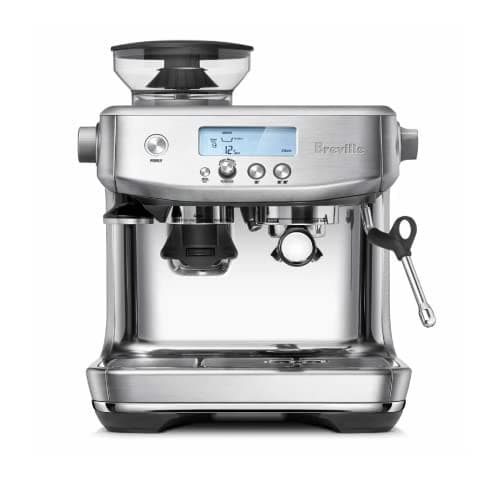
The Breville Barista Pro is what you get when Breville takes the Barista Express, the all-in-one that introduced most people in the US to home espresso, and fixes the two complaints owners make most: it takes too long to warm up, and its grinder does not adjust finely enough. The Pro answers both with ThermoJet heating that reaches extraction temperature in about three seconds and a grinder with thirty settings instead of sixteen. Everything else — the 54mm basket size, the 9-bar extraction after a low-pressure pre-infusion, the digitally controlled brew temperature, the Razor dose trimming tool — carries straight over.

It also removes something, and no listing leads with it: the analog pressure gauge on the front of the Express is gone, replaced by an LCD. Whether that is an upgrade or a downgrade depends entirely on whether you were reading the gauge. This review covers both sides, plus the part that decides more than any of it — that the grinder inside this machine is the ceiling on how good your espresso gets, and no amount of heat-up speed changes that.

The short verdict

Buy the Barista Pro if you want one box that makes real espresso with nothing else to purchase, you make coffee on weekday mornings where a warm-up wait is the difference between using the machine and skipping it, and you drink milk drinks often enough that faster steam matters. Buy the Barista Express instead if you switch the machine on and go do something else for five minutes anyway — the shot it pulls is the same, and the money you save covers most of a much better grinder. Buy neither if you already own a real espresso grinder: at that point you are paying twice for the same job, and a bare machine plus the grinder you own beats both.

The specs that decide it

SpecBarista Pro (BES878)Why it matters
Portafilter54mm stainless steel, commercial-style spoutsBreville sizing, not the 58mm commercial standard — buy 54mm-specific accessories
GrinderIntegrated conical burr; Breville lists Baratza European precision burrs, 30 espresso settingsThirty steps instead of sixteen is the single biggest functional gain over the Express
HeatingThermoJet, optimum extraction temperature in about 3 secondsNo warm-up wait, so the machine gets used on weekdays instead of ignored
Pressure15-bar Italian pump; low-pressure pre-infusion, then 9-bar extraction9 bar at the puck is the figure that matters; pre-infusion wets the puck evenly first
TemperatureDigital PID control, adjustable from the MENU button using the grind amount dialStable shot to shot, and you can nudge it up for lighter roasts — the Bambino cannot
DisplayLCD with grind and extraction progress animations, plus a shot timer. No pressure gaugeThe shot timer is the more useful of the two for dialing in; the gauge is the better puck diagnostic
MilkManual 360° swivel steam wand, with an auto-purge after texturingReal microfoam is on you, not the machine — but steam arrives almost immediately
Shot controlsVolumetric 1 shot (about 30ml) and 2 shot (about 60ml), or fully manualConvenient, but weigh your shots — volume is a starting point, not a recipe
Water tank2L (68 fl oz), removableLarge for a machine this size; far fewer refills than the Bambino class
Bean hopper½ lb (250g), sealedAbout a week of beans for a two-drink household — buy small bags, not bulk
Power120V, 60Hz, 1680WA standard US kitchen outlet
Size and weightAbout 13.9 in wide and 20 lb (Whole Latte Love listing)Counter-sized, not small — measure cabinet clearance above the hopper

Two figures are worth flagging because published listings disagree slightly: Breville’s own instruction book gives the tank as 2L / 68 fl oz while Whole Latte Love’s spec table lists 67 oz, and retailer dimension tables shuffle the width, depth and height figures around. Neither difference changes a buying decision. What does not vary across any source is the heating system, the 54mm basket size, the 30 grind settings and the 1680W rating.

01
Breville Breville Barista Pro (BES878)

Fast all-in-one espresso

Breville Barista Pro (BES878)

54mm stainless steel portafilterIntegrated conical burrs, 30 espresso grind settingsThermoJet heating, about 3 seconds to temperatureDigital PID temperature, adjustable in the menu2L (68 fl oz) tank, 250g bean hopper
8.0/10

The Barista Express shot engine with the two upgrades owners actually ask for: three-second heat-up and thirty grind settings instead of sixteen. Complete on day one, with a grinder that is good rather than great.

Shot quality
8.5
Grinder quality
8
Steam power
7.5
Ease of use
8.5
Value
7.5

Pros

  • Thirty grind settings instead of sixteen, which is the difference between being able to dial in a light roast and giving up on it
  • ThermoJet reaches optimum extraction temperature in about three seconds, so there is no warm-up ritual standing between you and a shot
  • Steam comes up almost immediately too; one long-term reviewer timed a jug at about 50 seconds, roughly a quarter faster than the Barista Express
  • Brew temperature is adjustable from the menu, so you can raise it for light roasts instead of living with one fixed number
  • Complete in the box: single and dual wall baskets in both sizes, the Razor dose trimming tool, a 480ml stainless milk jug, a water filter and a cleaning kit
  • A dedicated hot water outlet for long blacks and preheating cups, which is exactly what a single-boiler machine needs

Cons

  • No pressure gauge. The Express has one, and it is the cheapest way to see that a puck is choking or gushing before you taste it
  • Low thermal mass is what makes it heat instantly, and it is also why the group and cup tray sit cold; one long-term reviewer calls needing a blank shot or two to preheat the biggest downside of the machine
  • The integrated grinder is the ceiling. It retains roughly half a gram internally, clumps into the basket, and will not match a good standalone grinder
  • Grind-by-time, not by weight, so your dose drifts as beans age and you should weigh the basket rather than trust the dial
  • Single boiler: you pull, then you steam. There is no doing both at once
  • Loud. One reviewer's blunt summary was that you could not sneak an early espresso without waking the household
  • Costs meaningfully more than the Barista Express for gains that are real but incremental if warm-up time is not a problem you have

Don't buy this if…

…you already own an espresso-capable burr grinder. You would be paying a second time for a grinder that is worse than the one on your counter, and a bare machine at the same money buys a better shot engine.

The shot engine is the same one that made the Express famous. Breville lists a 15-bar Italian pump, but the number that matters is the 9-bar extraction that follows a low-pressure pre-infusion phase — the pump wets and swells the puck gently before full pressure arrives, which makes it far less likely that water punches a channel straight through. Digital temperature control holds brew temperature steady from shot to shot, and unlike the Bambino class you can change it: press MENU and turn the grind amount dial. One long-term owner review documents the adjustable span as roughly 91–95°C (196–205°F), which covers everything from a dark espresso blend at the bottom to a light Ethiopian at the top. That single feature is why this machine can follow you into lighter roasts.

Thirty grind settings is the upgrade you feel. Breville’s US product page names the burrs — Baratza European precision burrs — and gives the grinder 30 espresso settings from fine to coarse, with the machine shipping at setting 15 and counterclockwise going finer. The Barista Express gives you sixteen. In practice that means the Pro can land between two settings where the Express forces you to pick one and fix the rest with dose, and it matters most on light roasts, where the workable grind window is narrow. It is still a grind-by-time system, though: the dial sets seconds of grinding, not grams of coffee, so as beans age and the grind setting moves, your dose moves with it. Put a scale that reads to 0.1g under the portafilter and treat Breville’s stated 8–11g single and 16–19g double as targets to hit, not numbers the machine will hit for you.

Three seconds is not a marketing line, and it has a cost. ThermoJet heats a small volume of water very fast rather than bringing a heavy metal group up to temperature, which is exactly why it is ready almost immediately. The flip side is that there is very little hot metal in the machine. A long-term review covering nearly a year of daily use calls the cold idle group and cup tray the biggest downside of the machine, and recommends running one or two blank shots through the portafilter before you brew. That takes about as long as the Express’s warm-up would have, which is the honest way to read the three-second claim: you are choosing when to spend the time, not eliminating it. Steam is a clearer win — the same review timed a jug at about 50 seconds, roughly a quarter faster than the Express.

Losing the pressure gauge is a real trade, not a cosmetic one. The Express puts an analog needle on the front panel, and a beginner who does not yet know what a bad shot tastes like can still see the needle pinned high and know the grind is too fine. The Pro replaces it with an LCD that animates the grind and extraction and, more usefully, counts the shot. A shot timer is arguably the better dial-in tool once you know what you are aiming for — you want your double to run roughly 25–30 seconds — but it tells you nothing about why a shot missed. If you want the diagnostic as well as the timer, a bottomless portafilter shows channeling directly and costs far less than the price gap between these two machines.

The steam wand is manual, fast, and yours to learn. It is a 360-degree swivel wand with an auto-purge that clears the tip after texturing — keep your hand clear when you lower it, because that purge is live steam. Breville’s instruction book gives the target the same way every good manual does: the milk is right at 140–149°F (60–65°C), when the jug is hot to the touch and not before. Reviewers consistently rate the wand as powerful for a machine at this level and equally consistently note that it takes practice, which is the correct description of every manual wand ever made. Our milk frothing guide covers the technique, and it transfers to any machine you buy later.

Check the baskets before your first shot. Breville ships two single-wall and two dual-wall baskets. Dual-wall (pressurized) baskets create resistance themselves, so they forgive pre-ground coffee and a mediocre grind but cap how good the shot can get; single-wall baskets leave all of the resistance to the puck, which is what you bought a thirty-setting grinder for. We explain the mechanism in pressurized vs non-pressurized portafilters. Use the single-wall double, use the Razor tool to trim the puck level after tamping, and accept that the first week is dialing in rather than drinking.

$825.00View on Amazon

Price as of October 18, 2026. Prices change — Amazon's at checkout is the one that counts.

#ad · we may earn a commission from this link to Breville Barista Pro (BES878)

Barista Pro vs Barista Express: what the extra money buys

These two machines pull the same shot. The 54mm basket size, the 9-bar extraction after pre-infusion, the digital temperature control, the Razor trimming tool and the 2L tank are shared, so the premium buys speed, adjustment range and a screen — and gives up a gauge.

 Barista Express (BES870XL)Barista Pro (BES878)
HeatingThermocoil — a short warm-upThermoJet — about 3 seconds
Grind settings1630
Front panelAnalog pressure gaugeLCD with shot timer, no gauge
Brew temperaturePID controlledPID controlled and adjustable from the menu
SteamReady once the machine has warmedReady almost immediately; about a quarter faster per jug in one long-term test

The honest way to decide is to ask when you make coffee. If your machine lives on a counter you walk past at 6:45 on a weekday, three seconds versus a warm-up genuinely changes how often you use it, and thirty settings will keep the machine useful as your beans get lighter and more interesting. If you brew at a leisurely weekend pace, the Express does the same job and the difference in price is most of a standalone espresso grinder, which will improve your cup more than either upgrade here. Our full Barista Express review makes that case in detail, and Barista Express vs Impress covers the third machine in this family, which spends its premium on assisted tamping instead.

The grinder is the ceiling, and it is worth knowing where it sits

This is the part no spec sheet says out loud. The integrated grinder is genuinely good for a built-in unit — named burrs, thirty settings, grinds straight into the portafilter — and it is still the component that limits this machine. A long-term owner review measured roughly half a gram of retention inside the grinder, which matters if you switch beans often or try to single-dose, and notes that grind consistency does not match standalone grinders. A separate hands-on review found the steps between settings coarser than it wanted for micro-adjustment, and both mention clumping into the basket. None of that makes the machine a bad buy; it makes it a machine with a known ceiling. The fix, if you ever want it, is a separate grinder — and at that point you own two, which is exactly why anyone who already has one should buy a bare machine instead.

A cheap habit removes most of the clumping complaint: stir the grounds in the basket with a WDT tool before tamping. It costs very little and it does more for shot consistency on this machine than any setting change.

What else to budget for

Less than usual, because Breville packs the box. A tamper is integrated into the machine, baskets come in both types, the Razor tool is included, and there is a 480ml stainless milk jug and a water filter. What is genuinely worth adding: a 0.1g scale, because grind-by-time drifts and a scale is the only thing that catches it; a knock box if you are pulling more than a shot or two a day; and eventually a standalone 53.3mm tamper, since the basket is 54mm and the fitment details are in Breville espresso accessories. A better milk pitcher is an upgrade rather than a requirement, given what ships in the box.

Living with it: cleaning, descaling and the water filter

The routine is short, and the machine tells you when to do it. The LCD shows a FLUSH alert when a cleaning cycle is due and a DESCALE alert when a descaling cycle is due, so neither is something you have to track yourself. Breville’s manual recommends replacing the water filter every two months, and notes that doing so directly reduces how often you need to descale — the cheapest maintenance decision on the machine. Wipe and purge the steam wand after every use, keep the portafilter out of the dishwasher, and empty the drip tray on the float indicator. The machine drops into standby by itself after 30 minutes. Our descaling guide covers what scale does inside a machine and how to run the cycle properly, and our water filter picks cover the water side, which is the actual cause.

Who should buy something else

If warm-up time genuinely does not bother you, buy the Barista Express and put the difference into beans or a grinder. If tamping consistently is the step you expect to struggle with, the assisted-tamping Impress solves that specific problem — Barista Express vs Impress has the comparison. If you want milk drinks handled for you rather than steamed by hand, the Bambino Plus textures milk automatically, though you supply the grinder. If you want 58mm commercial parts, metal construction and a machine you will still be rebuilding in ten years, the Gaggia Classic Pro or the Rancilio Silvia are better long-term homes for the money, paired with a separate grinder. And if you need to pull shots and steam milk at the same time for a household, a dual boiler is the only thing that does it. To see where the Pro ranks against every other all-in-one, read the best espresso machines with a built-in grinder, and for the wider price band, the best espresso machines under $1,000.

How we picked

We did not lab-test this gear

Everyone in this category says they tested twenty machines. We have not lab-tested any of these, and we say so. What we did instead: compiled the published manufacturer specifications, read the manuals, ran the math where there was math to run (heat-up time, pressure, dose capacity, grind range, cost per cup), and scored each pick against a published rubric. The scores are judgments from documented research — not measurements we took, because we do not have a lab and we will not pretend we do. Where a number came from someone else's work, we name them in Sources.

Questions

Frequently asked

Is the Breville Barista Pro worth it over the Barista Express?
It is worth it if warm-up time is real friction for you and you plan to drink lighter roasts. The Pro heats in about three seconds instead of warming up, gives you 30 grind settings instead of 16, and lets you adjust brew temperature from the menu. If you switch the machine on and go do something else anyway, the Express pulls the same shot for less, and the saving covers most of a proper standalone grinder.
Does the Breville Barista Pro have a pressure gauge?
No. Breville replaced the Barista Express’s analog pressure gauge with an LCD that shows grind and extraction progress and times the shot. The timer is useful for dialing in, but it will not show you a choked or gushing puck the way the gauge does. A bottomless portafilter is the cheaper and more direct diagnostic if you want one.
How many grind settings does the Breville Barista Pro have?
Thirty espresso grind settings, from fine to coarse. The machine ships at setting 15; counterclockwise goes finer and clockwise goes coarser. The Barista Express has sixteen, which is the main reason the Pro dials in light roasts more easily.
How long does the Breville Barista Pro take to heat up?
Breville says the ThermoJet system reaches optimum extraction temperature in about three seconds. Because the machine holds very little hot metal, owners report running one or two blank shots through the portafilter first to warm the group head and the cup — so plan on a short preheat in practice, just a shorter one than the Express needs.
Does the Breville Barista Pro come with a grinder?
Yes. It has an integrated conical burr grinder that grinds straight into the portafilter, which is the whole point of the machine — there is nothing else to buy before you make coffee. Breville lists the burrs as Baratza European precision burrs with 30 settings.
What size tamper and accessories fit the Breville Barista Pro?
The machine uses a 54mm stainless steel portafilter, so the correct tamper is 53.3mm, and any accessory labeled 58mm — the commercial standard — will not fit. A tamper is integrated into the machine itself, so a separate one is an upgrade rather than a requirement.
Can the Breville Barista Pro brew and steam at the same time?
No. It is a single-boiler machine, so you pull the shot and then switch to steaming. Steam arrives almost immediately, so the pause is short, but making four milk drinks back to back still means alternating. Only a dual boiler does both at once.
Does the Breville Barista Pro need descaling?
Yes. The LCD shows a DESCALE alert when a descaling cycle is due, and a FLUSH alert when a cleaning cycle is due. Breville’s manual notes that replacing the water filter every two months reduces how often descaling is needed, which is the cheapest way to cut the maintenance down.

Keep reading

Receipts

Sources

We do not run a testing lab, and we do not pretend to. Where a measured number came from someone else's work, we name them and link them. Where we could not verify something, we say so on the page rather than quietly leaving it out. Read our full method.