A thermal carafe is not a luxury feature. It is a fix for a specific defect in the ordinary drip coffee maker: the glass pot sitting on an electric hot plate, which keeps your coffee hot by continuing to cook it. Twenty minutes on a plate flattens the aromatics; an hour turns a decent pot bitter and faintly burnt. An insulated steel carafe keeps the coffee hot by not letting the heat out, which is a different thing entirely and tastes like it.
So the honest way to rank these machines is not by how the carafe looks. It is by two questions asked in order. Does the machine brew correctly in the first place? A thermal carafe preserves what you put in it, and it will preserve a lukewarm, under-extracted pot just as faithfully as a good one. And does the carafe actually insulate well enough to matter— which, frustratingly, most manufacturers decline to put a number on. Two of the six machines below publish a real retention figure. We have printed those two and said plainly that the rest do not, rather than passing on a number from somewhere else.
One more thing worth settling before you spend anything, because it decides which half of this list you should be reading: how long does your pot actually sit?Under about twenty minutes, a glass carafe on a plate is fine and you can buy a better machine for the money — our best coffee makers ranking covers both kinds. Over an hour, and especially if you brew once and drink across a morning, the thermal carafe is the single biggest improvement available to you, and it is worth accepting the trade-offs that come with it.
The five criteria, and why they are in this order
Every machine above was ranked against the same five questions, applied in the same order. If you disagree with the ranking, it will be because you weigh these differently — which is useful information, so here they are explicitly.
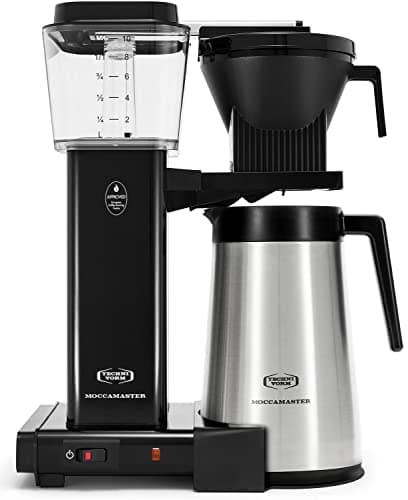
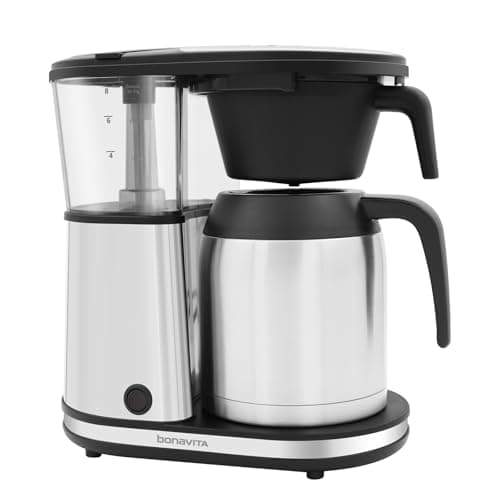
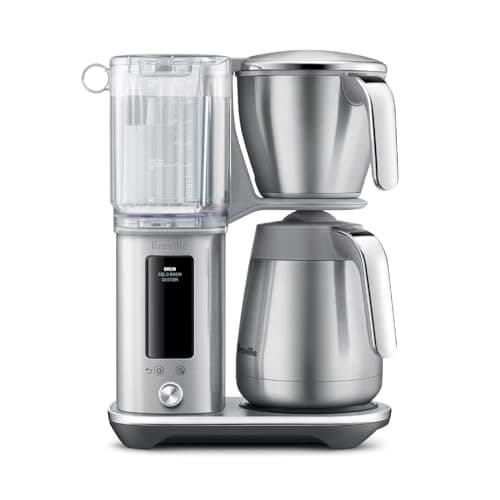
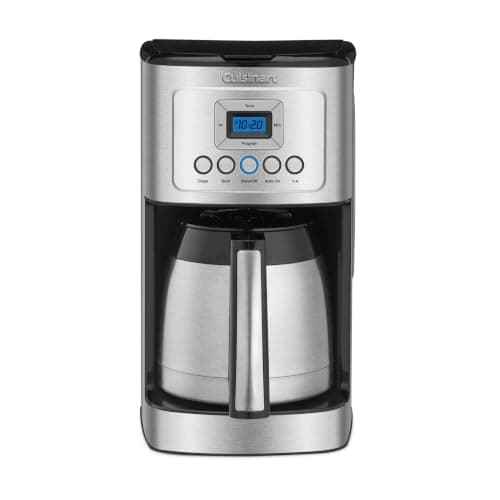
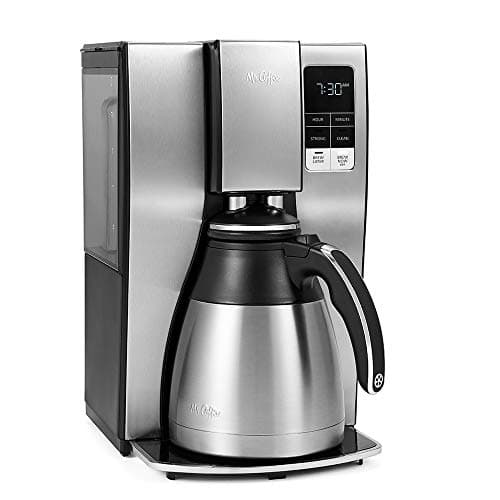
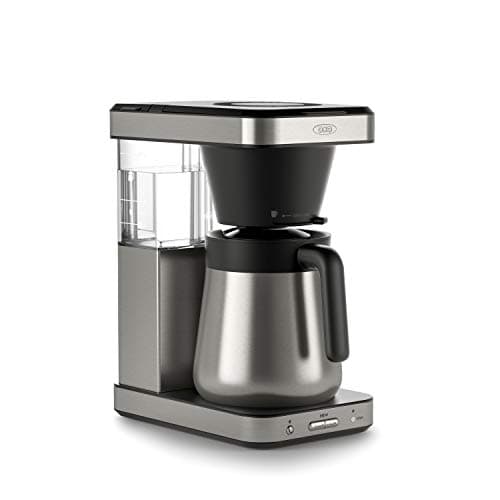
1. Is the brew temperature verified by someone other than the manufacturer? This is first because it is the only criterion a thermal carafe cannot compensate for. Water below roughly 195°F under-extracts, pulling sour, thin coffee out of the bed; above about 205°F it starts stripping bitter compounds. The SCA Certified Home Brewer mark and the European Coffee Brewer Centre (ECBC) certification both exist because an independent body put the machine on a bench and confirmed it holds that window through a full cycle — not just at the moment the water starts moving. Two machines here carry a third-party mark (OXO, Bonavita), one carries both an ECBC certification and SCA Golden Cup approval (Moccamaster), one states it brews to the standard in its own words (Breville), and two make no temperature claim at all (Cuisinart, Mr. Coffee). That is the spine of the ranking.
2. Does the manufacturer publish a retention figure for the carafe?This is the criterion the category fails worst. Only two machines here commit to anything: Breville states its dual-wall carafe holds the brew above 150°F for up to four hours, and Technivorm states its steel-and-glass carafe keeps coffee hot for up to an hour. Those are not comparable claims — Breville’s has a threshold temperature and Technivorm’s does not — and we have not tried to reconcile them, because that would mean inventing a measurement. The other four publish nothing. If a reviewer tells you how many degrees a carafe loses per hour, ask where the number came from.
3. Is there a hot plate anywhere in the design?A real thermal machine has no heated plate at all, because the carafe does the work. Watch for machines sold as “thermal” that pair an insulated carafe with a warming plate underneath, which reintroduces the exact problem you were paying to remove. Every machine on this page is plate-free.
4. Does the water actually reach the whole coffee bed?Brew temperature is wasted if the water drills a single hole through the middle of the grounds and runs out the bottom. A wide shower head over a flat-bottomed basket saturates the bed; a single center spout over a steep cone does not. OXO’s Rainmaker head and Bonavita’s flat-bottom basket are both named features for this reason, and the Breville ships with both basket shapes so you can change it.
5. Is there a timer?Last, but not unimportant — and it is the criterion that reshuffles the top of this list for a lot of people. The two best-brewing machines here, the Moccamaster and the Bonavita, both deliberately have no clock. If part of why you want a thermal carafe is a pot that is ready before you are, those two are out regardless of how well they brew, and the OXO, Breville, Cuisinart and Mr. Coffee are your entire shortlist.
Thermal versus glass, stated plainly
A glass carafe is not a worse carafe. It is a carafe with a different failure mode. On a hot plate, coffee continues to lose volatile aromatics and continues to develop bitterness, slowly and then not so slowly. The practical crossover is around twenty minutes: under that, almost nobody can tell, and a glass pot has real advantages — you can see how much is left, it washes properly, and it costs less. Past an hour on a plate, the difference is not subtle and not a matter of taste.
The thermal carafe’s own costs are worth knowing before you commit. You cannot see the level, so you learn to judge it by weight. Pours are slower, because a brew-thru lid is a smaller aperture than an open spout. They are harder to clean properly, and a neglected thermal carafe develops a stale coffee-oil film that will taint everything you put in it afterward — so it needs an actual wash, not a rinse. And preheating matters more than anyone tells you: rinsing the carafe with boiling water before you brew costs thirty seconds and stops the first minute of your brew being spent heating a cold steel wall. Our coffee to water ratio guide covers the other half of making a full carafe taste like it should.
What a thermal carafe does not fix
Three things, and they account for most of the disappointment people report after this upgrade.
It does not fix a bad grind.If you are brewing pre-ground supermarket coffee, or grinding in a blade grinder, that is a bigger limit on your cup than any carafe decision — the mechanism is in burr vs blade grinder, and the fix is a real brew grinder from our brewed-coffee grinder ranking. On a fixed budget, the grinder before the carafe is the right order almost every time.
It does not fix a weak element.A machine that cannot get water to 195°F makes under-extracted coffee, and an insulated carafe will keep that coffee exactly as sour as it was when it arrived. This is the whole reason criterion 1 outranks criterion 2.
It does not make coffee last all day.Even Breville’s four-hour claim is a claim about temperature, not about flavor. Coffee continues to oxidize in a sealed thermal carafe; it simply does not also cook. A pot that has been sitting for four hours will be hot and flat. If your drinking is spread across a whole day, the honest answer is brewing twice, or a one-mug method like the AeroPress.
Which one to buy, in one paragraph
Buy the OXO 8-Cup Thermal unless you have a specific reason not to: it is certified, it has no hot plate, and it has a timer, and no other machine here does all three. Buy the Moccamaster KBGT if the cup is the point, you brew and drink within the hour, and you are fine making the coffee yourself. Buy the Bonavita if you want the certification for the least money and will never miss a clock. Buy the Breville Luxe Brewerif you genuinely want to adjust bloom, temperature and flow — and if the four-hour retention claim is the thing you care most about. Buy the Cuisinart for twelve cups and a timer at half the price, accepting that nothing about its brew is verified. Buy the Mr. Coffee only to get a hot plate out of your kitchen on a budget that is not moving.