Skip to content
Tamp & Pour

Guides & explainers · Learn

How many grams of coffee for a double shot?

The usual answer is 18 grams, and the usual answer is incomplete. The dose is set by the basket in your portafilter, not by a number on the internet — here is how to find yours.

By Stephen V.Updated How we review
#ad

We earn a commission when you buy through our Amazon links, at no extra cost to you. It never changes a verdict, and we say so when the cheaper product is the better buy. How this works.

For a standard 58mm double basket, 18 grams in, about 36 grams of liquid espresso out, in roughly 25 to 30 seconds. That is the working answer and it is where to start. But the dose is a property of your basket, and baskets are sold in different capacities: a 54mm Breville double is commonly rated around 16–19g, and many 51mm De’Longhi baskets are rated around 14–16g. If you dose 18g into a basket rated for 15g, the puck hits the shower screen, the shot channels, and no amount of grind adjustment will rescue it. So: find your basket’s rated capacity, dose inside it, and use the ratio below.

There is a second reason the single number misleads. A “double shot” names the basket you are using, not a fixed volume of drink. A double basket paired with a short, concentrated pull and the same basket paired with a long one are both doubles, and they are very different drinks.

Find your basket’s capacity first

Three ways, in order of reliability.

1. Read the basket.Many baskets are stamped with their dose on the rim or the underside, often as a range like “18–20g”. If yours is, that is the answer and you can stop.

2. Check the manual or the manufacturer’s page for your machine, which usually states the dose for the baskets supplied in the box. This is the number we would trust over any general guidance, including ours.

3. Measure the headroom. Dose what you think is right, tamp level, lock the portafilter into the group, then unlock it and look at the puck. A clean puck surface with a shallow, even impression from the shower screen means you have roughly the right amount of room. A deep screw imprint pressed into the puck, or grounds smeared up the basket walls, means you are over-dosed. Nothing touching the puck at all and a swampy surface afterwards suggests you are under-dosed for that basket.

Typical rated ranges by basket size, as a sanity check rather than a specification — always use the figure published for your own basket:

58mm commercial double:commonly 18–20g. The size most published espresso advice assumes.
54mm (Breville) double:commonly around 16–19g.
51mm (many De’Longhi) double:commonly around 14–16g — covered in detail in espresso dose for a 51mm portafilter, which is the page to read if that is your machine.
Single basketsare usually half the double, in the 7–10g region, and are genuinely harder to pull well because the shallow puck bed is less forgiving.

The dose is half the recipe — the ratio is the other half

A dose on its own tells you nothing about the drink. What makes it a recipe is the brew ratio: the weight of liquid espresso you let out, divided by the weight of dry coffee you put in.

1:2 is the standard. 18g in, 36g out. This is the default for a modern espresso and the number to learn first.

1:1.5 is a ristretto— 18g in, 27g out. Shorter, thicker, sweeter, less of everything that comes out late in a shot. Often flattering to dark roasts.

1:3 or longer is a lungo— 18g in, 54g+ out. Thinner and more developed, which can suit a light roast and can also drag out bitterness. Ristretto vs lungo covers the trade properly.

Three things about measuring this that trip people up. Weigh the output, do not eyeball it— crema makes volume useless as a guide, since the same 36g of liquid can fill wildly different amounts of cup depending on the bean. Time is a diagnostic, not a target: 25 to 30 seconds is what a correct shot usually takes, so if you hit your ratio in 15 seconds the grind is too coarse, and if it takes 45 the grind is too fine. You adjust grind to land the ratio in the time window; you do not adjust the ratio to hit a time. And start the timer when you start the pump, consistently, so your numbers mean the same thing every day.

Why the basket decides, in one paragraph of mechanism

Espresso works by forcing water at around 9 bar through a compacted bed of coffee. For that to extract evenly, the water has to meet the whole bed at once — which requires a small, consistent gap between the tamped puck and the shower screen, and a puck deep enough to offer uniform resistance. Over-dose and the puck swells into the screen, loses that gap and gets disturbed, so water finds the path of least resistance and channels through one spot. Under-dose and the bed is too shallow and loose to resist evenly, and water races through. Both produce the same symptom — a fast, pale, sour, thin shot — from opposite causes, which is exactly why guessing the dose makes dialling in feel impossible.

A starting recipe you can actually run tomorrow

1.Find your basket’s rated dose. Use the middle of the range.
2.Weigh the dry coffee to 0.1g. Every time — a scoop will not do this.
3. Distribute and tamp level. An uneven puck wastes a correct dose.
4. Pull to double the dose in liquid weight, timing from the pump.
5. If it ran faster than ~25s, grind finer. Slower than ~30s, grind coarser. Change one thing at a time and keep the dose fixed while you do.

That loop needs exactly one tool you may not own: a scale that reads to 0.1g and fits where you brew. The three picks below are the dose, grind and tamp ends of making a weighed dose actually repeatable — the scale is the one that matters most and costs least.

The short answer

Quick picks

  • 01
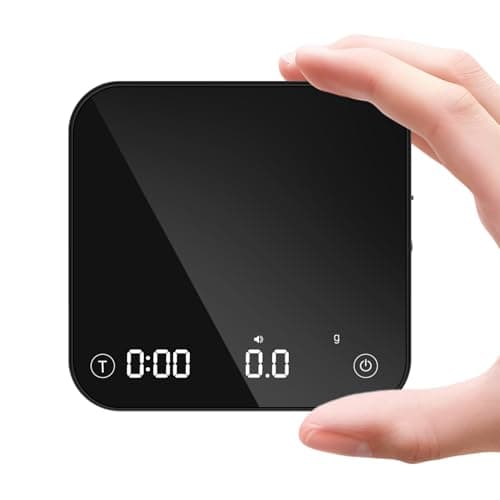
    Mini Mini Espresso Scale with Timer (0.1g)
    Mini Espresso Scale with Timer (0.1g)

    The tool this whole page depends on: 0.1g resolution and a timer, small enough to live on the drip tray so you weigh the shot out as well as in.

    8.8The one thing you actually need
  • 02
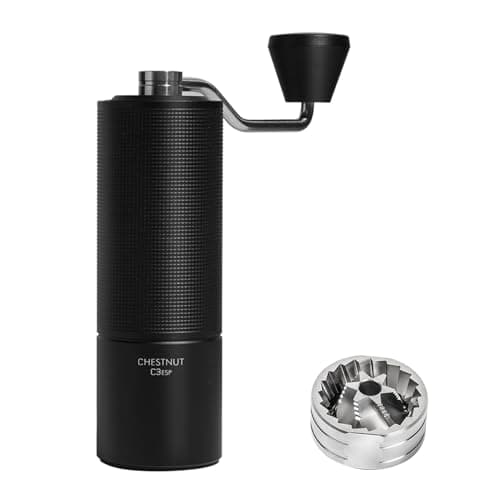
    Timemore Timemore Chestnut C3 ESP
    Timemore Chestnut C3 ESP

    The grinder that makes a weighed dose land intact: you weigh beans in and get essentially all of them out, so the number on the scale is the number in the basket.

    8.6Best way to grind a weighed dose
  • 03
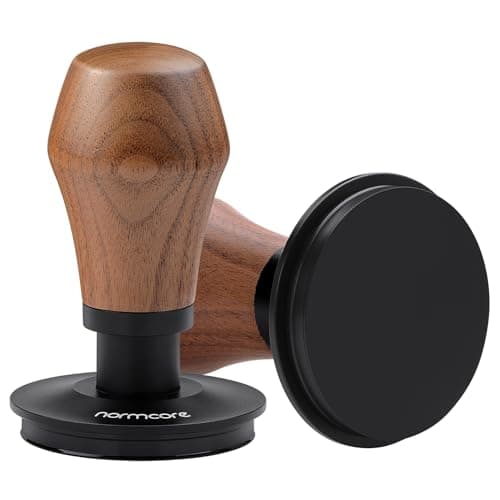
    Normcore Normcore 58.5mm Tamper (V4)
    Normcore 58.5mm Tamper (V4)

    What stops a correct dose being wasted: a base that fills a 58mm basket edge to edge and a calibrated spring, so the puck is the same shape every morning.

    8.8Best for 58mm baskets — removes the tamp variable

#ad · Live prices from the Amazon Product API, as of October 18, 2026. Where we have no verified live price, we show none — a gap beats a number that has rotted.

In detail

The picks, in full

01
Mini Mini Espresso Scale with Timer (0.1g)

The one thing you actually need

Mini Espresso Scale with Timer (0.1g)

0.1g / 2000gBuilt-in shot timerRechargeableSmall drip-tray footprint
8.8/10

The tool this whole page depends on: 0.1g resolution and a timer, small enough to live on the drip tray so you weigh the shot out as well as in.

Necessity
9
Impact on the cup
8.5
Ease of use
8.5
Value
9

Pros

  • 0.1g resolution is what makes a dose repeatable, and a repeatable dose is the precondition for every other adjustment being meaningful
  • The timer lets you check the standard target — roughly double the dose in liquid, in about 25 to 30 seconds — without a second device
  • Small enough to sit under the cup on most machines, which is the difference between a scale you use and one you own
  • Rechargeable rather than eating button cells

Cons

  • A small platform means a wide mug can obscure the readout
  • Not sealed against espresso drips, and a scale that lives on a drip tray will eventually meet one
  • Slower to settle than an expensive competition scale, so during a fast shot you are reading a number that lags slightly

Don't buy this if…

…you already own any 0.1g kitchen scale that fits under your cup. It will do this job — the only real advantages here are the footprint and the built-in timer.

Who it is for: anyone running the five-step loop above, which is anyone who wants a dose number to mean something. The footprint is the reason we name this one rather than a kitchen scale: a scale that fits on the drip tray lets you weigh the output, and the output is the half of the ratio most people never measure. Its own dontBuyIf is the honest line and we will repeat it — if you already own any 0.1g scale that fits under your cup, use it and spend nothing. Two cautions carried from its entry: it is not sealed, so a scale living in a drip tray eventually dies of espresso, and its readout lags slightly during a fast pour, which matters at the finish line of a short ristretto more than a standard double. The full category is best coffee scales.

$23.99View on Amazon

Price as of October 18, 2026. Prices change — Amazon's at checkout is the one that counts.

#ad · we may earn a commission from this link to Mini Espresso Scale with Timer (0.1g)

02
Timemore Timemore Chestnut C3 ESP

Best way to grind a weighed dose

Timemore Chestnut C3 ESP

Stainless S2C conical burrEspresso-capable fine rangeAluminum bodyTravel-friendly
8.6/10

The grinder that makes a weighed dose land intact: you weigh beans in and get essentially all of them out, so the number on the scale is the number in the basket.

Usefulness
9.5
Giftability
8
Build
7.5
Breadth of appeal
8.5
Value
9.5

Pros

  • Grinding fresh is the single biggest improvement available to most coffee drinkers
  • Good enough for espresso as well as filter, so it suits any setup
  • Compact and handsome; it lives on a counter happily
  • Works with any brewing method they already own

Cons

  • Manual, so someone grinding for a full pot daily may not love it
  • If they already own a grinder, this is a sideways move

Don't buy this if…

…they already own a burr grinder they like — upgrading someone's grinder is a decision they should make themselves.

Who it is for:the reader whose machine has a built-in grinder that doses by time, or who grinds into a hopper and wonders why the basket weight keeps moving. This is the retention problem, and it is the quiet reason weighed doses drift: an electric grinder with a chute holds back a fraction of a gram and releases some of yesterday’s coffee today, so you weighed 18g of beans and the basket received something else. A hand grinder you load one dose at a time has almost nowhere to hide grounds, which is why single-dosing solves dose accuracy before it solves anything about flavour. Note its scores come from a gift guide, so they measure usefulness and giftability rather than grind consistency and retention — we have not restated them against a different rubric. Its real cost is effort, as its own cons say: fine enough for espresso means genuinely hard work at espresso settings. Electric alternatives are on best single dose grinders, and the comparison is manual vs electric coffee grinders.

$99.00View on Amazon

Price as of October 18, 2026. Prices change — Amazon's at checkout is the one that counts.

#ad · we may earn a commission from this link to Timemore Chestnut C3 ESP

03
Normcore Normcore 58.5mm Tamper (V4)

Best for 58mm baskets — removes the tamp variable

Normcore 58.5mm Tamper (V4)

58.5mm stainless base (58mm baskets)Spring-loaded, calibrated pressureWalnut wood handleMachined flat contact face
8.8/10

What stops a correct dose being wasted: a base that fills a 58mm basket edge to edge and a calibrated spring, so the puck is the same shape every morning.

Base fit & flatness
9
Build
9
Consistency
9.5
Feel
9
Value
7.5

Pros

  • 58.5mm base fills a 58mm basket to the edge, cutting the loose-grounds ring that causes channeling
  • Calibrated spring clicks at a set pressure, so puck prep is repeatable shot to shot
  • Solid stainless base with a warm walnut handle that feels premium in the hand

Cons

  • Only right for 58mm baskets — the wrong choice for Breville or De'Longhi machines
  • Costs more than a plain flat tamper that does the mechanical job

Don't buy this if…

…your machine uses a 54mm (Breville) or 51mm (many De'Longhi) basket — a 58.5mm base won't fit, so buy the size that matches your portafilter instead.

Who it is for:the 58mm machine owner who has started weighing and wants the next variable gone. The connection to dose is direct: a correct dose tamped unevenly behaves like the wrong dose, because the water still finds the thin side and channels through it. A calibrated spring removes “how hard did I press today” from the variables you are juggling, which matters most while you are still learning what a good shot feels like. Read its first con carefully before buying, because it is a hard fitment limit rather than a preference — this is a 58mm tool and it is simply wrong for a Breville 54mm or a De’Longhi 51mm basket. The size question is answered in espresso tamper size guide, and whether a calibrated spring is worth it at all is argued honestly in calibrated tamper vs regular.

$56.00View on Amazon

Price as of October 18, 2026. Prices change — Amazon's at checkout is the one that counts.

#ad · we may earn a commission from this link to Normcore 58.5mm Tamper (V4)

Why 18g became the default number

It is not a law of physics. The 58mm group is the commercial standard, the double baskets supplied with those groups are typically rated 18–20g, and a very large share of published espresso advice is written by and for people using them. So “18g” really means “the middle of a standard 58mm double basket”. It is a good number if that is your basket and a misleading one if it is not — which is most home machines, since Breville’s 54mm platform and De’Longhi’s 51mm platform together account for a very large part of the home market.

Single, double, triple

These name baskets, not volumes. A singleis roughly half a double, around 7–10g in a 58mm, and is harder rather than easier — a shallow bed is less forgiving of an uneven tamp. A triple at 21g or more needs more headroom than some machines have and more steady pressure than many pumps deliver. If you want a bigger drink, the right move is almost always a double pulled to the same ratio with more water added afterwards, which is an americano, rather than a bigger basket.

Pressurized baskets change the answer

If your machine came with a pressurized(dual-wall) basket — common on entry machines, including most De’Longhi and many budget units — it manufactures crema through a valve rather than through resistance from the coffee bed. Dose and grind matter much less, because the basket, not the puck, is controlling the flow. Use whatever dose fills it level, and know that precision will not buy you much until you move to a single-wall basket. The mechanism is in pressurized vs non-pressurized portafilters.

When the dose is right and the shot still is not

Once the dose is weighed and inside the basket’s range, dose stops being the suspect. In rough order of likelihood: grind (the main lever, and the one to move first), distribution (clumps and an uneven bed cause channeling at any dose), bean freshness (very fresh coffee gushes as it degasses, very stale coffee runs fast and tastes flat), and temperature. The taste-based diagnosis is in why is my espresso sour or bitter, the full procedure in how to pull an espresso shot, and the crema-specific version in why does my espresso have no crema. For brewed coffee rather than espresso, the equivalent numbers are in coffee to water ratio.
How we picked

We did not lab-test this gear

Everyone in this category says they tested twenty machines. We have not lab-tested any of these, and we say so. What we did instead: compiled the published manufacturer specifications, read the manuals, ran the math where there was math to run (heat-up time, pressure, dose capacity, grind range, cost per cup), and scored each pick against a published rubric. The scores are judgments from documented research — not measurements we took, because we do not have a lab and we will not pretend we do. Where a number came from someone else's work, we name them in Sources.

Questions

Frequently asked

How many grams is a double shot of espresso?
About 18g of dry coffee for a standard 58mm double basket, yielding roughly 36g of liquid espresso in 25 to 30 seconds. On a 54mm Breville basket the rated dose is commonly 16–19g, and on many 51mm De’Longhi baskets 14–16g — use the figure published for your own basket.
How many grams for a single shot?
Roughly half a double, so around 7–10g in a 58mm single basket, pulled to about double that in liquid. Singles are harder to pull consistently than doubles because the shallower puck resists water less evenly.
What is the 1:2 espresso ratio?
The weight of liquid espresso divided by the weight of dry coffee. 1:2 means 18g in and 36g out — the modern default. Shorter is a ristretto at about 1:1.5; longer is a lungo at 1:3 or more.
Should I weigh the shot coming out or just time it?
Weigh it. Crema volume varies hugely between beans, so a cup that looks the same can hold very different amounts of liquid. Time is a diagnostic — if you hit your target weight much faster or slower than 25 to 30 seconds, adjust the grind.
Can I use more coffee to make a stronger espresso?
Only within the basket’s rated capacity. Beyond it the puck presses against the shower screen, loses the gap it needs and channels, which gives you a weaker and more uneven shot rather than a stronger one. To make it stronger, pull a shorter ratio instead.
Why does my shot taste different every morning with the same dose?
Usually grinder retention or an inconsistent tamp. A grinder with a chute holds back part of one dose and releases part of the last, so the basket does not receive what you weighed. Beans also change as they age, so a recipe set on day three of a bag needs a nudge by day twenty.

Keep reading

Receipts

Sources

We do not run a testing lab, and we do not pretend to. Where a measured number came from someone else's work, we name them and link them. Where we could not verify something, we say so on the page rather than quietly leaving it out. Read our full method.