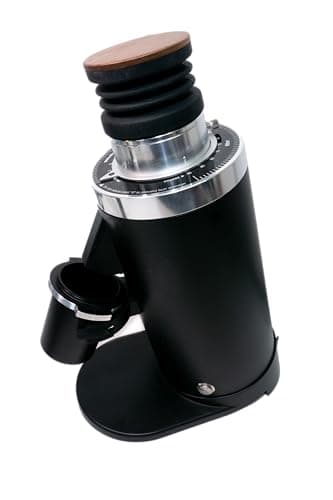
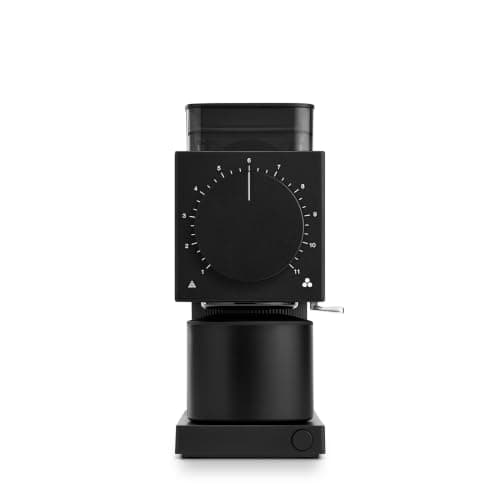
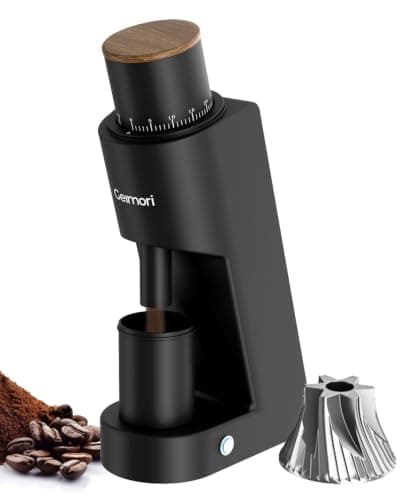
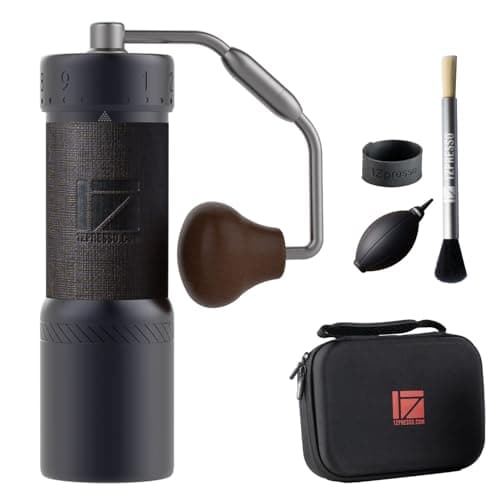
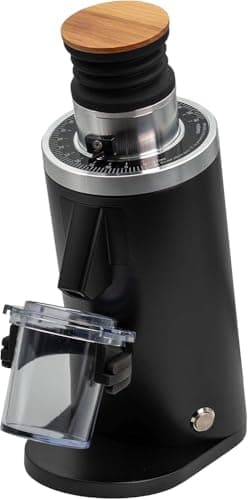
Single dosing means weighing exactly the coffee you are about to brew, dropping it in, and getting essentially all of it back out. That sounds like what every grinder does. It is not. A conventional hopper grinder holds a few grams inside the burr chamber and exit chute after every grind, so the first grams of today’s dose are yesterday’s stale coffee, and switching beans means purging some of the new bag to flush the old one.
That retention is the whole reason this category exists. A single dose grinder is designed around giving it all back: a short, steep grind path, an anti-static treatment or bellows to blow the chamber clear, and usually no hopper at all — just a small cup you drop your weighed dose into. The payoff is that every shot is only the beans you just put in, which matters enormously if you are dialing in espresso or if you rotate between bags.
Ranked below on the three things that actually differ: how much coffee stays inside, burr size and type, and how pleasant the workflow is day to day. If you are not sure the category is for you, the last section of the buyer’s guide says plainly who should skip it.
What retention actually costs you
Every grinder keeps some ground coffee inside — in the burr chamber, on the burr faces, and in the exit chute. A typical hopper grinder holds one to five grams. That coffee comes out at the start of your next grind, hours or days stale, mixed into a fresh dose.
For most people the practical cost is small. If you drink one bag all week, the retained coffee is the same coffee, only slightly older, and the effect on the cup is marginal. The cost becomes real in two situations. First, dialing in espresso: if you change the grind and pull again, part of what you just ground is still sitting inside from the previous setting, so your test shot is a blend of two settings and you cannot tell what your change did. Second, switching beans: a decaf drinker following a caffeinated household member gets a few grams of caffeine they did not ask for, and a light Ethiopian pulled through a chamber holding dark French roast tastes muddled.
How single dose grinders solve it
Four design choices, and a grinder is only really single-dose if it has most of them. A short, steep grind path with as few horizontal surfaces as possible, so grounds fall out instead of settling. A bellows or blower to push a puff of air through the chamber and clear what is left. Anti-static treatment of the chute, because static is what holds fines against the walls. And no hopper — just a small cup you drop a weighed dose into, which also means beans are not sitting in open air staling between uses.
A useful home trick works with any grinder: stir a single drop of water into your weighed beans before grinding (the Ross Droplet Technique). It dissipates the static charge and measurably reduces both retention and mess, and it costs nothing.
Burr size and shape at this level
Most single dose grinders use flat burrs, and the sizes cluster at 54mm and 64mm. Bigger burrs clear a dose in fewer rotations, which means less heat and fewer fines from repeated passes. Flat burrs tend to produce a tighter particle distribution, which is why they dominate espresso-focused machines; conical burrs are quieter, cheaper and run cooler, and the flavor difference is a profile preference rather than a quality ranking. We cover that argument properly in conical vs flat burr grinders.
Stepped or stepless?
Stepless collars — the DF54 and DF64 here — let you land anywhere between two settings, which is what espresso wants, because the useful range between a gushing shot and a choked one can be smaller than one click on a stepped grinder. The cost is that there are no numbers to return to, so you mark the collar and learn it by feel. Stepped grinders like the Ode are repeatable to the click, which is far more convenient for filter, where the increments are coarse enough to be usable. Match the mechanism to the drink.
The workflow, honestly
Single dosing adds a step: you weigh beans into a cup before you grind, rather than letting a hopper feed itself. In practice this takes about fifteen seconds with a 0.1g scale and quickly becomes automatic — and it has a side benefit, since weighing beans in and weighing grounds out is how you actually learn what your grinder retains. Add a bellows puff after each dose and a brush-out of the chamber weekly, and a single doser stays clean in a way a full hopper never does.
Who should skip this category
If you drink one bean, brew filter, and grind a full carafe each morning, a single dose grinder makes your routine slower and costs more for a benefit you will not taste — buy a good hopper grinder from our main grinder ranking instead. If you want the retention benefit at the lowest possible price, buy a hand grinder: it retains less than any electric here and costs a fraction. Single dose electrics earn their money for people rotating bags, chasing espresso consistency, or living with a mixed caffeinated and decaf household.