Skip to content
Tamp & Pour

Roundups & reviews · Coffee Makers

The best coffee makers with grinders, ranked

Grind-and-brew machines that build a burr grinder into the brewer — beans in, fresh coffee out on a timer. Ranked on grinder quality, brew temperature and value, with live prices and honest cons.

By Stephen V.Updated Published How we review
#ad

We earn a commission when you buy through our Amazon links, at no extra cost to you. It never changes a verdict, and we say so when the cheaper product is the better buy. How this works.

A grind-and-brew coffee maker builds a grinder into the machine, so whole beans go in the hopper and a fresh-ground pot comes out on a timer — no separate grinder, no measuring, no second gadget on the counter. It is the most convenient way to drink fresh-ground drip coffee, and the trade is real: an all-in-one grinder is rarely as good as a dedicated one, and it is the part that ages first. This ranking is honest about where that trade is worth it and where it is not.

Two things decide a grind-and-brew machine, in this order. First, the grinder: a burr grinder crushes beans to an even size for a cleaner cup, while a blade-style chopper makes dust and boulders — so a burr is worth holding out for, and every pick here has one. Second, the brew itself: the machine still has to hold water in the 195–205°F window and saturate the grounds evenly, which is what separates a real cup from a lukewarm one. After that it is capacity, carafe type and how much cleaning you will actually keep up with.

One honest note up front: grinder-integrated drip is a small category with only a handful of machines worth buying, so this is a short, curated list rather than a padded one. And if you already own a good burr grinder, you may be better served by a plain SCA-certified drip machine and grinding separately — you get a better grinder and a better brewer for the money. Grind-and-brew is for people who value one-box convenience over squeezing out the last of the cup.

The short answer

Quick picks

  • 01
    Café Café Specialty Grind and Brew
    Café Specialty Grind and Brew

    The one grind-and-brew machine that does not compromise on the cup: it is SCA-certified to brew in the correct 195-205F window, grinds with a conical burr, keeps coffee hot in a thermal carafe, and brews anything from a single mug to a full pot — with app and voice scheduling on top.

    8.5Best overall
  • 02
    De'Longhi De'Longhi TrueBrew (CAM51025MB)
    De'Longhi TrueBrew (CAM51025MB)

    The most flexible pick: De'Longhi's Bean Extract system grinds, doses and brews automatically across a wide range of sizes and five styles — including a real over-ice mode for iced coffee — so one machine covers an 8oz cup, a bold mug, or a summer glass of iced.

    8.0Best for flexible sizes & iced
  • 03
    Breville Breville Grind Control (BDC650BSS)
    Breville Grind Control (BDC650BSS)

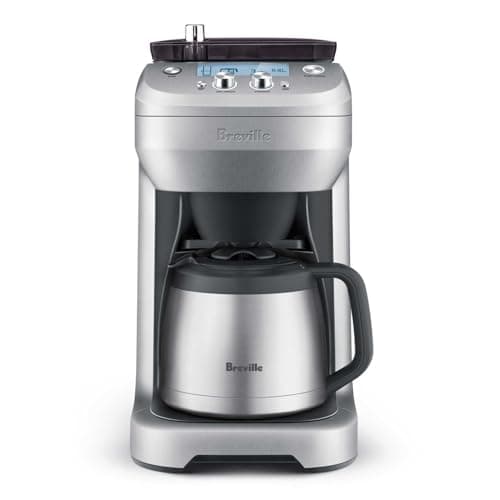
    The big-pot pick for people who like to adjust: flat stainless steel burrs with six grind settings, eight strength settings and a calibration mode for the dose, brewing a single cup or travel mug, or 2 to 12 cups into a double-wall thermal carafe on an auto-start timer.

    7.9Best 12-cup thermal carafe
  • 04
    Gevi Gevi 10-Cup Grind & Brew
    Gevi 10-Cup Grind & Brew

    The honest budget pick: a genuine built-in burr grinder — not a blade — with eight grind levels, three strengths and a pre-infusion step, at a fraction of the price of the premium machines. It gives up the thermal carafe and the polish, not the fundamentals.

    7.5Best budget

#ad · Live prices from the Amazon Product API, as of November 2, 2026. Where we have no verified live price, we show none — a gap beats a number that has rotted.

In detail

The picks, in full

01
Café Café Specialty Grind and Brew

Best overall

Café Specialty Grind and Brew

Conical burr, 6 grind settingsSCA-certified brew temperatureSingle-serve to 10-cup thermal carafe75oz reservoir, WiFi + Alexa
8.5/10

The one grind-and-brew machine that does not compromise on the cup: it is SCA-certified to brew in the correct 195-205F window, grinds with a conical burr, keeps coffee hot in a thermal carafe, and brews anything from a single mug to a full pot — with app and voice scheduling on top.

Grind quality
8.5
Brew quality
9
Ease & cleaning
8
Programmability
9
Value
8

Pros

  • SCA Golden Cup certification means an independent lab confirmed it brews at the right temperature and extraction — rare in a grind-and-brew
  • Conical burr grinder plus a vacuum thermal carafe that holds heat for hours without a plate cooking the coffee
  • Brews single-serve straight into a mug or a full 10-cup pot, and schedules from your phone or a smart speaker

Cons

  • Costs more than a basic grind-and-brew, and the smart features are more than some people want
  • The built-in burr, while good, is a step below a dedicated standalone grinder
  • More parts — hopper, reservoir, carafe — to rinse than a simple drip machine

Don't buy this if…

…you want the cheapest possible grind-and-brew or you will never use the app — a simpler burr machine like the Gevi gets you fresh-ground coffee for far less.

The Café earns the top spot because it refuses the usual grind-and-brew compromise. Most machines in this category bolt a mediocre grinder to a brewer that never gets hot enough; this one is SCA-certified, meaning an independent lab verified it brews in the 195–205°F window with even saturation — the same standard the best plain drip machines meet. Add a conical burr grinder with six settings, a vacuum thermal carafe that holds heat without a hot plate scorching the coffee, and the flexibility to brew a single mug or a full pot, and it is the machine to buy if you want grind-and-brew without giving up the cup. The WiFi and voice scheduling are genuinely useful for a wake-up pot, though they are the part you can ignore. Feed it a fresh bag of good beans and it is hard to beat for hands-off, fresh-ground drip.

$290.00View on Amazon

$329.0012% off

Price as of November 2, 2026. Prices change — Amazon's at checkout is the one that counts.

#ad · we may earn a commission from this link to Café Specialty Grind and Brew

02
De'Longhi De'Longhi TrueBrew (CAM51025MB)

Best for flexible sizes & iced

De'Longhi TrueBrew (CAM51025MB)

Conical burr + Bean Extract techSix sizes from single-serve up5 styles incl. Over-Ice (iced coffee)Auto-clean, built-in clock + auto-on
8.0/10

The most flexible pick: De'Longhi's Bean Extract system grinds, doses and brews automatically across a wide range of sizes and five styles — including a real over-ice mode for iced coffee — so one machine covers an 8oz cup, a bold mug, or a summer glass of iced.

Grind quality
8
Brew quality
8.5
Ease & cleaning
8.5
Programmability
7.5
Value
7.5

Pros

  • Bean Extract Technology grinds, doses and brews in one automatic cycle across a wide range of cup sizes
  • Five brew styles, from Light to Bold to Espresso-Style, plus a genuine Over-Ice mode that adjusts the brew for iced coffee
  • Conical burr grinder and an auto-clean cycle that keeps upkeep low

Cons

  • The single-serve focus means smaller batches than a 10-12 cup carafe machine — the version with the 40oz carafe is a pricier model
  • Stock and pricing on this listing can swing, so check the live price before you buy
  • Fewer manual controls than the Breville for people who like to tinker

Don't buy this if…

…you brew a big pot for a household every morning — this is built around single-serve to mid-size cups, so a 10-12 cup machine like the Breville or Café is the better fit.

The TrueBrew is the pick for someone who wants one machine to cover a lot of moods. De'Longhi's Bean Extract Technology handles the whole cycle — grind, dose, brew — and gives you a range of sizes and five styles, so the same machine makes a small light cup, a bold travel mug, or, with the Over-Ice setting, a properly concentrated iced coffee that does not turn watery over ice. The conical burr grinder and an auto-clean routine keep it low-fuss. It is more single-serve-minded than the carafe machines here (the version with the 40oz thermal carafe is a step up in price), and this exact listing's stock and price move around, so check the live price on the button before committing. For a one-or-two-cup household that likes variety — and iced coffee in summer — it is the most versatile machine on the list.

$495.04View on Amazon

$599.9517% off

Price as of November 2, 2026. Prices change — Amazon's at checkout is the one that counts.

#ad · we may earn a commission from this link to De'Longhi TrueBrew (CAM51025MB)

03
Breville Breville Grind Control (BDC650BSS)

Best 12-cup thermal carafe

Breville Grind Control (BDC650BSS)

Flat steel burrs, 6 grind settings8 strength settings + pre-ground optionSingle cup/travel mug or 2-12 cup thermal carafe60oz tank, 0.5lb hopper, auto start
7.9/10

The big-pot pick for people who like to adjust: flat stainless steel burrs with six grind settings, eight strength settings and a calibration mode for the dose, brewing a single cup or travel mug, or 2 to 12 cups into a double-wall thermal carafe on an auto-start timer.

Grind quality
8.5
Brew quality
8
Ease & cleaning
7
Programmability
8.5
Value
7.5

Pros

  • Six grind settings on stainless steel burrs, plus a calibration mode that changes how much coffee is dosed for each strength and cup size, so it can be tuned to a light or a dark roast
  • Brews one cup straight into a mug or travel mug, or 2 to 12 cups into a double-wall thermal carafe, so there is no hot plate cooking the pot
  • Auto start for a wake-up pot, a Pre-ground setting that turns the grinder off, and Brew Pause for pouring mid-cycle

Cons

  • The grinder needs regular attention: Breville has you rinse the chute area of the coffee basket after every brew, and clean the burrs and grinds chute when the machine prompts (every 2-3 weeks depending on use) to avoid clogs and an overflowing basket
  • Nothing is dishwasher-safe, per Breville's manual, so the basket, hopper and deep thermal carafe are all washed by hand
  • The 0.5lb hopper will not hold a full 12oz bag of beans, and at 16.7in wide it takes a lot of counter
  • Stock on this listing is limited and it is sold by a specialty dealer rather than Amazon itself, so check the live price before you buy

Don't buy this if…

…you will not keep up with cleaning the grinds chute. This machine rewards an owner who adjusts and maintains it; for beans-in, coffee-out with less upkeep, the SCA-certified Café or the De'Longhi with its auto-clean cycle is the better fit.

The Grind Control is the grind-and-brew for people who want to tune the cup rather than accept a default. Its flat stainless steel burrs have six settings, the strength dial has eight, and a calibration mode changes how much coffee it doses for each strength and cup size — useful when you switch between a light and a dark roast. It brews a single cup or a travel mug directly, or 2 to 12 cups into a double-wall thermal carafe with no hot plate stewing the pot, and auto start has coffee ready when you get up. The cost of that control is upkeep: Breville’s manual has you clean the burrs and grinds chute every few weeks or the basket can clog and overflow, and none of the parts can go in the dishwasher. That upkeep is the main reason it sits below the De'Longhi here. If you will actually dial it in and keep the chute clean, it is the machine on this list for a household that drinks a full 12-cup pot.

$399.95View on Amazon

Price as of November 2, 2026. Prices change — Amazon's at checkout is the one that counts.

#ad · we may earn a commission from this link to Breville Grind Control (BDC650BSS)

04
Gevi Gevi 10-Cup Grind & Brew

Best budget

Gevi 10-Cup Grind & Brew

Built-in burr grinder, 8 grind levels3 strength settings + pre-infusion10-cup glass carafe, 1.5L tank24-hr timer, 120-min keep-warm
7.5/10

The honest budget pick: a genuine built-in burr grinder — not a blade — with eight grind levels, three strengths and a pre-infusion step, at a fraction of the price of the premium machines. It gives up the thermal carafe and the polish, not the fundamentals.

Grind quality
7
Brew quality
7
Ease & cleaning
7
Programmability
8
Value
8.5

Pros

  • A real burr grinder at a budget price, with eight grind levels and three strengths — more adjustment than machines costing far more
  • A pre-infusion step wets the grounds before the full brew, which helps flavor
  • Fully programmable with a 24-hour timer and a long keep-warm

Cons

  • Glass carafe on a warming plate, not a thermal one, so coffee can cook if it sits
  • Budget build and a lesser-known brand mean less long-term track record than the majors
  • Not SCA-certified, so the brew temperature is not independently verified

Don't buy this if…

…you want a thermal carafe or a proven premium brand — this is a value machine, so the Café or Breville is worth the step up if the budget allows.

The Gevi exists to answer one question: what is the cheapest way to get genuinely fresh-ground drip coffee? The answer is a machine with a real burr grinder — not the blade chopper you find on the cheapest combos — and this one has eight grind levels, three strength settings and even a pre-infusion step that wets the grounds before the main brew. What you give up at this price is the thermal carafe (it uses a glass pot on a warming plate, which can cook the coffee if it sits) and the pedigree of a major brand with a long service record. It is also not SCA-certified, so the brew temperature is not independently verified. But for the money it covers the fundamentals honestly, and it is the right call if a premium grind-and-brew is more than you want to spend.

$139.99View on Amazon

Price as of November 2, 2026. Prices change — Amazon's at checkout is the one that counts.

#ad · we may earn a commission from this link to Gevi 10-Cup Grind & Brew

How to choose a coffee maker with a built-in grinder

A grind-and-brew machine is judged on the two jobs it combines — grinding and brewing — plus how you live with it. Work through these in order.

1. Insist on a burr grinder

This is the whole reason to buy grind-and-brew instead of a plain drip machine, so do not settle. A burr grinder crushes beans to an even size; a blade-style chopper smashes them into dust and boulders that brew unevenly and taste muddy. Every machine on this list uses a burr for exactly that reason. If you are fuzzy on why it matters, our burr vs blade grinder guide lays out the mechanism — but the short version is that a cheap machine with a blade grinder defeats the point of grinding fresh at all.

2. Check the brew temperature

A fresh grind cannot rescue a lukewarm brew. Coffee extracts properly at 195–205°F, and many cheaper machines never get there, which is why their coffee tastes thin and sour no matter the beans. The reliable shortcut is SCA certification, which means an independent lab confirmed the machine hits that window — the Café here carries it. Where a machine is not certified, treat brew temperature as an unknown and lean on owner reports.

3. Carafe type and batch size

Decide how much you brew at once. A thermal carafe (Café, Breville) keeps coffee hot for hours without a hot plate slowly stewing it — the biggest quiet quality difference between machines. A single-serve or flexible-size machine (De'Longhi) suits one or two drinkers who want a fresh cup rather than a standing pot, while a 10–12 cup carafe suits a household. Match the format to how your mornings actually run.

4. Cleaning you will actually do

Every grind-and-brew machine shares one chore: the grinder sits above the brew path, so oils and grounds build up and need regular cleaning or the coffee turns stale-tasting. Machines with removable, dishwasher-friendly parts and auto-clean cycles make that easier. Be realistic — a grind-and-brew you never clean makes worse coffee than a plain drip machine you keep spotless and pair with a separate grinder.

How we picked

We did not lab-test this gear

Everyone in this category says they tested twenty machines. We have not lab-tested any of these, and we say so. What we did instead: compiled the published manufacturer specifications, read the manuals, ran the math where there was math to run (heat-up time, pressure, dose capacity, grind range, cost per cup), and scored each pick against a published rubric. The scores are judgments from documented research — not measurements we took, because we do not have a lab and we will not pretend we do. Where a number came from someone else's work, we name them in Sources.

Questions

Frequently asked

Are coffee makers with built-in grinders worth it?
Yes, if you value convenience — beans in, fresh-ground coffee out on a timer, with no separate grinder to run. The trade-off is that the built-in grinder is usually a step below a good standalone one, and it is the part that needs the most cleaning. If you already own a quality burr grinder, a plain drip machine plus that grinder makes better coffee for the money.
Do these use a burr or a blade grinder?
The good ones use a burr grinder, which crushes beans to an even size, and every machine on this list does. Avoid grind-and-brew machines with a blade-style chopper — it makes uneven grounds that brew muddy, defeating the point of grinding fresh. Our burr vs blade grinder guide explains why.
How do you clean a grind-and-brew coffee maker?
Because the grinder sits right above the brew basket, coffee oils and grounds build up there, so it needs cleaning more often than a plain drip machine: wipe the grinder chute and basket regularly, run the machine's cleaning cycle if it has one, and descale on schedule. Machines with removable parts and auto-clean modes make this much easier.
Can I use pre-ground coffee in a grind-and-brew machine?
On most of them, yes — look for a “grind-off” or bypass setting, like the Breville’s Pre-ground setting. That lets you skip the grinder and use pre-ground on the days you want to, so the built-in grinder never locks you in.
Grind-and-brew, or a separate grinder and brewer?
If convenience and counter space matter most, grind-and-brew wins — it is one box on a timer. If cup quality per dollar matters most, a separate burr grinder and a good drip machine beat it, because a dedicated grinder out-grinds any built-in one. Neither is wrong; it is a convenience-versus-quality call.

Keep reading

Receipts

Sources

We do not run a testing lab, and we do not pretend to. Where a measured number came from someone else's work, we name them and link them. Where we could not verify something, we say so on the page rather than quietly leaving it out. Read our full method.