Skip to content
Tamp & Pour

Roundups & reviews · Grinders

The best quiet coffee grinders

Almost nobody publishes a decibel figure for a home grinder, so this page ranks them on the three things that genuinely decide how loud one is: whether it has a motor at all, how fast that motor turns the burrs, and how long it has to run.

By Stephen V.Updated How we review
#ad

We earn a commission when you buy through our Amazon links, at no extra cost to you. It never changes a verdict, and we say so when the cheaper product is the better buy. How this works.

If silence is the requirement and you can spare ninety seconds of cranking, buy the Timemore Chestnut C3 ESP— a hand grinder makes no motor noise because it has no motor, and that is the only change on this page that is a genuine order of magnitude rather than a few percent. If you want an espresso-capable hand grinder that gets the dose done faster, the 1Zpresso J-Ultra is the one. If it has to be electric, the Fellow Ode Gen 2 is the only grinder here whose maker publishes a noise claim at all, the Baratza Encore is the value answer on the strength of its gear-reduced low-speed motor, and the OXO Brew Conical is the budget one.

Two things are worth saying before the list, because they change what you should buy. The first is that the loudest part of grinding coffee is not the motor — it is beans fracturing between steel, and no grinder on earth avoids that. The second is that the cheapest picks on this page are the quietest, which is unusual for us and is the reason the ranking reads the way it does.

Why there are no decibel numbers on this page

We checked. Fellow, Baratza, OXO, Timemore and 1Zpresso do not publish a dB rating for any of these grinders on their own product pages, and we do not have a sound lab — so there is no honest number for us to print. Figures you will find elsewhere are almost always a phone app held at an unstated distance in an unstated room, which is not a measurement you can compare between two reviews, let alone rely on.

What we can do is read the mechanism, and the mechanism is unusually legible here. Grinder noise is a product of motor type, burr speed, grind duration and how much the housing resonates — all of which are either published specs or plainly visible in the design. That is what this page ranks on, and it is the same standard the rest of the site uses: judgments from documented research, stated as judgments. How we review says so in those words.

One published claim does exist and it belongs to Fellow, which describes the Ode Gen 2 as “engineered to reduce grind noise” and lists “quiet grinding” among the grinder’s highlights. That is a manufacturer marketing claim rather than a measurement, and we treat it as one — but it is the only such claim in this group, and it is specific enough to be worth something.

Where grinder noise actually comes from

1. Beans fracturing.This is the sharp, crackling part, and it is irreducible. A coffee bean is a brittle solid being crushed; crushing it makes a noise. Any grinder — hand, electric, cheap or expensive — produces it. It is also the shortest part of the cycle, because once the beans are through the burrs the cracking stops.

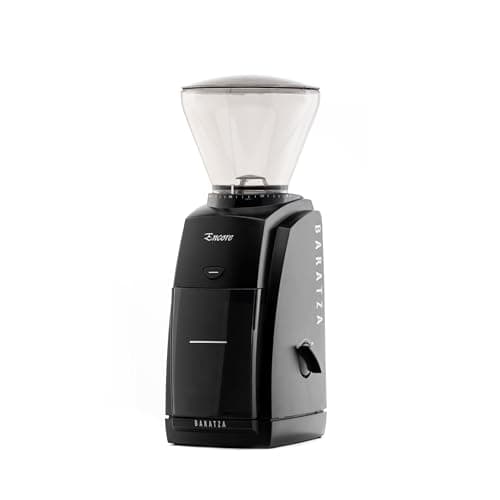
2. The motor.This is the continuous whine, and it is the part that actually varies between grinders. A universal AC motor driving burrs directly spins fast, typically in the thousands of RPM, and makes a high-pitched noise your ear is unusually sensitive to. A DC motor through a gear reduction turns the burrs at a few hundred RPM instead, which moves the sound down into a lower, duller register that carries less through a wall and wakes fewer people. Baratza’s own spec sheet for the Encore describes exactly this arrangement — a high-torque DC motor driving the cone burr through a gear-reduction transmission — and that single design decision is why the Encore has a reputation for being civilized at 6am.

Worth knowing: published burr-speed figures for the Encore disagree with each other. Baratza’s own spec sheet gives 550 RPM, while most retailer listings quote 450 RPM with an electronic controller adjustable between roughly 405 and 495. We are not going to pick one and present it as fact. The point that survives either number is the one that matters: a few hundred RPM is an entirely different acoustic problem from a few thousand.

3. Housing resonance.A grinder is a vibrating object sitting on a hard surface, and a plastic box on a stone countertop behaves like a drum skin. Mass, rubber feet and metal construction all damp this, which is one of the few places where paying more genuinely buys you quiet. It is also the source you can fix for free, and the buyer’s guide below tells you how.

4. Duration. Easy to overlook and arguably the most useful of the four. A grinder that takes eight seconds to do your dose subjects the house to a fraction of the noise of one that takes thirty, even if the two sound identical while running. Large burrs grind faster, which means a 64mm flat-burr grinder can be the better neighbor than a small conical one that sounds quieter moment to moment.

What to look for, in order

1. No motor beats every other factor.This is not a close call and it is the honest headline of the page. A hand grinder produces the bean-fracture noise and nothing else — no whine, no resonance through the counter, no startle at 6am. If your constraint is a thin wall, a sleeping baby or an open-plan apartment, start here and only move to electric if the manual option is genuinely impractical for you.

2. A gear-reduced, low-speed DC motor. Among electrics this is the single best predictor. Look for a published motor description rather than a wattage figure; wattage tells you about power draw, not about speed or pitch.

3. Burr size, for duration. Bigger burrs clear a dose faster and run cooler. All else equal, a shorter grind is a quieter morning.

4. Mass and materials. Metal body, rubber feet, some weight to it. A grinder that does not move when it runs is a grinder that is not using your countertop as a soundboard.

5. Where the grounds land.A hard plastic bin amplifies the rattle of grounds hitting it. A metal catch cup with a silicone base, or a dosing cup you hold, is noticeably less harsh — and on several grinders this is a free change, because the catch cup is swappable.

The one type to rule out

A blade grinder. Those spin a blade at very high speed in a thin metal cup for twenty or thirty seconds — which is the loudest configuration in the category and also the worst at the actual job, because it chops rather than grinds and produces dust and boulders at the same time. If a blade grinder is what you own, replacing it improves your coffee and your kitchen at once. The mechanism is in burr vs blade grinders.

The short answer

Quick picks

  • 01
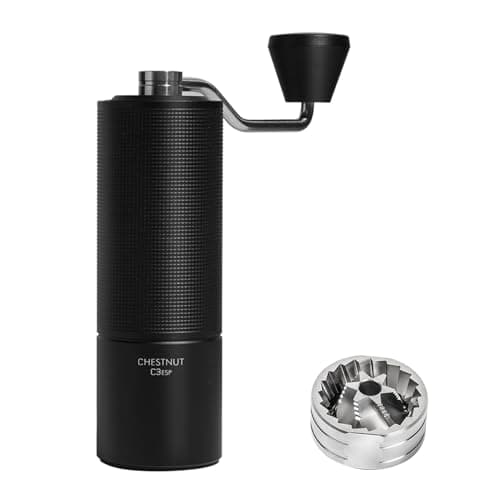
    Timemore Timemore Chestnut C3 ESP
    Timemore Chestnut C3 ESP

    The quietest grinder most people should actually buy: no motor at all, stainless burrs that reach espresso fineness, and a price that undercuts every electric here.

    7.9Best overall for quiet — and the value pick
  • 02
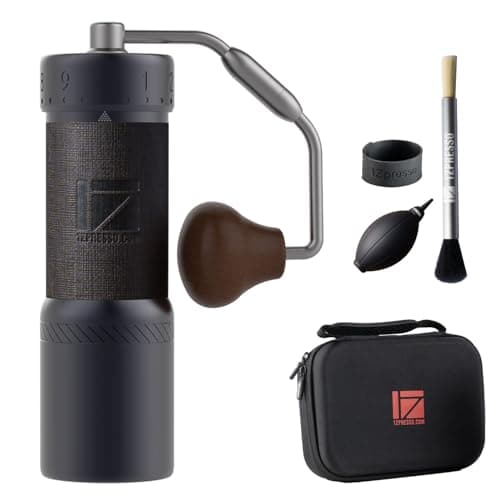
    1Zpresso 1Zpresso J-Ultra
    1Zpresso J-Ultra

    The silent option for espresso: fast enough that the cranking is not a chore, with numbered external adjustment that makes dialing in a shot repeatable by hand.

    8.6Best silent grinder for espresso
  • 03
    Fellow Fellow Ode Gen 2
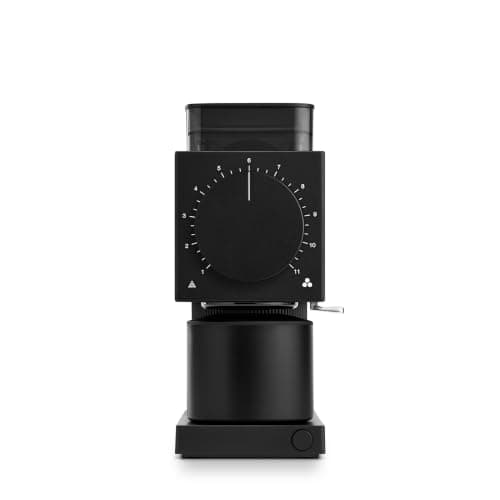
    Fellow Ode Gen 2

    The quietest electric here, and the only grinder in this group whose manufacturer makes a published noise claim — 64mm burrs also mean a short grind, which shortens the problem independently.

    7.6Best quiet electric grinder
  • 04
    Baratza Baratza Encore
    Baratza Encore

    The value electric: a high-torque DC motor geared down to a few hundred burr RPM instead of a few thousand, which is the single design choice that matters most for noise.

    7.3Best value quiet electric
  • 05
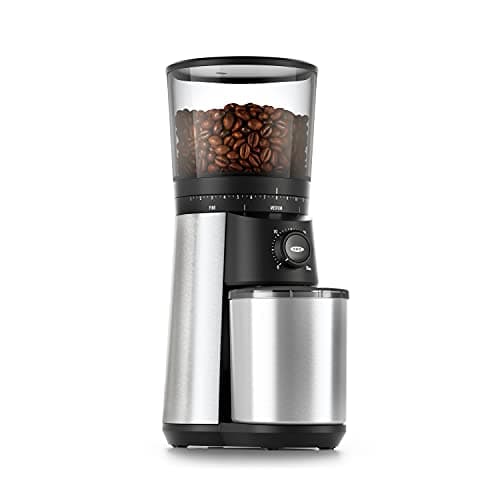
    OXO OXO Brew Conical Burr Grinder
    OXO Brew Conical Burr Grinder

    The budget electric that is genuinely easy to live with: a small stainless conical burr, a one-touch timer and a compact body that does not dominate a kitchen, acoustically or otherwise.

    6.7Best budget electric

#ad · Live prices from the Amazon Product API, as of November 2, 2026. Where we have no verified live price, we show none — a gap beats a number that has rotted.

In detail

The picks, in full

01
Timemore Timemore Chestnut C3 ESP

Best overall for quiet — and the value pick

Timemore Chestnut C3 ESP

Stainless S2C conical burrEspresso-capable fine rangeAluminum bodyEspresso to French press
7.9/10

The quietest grinder most people should actually buy: no motor at all, stainless burrs that reach espresso fineness, and a price that undercuts every electric here.

Grind consistency
7.5
Adjustment range
7.5
Portability
8
Build
7.5
Value
9

Pros

  • No motor, so no whine and no vibration transmitted into the countertop
  • Stainless steel burrs grind faster and more consistently than budget ceramic
  • The ESP version reaches espresso fineness, unusual at this price
  • Clean, compact build that feels well above its cost

Cons

  • Internal adjustment is less convenient to read than an external dial
  • Capacity and speed trail the premium 1Zpresso grinders
  • Grinding a large filter dose by hand gets old fast

Don't buy this if…

…you want the fastest grinding and the easiest repeatable adjustment — the pricier 1Zpresso pair are quicker and simpler to dial.

Who it is for: anyone whose real problem is a thin wall or a sleeping household, and who makes one or two drinks at a time. Its specs and scores here are reused verbatim from our manual grinder ranking, where it wins on value — we have not re-scored it for this page, because a quiet-specific rubric would be a number we did not measure. It leads on the one axis this page is about by the only mechanism that actually works: there is nothing in it to whine.

Be clear-eyed about what you are trading. The aluminum body transmits the crack of the beans to your hand rather than to the room, which sounds louder to youand quieter to everyone else — usually the trade people on this page want. Its listed cons are about effort and convenience rather than noise: the internal adjustment is fiddlier to read than a dial, and it grinds a dose more slowly than the 1Zpresso below. For a single espresso dose that is a non-issue. For 60g of French press grounds every morning it is a real chore, and the honest recommendation in that case is one of the electrics further down with a towel under it.

$99.00View on Amazon

Price as of November 2, 2026. Prices change — Amazon's at checkout is the one that counts.

#ad · we may earn a commission from this link to Timemore Chestnut C3 ESP

02
1Zpresso 1Zpresso J-Ultra

Best silent grinder for espresso

1Zpresso J-Ultra

Coated conical burrFine numbered adjustmentFoldable handleEspresso to pour over range
8.6/10

The silent option for espresso: fast enough that the cranking is not a chore, with numbered external adjustment that makes dialing in a shot repeatable by hand.

Grind consistency
8.5
Adjustment range
9
Portability
9
Build
9
Value
7.5

Pros

  • No motor at all — the quietest way to grind an espresso dose
  • Consistency and adjustment that rival electric grinders costing much more
  • External numbered dial makes returning to an espresso setting genuinely repeatable
  • Grinds a dose faster than cheaper hand mills, which is the main objection to manual

Cons

  • You are still grinding by hand every single morning
  • Costs more than two of the electric grinders on this page

Don't buy this if…

…you grind large filter doses — a hand grinder is pleasant for 18g and tedious for 60g, and no amount of burr quality changes that.

Who it is for:the espresso drinker in an apartment. Espresso is the best possible case for a hand grinder: the dose is small, you only do it once or twice a day, and the result is a fine grind that a good hand mill produces as well as most electrics. The J-Ultra adds the thing that makes manual espresso tolerable — an external numbered dial, so you can return to the setting that worked yesterday instead of counting clicks blind. Scores and specs are carried over unchanged from our 1Zpresso J-Ultra review. Its honest cost on this page is money and arm: it is pricier than both the Encore and the OXO, and it is still a crank every morning. If the quiet matters more than the thirty seconds, that is a good trade — but decide that now rather than after it arrives.

$199.00View on Amazon

Price as of November 2, 2026. Prices change — Amazon's at checkout is the one that counts.

#ad · we may earn a commission from this link to 1Zpresso J-Ultra

03
Fellow Fellow Ode Gen 2

Best quiet electric grinder

Fellow Ode Gen 2

64mm flat burrSingle-dose loadingVery low retentionBrew-only range
7.6/10

The quietest electric here, and the only grinder in this group whose manufacturer makes a published noise claim — 64mm burrs also mean a short grind, which shortens the problem independently.

Grind consistency
9
Adjustment range
5.5
Retention
8.5
Build
8.5
Value
6.5

Pros

  • Fellow publishes an explicit noise claim: 'engineered to reduce grind noise'
  • 64mm flat burrs clear a dose quickly, so the noise lasts a shorter time
  • Heavy aluminum body rather than a resonant plastic shell
  • Single-dose design with a magnetic catch cup and near-zero retention

Cons

  • Does not grind fine enough for espresso — Fellow designed it for filter only
  • Premium price for a grinder that deliberately does one job
  • The noise claim is marketing, not a measurement: Fellow publishes no decibel figure

Don't buy this if…

…you want a single grinder for both espresso and filter — the Ode is a dedicated brew grinder, and forcing it toward espresso will disappoint you.

Who it is for:the filter drinker who wants to press a button, not crank a handle, and who has decided the quiet is worth real money. Three separate things point the same way here. Fellow states on its own product page that the Ode is “engineered to reduce grind noise” and lists quiet grinding as a feature — the only such claim among these five. Its 64mm flat burrs clear a dose fast, which shortens the exposure regardless of how loud it is per second. And it is a 4.6kg aluminum grinder rather than a plastic box, so less of its vibration ends up in your countertop.

The cons are the real ones, and we have added a third specifically for this page. It is brew-only — Fellow designed it that way and says so, so do not buy it hoping to push it toward espresso. It is expensive for a grinder that does one job. And the noise claim is a marketing statement with no number behind it: Fellow publishes 64mm burrs, 11 settings across 31 steps, 100g capacity and 140W, but no dB figure. We are passing the claim on, clearly labeled, not validating it. Specs and scores are unchanged from our Fellow Ode Gen 2 review.

$399.95View on Amazon

Price as of November 2, 2026. Prices change — Amazon's at checkout is the one that counts.

#ad · we may earn a commission from this link to Fellow Ode Gen 2

04
Baratza Baratza Encore

Best value quiet electric

Baratza Encore

40mm conical burr40 stepped settingsFilter and French press focusRepairable, well-supported
7.3/10

The value electric: a high-torque DC motor geared down to a few hundred burr RPM instead of a few thousand, which is the single design choice that matters most for noise.

Grind consistency
7.5
Adjustment range
6
Retention
6.5
Build
7.5
Value
9

Pros

  • Baratza's spec sheet describes a DC motor driving the burr through a gear reduction — a low-speed, lower-pitched arrangement
  • 40 settings cover everything from cold brew to fine drip cleanly
  • Excellent long-term parts and service support from Baratza

Cons

  • Not fine or precise enough for real espresso
  • Plastic housing and stepped adjustment feel basic next to pricier grinders
  • The plastic body and grounds bin resonate more than the Ode's metal — a mat helps and costs nothing

Don't buy this if…

…espresso is anywhere in your plans — the standard Encore tops out too coarse, and the Encore ESP exists for exactly that reason.

Who it is for:most people reading this page who want an electric. Baratza’s published spec sheet is unusually forthcoming about the drivetrain — a high-torque DC motor turning the conical burr through a gear-reduction transmission — and that is the arrangement that keeps burr speed in the hundreds of RPM rather than the thousands. Pitch is what carries through a wall, and this one is lower than the direct-drive alternatives at the price. What it does not have is mass: the housing and the grounds bin are plastic, which is the one place it loses to the Ode on this specific axis, and it is also the easiest thing in the world to fix with a folded towel. Specs and scores reused from our coffee grinder ranking and the Baratza Encore review. Its hard limit is unchanged and has nothing to do with noise: it does not grind fine enough for espresso.

$149.95View on Amazon

Price as of November 2, 2026. Prices change — Amazon's at checkout is the one that counts.

#ad · we may earn a commission from this link to Baratza Encore

05
OXO OXO Brew Conical Burr Grinder

Best budget electric

OXO Brew Conical Burr Grinder

Stainless conical burr15 grind settingsOne-touch timer12oz bean hopper
6.7/10

The budget electric that is genuinely easy to live with: a small stainless conical burr, a one-touch timer and a compact body that does not dominate a kitchen, acoustically or otherwise.

Grind consistency
7
Adjustment range
5.5
Retention
6
Build
6.5
Value
8.5

Pros

  • Real burr consistency for filter coffee at a genuinely low price
  • Simple timer and generous hopper make daily drip effortless
  • Compact, quiet and easy to live with on a small counter

Cons

  • Only 15 settings, so not built for the fine, precise range espresso needs
  • Static can make the grounds cup a little messy
  • Small burrs mean a longer grind than the Ode for the same dose — more seconds of noise

Don't buy this if…

…you want to make espresso — 15 coarse-leaning steps cannot reach the fineness a shot requires; pick an espresso-capable grinder instead.

Who it is for:the drip drinker on a budget who is upgrading from a blade grinder, where the jump in both cup quality and kitchen peace is the largest single improvement available in coffee. It earns its place honestly rather than impressively: “compact, quiet and easy to live with” has been in this grinder’s entry on our grinder ranking since before this page existed, so we are not inventing a virtue to fill a fifth slot. But note the con we added for this page, because it is the mechanism cutting the other way: small burrs take longer to clear a dose, so a 60g filter batch runs for noticeably more seconds than it would on the Ode. Quieter per second, louder per morning. If your household measures noise by how long it lasts, that matters.

$98.99View on Amazon

$109.9910% off

Price as of November 2, 2026. Prices change — Amazon's at checkout is the one that counts.

#ad · we may earn a commission from this link to OXO Brew Conical Burr Grinder

Four free things that cut grinder noise more than upgrading does

Do these before you spend anything. On a plastic-bodied electric they are worth more than one rung up this list.

1. Put something under it. A folded tea towel, a silicone trivet or a cheap cork mat. A hard countertop is a soundboard, and decoupling the grinder from it kills the booming low end that travels through cabinets and walls. This is the single biggest free win and it takes four seconds.

2. Move it off the corner. A grinder tucked into the junction of two walls and a worktop is sitting in a corner reflector. Six inches out into the open is less harsh to stand next to, for free.

3. Change where the grounds land. Much of what people describe as grinder noise is actually grounds machine-gunning a hard plastic bin. A metal dosing cup, a glass jar with a cloth under it, or a catch cup you hold in your hand changes the character of the sound completely.

4. Shut a door and grind at the back of the counter. Obvious, and it works. Grinding is a 10-30 second event; most of the complaints that send people to a page like this one are about where the noise goes, not how loud it is at source.

Is a hand grinder realistic every single morning?

It depends almost entirely on the dose and the grind size, and the honest answer splits cleanly by brew method:

Espresso, around 18g, one or two shots a day: yes, comfortably. A fine grind takes more force per turn, but the dose is tiny and this is the case hand grinders were made for. It is why the two manual picks lead this page.

Pour-over or AeroPress, 15-25g, one or two cups: yes. A coarser grind turns more easily than espresso, so the cranking stays light even though there is more coffee in the hopper.

French press or drip for a household, 50-70g: realistically no, not every day. This is where people quietly stop using the hand grinder after three weeks. Buy an electric and put a towel under it. We say the same thing on manual vs electric coffee grinders, and the dose numbers by brew size are in coffee to water ratio.

Quiet is not the same as slow

The intuition that a slower grinder must be a quieter one is half right, and it leads people to the wrong purchase. Low burr speed helps, because it lowers the pitch of the motor whine. Long grind durationhurts, because it extends the event. A grinder with big burrs and a geared-down motor gets you both — low pitch, short run — and that combination is why the Ode sits above the OXO here despite being the far more powerful machine. Judge the two separately when you are comparing anything not on this list.

What about the grinder built into my machine?

Most bean-to-cup and grind-and-brew machines use a small, fast conical burr in a plastic chassis, which is close to the worst case on every axis above — and you cannot put a towel under it, because it is bolted inside a machine that also has to sit level. If the grinder noise in your kitchen is coming from an all-in-one machine, there is no accessory fix: the options are to grind elsewhere or to live with it. The trade-offs of integrated versus separate grinders are set out in best espresso machines with a grinder and semi-automatic vs super-automatic machines.

Three things that will not make your grinder quieter

Grinding fewer beans. It shortens the run, which is something, but the per-second noise is unchanged and so is the startle.

Buying a bigger motor. Wattage is power draw, not pitch. A 300W grinder with geared-down burrs can be far more pleasant to live with than a 150W direct-drive one.

Pre-grinding the week’s coffee on Sunday.It solves the noise and ruins the coffee — ground coffee goes stale in days rather than weeks, which is the whole reason to own a grinder in the first place. Whole bean vs ground coffee has the mechanism. If the noise is genuinely unworkable at your hour, grind by hand instead.

Keep the burrs clean, for noise as well as taste

Oil and fines build up on burrs and in the chute, and a loaded grinder works harder, runs longer and sounds rougher than it did new. It is a half-hour job a couple of times a year and it is free: how to clean a coffee grinder.
How we picked

We did not lab-test this gear

Everyone in this category says they tested twenty machines. We have not lab-tested any of these, and we say so. What we did instead: compiled the published manufacturer specifications, read the manuals, ran the math where there was math to run (heat-up time, pressure, dose capacity, grind range, cost per cup), and scored each pick against a published rubric. The scores are judgments from documented research — not measurements we took, because we do not have a lab and we will not pretend we do. Where a number came from someone else's work, we name them in Sources.

Questions

Frequently asked

What is the quietest type of coffee grinder?
A manual hand grinder, by a wide margin and for a structural reason: it has no motor, so the only noise it makes is beans fracturing. Among electrics, the quietest designs pair a DC motor through a gear reduction — which turns the burrs at a few hundred RPM instead of a few thousand — with a heavy, damped body and large burrs that finish the dose quickly.
How many decibels is a coffee grinder?
We are not going to give you a number. None of the manufacturers of the grinders on this page publishes a dB rating, and we do not have a sound lab — so any figure here would be invented or lifted from a phone app at an unstated distance. What we can tell you is which design choices make a grinder loud, which is what the ranking above is built on.
Are burr grinders quieter than blade grinders?
Generally yes, and the mechanism is simple: a blade grinder spins a blade at very high speed inside a thin metal cup, which is a resonant chamber driven at a high frequency, and it needs twenty or thirty seconds to do a job it never does well. A burr grinder turns much more slowly and finishes sooner. The grind quality difference is the bigger reason to switch — see burr vs blade grinders.
Will a mat under my grinder really help?
Yes, and it is the first thing to try. A hard countertop couples to the grinder’s housing and radiates the low-frequency part of the sound into the cabinets and the room below. A folded towel, a cork mat or a silicone trivet breaks that path. It does nothing for the crack of the beans or the motor whine, but it is free and it addresses the part of the noise that travels furthest.
Is the Fellow Ode actually quiet, or is that just marketing?
Fellow states on its own product page that the Ode Gen 2 is “engineered to reduce grind noise” and lists quiet grinding as a feature, which is a published manufacturer claim and more than any rival here offers. It publishes no decibel figure to support it. Independently of the claim, two of its specs point the same way — 64mm burrs clear a dose in a short run, and a 4.6kg aluminum body resonates less than a plastic one — which is why we rank it as the quietest electric while labelling the claim as a claim.
Does grinding coarser make less noise?
Slightly, and not in a way worth choosing your grind size over. A coarse setting puts less load on the burrs so the motor works less hard, but the beans still fracture and the run can end up a similar length. Grind for the brew method you are using — the grind size charthas the targets — and solve noise with the mat, the position and the hardware instead.

Keep reading

Receipts

Sources

We do not run a testing lab, and we do not pretend to. Where a measured number came from someone else's work, we name them and link them. Where we could not verify something, we say so on the page rather than quietly leaving it out. Read our full method.