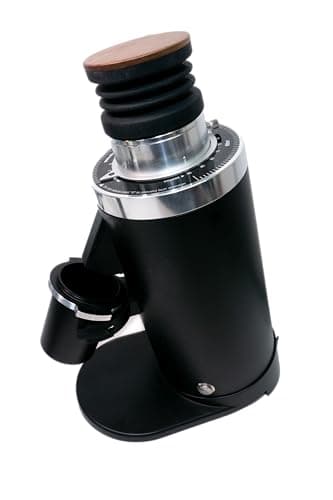
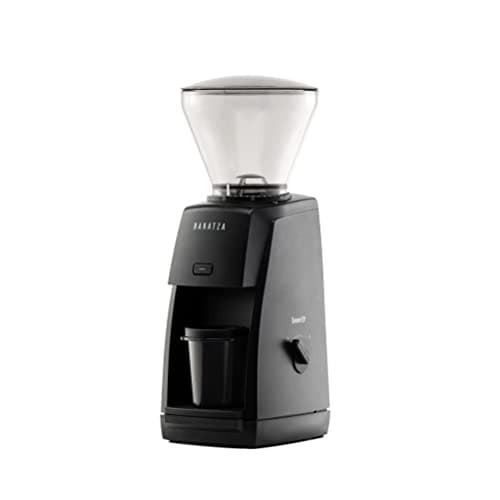
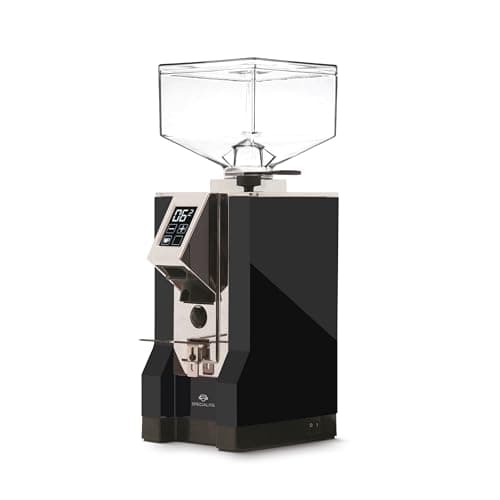
Pair a Gaggia Classic Pro with the Eureka Mignon Specialita. Its 55mm flat burrs and stepless micrometric collar give you adjustment at the resolution a 58mm commercial basket on a non-PID machine actually needs, and it is quiet enough to use at 6am. If you rotate bags instead of keeping a hopper, the DF64 Gen 2 is the single-dose answer with 64mm flats. If this is your first burr grinder and the machine has already taken the budget, the Baratza Encore ESP is the honest floor — it will dial the machine in, with steps rather than a stepless collar.
The Classic Pro is a demanding machine to feed, and not for the reason people expect. It is demanding because of what it lacks: no grinder, no PID, and no pressurized basket to hide behind once you switch to the single-wall one. Every variable the machine does not control lands on the grinder and on you. That is also why it is such a rewarding machine — but it means a grinder that would be perfectly adequate on a Bambino with a dual-wall basket will feel coarse and frustrating here.
Why the Classic Pro is harder on a grinder than most machines
A 58mm commercial basket needs a real dose. 58mm is the commercial standard, and its double baskets are built around a larger dose than the 51mm and 54mm baskets on entry machines. A bigger puck of fine coffee is more resistance for the pump to push through, which means grind size has more leverage over the shot, not less. Small grind changes move the shot further.
No PID means temperature is already a variable. The Classic Pro heats its brass boiler with a thermostat, so brew temperature drifts within a band and owners manage it by timing a flush. When one input is already moving, you want every other input nailed down — and the grinder is the input you can actually fix with money.
No dual-wall safety net, once you commit. Switch to a single-wall basket and the puck itself becomes the restriction. Now a grinder that produces boulders and dust together will channel visibly, and you will see it as a sour, fast, thin shot that no setting fixes. The mechanism is in pressurized vs non-pressurized portafilters.
You are going to mod it.Most Classic Pro owners end up adjusting the OPV, fitting a PID, or both, which narrows the machine’s own variability further and makes grinder resolution the remaining limit. Buying a grinder you will outgrow in six months is the most common regret with this machine.
The one specification that matters most: adjustment resolution
A stepped grinder moves in fixed clicks. A stepless grinder rotates continuously, so any grind size in its range is reachable. On the Classic Pro you will meet a coffee — usually a lighter roast — that gushes on one click and chokes on the next, and on a stepped grinder there is nothing between those two points. Stepless removes that wall. The trade is memory: stepless has no numbers to return to, so if you move off your espresso setting you rediscover it by taste. Most owners find a setting and stop touching it, which works perfectly if you drink one coffee and badly if you rotate three.
How we ranked them
On grind consistency, adjustment precision, retention, build and value, from published manufacturer specifications rather than tests we did not run. Every pick keeps the scores it already carries elsewhere on this site. The order is specific to this machine: we weight stepless or near-stepless fine adjustment and burr size above versatility, which is why this list reads differently from best espresso grinders and very differently from our Breville pairings, where a 54mm basket and a more forgiving machine change the answer.
Below are the four we would actually put next to a Classic Pro.
The four, side by side
| Grinder | Burrs | Adjustment | Workflow | Retention | Best for |
|---|
| Eureka Mignon Specialita | 55mm flat steel | Stepless micrometric | Hopper, timed dosing to portafilter | Moderate | One blend, daily shots |
| DF64 Gen 2 | 64mm flat | Fine, near-stepless | Single dose, weigh in | Very low | Rotating bags, modders |
| Eureka Mignon Notte | 50mm flat steel | Stepless micro-adjust | Hopper, doses to portafilter | Moderate | Stepless on a budget |
| Baratza Encore ESP | 40mm conical | Stepped, fine steps at espresso end | Hopper, doses to bin | Higher | First grinder, also does filter |
Flat or conical, for this machine
Flat burrs shear beans between two parallel rings and tend to produce a narrower particle distribution, which in espresso reads as clearer separation of flavors. Conical burrs crush between a cone and a ring and produce a broader spread, often described as rounder and heavier-bodied. Neither is an upgrade over the other — they are different flavor targets, and anyone telling you flats are strictly better is selling something. What is true is that the dedicated espresso grinders in this price range mostly use flats and mostly offer stepless adjustment, and on a non-PID 58mm machine that adjustment is the part worth paying for. The full argument is on conical vs flat burr grinders.
What not to buy for a Classic Pro
Any blade grinder. It makes dust and boulders simultaneously, the puck cannot resist water evenly, and the shot channels. On a single-wall 58mm basket this is not a subtle degradation — it is undrinkable. See burr vs blade grinder.
A coarse-stepped burr grinder sold for drip.The failure is specific: if the grinder cannot go fine enough to choke the machine, you can never approach the correct point from the slow side, so you cannot dial a shot in at all. “Has an espresso setting” on the dial is not the same claim as “reaches espresso fineness.”
A hand grinder, as your only grinder, if you make several drinks a day. A good hand grinder like the Timemore C3 ESP genuinely reaches espresso fineness, and grinding 18g fine by hand twice every morning gets old faster than people expect. It is a great second grinder and a questionable only grinder for this machine — see manual vs electric.
Budget order for a Classic Pro setup
If you are building the whole setup, spend in this order: grinder, 58mm tamper, 0.1g scale, knock box, then everything else. The grinder is first because it is the only component that changes whether espresso is possible; the tamper is second because diameter is the one spec that cannot be fudged. We set the full order out on Gaggia Classic Pro accessories and 58mm espresso accessories, and the machine itself is reviewed on our Gaggia Classic Pro review.
A note on dose and the 58mm basket
Because a 58mm double basket holds a larger puck than the 51mm and 54mm baskets on entry machines, it needs more coffee per shot and gives you more room to adjust dose as a variable alongside grind. That is an advantage once you own a scale and a liability before you do, because a timed grinder dose drifts as beans age and stale beans grind differently. Weigh the dose in, every time. Our coffee scale rankings cover the cheap end honestly.