Skip to content
Tamp & Pour

Roundups & reviews · Grinders

Conical vs flat burr grinders

Not a quality ranking — a flavor-profile choice with real trade-offs in heat, retention and price. Here is what actually differs, and which to buy.

By Stephen V.Updated How we review
#ad

We earn a commission when you buy through our Amazon links, at no extra cost to you. It never changes a verdict, and we say so when the cheaper product is the better buy. How this works.

This is the question people reach once they already know they want a burr grinder, and the honest answer is less dramatic than the internet suggests: neither shape is better. They produce slightly different particle distributions, which produce slightly different cups, and the differences in heat, retention, noise and price matter more day to day than the flavor difference does.

A conical burr set is a cone spinning inside a ring, with coffee falling through the gap under gravity. A flat burr set is two parallel rings facing each other, with coffee thrown outward through the gap by centrifugal force. That geometric difference is the root of everything below.

The short answer

Conicalif you want quieter, cooler, cheaper, and a rounder, heavier cup — and if espresso with body and a forgiving dial-in is the goal. Flat if you want maximum clarity and separation of flavors, and you are willing to pay more, tolerate more noise, and align burrs occasionally. For most home brewers, budget and workflow should decide this, not burr shape.

Side by side

 Conical burrsFlat burrs
GeometryCone inside a ring; gravity-fedTwo parallel rings; centrifugally fed
Particle distributionWider, bimodal — more fines alongside the main sizeNarrower, more unimodal
Typical cupRounder, heavier body, more forgivingClearer, more separated, more acidity-forward
Heat generatedLower — slower RPM, less frictionHigher — faster surface speed
RetentionUsually lowerUsually higher (grounds sit on the burr face)
NoiseQuieterLouder
Alignment sensitivitySelf-centering, forgivingSensitive — misalignment shows up in the cup
Price at equal qualityLowerHigher

The short answer

Quick picks

  • 01
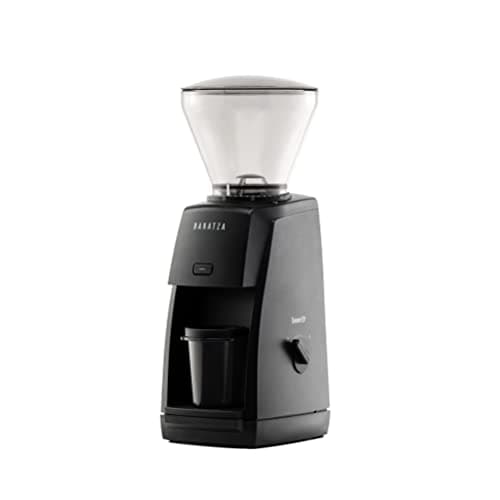
    Baratza Baratza Encore ESP
    Baratza Encore ESP

    The conical case at entry price: a 40mm conical set with an espresso-capable range, forgiving to dial and cheap to keep alive with replaceable parts.

    7.8Best conical, entry
  • 02
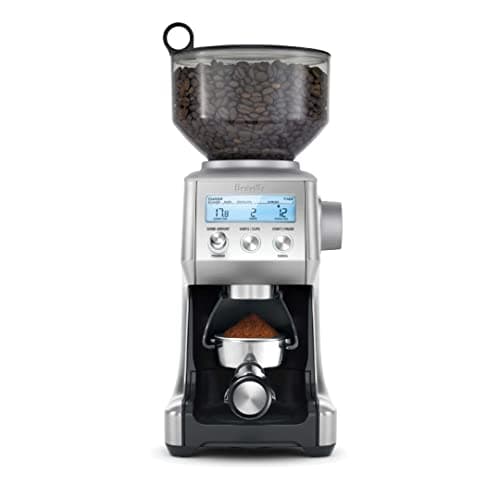
    Breville Breville Smart Grinder Pro (BCG820)
    Breville Smart Grinder Pro (BCG820)

    The conical all-rounder: stainless conical burrs, 60 settings and a dose timer, covering espresso through French press in one quiet, cheap-to-run machine.

    7.2Best conical all-rounder
  • 03
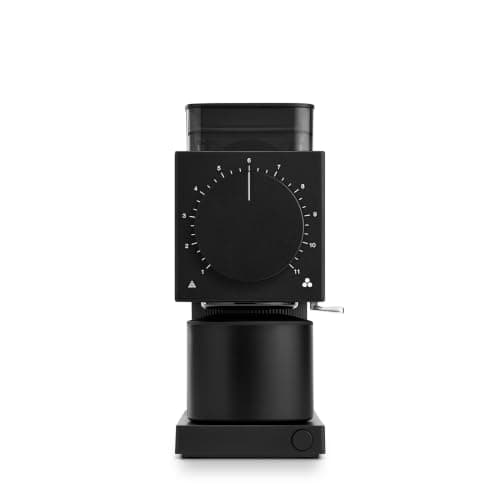
    Fellow Fellow Ode Gen 2
    Fellow Ode Gen 2

    The flat-burr case for filter: 64mm flats produce the clean, separated cup that pour-over rewards, in the quietest flat-burr grinder we would recommend.

    8.4Best flat burr for filter
  • 04
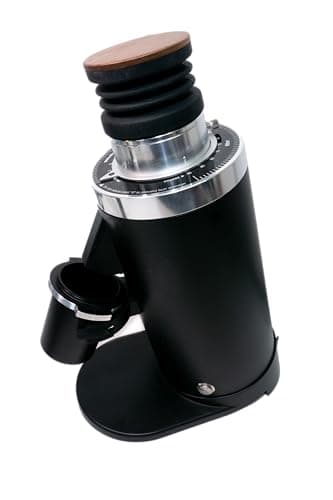
    DF64 DF64 Gen 2
    DF64 Gen 2

    The flat-burr case for espresso: 64mm flats and a stepless collar, which is the combination enthusiasts chase for clarity and precise dial-in.

    8.1Best flat burr for espresso

#ad · Live prices from the Amazon Product API, as of Sep 2, 2026. Where we have no verified live price, we show none — a gap beats a number that has rotted.

In detail

The picks, in full

01
Baratza Baratza Encore ESP

Best conical, entry

Baratza Encore ESP

40mm conical burrsEspresso-capable fine rangeStepped adjustmentFully documented parts
7.8/10

The conical case at entry price: a 40mm conical set with an espresso-capable range, forgiving to dial and cheap to keep alive with replaceable parts.

Grind consistency
7.5
Clarity in cup
7
Heat & noise
8.5
Retention
7
Value
9

Pros

  • Conical geometry is self-centering, so it needs no alignment fuss
  • Runs cool and quiet relative to flat-burr grinders
  • Repairable, with burrs and motor available as parts

Cons

  • Stepped adjustment can land espresso between two clicks
  • 40mm burrs are small — slower and less uniform than larger sets

Don't buy this if…

you want maximum clarity from light single origins — that is what flats are for.

$199.95View on Amazon

Price as of Sep 2, 2026. Prices change — Amazon's at checkout is the one that counts.

#ad · we may earn a commission from this link to Baratza Encore ESP

02
Breville Breville Smart Grinder Pro (BCG820)

Best conical all-rounder

Breville Smart Grinder Pro (BCG820)

Stainless conical burrs60 grind settingsProgrammable dose timerGrinds into portafilter or container
7.2/10

The conical all-rounder: stainless conical burrs, 60 settings and a dose timer, covering espresso through French press in one quiet, cheap-to-run machine.

Grind consistency
7.5
Clarity in cup
7
Heat & noise
8
Retention
5.5
Value
8

Pros

  • Widest range here — genuinely covers espresso to press
  • Conical burrs keep it quiet and cool through repeated doses
  • Dose timer removes a step from a rushed morning

Cons

  • Retains grounds in the chute, so single-dosing needs purging
  • Stepped settings limit espresso micro-adjustment

Don't buy this if…

you single dose different beans daily — a low-retention grinder suits that far better.

$199.95View on Amazon

Price as of Sep 2, 2026. Prices change — Amazon's at checkout is the one that counts.

#ad · we may earn a commission from this link to Breville Smart Grinder Pro (BCG820)

03
Fellow Fellow Ode Gen 2

Best flat burr for filter

Fellow Ode Gen 2

64mm flat burrs31 stepped settingsBrew-only rangeSingle dose workflow
8.4/10

The flat-burr case for filter: 64mm flats produce the clean, separated cup that pour-over rewards, in the quietest flat-burr grinder we would recommend.

Grind consistency
9
Clarity in cup
9.5
Heat & noise
8
Retention
8.5
Value
7

Pros

  • Clarity and separation in the cup that conicals do not match on light roasts
  • Unusually quiet for a flat-burr grinder
  • Single-dose design keeps retention low despite flat geometry

Cons

  • Cannot reach espresso fineness by design
  • Expensive for a grinder that only does filter

Don't buy this if…

you pull espresso. This is the clearest illustration that burr shape is not the only spec that matters.

$339.95View on Amazon

$399.9515% off

Price as of Sep 2, 2026. Prices change — Amazon's at checkout is the one that counts.

#ad · we may earn a commission from this link to Fellow Ode Gen 2

04
DF64 DF64 Gen 2

Best flat burr for espresso

DF64 Gen 2

64mm flat burrsStepless adjustmentSingle dose bellowsEspresso through filter
8.1/10

The flat-burr case for espresso: 64mm flats and a stepless collar, which is the combination enthusiasts chase for clarity and precise dial-in.

Grind consistency
9
Clarity in cup
9
Heat & noise
6.5
Retention
8
Value
8

Pros

  • Stepless collar lets you land between clicks, which flat-burr espresso genuinely needs
  • 64mm burrs clear a dose fast and stay cooler under load
  • Large aftermarket for burrs, alignment shims and upgrades

Cons

  • Loud
  • Alignment is worth checking — flat sets are sensitive to it in a way conicals are not
  • Static and chamber retention at fine settings need the bellows to manage

Don't buy this if…

you want a grinder you never think about — flats reward attention and this one expects some.

$389.00View on Amazon

Price as of Sep 2, 2026. Prices change — Amazon's at checkout is the one that counts.

#ad · we may earn a commission from this link to DF64 Gen 2

What particle distribution actually means

Grind a dose and you do not get one particle size, you get a spread. Plot that spread and conical burrs typically show two humps — a main population at your target size plus a second, smaller population of fines. Flat burrs typically show a single, tighter hump. That is the whole technical difference, and it is worth understanding what it does rather than treating one curve as better.

Fines extract faster than the main population because they have more surface area per gram. In espresso they also add resistance to the puck, which is part of why conical grinders feel forgiving to dial in and produce a heavier, rounder shot. Flats, with fewer fines, produce a cup where individual flavors sit more separately — which is exactly what you want from a light Ethiopian and arguably not what you want from a chocolatey espresso blend.

Heat, and why it matters less than people say

Flat burrs have a higher surface speed at the outer edge and generate more heat, which in extreme cases can dull aromatics. In a home setting, grinding 18g at a time, the effect is small — heat becomes a genuine issue in a cafe grinding continuously through a rush. Treat it as a tiebreaker, not a decision.

Retention and alignment: the practical differences

Flat burr sets sit horizontally, so grounds settle on the lower burr face and stay there; conical sets are vertical and gravity helps clear them. That is why flat-burr grinders almost always ship with a bellows and anti-static treatment, and why the low-retention designs in our single dose grinder ranking are mostly flats solving a problem their own geometry creates.

Alignment is the other flat-burr consideration. Two parallel rings must be genuinely parallel, or one side of the burr grinds finer than the other and your distribution widens — which undoes the clarity you paid for. Conicals are self-centering and effectively immune to this. On enthusiast flat-burr grinders, checking alignment with marker on the burr faces is a normal part of ownership.

Which shape for which drink

You mostly brewLean towardWhy
Espresso with milkConicalBody and sweetness carry through milk; forgiving dial-in
Straight espresso, light roastsFlatClarity and separation are the point of the shot
Pour-over, single originsFlatUniformity shows off distinct origin character
French press, drip, cold brewEitherImmersion blends flavors anyway; buy on price and workflow
Everything, one machine, tight budgetConicalCheaper, quieter, cooler, and forgiving across methods

What actually matters more than burr shape

Three things, all of which outrank this decision. Burr size: a 64mm conical will out-grind a 38mm flat. Adjustment precision: a grinder that cannot land on your target grind is useless regardless of geometry. Alignment and build: a well-made conical beats a poorly-aligned flat every time. If you are choosing between two grinders at the same price, compare those first — and if you are still choosing between blade and burr at all, read burr vs blade, which is the decision that actually changes your coffee.

How we picked

We did not lab-test this gear

Everyone in this category says they tested twenty machines. We have not lab-tested any of these, and we say so. What we did instead: compiled the published manufacturer specifications, read the manuals, ran the math where there was math to run (heat-up time, pressure, dose capacity, grind range, cost per cup), and scored each pick against a published rubric. The scores are judgments from documented research — not measurements we took, because we do not have a lab and we will not pretend we do. Where a number came from someone else's work, we name them in Sources.
Questions

Frequently asked

Are flat burr grinders better than conical?
Not better — different. Flats produce a narrower particle distribution and a clearer, more separated cup; conicals produce more fines, a rounder and heavier cup, and are quieter, cooler and cheaper. Choose on the coffee you drink, not on a ranking.
Which burr type is best for espresso?
Both work. Conicals are more forgiving to dial in and give a heavier shot that carries well through milk; flats give more clarity and suit light roasts and straight espresso. Burr size and adjustment precision matter more than shape.
Do flat burrs really run hotter?
Yes, because the outer edge of a flat burr has a higher surface speed. At home, grinding one or two doses at a time, the difference is small. It matters far more in a cafe grinding continuously.
Why do flat burr grinders need alignment?
Two parallel rings must be genuinely parallel or one side grinds finer than the other, widening your particle distribution and undoing the uniformity you paid for. Conical burrs are self-centering and do not have this issue.
Does burr shape matter for French press or drip?
Barely. Immersion and drip brewing blend flavors and are far more forgiving of a wider particle spread, so buy on price, capacity and workflow instead.

Keep reading

Receipts

Sources

We do not run a testing lab, and we do not pretend to. Where a measured number came from someone else's work, we name them and link them. Where we could not verify something, we say so on the page rather than quietly leaving it out. Read our full method.