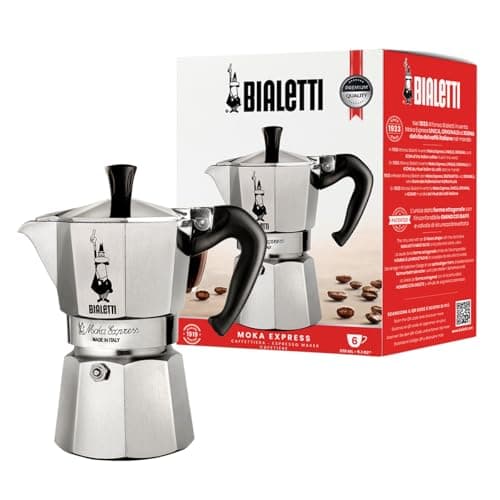
A moka pot is the cheapest way to make a strong, concentrated coffee at home, and it is the one piece of coffee gear that has not really needed redesigning since 1933. Water in the bottom chamber boils, the pressure it creates pushes that water up through a basket of finely ground coffee, and the brew arrives in the top chamber. No electricity, no filters, no moving parts.
Set the expectation correctly first, because this is where most disappointment comes from: a moka pot does not make espresso. Espresso is brewed at around 9 bars of pressure; a moka pot works at roughly 1.5 bars. What you get is a strong, syrupy, low-acid coffee somewhere between drip and espresso — excellent on its own, excellent with milk, and not a substitute for a shot. If you want actual espresso, our espresso machine ranking is the right page.
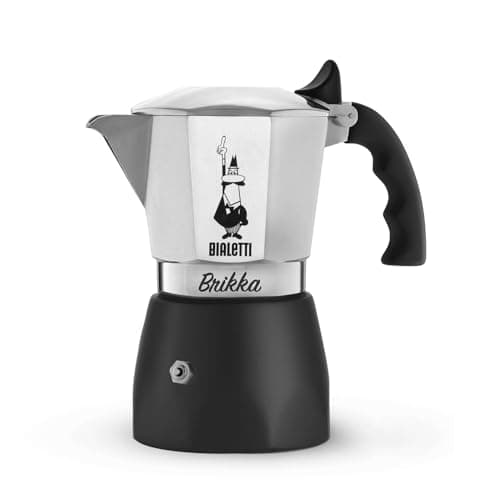
The decisions here are simple: material (aluminum is traditional and cheaper, stainless works on induction), size (moka pots must be filled to their rated capacity to brew properly), and whether you want the pressure-valve version that produces a crema-like head. The picks below cover all three.
Moka “cups” are not cups
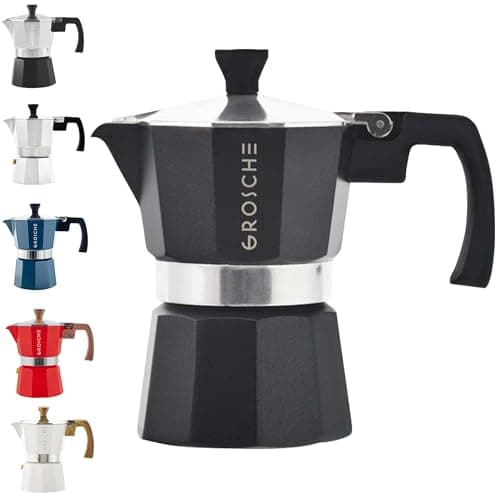
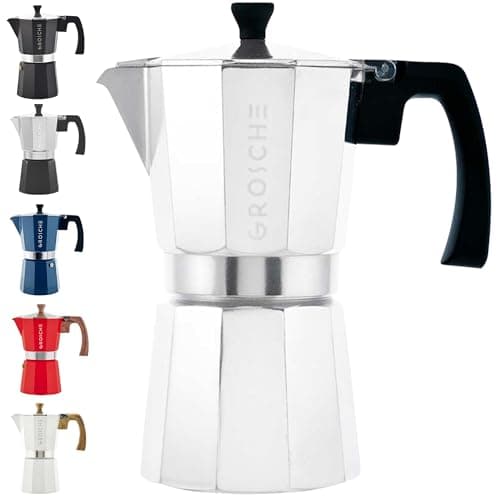
The single most common purchasing mistake is buying a 3-cup pot expecting three mugs of coffee. A moka “cup” is a small Italian serving of roughly 1.7oz of concentrated brew. So a 3-cup pot makes about 5oz total, a 6-cup makes about 9oz, and a 9-cup makes about 15oz. As a rough guide: 3-cup for one person, 6-cup for two, 9-cup for three or four, or for two people who drink milk drinks.
This matters more than usual because moka pots must be filled to their rated capacity. The water chamber is designed to be filled to just below the safety valve and the basket to be filled level; brewing half a pot changes the water-to-headspace ratio, which changes the pressure and the extraction. Buy the size you actually drink.
Aluminum or stainless?
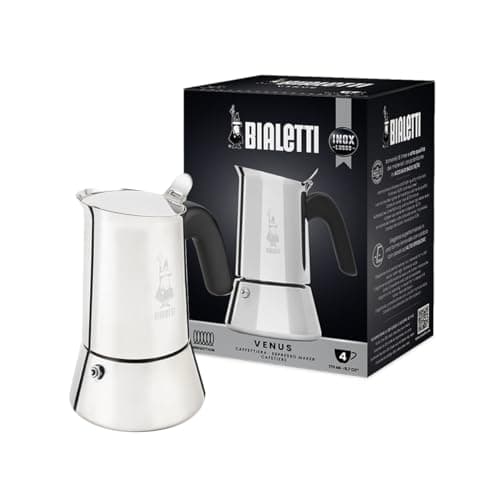
Cast aluminum is the traditional material, and it conducts heat more evenly, which makes the brew a little more forgiving. It is also cheaper, cannot go in a dishwasher, and will not work on an induction hob. Stainless steel works on every cooktop including induction, tolerates a dishwasher, and is chemically inert, so it does not add the faint metallic edge some people taste from a new aluminum pot. Stainless costs more and heats less evenly, so it wants a slightly lower flame. If your hob is induction, the decision is made for you.
How to brew a moka pot properly
Most bad moka coffee is a heat problem, not a coffee problem. Fill the bottom chamber with pre-boiled hot water to just below the safety valve — this is the single biggest improvement you can make, because it means the coffee is not sitting over a slowly heating chamber getting stewed. Fill the basket level with a fine grind, but coarser than espresso, and do not tamp it: a moka pot cannot push through a tamped puck. Assemble it with a cloth (the base is hot) and put it on a medium-low heat with the lid open.
When the coffee starts to arrive it should flow steadily, a shade of honey-brown. As soon as it lightens and starts to sputter and hiss, take it off the heat — that sputter is steam coming through the exhausted puck and it tastes burnt and bitter. Many people run the base under a cold tap for a second to stop the brew cleanly. Serve immediately; moka coffee does not improve sitting in the pot.
Grind size is the second variable
Aim for a grind noticeably finer than drip and clearly coarser than espresso — roughly table-salt texture. Too coarse and water rushes through, giving a weak, sour brew. Too fine and the pot struggles, pressure builds, and you get bitterness plus a real risk of the safety valve venting. A burr grinder makes this easy; a blade grinder makes it a lottery. Our budget grinder picks all reach moka grind comfortably.
Care: gaskets, filters and never the dishwasher
Rinse the pot with hot water and let it dry fully after every brew, and skip the detergent — soap residue in a moka pot is a persistent flavor. The rubber gasket is the wear part; it hardens and shrinks over about a year of regular use and starts to leak steam from the seam, at which point replace it (they cost a few dollars). Replace the perforated filter plate if it warps. Never put an aluminum moka pot in a dishwasher: the detergent oxidizes the surface and it never looks or tastes the same again.
What to put in it, and the grind that matters more
A moka pot runs at roughly 1 to 2 bar rather than the 9 an espresso machine applies, so it cannot build much crema — which means a robusta-heavy bar blend engineered for crema gives you its harsher edge with no cushion to hide behind. A balanced medium roast is the safer buy, and the grind matters more than the bean: you want it between espresso and drip, because espresso-fine chokes the basket and turns the cup bitter. Both, with the no-tamping and take-it-off-at-the-gurgle rules, are in best coffee beans for a moka pot.