Skip to content
Tamp & Pour

Roundups · Coffee Beans

The best coffee beans for French press

Immersion brewing rewards body and blends flavors together, which makes some beans shine and others disappear. Ranked for the press specifically.

By Stephen V.Updated How we review
#ad

We earn a commission when you buy through our Amazon links, at no extra cost to you. It never changes a verdict, and we say so when the cheaper product is the better buy. How this works.

A French press is an immersion brewer with a metal filter, and both halves of that change which beans work. Immersion steeps everything together for four minutes, which blends flavors rather than separating them, so the delicate, distinct notes that make a great pour-over bean exciting tend to get muddled. The metal filter lets the coffee oils through, which adds weight and mouthfeel — and rewards beans that have body to give.

Put those together and the answer is consistent: medium to medium-dark roasts with chocolate, nut and caramel character are what a French press makes sing. Light, fruit-forward single origins are not wrong here, they are just spending their best qualities on a method that cannot show them. If bright and floral is what you want, brew it as a pour-overinstead — we explain the trade in French press vs pour over.

Every pick below is whole bean, because a French press needs a coarse grind and pre-ground coffee is almost always ground for drip — too fine, which slips through the mesh and turns the last inch of your cup to silt. The ranking weighs roast suitability, roast-date transparency and value per bag.

The short answer

Quick picks

  • 01
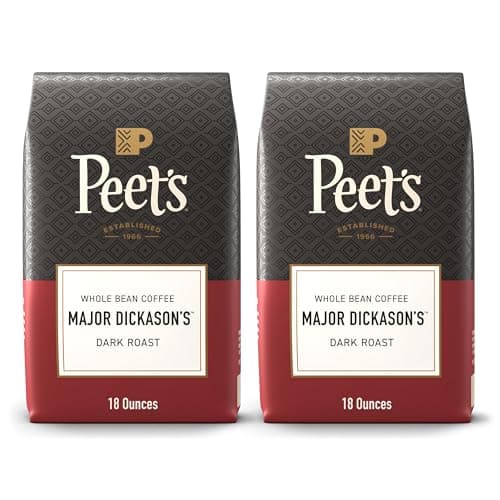
    Peet's Peet's Major Dickason's Blend
    Peet's Major Dickason's Blend

    The benchmark dark-roast blend for immersion: deep, smooth and full-bodied without the burnt edge most dark roasts carry, and available fresh almost everywhere.

    8.7Best overall for French press
  • 02
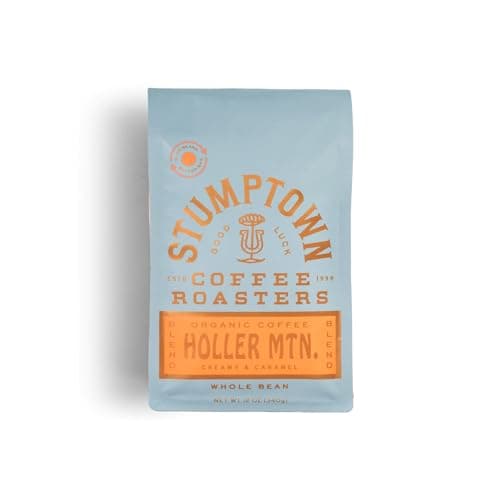
    Stumptown Stumptown Holler Mountain
    Stumptown Holler Mountain

    The specialty pick: a medium roast with a printed roast date, enough sweetness and body for the press, and enough character that you can still taste where it came from.

    8.2Best specialty option
  • 03
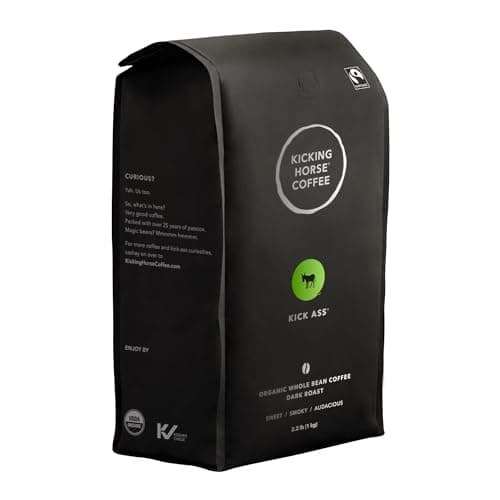
    Kicking Horse Kicking Horse Kick Ass
    Kicking Horse Kick Ass

    The heavy hitter: an organic, fair-trade dark roast with real smoky depth and enough body that it stands up to milk without disappearing.

    8.3Best dark roast
  • 04
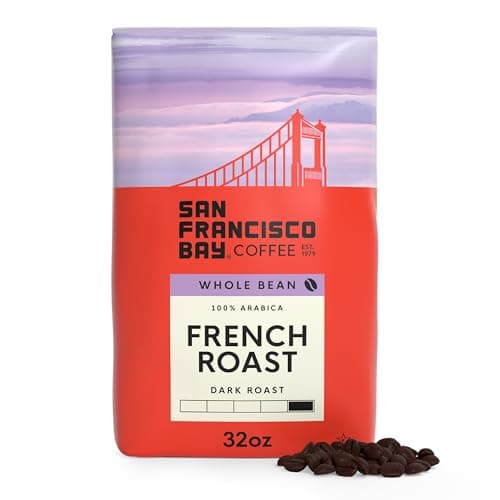
    San Francisco Bay Coffee San Francisco Bay Coffee French Roast (2 lb)
    San Francisco Bay Coffee French Roast (2 lb)

    The value play: a two-pound bag of proper French roast at a price per ounce nothing else here matches, for households that go through a press pot daily.

    8.0Best value big bag
  • 05
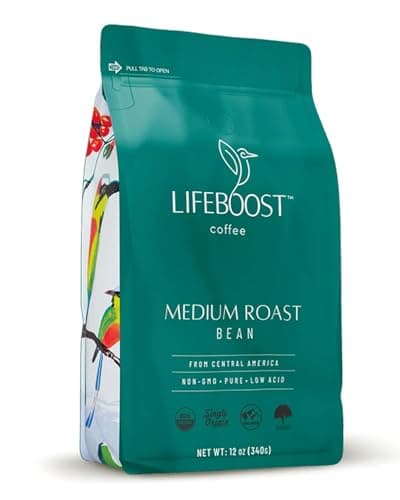
    Lifeboost Lifeboost Medium Roast
    Lifeboost Medium Roast

    The low-acid choice: a shade-grown medium roast that is gentle on the stomach while keeping enough sweetness and body to work in an immersion brew.

    7.3Best low-acid pick

#ad · Live prices from the Amazon Product API, as of Sep 2, 2026. Where we have no verified live price, we show none — a gap beats a number that has rotted.

In detail

The picks, in full

01
Peet's Peet's Major Dickason's Blend

Best overall for French press

Peet's Major Dickason's Blend

Dark roastWhole beanMulti-region blendWidely stocked and consistently fresh
8.7/10

The benchmark dark-roast blend for immersion: deep, smooth and full-bodied without the burnt edge most dark roasts carry, and available fresh almost everywhere.

Suits immersion
9.5
Body
9
Freshness policy
7.5
Consistency
9
Value
8.5

Pros

  • Full body and low acidity — exactly what a metal filter and a four-minute steep flatter
  • Rich without tasting scorched, which separates it from most supermarket dark roasts
  • Blend consistency means the bag you buy in March tastes like the one from November
  • Easy to find fresh, which matters more than a rare origin

Cons

  • Dark roast means the origin character is largely gone — this is about roast profile
  • Oily surface can clog a burr grinder if you leave beans in a hopper
  • Not interesting if you want to taste a specific farm or region

Don't buy this if…

you like bright, fruity coffee. This is deliberately deep and smooth, and no brewing change will make it taste like an Ethiopian.

$29.98View on Amazon

$31.986% off

Price as of Sep 2, 2026. Prices change — Amazon's at checkout is the one that counts.

#ad · we may earn a commission from this link to Peet's Major Dickason's Blend

02
Stumptown Stumptown Holler Mountain

Best specialty option

Stumptown Holler Mountain

Medium roastWhole beanPrinted roast date on every bagCitrus, caramel and hazelnut notes
8.2/10

The specialty pick: a medium roast with a printed roast date, enough sweetness and body for the press, and enough character that you can still taste where it came from.

Suits immersion
8
Body
7.5
Freshness policy
9.5
Consistency
8
Value
8

Pros

  • Roast date printed on the bag — the clearest freshness signal in coffee
  • Medium roast keeps some origin character while still having body for immersion
  • Sweet and balanced rather than aggressively roasty

Cons

  • Lighter body than a true dark roast, so less of the classic press weight
  • Costs more per ounce than the supermarket blends here
  • The subtler notes get partly blended away by immersion

Don't buy this if…

you want the heaviest, richest possible press cup — a darker roast gives you more of that.

$14.98View on Amazon

Price as of Sep 2, 2026. Prices change — Amazon's at checkout is the one that counts.

#ad · we may earn a commission from this link to Stumptown Holler Mountain

03
Kicking Horse Kicking Horse Kick Ass

Best dark roast

Kicking Horse Kick Ass

Dark roastWhole beanOrganic and fair-trade certifiedChocolate malt and licorice notes
8.3/10

The heavy hitter: an organic, fair-trade dark roast with real smoky depth and enough body that it stands up to milk without disappearing.

Suits immersion
9
Body
9.5
Freshness policy
6.5
Consistency
8.5
Value
8

Pros

  • Genuinely bold — this is the cup people mean when they say strong coffee
  • Organic and fair-trade certification, which not many dark roasts at this price carry
  • Holds up in a milky press coffee where lighter roasts wash out

Cons

  • Oily beans need a grinder cleaned more often
  • Some will find it too smoky; there is no subtlety here
  • No printed roast date on most bags

Don't buy this if…

you find dark roasts harsh. This is at the bold end of dark, and it does not hide it.

$43.99View on Amazon

Price as of Sep 2, 2026. Prices change — Amazon's at checkout is the one that counts.

#ad · we may earn a commission from this link to Kicking Horse Kick Ass

04
San Francisco Bay Coffee San Francisco Bay Coffee French Roast (2 lb)

Best value big bag

San Francisco Bay Coffee French Roast (2 lb)

French (very dark) roastWhole bean2 lb bagBlend of Central and South American arabica
8.0/10

The value play: a two-pound bag of proper French roast at a price per ounce nothing else here matches, for households that go through a press pot daily.

Suits immersion
8.5
Body
8.5
Freshness policy
5.5
Consistency
8
Value
9.5

Pros

  • Dramatically cheaper per ounce than specialty bags
  • Very dark roast profile is exactly what a press flatters
  • Two pounds suits a household making a full press every morning

Cons

  • A 2 lb bag takes weeks to get through, and coffee stales after opening
  • Very dark roasting flattens origin character entirely
  • No printed roast date

Don't buy this if…

you drink one cup a day. A two-pound bag will be stale long before you finish it — buy a smaller bag more often.

$30.99View on Amazon

Price as of Sep 2, 2026. Prices change — Amazon's at checkout is the one that counts.

#ad · we may earn a commission from this link to San Francisco Bay Coffee French Roast (2 lb)

05
Lifeboost Lifeboost Medium Roast

Best low-acid pick

Lifeboost Medium Roast

Medium roastWhole beanSingle-origin NicaraguanShade-grown, third-party tested
7.3/10

The low-acid choice: a shade-grown medium roast that is gentle on the stomach while keeping enough sweetness and body to work in an immersion brew.

Suits immersion
7.5
Body
7
Freshness policy
7.5
Consistency
8
Value
6.5

Pros

  • Noticeably gentle — a genuine option if acidic coffee bothers you
  • Medium roast keeps sweetness that very dark roasts burn off
  • Third-party testing and sourcing transparency are unusually well documented

Cons

  • Expensive per ounce compared with everything else here
  • Lighter body than the dark roasts, so less of the classic press weight
  • Mild profile can taste flat next to a bold blend

Don't buy this if…

you want a strong, bold cup — this is deliberately smooth and gentle, which some people read as weak.

$28.40View on Amazon

Price as of Sep 2, 2026. Prices change — Amazon's at checkout is the one that counts.

#ad · we may earn a commission from this link to Lifeboost Medium Roast

Why roast level matters more here than anywhere else

Immersion brewing is a blending process. Every ground particle sits in the same water for the same four minutes, so the flavors dissolve together and arrive as one combined impression rather than a sequence of distinct notes. That is fundamentally different from pour-over, where water passes through in stages and the cup keeps some separation. The practical result: coffees chosen for complexity get flattened, and coffees chosen for depth get amplified. Medium-dark to dark roasts, with their chocolate, nut and caramel character, are the ones that gain.

Grind coarse, and grind fresh

A French press needs a coarse grind for two reasons. First, fines slip straight through the metal mesh and end up as silt in the bottom of your cup. Second, a four-minute steep over-extracts fine particles into bitterness while the coarse ones are still going. Aim for something like coarse sea salt. Pre-ground supermarket coffee is almost always ground for drip, which is far too fine for this — which is why every pick on this page is whole bean, and why a burr grinder matters more than which bag you choose. If you are still deciding on a grinder, read burr vs blade first.

Roast dates and the freshness window

Coffee peaks roughly four to twenty-one days after roasting. Before that it is still off-gassing carbon dioxide and tastes uneven; after a few weeks the aromatics fade and it goes flat. A bag with a printed roast datelets you buy inside that window. A bag with only a “best by” date tells you nothing — it could have been roasted eight months ago. Among the picks here, Stumptown prints roast dates; the supermarket blends do not, which is the main quality gap between them.

Immersion is slightly more forgiving of an older bag than espresso is, because a long, gentle extraction does not depend on the CO2 behavior that makes stale coffee pull badly under pressure. It is still worth buying smaller bags more often rather than a large one that sits open for a month.

Ratio and technique for the press

Start at 1:15 by weight — roughly 60g of coffee per liter of water, or about 30g for a standard two-mug press. Pour water just off the boil (about 200°F), stir once to wet all the grounds, put the lid on with the plunger up, and wait four minutes. Break the crust and skim the foam if you want a cleaner cup, then press slowly. Decant immediately: coffee left sitting on the grounds keeps extracting and turns bitter within minutes, which is the single most common reason a good bag tastes bad in a press.

Storage, plainly

Keep beans in an airtight container at room temperature, away from light and heat. Do not freeze a bag you are working through — repeated condensation from taking it in and out does real damage. Do not store beans in the grinder hopper for days; they stale in the open air, which undoes the reason you bought whole bean in the first place.

How we picked

We did not lab-test this gear

Everyone in this category says they tested twenty machines. We have not lab-tested any of these, and we say so. What we did instead: compiled the published manufacturer specifications, read the manuals, ran the math where there was math to run (heat-up time, pressure, dose capacity, grind range, cost per cup), and scored each pick against a published rubric. The scores are judgments from documented research — not measurements we took, because we do not have a lab and we will not pretend we do. Where a number came from someone else's work, we name them in Sources.
Questions

Frequently asked

What roast is best for French press?
Medium-dark to dark. Immersion brewing blends flavors together and the metal filter lets oils through, so beans with chocolate, nut and caramel depth gain the most. Light, fruity roasts get muddled rather than showcased.
Can I use pre-ground coffee in a French press?
You can, but most pre-ground coffee is ground for drip and is too fine — fines pass through the mesh and leave silt, and they over-extract into bitterness during the four-minute steep. Whole bean plus a coarse grind is a much bigger upgrade than changing brands.
What is the right coffee-to-water ratio for a French press?
Around 1:15 by weight — about 60g of coffee per liter, or roughly 30g for a standard two-mug press. Go to 1:14 for a stronger cup or 1:16 for a lighter one.
Why does my French press coffee taste bitter?
Usually one of three things: the grind is too fine, the steep ran past four minutes, or the coffee sat in the press after plunging. Decant into a mug or carafe immediately after pressing — it keeps extracting otherwise.
Do I need a roast date on the bag?
It is the most useful thing on a coffee bag. Coffee peaks roughly 4 to 21 days after roasting, and a “best by” date does not tell you when that window started. French press is more forgiving of older coffee than espresso, but fresher is still better.

Keep reading

Receipts

Sources

We do not run a testing lab, and we do not pretend to. Where a measured number came from someone else's work, we name them and link them. Where we could not verify something, we say so on the page rather than quietly leaving it out. Read our full method.