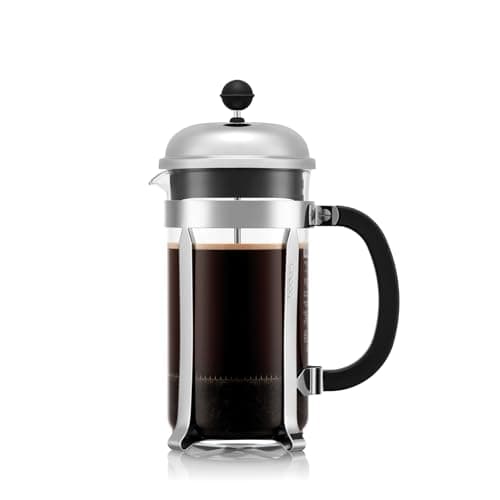
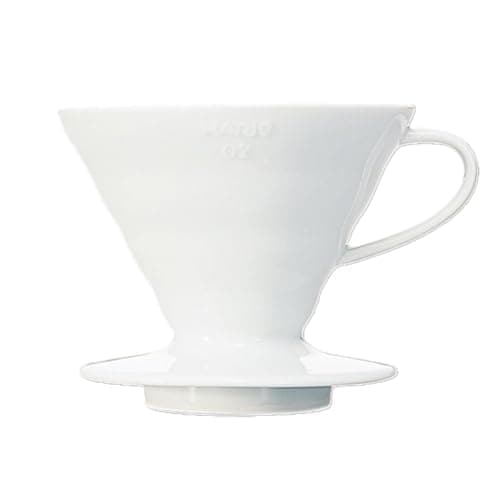
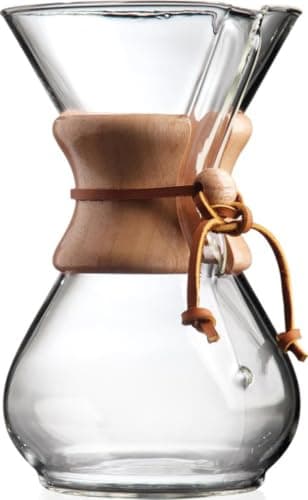
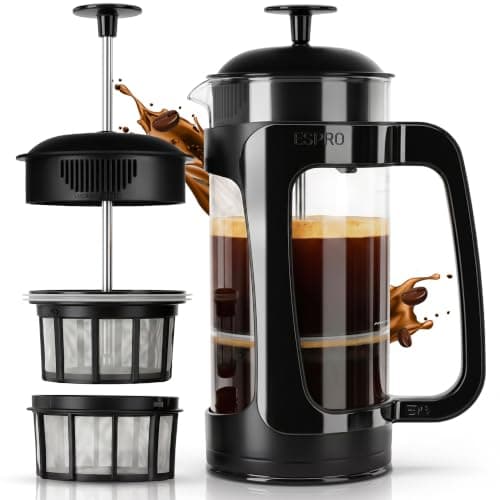
Every difference between these two methods comes from one thing: what the coffee passes through on the way out. A French press uses a metal mesh, which holds back the grounds and lets the oils and the finest particles through. A pour-over uses a paper filter, which traps both. Everything else — body, clarity, forgiveness, which beans shine — follows from that single fact.
The short answer
French press if you want a full-bodied, rich cup with minimal technique and no timing pressure, or if you are brewing for several people at once. Pour-over if you want a clean, bright cup that shows off a good single origin and you are willing to learn a four-minute routine that rewards attention.
Side by side
| | French press | Pour-over |
|---|
| Method | Immersion — grounds steep in all the water | Percolation — water passes through the bed |
| Filter | Metal mesh | Paper (usually) |
| Body | Heavy, oily, some sediment | Light, clean, no sediment |
| Clarity of flavor | Muted, blended, chocolatey | Distinct, bright, origin-forward |
| Grind | Coarse | Medium to medium-fine |
| Attention needed | Pour, wait four minutes, press | Continuous pouring for 3–4 minutes |
| Forgiveness | High — hard to ruin | Low — grind and pour both show up in the cup |
| Serves | 2–4 easily | 1–2 comfortably |
| Extra gear | Nothing | Gooseneck kettle, filters, scale |
Why the filter decides everything
Coffee contains soluble compounds (which dissolve and pass through anything), oils, and insoluble fines. A metal mesh stops the grounds and lets oils and most fines through, and those oils are what give French press coffee its weight and its slightly slick mouthfeel. Paper traps them, which is why pour-over tastes cleaner and lighter, and why the same bean can seem like two different coffees through the two methods. Neither is better; they are different instruments.
There is a health footnote worth knowing rather than worrying about. The oils that paper filters remove include cafestol and kahweol, diterpenes that have been shown to raise LDL cholesterol in people drinking large amounts of unfiltered coffee. If you drink several cups of French press or moka coffee a day and cholesterol is a concern for you, paper-filtered brewing is the conservative choice. For a cup or two a day it is not something most people need to weigh.
Match the method to the bean
French press suits medium and dark roasts — chocolate, nut and caramel notes with weight behind them. Immersion blends flavors together, so a complex light roast gets muddled rather than showcased.
Pour-over suits light and medium single origins. The clean filter and the controlled percolation let distinct notes come through separately, which is the entire point of buying an Ethiopian or a Kenyan in the first place. Brew a dark French roast through a V60 and you mostly get thin bitterness.
If you want to try both with one bag, a medium-roast Colombian or Guatemalan works honestly in either — see our single-origin picks.
Effort, honestly measured
French press: coarse grind, pour water, wait four minutes, press, serve. Total attention required is about thirty seconds spread over five minutes, and you can walk away in the middle. Pour-over: bloom for thirty seconds, then pour in slow circles for two to three minutes without stopping. You cannot walk away, and the pour rate itself is a variable in the cup. That is the real difference in daily life, and it is the reason many people own both — press on weekdays, pour-over at the weekend.
What each method needs you to buy
A French press needs a press and a burr grinder that does coarse cleanly. That is the whole list. Pour-over needs the cone, paper filters, a gooseneck kettle so you can control the stream, and a scale with a timer, because pour-over is a ratio on a schedule. Budget accordingly: the brewer is the cheapest part of a pour-over setup.
Grind matters for both, differently
French press wants a coarse grind because the grounds sit in water for four minutes and fines would over-extract and slip through the mesh. Pour-over wants medium to medium-fine, because the water is passing through rather than sitting, and too coarse a grind drains before it extracts. In both cases an even grind matters more than the exact setting — which is why a burr grinder is the one piece of gear that improves both methods at once.
How we picked
We did not lab-test this gear
Everyone in this category says they tested twenty machines. We have not lab-tested any of these, and we say so. What we did instead: compiled the published manufacturer specifications, read the manuals, ran the math where there was math to run (heat-up time, pressure, dose capacity, grind range, cost per cup), and scored each pick against a published rubric. The scores are judgments from documented research — not measurements we took, because we do not have a lab and we will not pretend we do. Where a number came from someone else's work, we name them in Sources.