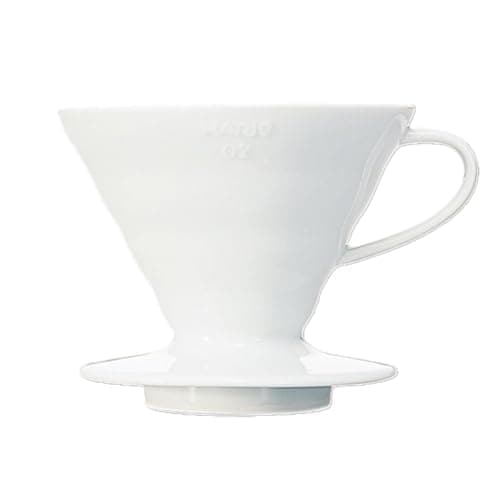
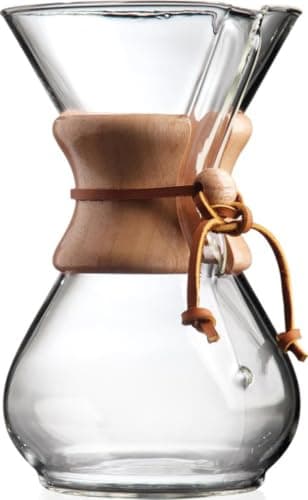
These two get compared constantly and they are not really competitors. A Chemex is a carafe and a brewer in one object, using a filter several times thicker than normal paper, designed to make multiple cups of extremely clean coffee. A V60 is a 60-degree cone with spiral ribs and one large hole, designed to give you total control over a single cup. They sit at opposite ends of the same method.
The differences that matter are structural, and there are four of them: filter thickness, drainage geometry, batch size and how much your technique changes the result. Get those straight and the choice makes itself.
The short answer
Chemex if you brew for two or more people, if you want the cleanest and lightest-bodied cup available from any method, and if you would rather the brewer forgive your pour than reward it. V60 if you brew one or two cups, if you want to taste what the coffee actually is, and if you are willing to develop a technique that will make the difference between a great cup and a hollow one.
Side by side
| | Chemex | Hario V60 |
|---|
| Filter | Thick bonded, proprietary | Standard weight, widely available |
| Drainage | Restricted by the filter | One large hole, unrestricted |
| Cup character | Very clean, light body, tea-like | Clean but more body and aroma |
| Batch size | Up to 6–8 cups | 1–2 cups |
| Grind | Medium-coarse | Medium to medium-fine |
| Forgiveness | Higher — the filter controls flow | Lower — you control flow |
| Gooseneck kettle | Helpful | Close to mandatory |
The filter is the entire difference
Chemex bonded filters are substantially heavier than standard paper, and that single fact drives everything else. The thicker paper traps more of the coffee’s oils and fine particles, which is why a Chemex cup is so strikingly clear and so light in body. It also slows drainage, which means the brewer — not your pouring technique — is setting much of the contact time. That is why a sloppy pour hurts less on a Chemex, and why a Chemex can stall completely if you grind too fine. The V60’s standard filter and open hole hand all of that back to you.
Grind differently for each
Because the Chemex restricts flow, it wants a slightly coarser grind than the V60 — medium-coarse, closer to a drip machine setting. The V60 wants medium to medium-fine, and it responds sharply to changes: one step finer can add thirty seconds of brew time. A capable burr grinder matters for both, and it matters more here than in any other brewing method because there is nothing in the process to hide behind. Start from the grind size chart and adjust by taste, and see grinders for pour-over for the hardware.
The kettle question
A gooseneck kettle is close to mandatory for a V60 and merely helpful for a Chemex. The reason is the same as everything else here: in a V60 your pour rate is the brew control, and a normal kettle spout dumps water in a wide, uncontrolled stream that disturbs the bed and creates channels. The Chemex’s thick filter absorbs some of that abuse. If you are buying a V60 without a gooseneck kettle, budget for one or buy a Chemex instead.
Cleaning and durability
The V60 is a cone; you rinse it and it is done, and the ceramic version survives being knocked about. A Chemex is a narrow-necked glass carafe that needs a bottle brush and gets cloudy with coffee oils over time; the wooden collar has to come off before it goes anywhere near a dishwasher. Neither is difficult, but the Chemex asks for slightly more care and is considerably more fragile.
Which should you buy?
If you are brewing for a household, buy the Chemex — nothing else here makes six clean cups at once, and it doubles as the serving vessel. If you brew for yourself and want to learn, buy the V60: it costs almost nothing, teaches you more about extraction than any other brewer, and rewards every improvement in your technique. And if the honest answer is that you want good coffee without standing over a kettle, a temperature-certified drip machine does this automatically and neither of these will beat it on a rushed morning.
How we picked
We did not lab-test this gear
Everyone in this category says they tested twenty machines. We have not lab-tested any of these, and we say so. What we did instead: compiled the published manufacturer specifications, read the manuals, ran the math where there was math to run (heat-up time, pressure, dose capacity, grind range, cost per cup), and scored each pick against a published rubric. The scores are judgments from documented research — not measurements we took, because we do not have a lab and we will not pretend we do. Where a number came from someone else's work, we name them in Sources.