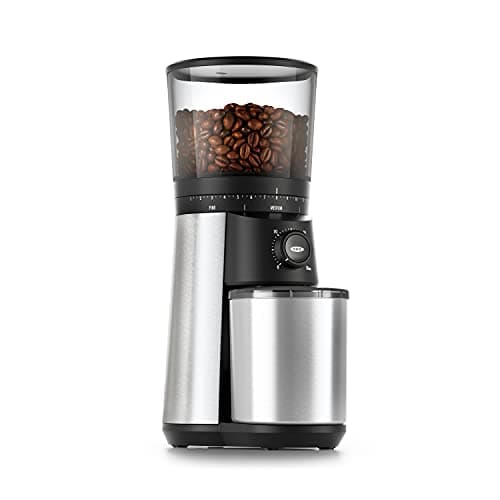
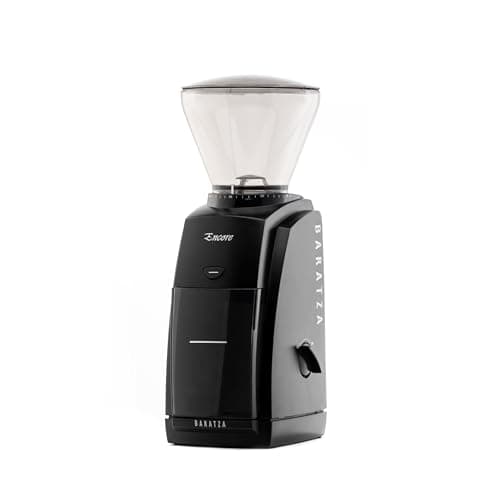
Pour-over is the brewing method that most rewards a good grinder and most punishes a bad one. The reason is drainage. Water passes through the coffee bed under gravity, and how fast it drains is set almost entirely by particle size — so a grind full of fines clogs the filter and stalls the brew, while a grind full of boulders drains before it extracts. Get the grind even and a mediocre technique still produces a good cup; get it uneven and no pouring skill rescues it.
That makes the specs to look for different from espresso. You do not need extreme fineness or hairline micro-adjustment. You need uniformity in the medium range, low fines production, and enough usable steps between medium-fine and medium-coarse that you can chase a target brew time. Burr size helps more than burr shape, though flats have a genuine clarity advantage here that is worth paying for if light single origins are your thing.
The picks below are ranked on exactly that. If you are still choosing a brewer, our pour-over ranking and gooseneck kettle picks are the other two thirds of the setup.
Why fines matter more in pour-over than anywhere else
Fines are the dust-sized particles every grinder produces alongside the target size. In immersion brewing they mostly just over-extract slightly. In pour-over they physically migrate down through the bed as water flows and pack against the filter, choking drainage. That is what a stalled V60 usually is: not a pouring mistake, but a grind producing enough fines to seal the paper.
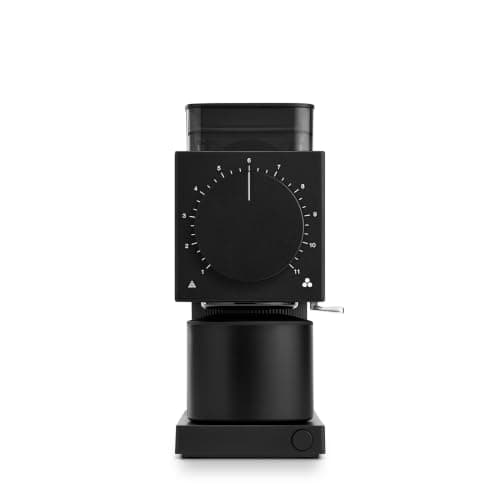
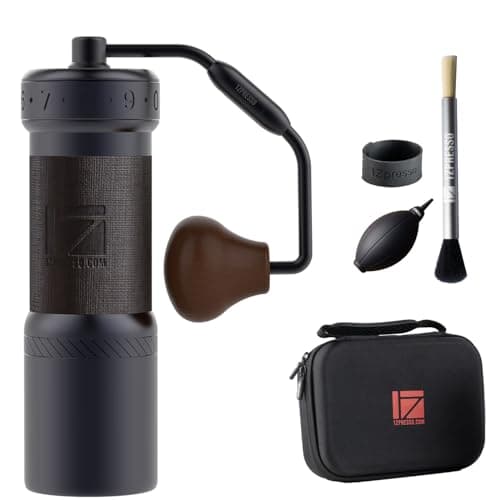
Larger burrs and flat geometry both reduce fines, which is why the Ode and the K-Ultra sit above the cheaper picks here. If your brews routinely run long and taste bitter and hollow, suspect fines before you blame technique.
Where to start on grind size
Pour-over sits between drip and French press — roughly the texture of coarse sand. Cone-shaped brewers with a single large hole (a V60) drain fast and generally want a slightly finer grind; flat-bottom brewers (a Kalita Wave) and thick-filter brewers (a Chemex) drain slower and want it coarser. Then adjust by brew time, not by taste alone: for a standard 15g dose in a V60, aim to finish draining around 2:30 to 3:00. Running long? Coarsen. Finishing early and tasting sour? Go finer.
The ratio and the routine
Start at 1:16 by weight — 15g of coffee to 250g of water is a reliable single-cup recipe. Bloom with about twice the coffee’s weight in water (30g) for 30 to 45 seconds to let trapped CO2 escape, then pour the rest in slow circles. Water at 195–205°F. None of this works repeatably without a scale with a timer, which is a $25 purchase that improves pour-over more than a $200 grinder upgrade would.
Do you need a dedicated pour-over grinder?
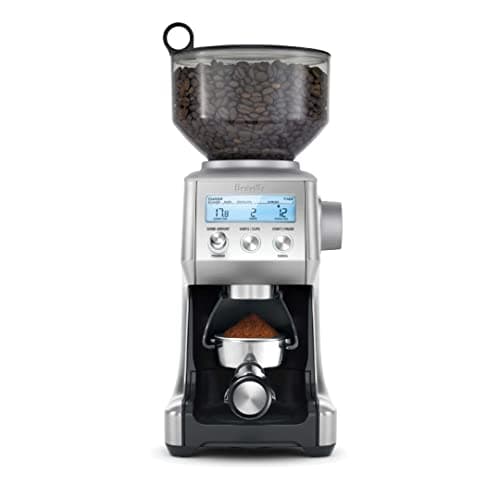
Only if pour-over is the main thing you brew and you drink light roasts. An espresso-capable all-rounder like the Smart Grinder Pro handles filter perfectly well; a filter-only grinder like the Ode simply does it better and can do nothing else. The decision is about the range of drinks in your house, not about grind quality alone — see conical vs flat burr grinders if you want the geometry argument in full.
Keep it clean or it stops being even
Coffee oils build up on burr faces and in the chute, and rancid oil both tastes bad and changes how beans feed through the burrs. Brush the chamber out every few weeks and run a grinder cleaning tablet occasionally — our grinder cleaning guide covers the routine, and the cleaning supply picks cover what to buy.
Why the French press list is not this list
Some of the same hardware appears in a different order on our press page, for a mechanical reason rather than an editorial one. A paper filter already removes fines, so here their cost is flow: they migrate down, clog the paper, stall the bed and drag contact time long. A grinder for pour-over is therefore judged on flow consistency and precision in the medium range. A metal mesh traps nothing, so a French press grinder is judged at the coarse end of its range on how few fines it makes there — which is why a brew-only flat-burr grinder leads best grinders for French press and does not lead this page.
How we picked
We did not lab-test this gear
Everyone in this category says they tested twenty machines. We have not lab-tested any of these, and we say so. What we did instead: compiled the published manufacturer specifications, read the manuals, ran the math where there was math to run (heat-up time, pressure, dose capacity, grind range, cost per cup), and scored each pick against a published rubric. The scores are judgments from documented research — not measurements we took, because we do not have a lab and we will not pretend we do. Where a number came from someone else's work, we name them in Sources.