Skip to content
Tamp & Pour

Roundups & reviews · Grinders

Fellow Ode Gen 2 review

64mm flat burrs and a single-dose workflow in a grinder the size of a toaster. The clearest specialist in home coffee — and the one that tells you outright what it will not do.

By Stephen V.Updated How we review
#ad

We earn a commission when you buy through our Amazon links, at no extra cost to you. It never changes a verdict, and we say so when the cheaper product is the better buy. How this works.

Almost every grinder sold to home coffee drinkers claims to do everything. The Fellow Ode Gen 2 does the opposite, and Fellow says so in its own documentation: the Ode is not suitable for espresso, because its 64mm flat burrs and motor are geared toward drip and immersion brewing. That single honest sentence is the most useful thing about the product, and it is why this is the easiest grinder on the site to recommend or rule out.

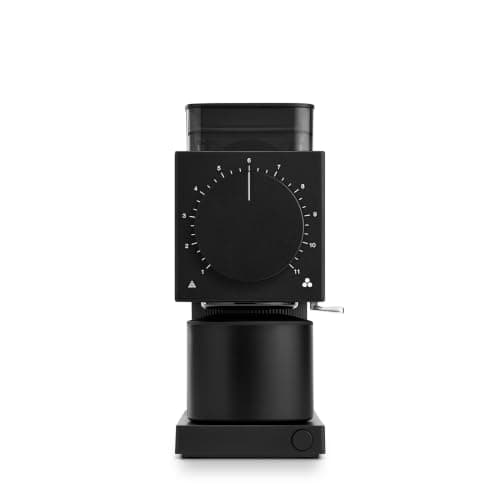
What you get in exchange for giving up espresso is a 64mm flat burr set — larger than almost anything at this price — in a single-dose body about the footprint of a toaster, with a 100g hopper, 11 settings across 31 total steps, and a two-stage burr geometry designed to produce a narrow particle distribution for filter methods.

01
Fellow Fellow Ode Gen 2

Best filter-only grinder

Fellow Ode Gen 2

64mm stainless flat burrs, two-stage geometry11 settings across 31 total steps100g single-dose hopper239 x 105 x 248mm, 10.14 lb120V, 140W — brew only, not for espresso
8.6/10

The best filter grinder for a normal kitchen: 64mm flat burrs and a two-stage geometry produce exceptionally uniform grounds for pour-over, drip and French press, in a single-dose body with almost no retention — and no espresso capability at all.

Grind consistency
9.5
Adjustment
8
Retention
9.5
Noise
8.5
Value
7.5

Pros

  • 64mm flat burrs are unusually large for a home grinder, and the uniformity shows most in pour-over, where clarity is the whole point
  • Single-dose design with a magnetic catch cup: you grind what you weigh, so beans stay in the bag and stale grounds do not accumulate
  • Very low retention, so bag-to-bag switching is genuinely clean and the first cup after a change tastes like the new coffee
  • 31 numbered steps means your setting is a number you can write down and return to — the exact thing stepless grinders cost you
  • Small on the counter and notably quiet for a 64mm flat burr grinder

Cons

  • No espresso, and this is not a limitation to work around — Fellow states the burrs and motor are geared to drip and immersion
  • 100g hopper means you weigh beans in for every batch, which is a workflow, not a convenience
  • Expensive for a grinder that covers one half of coffee
  • Stepped adjustment is repeatable but coarse compared with a stepless espresso grinder — fine for filter, which does not need micron control
  • Static can make grounds cling on very dry days; a drop of water on the beans before grinding is the standard fix

Don't buy this if…

you make espresso now or think you might within a year. There is no configuration of this grinder that pulls a good shot, and buying a second grinder later costs more than buying one that does both.

Why 64mm flat burrs matter for filter specifically. Filter brewing is percolation: water passes through a bed of coffee and drains away. Everything about how that tastes depends on whether the bed extracts evenly, which depends on how tightly the particle sizes cluster. Big flat burrs shear beans between parallel rings over a longer path than a small conical, and the result is fewer boulders and fewer fines at the same nominal setting. In a French press you might not notice. In a V60, where clarity is the entire reason you are doing it by hand, it is the difference between a cup that separates into distinct flavors and one that tastes like general coffee.

Single dosing is the workflow, not a feature.The 100g hopper is not a hopper in the traditional sense — it is a loading chamber. You weigh your beans, tip them in, grind, and the grinder empties. Nothing sits in a bin oxidizing for a week, nothing is left behind to contaminate the next coffee, and the amount you grind is the amount you weighed. For anyone who buys 12oz bags of interesting coffee and rotates them, this is the correct design and it is why the Ode feels like a specialty tool rather than an appliance.

Numbered steps beat stepless here.This is the inverse of the espresso argument. Filter grinds do not need micron-level control, and what you actually want is to write down “Ethiopian, V60, setting 6.2” and reproduce it in three weeks. 31 steps across the brew range is plenty of resolution for that and gives you an index that stepless grinders cannot.

Fellow’s espresso statement, taken at face value.Plenty of grinders are “not really for espresso” and grudgingly manage it. The Ode is not one of them: the published guidance is that the burrs and motor are geared to drip and immersion, and the practical experience matches — the fine end of its range does not go fine enough to choke a nine-bar puck properly. Treat that as a hard boundary. If you want one grinder for both, look at the espresso-capable machines in our main grinder roundup instead.

What it competes with. Against a Baratza Encore, the Ode is substantially more expensive and grinds more uniformly, with a better single-dose workflow and lower retention. Against a good hand grinder, the Ode wins on effort and batch size and loses on price and portability. Against an espresso-capable electric, it is not a competitor at all — it is a different tool for a different half of coffee.

$339.95View on Amazon

$399.9515% off

Price as of Sep 2, 2026. Prices change — Amazon's at checkout is the one that counts.

#ad · we may earn a commission from this link to Fellow Ode Gen 2

Which brew methods it is built for

Fellow lists AeroPress, pour-over, electric coffee makers, French press and cold brew, and that is an accurate description of its range. In practice the two ends of that list are where the burr quality shows most: pour-over, because clarity rewards uniformity, and cold brew, because a coarse grind with few fines avoids the muddy over-extraction that ruins long steeps. If your entire coffee life is a drip machine you fill with a scoop, this grinder is more precision than the method can use — a cheaper burr grinder gets you most of the way.

Setting numbers, and how to use them

Treat the numbered steps as a lab notebook, not a rulebook. Start at the middle of the range for pour-over, brew, then move one step at a time: coarser if the cup tastes harsh and dries your mouth, finer if it tastes sour and thin and the brew ran fast. Write each result down with the bean and the method. Two weeks of that gives you a personal chart worth more than any published one — though ours, in the grind size chart, will get you into the right neighborhood on day one.

Static, clumping and the water trick

Flat burrs generate static, and dry winter air makes it worse; the symptom is grounds clinging to the catch cup and jumping onto the counter. The universal fix costs nothing: stir a single drop of water into the beans, or spritz them lightly, before grinding. It grounds the charge and the difference is immediate. This is not a defect specific to the Ode — every flat burr grinder benefits.

Cleaning

Low retention makes this the easiest grinder here to keep clean, but oils still build on the burrs over months and stale oil flattens every cup that follows. Brush the burr chamber periodically and use cleaning tablets a few times a year; the routine is in how to clean a coffee grinder. Fellow designs the burrs to be user-accessible, which is part of what the price buys.

How we picked

We did not lab-test this gear

Everyone in this category says they tested twenty machines. We have not lab-tested any of these, and we say so. What we did instead: compiled the published manufacturer specifications, read the manuals, ran the math where there was math to run (heat-up time, pressure, dose capacity, grind range, cost per cup), and scored each pick against a published rubric. The scores are judgments from documented research — not measurements we took, because we do not have a lab and we will not pretend we do. Where a number came from someone else's work, we name them in Sources.

Questions

Frequently asked

Can the Fellow Ode Gen 2 grind for espresso?
No. Fellow states plainly that the Ode is not suitable for espresso, because its 64mm flat burrs and motor are geared toward drip and immersion brewing. It is a brew grinder by design, not a compromise you can dial around.
Is the Fellow Ode Gen 2 worth it for pour-over?
If pour-over is your main method, it is one of the strongest arguments in home coffee. The uniformity of 64mm flat burrs shows most clearly in the method that rewards clarity, and the single-dose workflow suits people buying small bags of interesting coffee.
How many grind settings does the Ode Gen 2 have?
Fellow publishes 11 settings with 31 total steps, all numbered. For filter brewing that is ample resolution, and the numbers are the practical advantage — you can record a setting and return to it exactly.
Does it hold beans in a hopper?
Only 100g, and it is a loading chamber rather than a storage hopper. The Ode is designed for single dosing: you weigh beans for one brew, grind, and the machine empties. Store the rest of the bag properly — see our storage container picks.
Fellow Ode vs Baratza Encore — which should I buy?
The Encore if budget matters or you might want espresso later with the ESP version. The Ode if filter coffee is the point, you want lower retention, larger burrs and a cleaner single-dose workflow, and you accept it will never pull a shot.
Why do the grounds stick to everything?
Static, which every flat burr grinder produces and dry air worsens. Add a single drop of water to the beans before grinding — the Ross Droplet Technique — and the clinging stops almost entirely.

Keep reading

Receipts

Sources

We do not run a testing lab, and we do not pretend to. Where a measured number came from someone else's work, we name them and link them. Where we could not verify something, we say so on the page rather than quietly leaving it out. Read our full method.