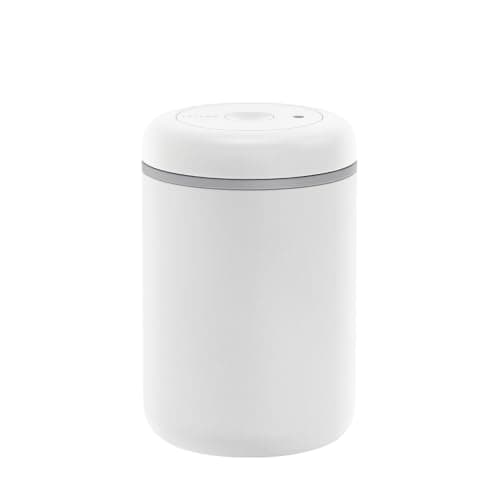
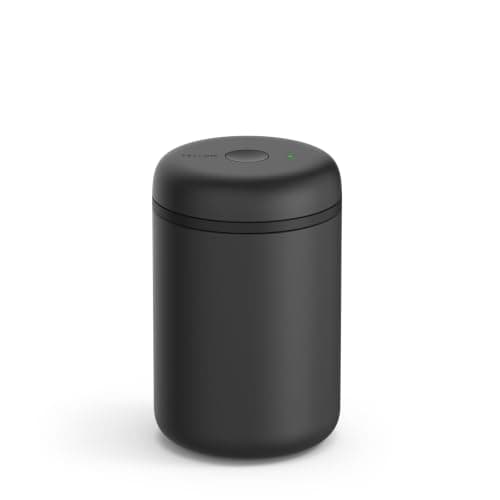
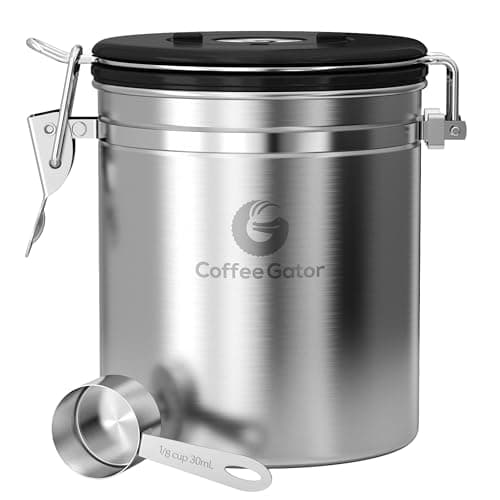
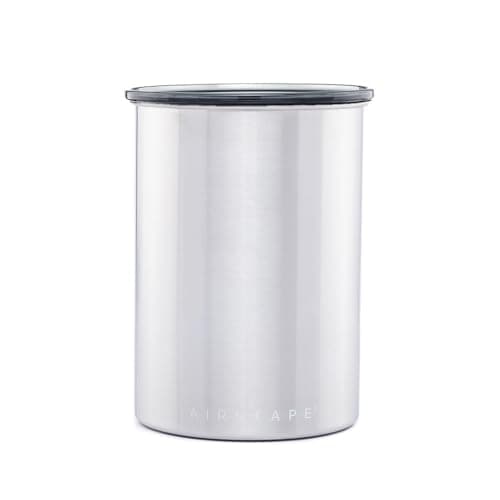
Coffee goes stale for one main reason: oxygen. Roasting fills the bean with volatile aromatic compounds and carbon dioxide; once ground or exposed, those aromatics escape and oxygen reacts with the coffee’s oils, which is what produces the flat, cardboard note in old coffee. Light and heat speed it up, and moisture is the fastest killer of all. So the job of a storage container is precise: keep oxygen away, keep light out, keep it cool, keep it dry.
Most containers do only the last two. A pretty ceramic jar with a rubber seal keeps light and humidity out and leaves a large volume of air sitting on your beans, which is exactly the problem you were trying to solve. The four containers below all attack the oxygen directly, by three different mechanisms — and it is worth knowing which mechanism you are buying, because they suit different habits.
One honest caveat before you spend anything. If you buy 12oz bags with a one-way degassing valve and finish them in two weeks, that bag is already a good container: roll the air out, clip it, keep it in a cupboard, and you have most of the benefit for free. A canister earns its money when you buy larger bags, when you buy from a roaster who packs in plain bags, or when you want the coffee visible and tidy on a counter.
The three mechanisms, and which one you need
Air purging (Airscape) pushes a plunger down onto the beans and forces the headspace air out through a valve. It is mechanical, permanent and needs no thought. Vacuum (Fellow Atmos) pulls pressure below atmospheric so there is less air in the container than the room has. It removes more oxygen and needs re-pulling as the seal relaxes. Valved passive storage (Coffee Gator, and every roaster’s own bag) lets CO2 out without letting oxygen in, but does nothing about the air already inside. Match the mechanism to your turnover: fast drinkers barely need any of it, slow drinkers and bulk buyers should pay for active removal.
Whole beans, not ground — this is the bigger lever
Grinding multiplies the coffee’s surface area enormously, and staling is a surface reaction. That is why ground coffee goes flat in a matter of minutes to hours while whole beans stay good for weeks. No container reverses it. If you are buying a canister to keep pre-ground coffee fresh, buy a burr grinder instead — the money does far more work there. The comparison is laid out in whole bean vs ground coffee.
The freezer question, answered properly
Freezing does slow staling, and it is a legitimate technique — with two conditions. Freeze in small, airtight, single-use portions, and never open a frozen container in a warm kitchen. The reason is condensation: warm humid air hits cold beans, water condenses onto them, and moisture destroys coffee faster than oxygen. Take a portion out, let it come to room temperature sealed, then open it. Repeatedly opening and refreezing one big bag is the version that ruins coffee, and it is the version most people do.
Size the container to the bag, not the counter
A half-empty canister is a canister full of air. If you buy 12oz bags, buy a container that holds roughly 12oz, not a 2.2lb showpiece — the headspace above your last few days of coffee is what stales it. This is the single most common mistake in coffee storage and it is free to avoid.
Where to keep it
A cupboard, not the counter next to the machine, and never above the stove or beside a window. Heat and light both accelerate the oil oxidation you are trying to prevent, and an espresso machine radiates heat all morning. If aesthetics mean the canister lives out in the open, buy an opaque one — that is why every pick here except the glass Atmos is steel.
How we picked
We did not lab-test this gear
Everyone in this category says they tested twenty machines. We have not lab-tested any of these, and we say so. What we did instead: compiled the published manufacturer specifications, read the manuals, ran the math where there was math to run (heat-up time, pressure, dose capacity, grind range, cost per cup), and scored each pick against a published rubric. The scores are judgments from documented research — not measurements we took, because we do not have a lab and we will not pretend we do. Where a number came from someone else's work, we name them in Sources.