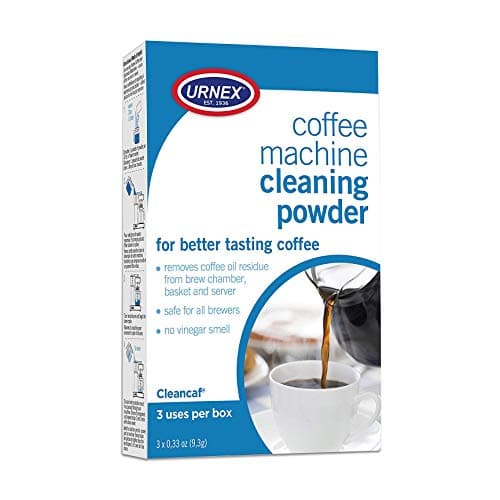
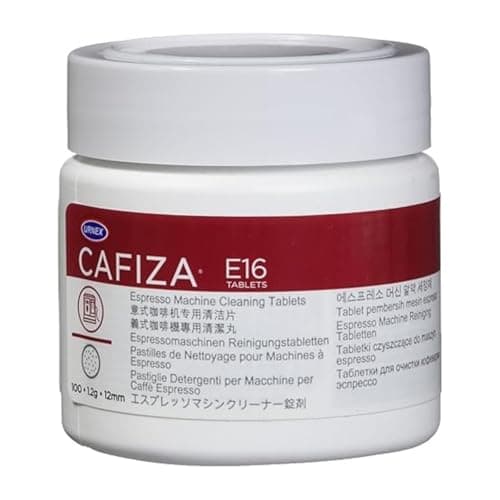
The most common reason a machine that used to make good espresso stops is not wear. It is two invisible processes: coffee oils building up behind the shower screen and in the group, where they go rancid and add a persistent bitterness to every shot; and limescale accumulating in the boiler and water paths, which makes the machine brew cooler, slower and weaker — a symptom most owners misread as the machine dying.
Both are entirely preventable with about $60 of consumables that last a year or more. This page covers the five categories that actually matter, and the buyer’s guide gives you the schedule. If your espresso has gone flat and bitter across different beans and grind settings, start here before you change anything else.
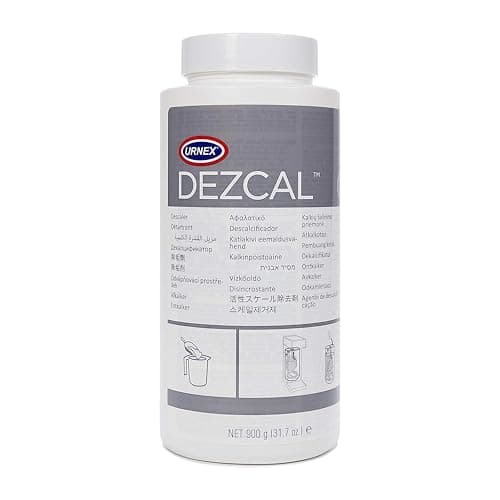
One safety note up front, because it is the most common mistake: do not use vinegar as a descaler in an espresso machine. It is weak for the job, it attacks aluminum boilers and rubber seals, and the smell lingers in the water path for weeks. Citric- or sulfamic-acid descalers formulated for coffee equipment cost a few dollars more and do not damage anything.
The schedule, plainly
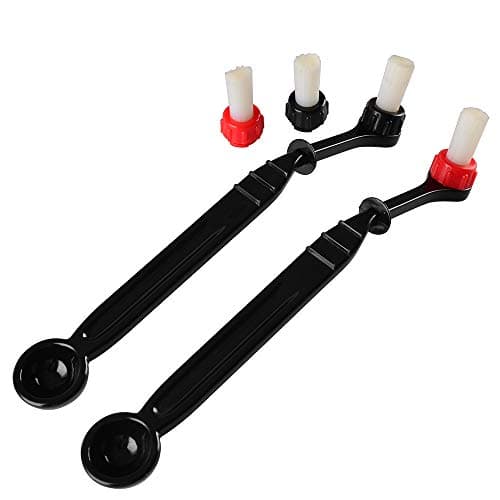
After every session: knock the puck out, rinse the basket, wipe the shower screen and gasket with the group brush, and run a two-second flush through the group. Purge and wipe the steam wand immediately — dried milk is very difficult to remove and blocks the tip.
Weekly: backflush with detergent if your machine has a three-way valve — blind basket, half a tablet, several short pump cycles, then several more with plain water to rinse. Soak the portafilter, baskets and shower screen in a detergent solution while you are at it.
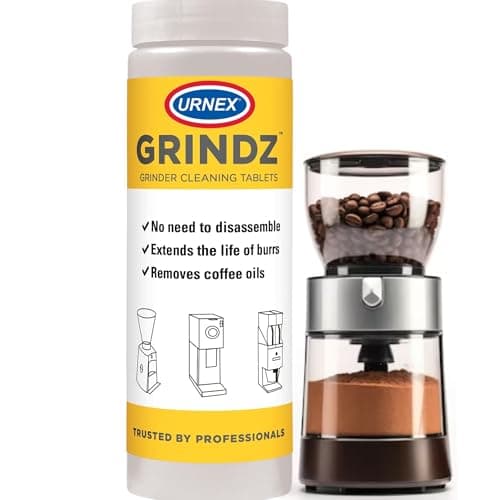
Monthly: run grinder cleaning granules through the burrs, then purge with a small dose of beans. Wipe out the bean hopper, which accumulates oil you cannot see.
Every 1–3 months, depending on water hardness: descale. Hard water may need it monthly; soft or filtered water can stretch to three or more. Most machines with a descale indicator are guessing from shot count rather than measuring scale, so treat the prompt as a floor, not a rule.
Every 6–12 months: remove and clean or replace the group gasket and shower screen. A hardened gasket is the most common cause of a portafilter that suddenly leaks, and it is a cheap part.
Backflushing: what it is and who can do it
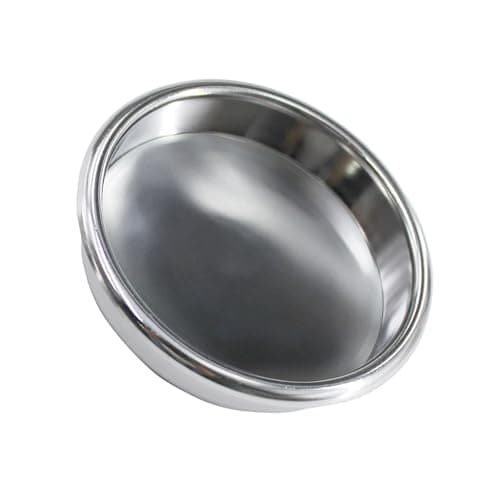
Backflushing uses a solid “blind” basket to block the portafilter, so when the pump runs, water has nowhere to go except backwards through the shower screen and out through the three-way solenoid drain. That reverse flow is what carries away the oil deposits sitting above the screen — the ones you cannot reach with a brush and that a normal shot never disturbs.
You need a three-way solenoid valve for this. Machines that have one include the Gaggia Classic Pro, most E61 machines and Breville’s larger models; many cheap thermoblock machines do not. If yours does not, do not force it — check your manual, and instead soak the portafilter and baskets and clean the screen manually.
Descaling, and the vinegar question
Scale is dissolved calcium and magnesium precipitating out of heated water onto boiler walls and inside narrow tubes. It insulates the heating element, so the machine brews cooler, and it narrows the water path, so flow drops. The symptoms — weak, sour, slow shots — are exactly what people misdiagnose as a dying pump.
Use a purpose-made descaler. Vinegar is a weak acid for this job, its acetic acid attacks aluminum boilers and rubber seals over time, and the smell persists in the water path for a long time afterwards. The few dollars a proper descaler costs is not worth arguing about against a boiler.
Better still, reduce the problem at source: filtered water dramatically extends descaling intervals. Do not use distilled or fully deionized water, though — espresso machines need some mineral content both for taste and, on many machines, for the water-level sensors to work.
What most people skip, and should not
The grinder. Burr chambers accumulate an oil film that goes rancid, and it transfers straight into the cup. If your coffee tastes stale with fresh beans, clean the grinder before you blame the roaster.
The steam wand interior. Wiping the outside is not enough — purge a burst of steam through after every use to clear milk from inside the tip, and soak the tip periodically. A blocked steam tip is the most common milk-system fault.
The drip tray and water tank. Standing water grows biofilm. Empty and wash the tray regularly, and do not leave water sitting in the tank for weeks.
A complete kit, and what it costs
Backflush tablets, a descaler, grinder granules, a blind basket and a group brush comes to roughly $85 and lasts a year or more for a typical household. Against the price of the machine it is trivial, and it is the difference between a machine that still makes good espresso in five years and one that quietly gets worse until it is replaced. If you own a portafilter machine and buy nothing else from this page, buy the backflush tablets and the blind basket.