Skip to content
Tamp & Pour

Roundups & reviews · Espresso Machines

How long do espresso machines last?

Scale kills more espresso machines than wear does, and nothing on the spec sheet tells you that. Realistic lifespans by machine type, and the four things that change them.

By Stephen V.Updated How we review
#ad

We earn a commission when you buy through our Amazon links, at no extra cost to you. It never changes a verdict, and we say so when the cheaper product is the better buy. How this works.

Expect roughly 3 to 5 years from a pod machine, 5 to 10 from a bean-to-cup super-automatic, 8 to 15 from a simple semi-automatic with a brass boiler, and effectively indefinitely from a prosumer machine with available parts. Those ranges are not fixed properties of the hardware — they are what happens with typical water and typical maintenance. The single biggest variable is limescale, and the cheapest intervention is water treatment, which is why the picks on this page are a descaler, a backflush cleaner, a water-mineral kit and a filter rather than a machine.

Nobody publishes a lifespan figure for an espresso machine, and the ones you see quoted are generally owner reports rather than manufacturer claims. What is documentable is the failure modes: which parts fail, in what order, and what accelerates them. That is a more useful thing to know than an average, because three of the four are preventable with products that cost a fraction of the machine.

What actually kills an espresso machine

1. Limescale, by a wide margin. Every time a machine heats water, dissolved calcium and magnesium precipitate out onto the hottest surfaces — the boiler wall, the heating element, the narrow passages of a thermoblock. Scale is an insulator, so the element works harder and runs hotter; it also narrows flow paths, which shows up first as weak pressure and slow filling. On a thermoblock machine the passages are small enough that scale can block them outright, and on a sealed bean-to-cup machine the repair often costs more than the machine. This is the failure that ends most domestic machines, and it is almost entirely a function of your water.

2. Pump wear. Most domestic machines use a vibratory pump rated for a duty cycle rather than continuous use. They are consumables with a long life, and on a repairable machine a pump is an inexpensive part. On a sealed machine it is frequently the end. Pumps also die early when they are made to push water through a scaled-up path, so failure mode two is often a symptom of failure mode one.

3. Seals and gaskets.The group gasket hardens with heat and loses its seal, which shows up as water escaping around the portafilter. This is routine maintenance on a machine designed for it — a gasket is cheap and the job is minutes — and a structural problem on a machine that was not. Ask whether your model’s gasket is a listed part before you assume a leak is terminal.

4. Electronics and boards. The one failure you cannot prevent. Touchscreen super-automatics have more of this surface than a machine with a mechanical switch, and board-level failures on a discontinued model are usually where a machine stops being worth repairing. It is the honest argument for a simpler machine if longevity is the goal.

Realistic lifespans by machine type

Pod and capsule machines: roughly 3 to 5 years. Small thermoblocks, limited servicing, and a price point where replacement beats repair. They are also the least affected by user error, because there is no group head to neglect.

Bean-to-cup super-automatics: roughly 5 to 10 years. A wide range, because the outcome depends almost entirely on whether the cleaning cycles and descaling prompts were obeyed. These machines have the most moving parts of any domestic type — a grinder, a brew unit, often a milk system — and they are the type where neglect most reliably shortens life. Our super-automatic maintenance guide is the routine version of this page.

Semi-automatic machines with a brass boiler: roughly 8 to 15 years, often more. A machine like the Gaggia Classic Pro is simple, mechanically serviceable and supported by parts, which is why decade-old examples are common. Thermoblock semi-automatics in the same price range generally do not last as long, because the heating path is the part scale attacks and it is not serviceable.

Prosumer and E61 machines: effectively indefinite.Heat exchangers, dual boilers and E61 groups are rebuildable, parts are catalogued, and the failure mode is “needs a service” rather than “needs replacing.” You are buying into maintenance rather than out of it.

The things that actually extend it

In order of how much life they add per dollar: treat the water, because scale is the dominant failure; descale on schedule, because treatment reduces scale rather than eliminating it; backflush weekly if your machine has a three-way valve, because coffee oil degrades the group and makes shots bitter long before anything fails; and run the machine’s own cleaning cycles when it asks, which is the one task super-automatic owners skip most.

Those four jobs map onto four products. None of them is expensive, and buying them is the difference between the bottom and the top of every range above.

The short answer

Quick picks

#ad · Live prices from the Amazon Product API, as of October 17, 2026. Where we have no verified live price, we show none — a gap beats a number that has rotted.

In detail

The picks, in full

01
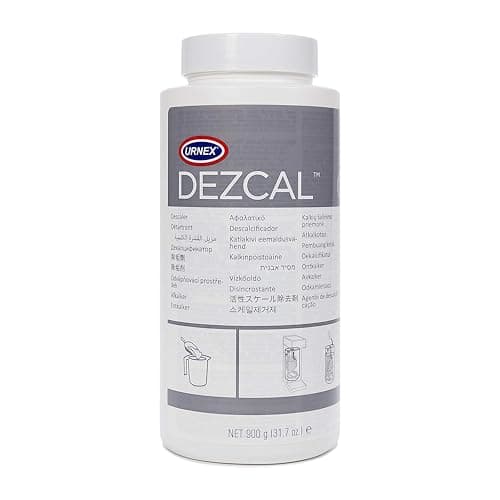
Urnex Urnex Dezcal Coffee and Espresso Machine Descaler (900g)

The one job that matters most — removing existing scale

Urnex Dezcal Coffee and Espresso Machine Descaler (900g)

900g bottle, many usesSafe for aluminum and sealsFor espresso machines, drip and pod brewersFast-acting
8.9/10

The descaler to buy: a proper activated scale remover in a bottle large enough to cover a couple of years, safe for the seals and metals vinegar would attack.

Effectiveness
9
Ease of use
7.5
Cost per use
9.5
Machine compatibility
9.5
Value
9

Pros

  • Formulated for coffee equipment, so it will not attack aluminum boilers or rubber seals the way vinegar does
  • The large bottle works out far cheaper per descale than single-use sachets
  • Works across espresso machines, drip machines and pod brewers, so one bottle covers the kitchen
  • Rinses clean without leaving a taste

Cons

  • Powder needs measuring and dissolving, which is fussier than a pre-dosed sachet
  • A 900g bottle is more than most single-machine households will use before it is a very old bottle
  • Descaling is a 30-minute job you have to actually do

Don't buy this if…

…you have very soft water and one small machine — a smaller pack or a liquid version will be less waste.

Who it is for:every machine owner, without exception. Do not use vinegar as a substitute: it is a weak acid that works slowly, it attacks aluminum and rubber, and the smell lingers in a boiler for weeks. A purpose-made descaler is designed around the metals and seals in coffee equipment. Frequency depends on your water, not on a calendar — soft water might mean twice a year, hard water every month or two, and your machine’s manual will give a hardness-based schedule. The procedure is on how to descale an espresso machine.

$29.98View on Amazon

Price as of October 17, 2026. Prices change — Amazon's at checkout is the one that counts.

#ad · we may earn a commission from this link to Urnex Dezcal Coffee and Espresso Machine Descaler (900g)

02
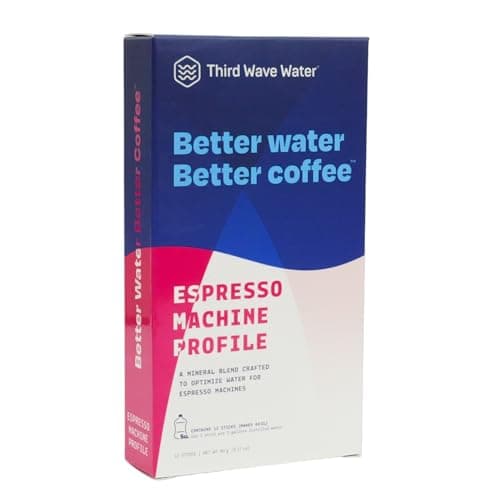
Third Wave Water Third Wave Water — Espresso Machine Profile (5 gallon sticks)

Best prevention — stops scale forming at all

Third Wave Water — Espresso Machine Profile (5 gallon sticks)

Mineral packets dosed per gallonEspresso-specific profile (lower scale risk)Requires distilled or zero-TDS base water5 gallon sticks per box
8.1/10

The most controlled answer: start from distilled or zero-TDS water with no scale-forming minerals at all, then add a measured packet that puts back exactly the mineral profile espresso wants.

Scale prevention
9.5
Taste control
9.5
Convenience
5.5
Running cost
7
Value
8

Pros

  • It is the only approach here that controls the mineral profile rather than merely reducing it — you know what is in the water
  • The espresso profile is formulated with scale in mind, which is a different target from the brewed-coffee profiles
  • Removes the guesswork of local water entirely, so your shots taste the same whether you move house or not
  • Cheap per gallon compared with the cost of descaling a machine that has furred up

Cons

  • You must buy or make distilled water, which is a recurring errand and a recurring cost
  • Dosing by the gallon means mixing in a jug rather than filling the tank from a tap
  • Genuinely soft, low-mineral water can be corrosive to some machines' internals — follow your manufacturer's guidance rather than assuming less is always better
  • An ongoing consumable rather than a one-off purchase

Don't buy this if…

…your tap water is already in the SCA range. You would be adding cost and effort to reach where you already are — test first with a cheap TDS meter.

Who it is for: anyone in a hard-water area who intends to keep the machine for years, and anyone who has already descaled a machine out of an early grave. Prevention beats removal here by a wide margin: minerals that are never in the tank cannot deposit on an element. The honest caveats are in the cons above and they matter — pure distilled water on its own is not the answer, because very low-mineral water can be aggressive to some internals and tastes flat. That is the whole reason this product adds minerals back rather than just removing them. Test your tap water first with a TDS meter before you commit to a recurring consumable.

$29.00View on Amazon

Price as of October 17, 2026. Prices change — Amazon's at checkout is the one that counts.

#ad · we may earn a commission from this link to Third Wave Water — Espresso Machine Profile (5 gallon sticks)

03
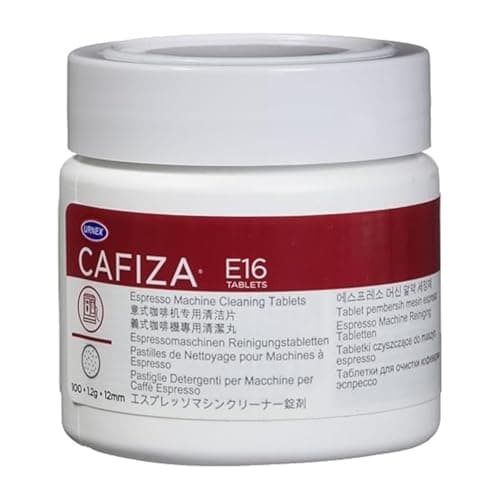
Urnex Urnex Cafiza Espresso Machine Cleaning Tablets (100 count)

Weekly upkeep — if your machine can backflush

Urnex Cafiza Espresso Machine Cleaning Tablets (100 count)

100 tabletsFor backflushing and soakingIndustry-standard formulationRinses without residue
9.0/10

The weekly habit that keeps a machine tasting new: backflush detergent tablets that dissolve the coffee oils behind the shower screen, which is where bitter, stale flavor actually comes from.

Effectiveness
9.5
Ease of use
9
Cost per use
9.5
Machine compatibility
7
Value
9.5

Pros

  • Removes the rancid oil buildup that no amount of rinsing reaches — the fix for 'my machine tastes bitter now'
  • 100 tablets is well over a year of weekly backflushing, so cost per use is tiny
  • Tablet form means no measuring and no over-dosing
  • Also works as a soak for portafilters, baskets and shower screens

Cons

  • Backflushing needs a machine with a three-way solenoid valve and a blind basket — not every machine supports it
  • Requires a thorough rinse cycle afterwards or you will taste it
  • Does nothing for limescale, which is a separate product and a separate problem

Don't buy this if…

…your machine cannot backflush (most thermoblock machines without a three-way valve). Use it as a soak for the portafilter and baskets instead, and prioritize descaling.

Who it is for:owners of machines with a three-way solenoid valve — the Gaggia Classic Pro, Breville’s Dual Boiler and Oracle, and essentially every prosumer machine. Check your manual before buying for backflushing specifically, because most thermoblock machines cannot do it and forcing the issue achieves nothing. Note what this does and does not do: it strips coffee oil from the group, and it has no effect on limescale. Two problems, two products, and conflating them is the most common maintenance mistake we see. The rest of the kit is on best espresso machine cleaning supplies.

$17.99View on Amazon

Price as of October 17, 2026. Prices change — Amazon's at checkout is the one that counts.

#ad · we may earn a commission from this link to Urnex Cafiza Espresso Machine Cleaning Tablets (100 count)

04
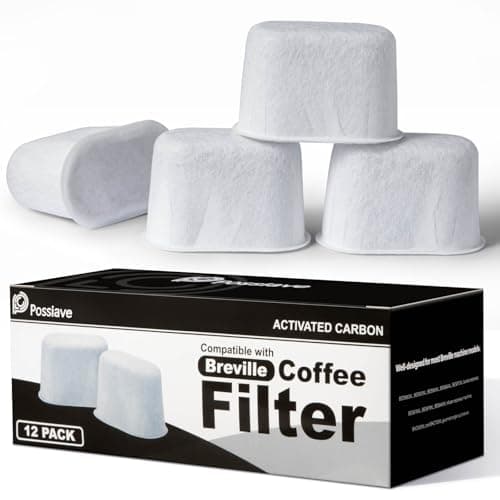
Possiave Possiave Water Filters Compatible with Breville (12 pack)

Easiest prevention — if you own a Breville

Possiave Water Filters Compatible with Breville (12 pack)

Compatible with Breville BWF100 fitment12 filters per packCharcoal and resin mediaSame 2-3 month replacement interval
7.8/10

The low-effort option: a twelve-pack of BWF100-compatible in-tank cartridges, cheap enough that you actually change them on schedule, which is the only thing that makes an in-tank filter work.

Scale prevention
6
Taste control
6.5
Convenience
9.5
Running cost
9.5
Value
9

Pros

  • Twelve filters is roughly two to three years of correct replacement intervals in one purchase
  • Cheap enough that you actually change them on time, which matters far more than brand
  • Same passive, no-habit-required operation as the original
  • Removes the main excuse for running an exhausted filter

Cons

  • Third-party media, so the exact resin performance is not published the way Breville's is
  • Fit tolerances can vary between production runs
  • Same fundamental limitation: partial softening, not water treatment
  • No published capacity figures to plan replacement precisely

Don't buy this if…

…your machine is under warranty and its terms specify manufacturer consumables — check before substituting.

Who it is for: Breville owners who want the prevention step to require no habit beyond dropping a cartridge in the tank. Be clear about what an in-tank filter does: it reduces hardness partially and improves taste, and it does not eliminate scale. An exhausted filter does nothing at all, which is why a cheap twelve-pack beats an expensive six-pack in practice — the correct filter is the one you actually replace. If your machine is still in warranty, check whether its terms require manufacturer consumables. Alternatives for other machines are on best water filters for espresso machines.

$15.95View on Amazon

Price as of October 17, 2026. Prices change — Amazon's at checkout is the one that counts.

#ad · we may earn a commission from this link to Possiave Water Filters Compatible with Breville (12 pack)

Lifespan by machine type, and what ends it

Machine typeTypical lifespanUsual failureEconomically repairable?
Pod / capsule~3–5 yearsScaled thermoblock, pumpRarely — replacement usually costs less
Bean-to-cup super-automatic~5–10 yearsBrew unit wear, scale, milk-system and board faultsSometimes, at specialist rates
Thermoblock semi-automatic~5–8 yearsScale in the heating pathLimited — the heating path is not serviceable
Brass-boiler semi-automatic~8–15 years, often moreGaskets, pump, thermostat — all replaceableYes, and cheaply
Prosumer / E61, dual boilerIndefinite with servicingNothing terminal; parts are cataloguedYes, by design

These ranges are owner-reported norms for typical domestic use, not manufacturer specifications — no maker publishes a lifespan figure, and we are not going to invent one. Treat them as the shape of the difference between types rather than a promise about any one machine.

The maintenance schedule that produces the top of each range

JobHow oftenWhy it matters
Rinse the group and wipe the steam wandEvery useStops milk and coffee residue baking on
Backflush with detergent (if three-way valve)WeeklyRemoves coffee oil from the group — the real cause of creeping bitterness
Soak portafilter and basketsWeekly to monthlyWhere visible residue lives
Replace in-tank filterEvery 2–3 monthsAn exhausted filter does nothing
DescalePer your water hardness — months, not yearsThe single biggest determinant of lifespan
Replace group gasketWhen it leaks or hardensCheap part, prevents a wet counter and a stressed pump

Three signs your machine is scaling up

Flow has dropped with no coffee in the machine. Run water through the group with no portafilter. If that is weak, the restriction is in the machine, not the puck, and scale is the first suspect. We cover the full diagnosis on why is my espresso machine not building pressure.

It takes longer to heat up than it used to. Scale on the element is an insulating layer, so the machine has to work longer to reach temperature.

The steam wand sputters or has weakened. Narrow passages scale first.

When repair stops being worth it

A reasonable rule: repair when the part is catalogued and the labour is yours or local, and replace when the fault is a board or a sealed assembly on a discontinued model. In practice that means a brass-boiler semi-automatic or a prosumer machine is almost always worth fixing, a bean-to-cup machine is worth a quote, and a pod machine is worth replacing. This is also the strongest practical argument for buying a simpler machine if you want it to last: fewer sealed assemblies, fewer boards, more catalogued parts. Our Gaggia rankings and dual-boiler rankings are where the repairable machines live.
How we picked

We did not lab-test this gear

Everyone in this category says they tested twenty machines. We have not lab-tested any of these, and we say so. What we did instead: compiled the published manufacturer specifications, read the manuals, ran the math where there was math to run (heat-up time, pressure, dose capacity, grind range, cost per cup), and scored each pick against a published rubric. The scores are judgments from documented research — not measurements we took, because we do not have a lab and we will not pretend we do. Where a number came from someone else's work, we name them in Sources.

Questions

Frequently asked

How long do espresso machines last?
Roughly 3 to 5 years for a pod machine, 5 to 10 for a bean-to-cup super-automatic, 8 to 15 or more for a simple semi-automatic with a brass boiler, and effectively indefinitely for a prosumer machine with available parts. These are owner-reported norms for typical domestic use, not manufacturer figures, and the main variable is limescale.
What kills espresso machines?
Limescale, more than anything else. It insulates the heating element, narrows flow paths and makes the pump work harder, and on a sealed machine the repair often costs more than a replacement. After that: pump wear, hardened seals, and electronics — only the last of which you cannot prevent.
How often should I descale my espresso machine?
On a schedule set by your water hardness rather than a calendar. Soft water might mean twice a year; hard water can mean every month or two. Your machine's manual will give hardness-based intervals, and a cheap TDS meter tells you where you sit.
Does using filtered water really extend an espresso machine's life?
Yes, and it is the highest-value thing you can do. An in-tank filter reduces hardness partially — provided you actually replace it. Starting from distilled or zero-TDS water and adding a measured mineral packet is the more controlled approach, because minerals that are never in the tank cannot scale the boiler.
Is it worth repairing an espresso machine?
It depends on whether the part is catalogued. Gaskets, pumps and thermostats on a simple semi-automatic are cheap and often user-replaceable, so repair wins easily. Board faults and sealed assemblies on a discontinued super-automatic usually do not, and a pod machine is almost never worth a paid repair.
Do super-automatic machines break more often?
They have more to go wrong — a grinder, a brew unit and often a milk system, plus more electronics than a mechanical machine. Their lifespan range is wide precisely because it depends on whether the cleaning cycles and descaling prompts were followed.

Keep reading

Receipts

Sources

We do not run a testing lab, and we do not pretend to. Where a measured number came from someone else's work, we name them and link them. Where we could not verify something, we say so on the page rather than quietly leaving it out. Read our full method.