Start with the grind. If your shot gushes out in ten seconds, the gauge sits low and the coffee tastes thin and sour, the machine is almost certainly working correctly and your coffee is too coarse to resist the water. Grind finer, one step at a time, until a double takes roughly 25 to 30 seconds to pour about twice the weight of the dry dose. That single change fixes the large majority of “no pressure” complaints, and it costs nothing.
The reason this is counter-intuitive is that pressure in an espresso machine is not generated by the pump alone — it is generated by the pump pushing against a restriction, and the restriction is your puck. A coarse, under-dosed or channeled puck is a hole in the system: water takes the easy route, the pump never has to work, and the gauge never rises. The machine is not failing to make pressure. Nothing is asking it to.
That also explains a confusing case worth naming early. If you have a pressurized basket — the kind with a solid floor and one pinhole, standard on budget machines — you will usually see plenty of pressure even with bad coffee, because the pinhole supplies the restriction instead of the puck. So low pressure with a pressurized basket points at the machine or a blockage sooner than it would on a machine with normal baskets. Knowing which basket you have changes the diagnosis.
Below are the causes in order of likelihood, with the test for each. Work down the list rather than jumping to the bottom — the expensive conclusions are last for a reason.
1. The grind is too coarse (most common by far)
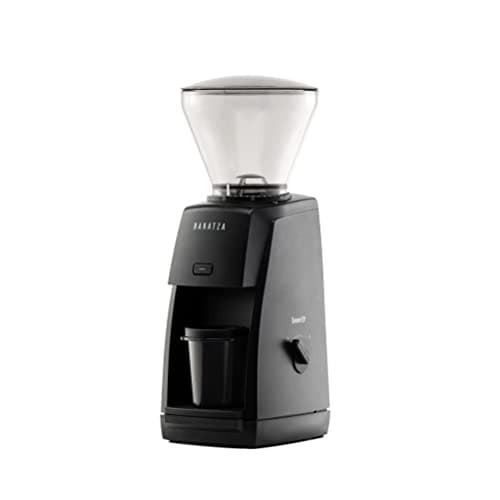
Test: pull a shot and time it. A standard modern double is about 18g in and about 36g out in 25 to 30 seconds. If you get 36g out in under 15 seconds, the grind is too coarse. Fix: go finer in small steps, one shot per step, and keep the dose the same so you are changing one variable. If your grinder cannot go fine enough before the shot still runs fast, the grinder is the problem — blade grinders and cheap low-step burr grinders frequently cannot reach espresso fineness at all.
2. The dose is too low, or the basket is the wrong size
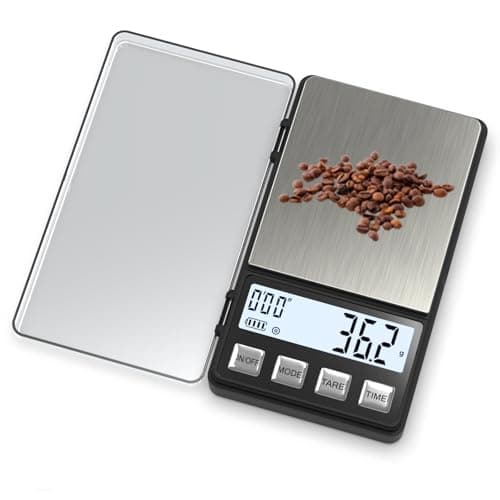
Test: weigh your dose. A basket is designed for a dose range, usually printed on the box or in the manual — commonly 7 to 9g for a single and 16 to 19g for a double. An 18g basket filled with 12g of coffee leaves headspace, the puck does not hold together under pressure, and water runs around the edges. Fix: weigh in to the basket's stated range. A 0.1g scale is the cheapest tool that removes this entire category of problem permanently.
3. Channeling — the puck is uneven, not coarse
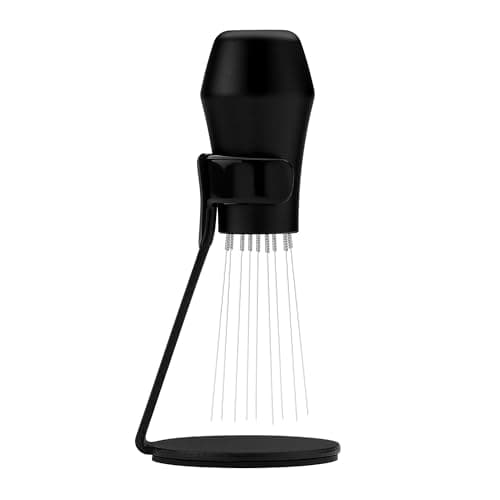
Test: pull a shot in a bottomless portafilter and watch the underside. Even extraction looks like a single converging stream; channeling sprays, jets sideways or runs pale from one spot. Fix: stir the dry grounds in the basket with a needle tool before tamping, tamp level, and stop knocking the portafilter on the counter after tamping — that cracks the puck. Clumpy grinders cause this constantly, and it is the one failure a tamper alone cannot fix.
4. Tamping problems
Test: look at the puck surface before you lock in. It should be flat and level, with no gap at the rim. A tamper that is too small for the basket leaves a ring of loose coffee at the edge, which is a guaranteed channel. Fix: use the correct diameter for your basket — our tamper size guide sets out which size goes with which machine — and tamp firmly and level rather than hard and crooked. Tamping pressure matters much less than levelness.
5. Old or stale coffee
Test: check the roast date. Fix: this one surprises people — coffee that is weeks old has lost most of its CO2, which changes how the bed behaves and how fast water moves through it, and very old coffee tends to run faster at the same grind setting. If you have changed nothing and shots suddenly run fast, a new bag of old coffee is a real suspect.
6. The pump is not primed, or the tank is not seating
Test: run hot water or the steam wand with no portafilter in. If water comes through weakly, sputters, or the pump makes a dry, high-pitched noise, the problem is upstream of the coffee. Fix: refill the tank, make sure it is pushed fully home onto its valve, and run the hot-water function for twenty to thirty seconds to purge air. Air locks after a tank runs dry are an extremely common cause of a machine that suddenly stops building pressure.
7. Scale or a blockage in the water path
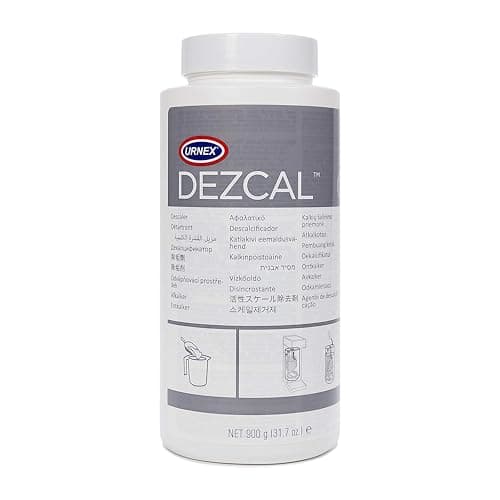
Test: compare flow with no portafilter against how the machine behaved when new, and check when you last descaled. Fix: descale. Scale restricts the narrow passages in a thermoblock and around the group, which usually shows up as slow flow and low temperature rather than low pressure — but on a machine with a pressurized basket, a partially blocked pinhole or a scaled path can read as both. Follow how to descale, then re-test.
8. A worn group gasket, or a genuinely failing pump
Test: watch where water escapes when you lock the portafilter in and start the pump. Water leaking from around the rim of the portafilter rather than through the spouts points at a hardened group gasket, which is a cheap consumable part on most machines and a normal wear item after a few years. Only after everything above has been ruled out is the pump itself a reasonable conclusion — pumps do fail, but they are the least likely cause and the most expensive guess.
Below are the four things we would actually buy to fix the common causes, in the order the list above puts them. None of them is a replacement for the diagnosis.
Symptom to cause, at a glance
| What you see | Most likely cause | First thing to try |
|---|
| Shot gushes, pale and thin, under 15 seconds | Grind too coarse | Grind finer one step at a time, same dose |
| Fast shot even at your finest grind setting | Grinder cannot reach espresso fineness | A grinder that actually goes fine enough |
| Inconsistent — one good shot, one gusher | Channeling from clumps or an uneven tamp | Stir the dry bed, tamp level, stop knocking the portafilter |
| Water escaping around the portafilter rim | Hardened group gasket, or an under-filled basket | Weigh the dose; then replace the gasket |
| Weak flow with no portafilter in at all | Air lock, tank not seated, or scale | Reseat the tank, purge via hot water, then descale |
| Pump whines dry and nothing comes out | Pump not primed after running the tank dry | Refill, run hot water 20-30 seconds to purge air |
| Low pressure with a pressurized basket | Machine-side problem or blocked pinhole | Clean or replace the basket, then test flow with no basket |
The test that separates coffee problems from machine problems
Lock an empty portafilter in — no coffee — and run the pump. Water should arrive quickly and in volume, and the gauge, if there is one, should barely move, because nothing is restricting flow. Then run the hot water outlet or the steam wand. If both are strong, the machine is making pressure and your puck is the variable. If both are weak, the problem is upstream: priming, the tank valve, the pump, or scale. Doing this before you buy anything saves most people a wasted purchase.
What a gauge is actually telling you
On machines with a gauge, read the needle during the middle of the shot, not at the start. A low reading throughout means insufficient resistance — grind, dose or channeling. A high reading with almost nothing in the cup means the opposite problem: the puck is choking, from a grind that is too fine or a dose that overfills the basket. Pressure sitting in the normal band with a bad-tasting shot is not a pressure problem at all; see why is my espresso sour or bitter. For what the figure on the box means, read 15 bar vs 20 bar.
Changing one variable at a time
The reason this problem drags on for weeks is that people change grind, dose and tamp all at once and cannot tell what helped. Fix the dose first with a scale and then leave it alone. Then move grind in single steps, one shot per step, writing down grams in, grams out and seconds. Three or four shots of that discipline will settle a machine that has been frustrating for a month.
When it is worth paying someone
A hardened group gasket is a cheap part and a ten-minute job on most machines, and it is worth doing yourself. A failed pump on a budget machine is usually not worth repairing — the labour approaches the price of the machine. On a 58mm machine with a brass boiler and a long parts life, the opposite is true: those are designed to be serviced, and a pump or a solenoid is a normal repair. That difference in repairability is one of the real arguments for buying a machine built to be fixed.