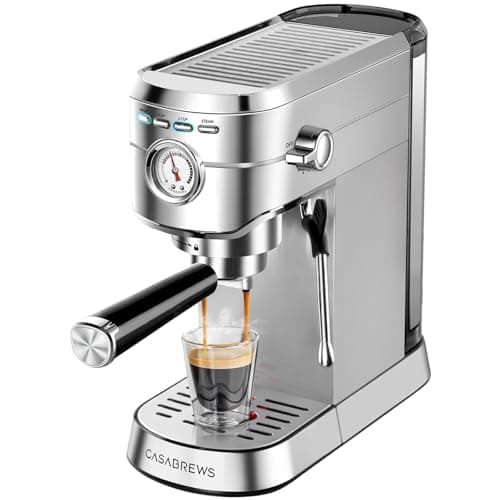
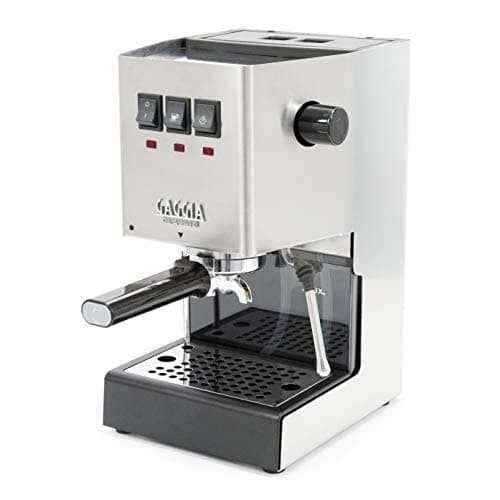
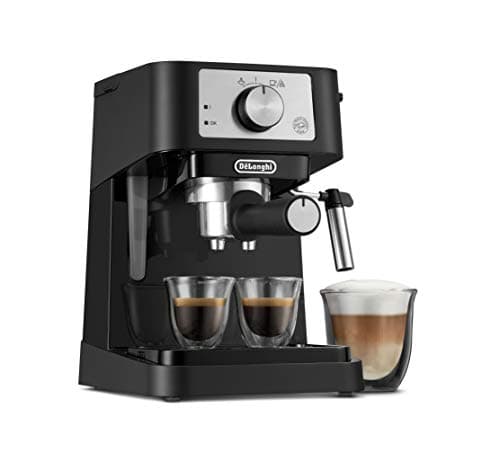
Neither is better. Buy on the basket, the steam wand and the build, and ignore the bar number entirely. Espresso is brewed at roughly 9 bar of pressure at the coffee, and both a 15-bar and a 20-bar pump exceed that comfortably — the figure on the box is the pump's maximum capability with nothing restricting it, not the pressure the puck sees. If you are choosing between two machines at the same price and one says 20 bar, that difference should not move your decision by a single dollar.
This matters because the number has become the main selling point on budget machines. Scan listings under $200 and you will see 15 bar, 20 bar and occasionally 22 bar presented as a ladder of quality. It is not a ladder. A vibratory pump in a home machine produces far more pressure than espresso needs, and in a well-designed machine a pressure-relief valve dumps the excess so that what arrives at the coffee is close to 9 bar. A machine without that regulation does not brew better coffee at 20 bar; it simply pushes harder against a restriction somewhere else in the system.
The restriction is usually the part nobody mentions in the headline. Most machines in this class ship with a pressurized basket, which has a solid floor and one pinhole. That pinhole creates back-pressure no matter how your coffee is ground, and the jet of coffee leaving it aerates into a foam that looks like crema. That is what makes a cheap machine “work” with supermarket pre-ground coffee — not the pump rating. We cover the mechanism in detail in pressurized vs non-pressurized portafilters.
So what does the bar figure tell you? Only one useful thing: that the machine has a pump capable of real extraction pressure rather than a steam-pressure design. Machines labelled 3 to 5 bar are steam-driven and cannot make espresso in any meaningful sense. Once a listing says 15 bar, the box has told you everything it is going to tell you, and the remaining questions are about the basket, the wand, the boiler and whether you will still want the machine in two years.
What the numbers actually mean
| Figure | What it describes | What it tells you about the coffee |
|---|
| 9 bar | The pressure at the coffee that defines espresso extraction | Everything — this is the target every machine is trying to hit |
| 15 bar | Pump maximum with no restriction in the circuit | Only that the machine has a real pump rather than a steam design |
| 20 bar | A higher pump maximum, still regulated down in a well-built machine | Nothing extra — headroom you never use at the puck |
| 3-5 bar | Steam-driven, not pump-driven | It cannot make espresso in a meaningful sense; avoid |
Why pumps are over-specified in the first place
A vibratory pump is a cheap, compact, reliable way to make pressure, and the versions used in home machines are rated well above what espresso needs. Manufacturers buy the pump, read its rating off the datasheet and print it on the box. A properly designed machine then fits an over-pressure valve that bleeds the excess back to the tank so the group sees something close to 9 bar. The pump rating and the brew pressure are therefore two different numbers, and only one of them is about coffee.
The three specifications that do change the cup
The basket. Pressurized or not is the single biggest fork in this price class. A pressurized basket makes bad coffee drinkable and good coffee impossible. A non-pressurized basket does the opposite: it demands a real grinder and rewards one.
The steam system. A real wand you can insert into a jug and move is a different tool from a panarello sleeve that injects air for you. If milk drinks are the point, this is the specification to read, not the pump.
Thermal behaviour. How quickly the machine reaches temperature, and whether it holds it across a shot, decides more about flavour than pressure ever will. A thermoblock that heats in seconds gets used on weekdays; a machine that needs twenty minutes gets used on Sundays.
How to tell what pressure your machine actually brews at
Two practical routes. A machine with a gauge shows you directly — watch where the needle settles during the middle of the shot, not during the first second. Without a gauge, use the shot itself: a 1:2 ratio double that takes roughly 25 to 30 seconds from a non-pressurized basket is behaving like a 9-bar extraction. If it gushes in ten seconds you are under-restricted (grind finer), and if it drips past forty you are over-restricted (grind coarser). Our guide to pulling a shot walks through the whole sequence, and why your machine is not building pressure covers the failure case.
So which should you buy?
Compare on everything except the bar rating. Between the two budget machines above, the 20-bar CASABREWS is the better buy for its gauge, shell and wand, and the 15-bar Stilosa is the better buy if brand-backed parts and service matter to you. Neither difference is caused by the pump. If you can stretch, the move that actually changes the coffee is leaving pressurized baskets behind entirely — which is a basket and portafilter decision, not a pressure one. The full budget field is ranked in best espresso machines under $200.
How we picked
We did not lab-test this gear
Everyone in this category says they tested twenty machines. We have not lab-tested any of these, and we say so. What we did instead: compiled the published manufacturer specifications, read the manuals, ran the math where there was math to run (heat-up time, pressure, dose capacity, grind range, cost per cup), and scored each pick against a published rubric. The scores are judgments from documented research — not measurements we took, because we do not have a lab and we will not pretend we do. Where a number came from someone else's work, we name them in Sources.