Under $500 is where home espresso stops being a novelty and starts being a habit. It is also the price band with the widest quality spread on this site: the cheapest machine here costs less than a third of the dearest, and the gap between them is not polish, it is whether the machine will still suit you in two years. The ranking below is built on that single question.
One warning before the picks, and it is the same warning we give on every page here: this budget has to cover a grinder. A $450 machine with a $30 blade grinder makes worse espresso than a $250 machine with a $150 burr grinder, because espresso is decided by grind consistency long before it is decided by boiler design. If $500 is your total spend, buy around $250–$300 of machine and put the rest into a real espresso grinder. If $500 is machine-only money, the top of this list is genuinely excellent.
Prices move constantly at this tier, and Amazon discounts swing several machines in and out of the bracket week to week. Every card below shows the live price at the top of this page, so if one has drifted above $500 you will see the real number rather than our claim about it.
What $500 actually buys, and what it does not
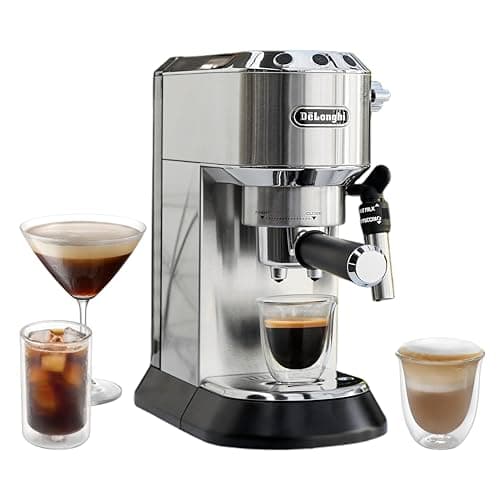
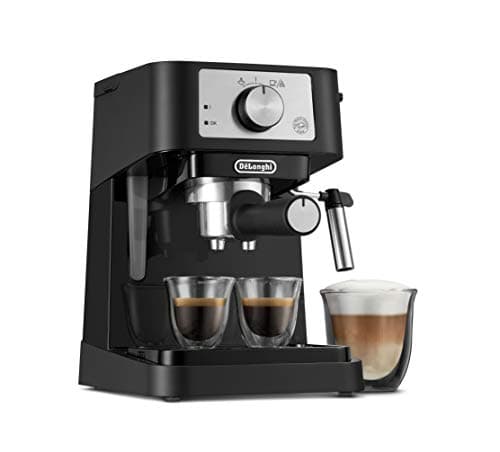
The single most useful thing to understand about this price band is the pressurized basket. Cheap espresso machines ship with a portafilter basket that has one tiny exit hole behind a second chamber; it creates artificial back-pressure so that almost any grind produces foam on top of the cup. That foam looks like crema. It is not really crema, and more importantly the basket is doing the work your grinder should be doing, which means a better grinder cannot improve your shot. Non-pressurized (sometimes called precision or single-wall) baskets have dozens of tiny holes and no cheat chamber: the puck itself creates the resistance, so grind and tamp decide the shot. Every machine on this list except the Dedica and Stilosa ships with non-pressurized baskets, and that is the real line between the top and bottom of this ranking — the mechanism is explained in pressurized vs non-pressurized baskets.
The four specs that separate these machines
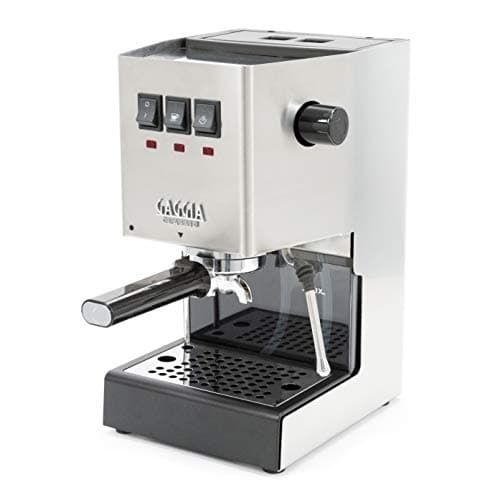
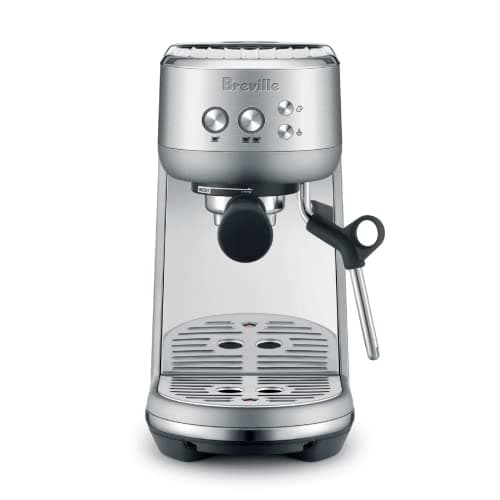
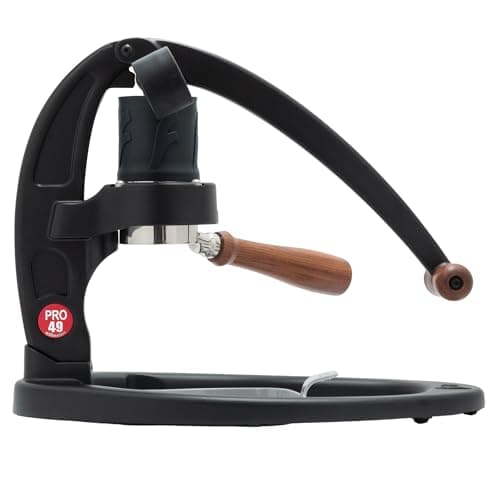
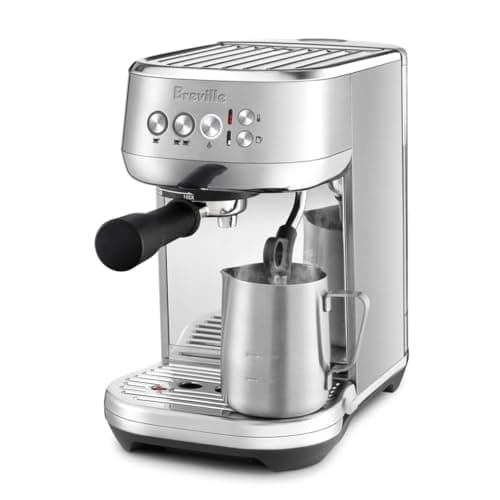
Portafilter size. 58mm is the commercial standard and only the Gaggia has it here; Breville uses 54mm, and De’Longhi and Flair use their own sizes. This matters for accessories: a 58mm machine can use any commercial basket, distribution tool or bottomless portafilter, while smaller sizes have a narrower and pricier aftermarket. It does not, by itself, make better espresso.
Heating system. A thermoblock or thermocoil heats water as it passes through, so it warms up fast and cannot pull and steam at once. A boiler holds a reservoir of hot water: slower to warm, steadier once there. Breville’s ThermoJet is a thermoblock tuned for speed, which is why the Bambinos are ready in seconds; the Gaggia has a genuine single boiler, which is why it steams with more authority once hot.
Milk system. There are three tiers under $500 and they are easy to confuse. A panarello or “cappuccino frother” (the Dedica) injects air through a sleeve and makes bubbly foam — fine on top of a cappuccino, useless for latte art. A manual steam wand (Stilosa, Bambino, Gaggia) is the real thing and rewards practice. An automatic wand (Bambino Plus) does the real thing for you and stops at a set temperature.
Temperature control. Only the Bambinos have meaningful electronic temperature management at this price. The Gaggia is famous for “temperature surfing” — timing your shot against the heating cycle — which is a real skill and the reason a PID mod is the most common upgrade owners make.
Budget the whole setup, not the machine
A realistic under-$500 espresso setup is roughly half machine, half everything else. A burr grinder that can go fine enough for espresso starts around $100 for a good manual and around $200 for a decent electric, and it is not optional — see burr vs blade grinders for why. A 0.1g scale is about $25 and is the cheapest consistency upgrade in the hobby. A tamper that matches your basket diameter is $25–$60. Fresh beans with a printed roast date are a few dollars more per bag than supermarket coffee and matter more than any of it.
Who should spend more, and who should spend less
Spend more than $500 if you make four or more milk drinks back to back — that is a dual-boiler problem and no single-boiler machine solves it — or if you want the machine to grind, dose and tamp for you. Spend less if you are not sure espresso is your drink at all: a $150 Stilosa answers that question honestly, and if the answer is no, you have lost the price of a few weeks of café coffee rather than the price of a phone.
How we picked
We did not lab-test this gear
Everyone in this category says they tested twenty machines. We have not lab-tested any of these, and we say so. What we did instead: compiled the published manufacturer specifications, read the manuals, ran the math where there was math to run (heat-up time, pressure, dose capacity, grind range, cost per cup), and scored each pick against a published rubric. The scores are judgments from documented research — not measurements we took, because we do not have a lab and we will not pretend we do. Where a number came from someone else's work, we name them in Sources.