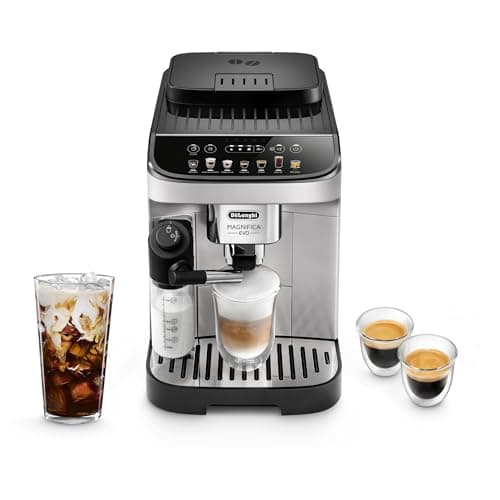
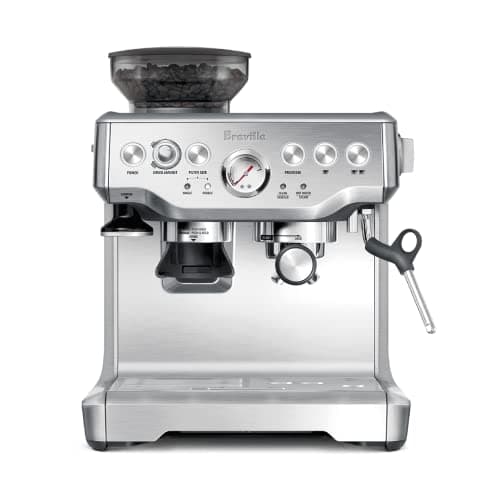
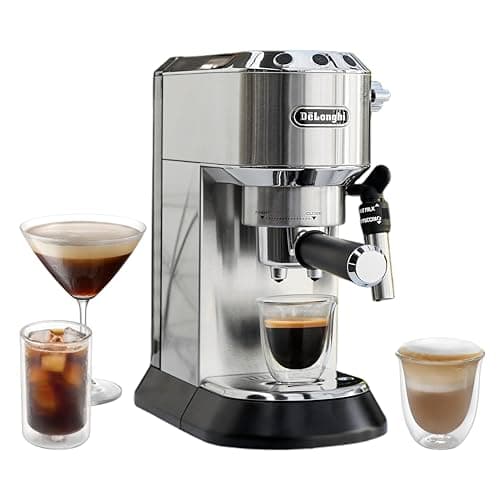
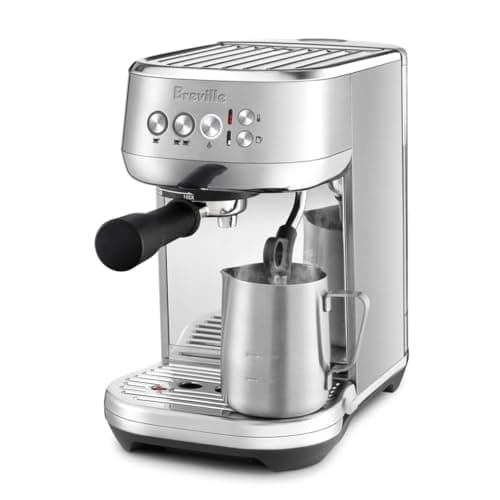
De’Longhi and Breville sit on almost every “best espresso machine” list, and they are not really competing on the same thing. Breville builds portafilter machines for people who want to make espresso. De’Longhi builds a huge range, but its center of gravity is bean-to-cup machines for people who want to drink espresso. Once you see that, picking between them is mostly a question about yourself.
The one-line version
Breville if you want to pull shots, dial in a grinder and eventually pour latte art — its 54mm machines, PID temperature control and automatic steam wands are the best on-ramp to real espresso at consumer prices. De’Longhi if you want a button that produces a cappuccino, or if you need the narrowest machine that will fit your counter, or if you want the cheapest legitimate way to try espresso at all.
Where each brand actually wins
| | Breville | De’Longhi |
|---|
| Core strength | Portafilter machines with real baskets and PID | Bean-to-cup automatics and compact entry machines |
| Entry price | Higher — starts around the Bambino | Lower — the Stilosa is the cheapest we recommend |
| Milk | Automatic steam wand (real microfoam) | One-touch carafe systems, or panarello frothers on cheap models |
| Grinder | Built into the Barista range | Built into every bean-to-cup machine |
| Learning curve | Real, and rewarded | Minimal on automatics; capped on entry machines |
| Ceiling | High — non-pressurized 54mm baskets | Lower on entry models; automatics trade control for ease |
The picks below are one machine from each brand at two budgets, so you can see the comparison in concrete terms rather than in the abstract.
The real difference is philosophy, not quality
Breville’s consumer espresso range is built around a 54mm portafilter and non-pressurized baskets, which means the coffee puck creates the resistance and your grind setting is the main variable. That is the same physical relationship a $3,000 prosumer machine has, scaled down. It also means a Breville rewards better beans, a better grinder and better technique indefinitely.
De’Longhi’s strength is at the two ends Breville does not really contest. At the bottom, the Stilosa and Dedica are cheaper and narrower than anything Breville makes, and they use pressurized baskets deliberately — the machine does the work a good grinder would, so a beginner gets drinkable coffee immediately. At the top of the convenience scale, De’Longhi’s bean-to-cup range is deeper, better-established and generally better value than Breville’s equivalent.
Milk systems: different tools for different drinkers
Breville’s automatic steam wand textures milk in a pitcher and hands it to you to pour, which preserves the possibility of latte art and gives real microfoam. De’Longhi LatteCrema draws milk from a carafe and pours the finished drink, which is more convenient and removes the art entirely. On cheaper De’Longhi models the “frother” is a panarello sleeve that injects air automatically — fine foam for a cappuccino, wrong for a flat white. Read the milk spec carefully, because the same word covers all three.
Which to buy at each budget
Around $150: De’Longhi wins by default — the Stilosa is the only machine at this price we would tell anyone to buy, and Breville does not compete here.
Around $250–$350: a genuine split. The Dedica if counter width is your constraint; the plain Breville Bambino if shot quality is.
Around $500: the Bambino Plus for better milk and a real basket, or the Magnifica Evo for a complete grind-brew-pour machine. This is where the philosophies collide most directly, and the answer is entirely about whether you want to make coffee or drink it.
$700 and up: Breville for the Barista range if you want a grinder and a portafilter in one box; De’Longhi or another bean-to-cup brand if you want the machine to do everything. Our super-automatic ranking covers the latter properly. The two machines that make this comparison concrete at that money are reviewed individually: the De'Longhi Magnifica Evo for the one-touch, automatic-milk approach, and the Breville Barista Touch Impress for the guided, you-still-make-it approach at the top of Breville’s range.
Servicing and longevity
Both brands are widely serviced and both need the same basic care: descale on the schedule your water hardness demands, backflush portafilter machines with a blind basket and detergent if the model supports it, and never let milk dry inside a wand or carafe. Bean-to-cup machines have more moving parts and a brew group that needs regular removal and rinsing; portafilter machines have fewer parts but demand more of you daily. Neither is maintenance-free, and neglect kills both.
How we picked
We did not lab-test this gear
Everyone in this category says they tested twenty machines. We have not lab-tested any of these, and we say so. What we did instead: compiled the published manufacturer specifications, read the manuals, ran the math where there was math to run (heat-up time, pressure, dose capacity, grind range, cost per cup), and scored each pick against a published rubric. The scores are judgments from documented research — not measurements we took, because we do not have a lab and we will not pretend we do. Where a number came from someone else's work, we name them in Sources.