Almost every home espresso decision comes down to this fork, even when the listing never uses the words. A semi-automatic machine gives you a portafilter and a pump and leaves the grinding, dosing, tamping and milk steaming to you. A super-automatic — the same thing the box usually calls “fully automatic” or “bean-to-cup” — grinds, doses, tamps, brews and ejects the puck behind a closed door, and on most models handles the milk too. Both make espresso. They ask completely different things of you, and they hide their costs in completely different places.
The one-line version
Buy a semi-automatic if you find the process interesting, or if you want the best possible cup for a fixed budget and are willing to work for it. Buy a super-automatic if the coffee is the point and the process is an obstacle — especially in a household where several people want different drinks and nobody wants to learn a steam wand. Neither is the enthusiast answer or the lazy answer. They are answers to different questions.
Four categories, because the words are a mess
Retailers use “automatic” to mean four different things, which is why so many people end up with the wrong machine. From least to most automated:
- Manual (lever). You generate the brew pressure yourself with a lever or a hand pump; most need no electricity for the shot at all. Covered separately in our manual espresso maker roundup.
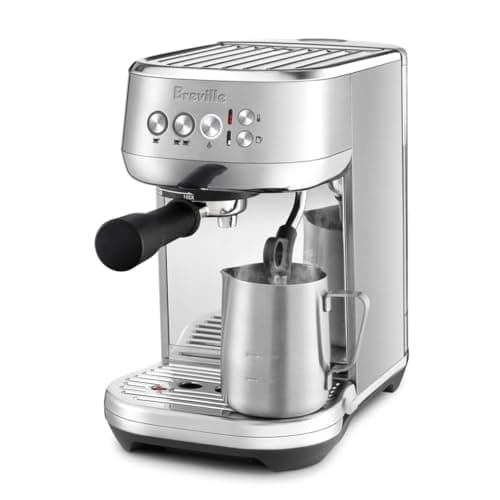
- Semi-automatic. A pump provides the pressure; you decide when the shot starts and when it stops. Everything else — grind, dose, tamp, milk — is yours. This is the Breville Bambino, the Gaggia Classic Pro, the Rancilio Silvia, and most of what people picture when they picture an espresso machine.
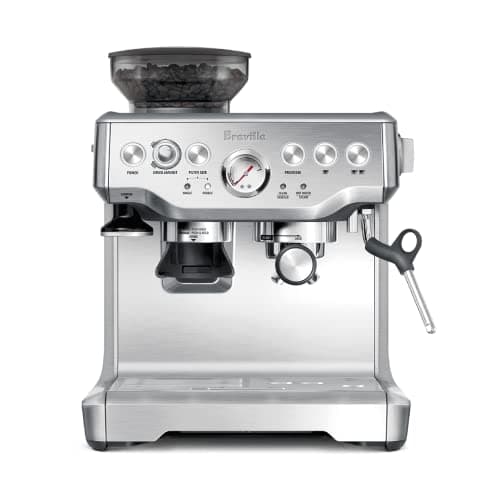
- Automatic (volumetric). A semi-automatic that also stops the shot for you at a programmed volume. In practice this is a feature rather than a category — the Breville Barista Express has programmable shot volumes and is still sold, correctly, as a semi-automatic.
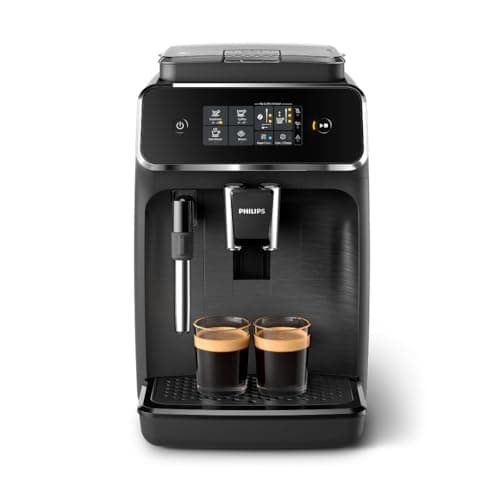
- Super-automatic (bean-to-cup). Beans in the hopper, cup under the spout, one button. The grinder, the tamping mechanism and the brew group are internal and sealed. Milk is either a manual steam wand, a panarello-style frother, or an automatic carafe that pours the finished drink.
This page is about the two most people actually cross-shop: semi-automatic against super-automatic.
Where each one wins
| | Semi-automatic | Super-automatic |
|---|
| What you do | Grind, dose, tamp, pull, steam | Fill the hopper, press a button |
| Best shot possible | High — keeps improving as you do | Good, and fixed at good |
| Worst shot possible | Undrinkable, until you learn | Still fine — the floor is the point |
| Grinder | Usually a separate purchase | Always included, never upgradeable |
| Milk | Steam wand — real microfoam, real practice | One-touch carafe, or a basic frother |
| Time per drink | Several minutes, plus cleanup | Under a minute, hands-off |
| Daily upkeep | Purge the wand, knock the puck, rinse | Rinse the milk parts, empty the puck bin |
| Upgrade path | Better grinder, better beans, better technique | Better beans, and that is the list |
The picks below are price-matched pairs rather than a ranked list: one semi-automatic and one super-automatic at roughly the same money, twice, so the trade is concrete instead of abstract. Prices are pulled live from Amazon and move constantly, which is why the brackets in the text stay deliberately rough.
The question that actually decides it
Every honest version of this comparison ends in the same place: do you want to make coffee, or do you want to drink it? That is not a snobbery test. Some people find grinding, dosing and dialing in genuinely absorbing, and for them a super-automatic removes the best part of the morning. Other people want a flat white on the way out the door and would resent every second spent on puck prep — for them a semi-automatic becomes a chore they stop doing in six weeks, which is how machines end up in cupboards. Be honest about which person you are before you compare a single spec.
The hidden cost is on the semi-automatic side
A super-automatic price is the whole price. A semi-automatic price usually is not. Espresso is far more sensitive to grind consistency than any other brew method, so a semi-automatic without a grinder needs one before it makes good coffee — and a cheap blade grinder is not a grinder. It smashes beans into a mix of dust and boulders that extract at different rates inside the same shot; our burr vs blade explainer covers the mechanism. So budget for the machine plus a real burr grinder, and compare that total against the super-automatic you are considering. Then add a scale, and a decent tamper if the machine shipped with a plastic one. Do that arithmetic first and the comparison usually gets less flattering to whichever side you were leaning toward.
The hidden cost on the super-automatic side is the ceiling
A bean-to-cup machine has exactly one upgrade path: better beans. The grinder is internal and cannot be swapped for a better one. Dose, tamp pressure and brew pressure are fixed by the manufacturer. There is no way to slow an extraction down because a new roast needs it. None of that is a defect — it is the design intent, and it is why the machine is consistent. But it means the coffee you get in week one is roughly the coffee you get in year three, and if you develop a taste for lighter roasts or straight shots, the machine will not follow you there.
Milk is where people buy the wrong machine
Three completely different things are all sold as “milk frothing,” and the word on the box does not distinguish them. A steam wand — manual or automatic — textures milk in a pitcher and hands it to you to pour; it makes real microfoam and preserves the possibility of latte art. A panarello or classic frother injects air automatically and makes stiff, bubbly foam that is fine on a cappuccino and wrong under a flat white. An automatic carafe (De’Longhi LatteCrema, Philips LatteGo) draws milk from a container and pours the finished drink: maximum convenience, zero art. If milk drinks are your main coffee, check which one a machine has before you check anything else. Our milk-frother machine roundup separates them model by model, and how to froth milk covers the manual technique if you go that way.
Maintenance is different, not lighter
Super-automatics are marketed as low-effort, and day to day they are: rinse the milk parts, empty the puck container, wipe the drip tray. But they have more moving parts and a brew group that needs regular removal and cleaning — and on models where that brew group is sealed, it has to be serviced rather than rinsed. Milk circuits are unforgiving; dried milk in a carafe or a tube is the fastest way to ruin the taste of every drink after it. Semi-automatics have fewer parts but ask for something every single day: purge and wipe the wand immediately, knock the puck out, backflush if the machine has a three-way solenoid. Both need descaling on whatever schedule your water hardness demands — our descaling guide covers that, and a water filter is worth more than most accessories on either side of this comparison.
Which one is better coffee?
At the same total spend, a semi-automatic with a good grinder has a clearly higher ceiling and a much lower floor. It can make espresso a bean-to-cup machine cannot approach, and it can also make three bad shots in a row while you are learning. A super-automatic lifts the floor to “good” and caps the ceiling in the same place. If you value the best cup you are capable of, that points to the semi-automatic. If you value the worst cup being fine, that points to the super-automatic. Most arguments about this comparison are really two people optimizing different ends of that range.
What we would tell a first-time buyer
Milk drinks, no interest in the craft, one machine for a busy household: super-automatic — and specifically one with an automatic milk carafe rather than a classic frother. Buying a cheap bean-to-cup machine and then frothing by hand gets you the worst of both sides.
Straight espresso, curiosity about the process, or a tight budget: semi-automatic, with the grinder budgeted from the start. If the total will not stretch to a machine plus a real burr grinder, go one machine cheaper rather than one grinder cheaper. Our beginner roundup is built around exactly that constraint.
Genuinely torn: the tiebreaker is who else uses it. A machine only you operate can be a semi-automatic. A machine four people operate, at different times, with different drink orders, is a super-automatic — and everyone will be happier.
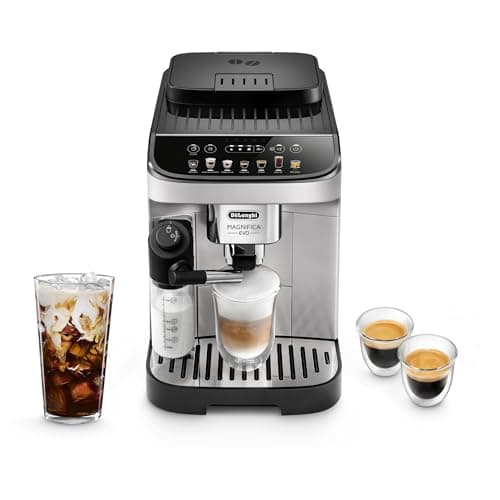
If it helps to see each side at its most representative, read the two machines side by side: the De'Longhi Magnifica Evo is the value bean-to-cup case — one touch, automatic milk, nothing to learn — and the Breville Barista Touch Impress is the semi-automatic case with the learning curve automated away. Both of those arguments are priced against each other in the $1,000 to $2,000 band.