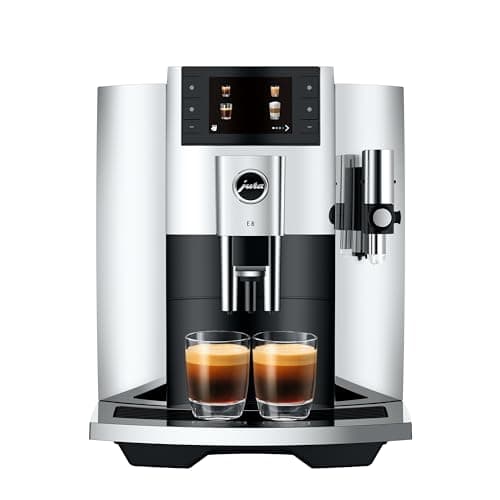
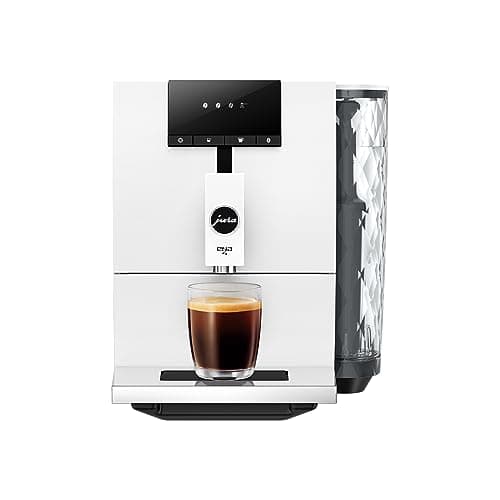
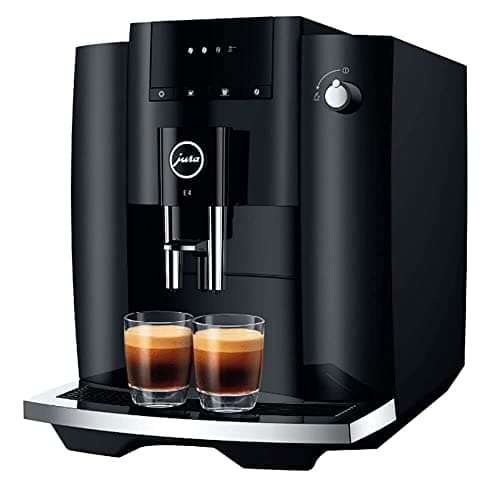
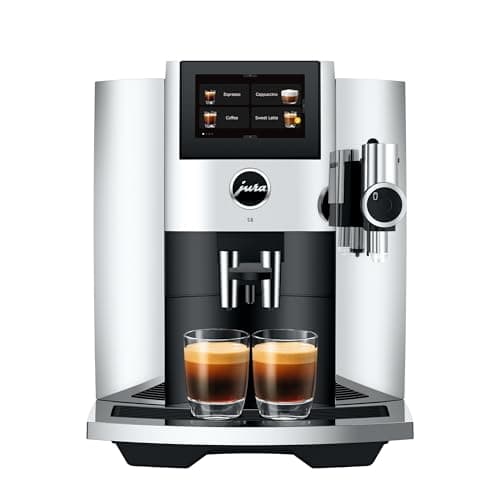
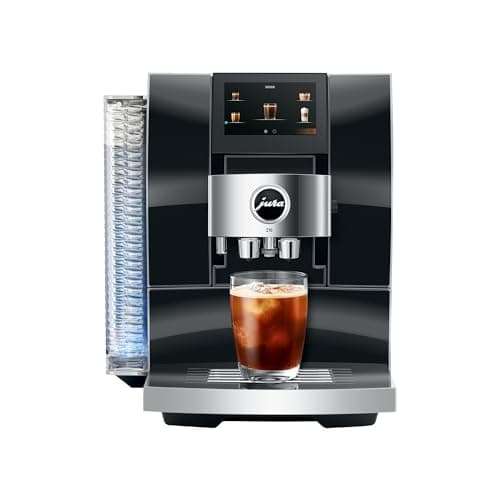
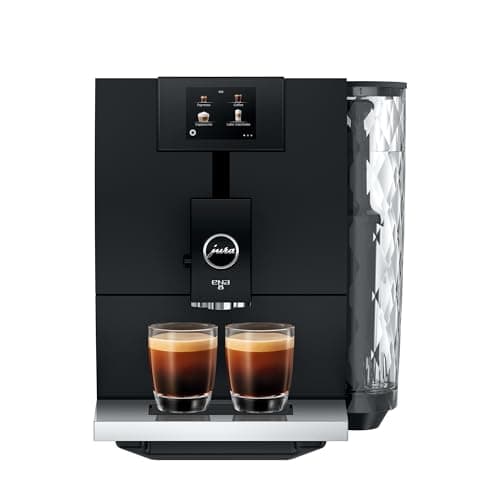
Jura makes one kind of machine — a Swiss bean-to-cup super-automatic that grinds, doses, tamps, brews and (on most models) textures milk behind a closed door — and then sells roughly a dozen versions of it across a price range that spans more than three times over. The hard part is not deciding whether a Jura is good. It is working out which rung of the ladder you are actually buying, because the published specifications change far less between models than the price does.
Here is the short version, and the rest of this page is the evidence for it. The cheapest Jura with a milk system is the one most people should buy.Below that line the machines make espresso and coffee only — no cappuccino, no latte, no frother at all — which is a fine answer if you drink your coffee black and a wasted purchase if you do not. Above that line you are mostly buying interface, drink-menu breadth and tank size, and the coffee in the cup changes much less than the receipt does.
A second thing worth saying before the picks: a Jura is expensive even at the bottom of the range, and a super-automatic is a convenience machine, not a quality machine. If what you want is the best espresso your money can buy, a semi-automatic and a decent grinder beat any bean-to-cup at the same total price — that is the argument laid out in semi-automatic vs super-automatic, and nothing on this page contradicts it. What a Jura buys is a very good drink at the press of one button with no skill, no mess and no learning curve. If that is worth the money to you, read on.
How this page is ordered.The order below is a recommendation order — who should buy what, starting with the machine that suits the most people. The score beside each pick is a flat average of five axes (coffee quality, ease and cleaning, drink range, build, value), so a machine that costs a thousand dollars more can score a tenth of a point higher and still sit lower on the page. No score was adjusted to make the order look tidy; where the two disagree, the pick body says so plainly.
The four specs that actually separate these machines
Jura names a lot of technologies, and most of them appear on most of the range. Strip the names away and four published figures do nearly all the work of telling these machines apart.
| | Specialties | Milk system | Water tank | Display |
|---|
| ENA 4 | 4 | None | 37.2oz / 1.1 l | Symbol display |
| E4 | 5 | None | 64oz / 1.9 l | Symbol display |
| ENA 8 | 15 | HP1 / CX1 | 37.2oz / 1.1 l | 2.8-inch touchscreen |
| E8 | 17 | HP3 / CX3 | 64oz / 1.9 l | 3.5-inch color + buttons |
| S8 | 27 | HP3 / CX3 + Sweet Foam | 64oz / 1.9 l | 4.3-inch touchscreen |
| Z10 | 40 (hot & cold) | HP3 / CX3 | 81oz / 2.4 l | 4.3-inch touchscreen |
Those figures are Jura's own published specifications for the current US models, taken from the product pages linked in Sources. Read the table as two decisions rather than six options: milk or no milk — that is the ENA 4 / E4 line — and small tank or large tank, which is the ENA line against the E and S line. Everything else (screen size, menu length, Sweet Foam, cold extraction) is a preference you can put a price on.
What P.E.P. is, and why it matters more than the model number
All six machines here carry Jura's Pulse Extraction Process. Instead of pushing water through the puck in one continuous flow, the pump delivers it in short pulses. The point is short drinks: a ristretto or an espresso has so little contact time that a continuous flow under-extracts it, and pulsing gives the water more time in the coffee without adding volume to the cup. It is the single most useful thing Jura does, and it is on the cheapest machine here as well as the most expensive. If a showroom tries to sell you up the range on extraction quality, that spec is the answer.
The grinder is the one place the range genuinely changes
The ENA 4 uses the multi-level Aroma G3 grinder. The E4 and ENA 8 use the Professional Aroma Grinder (P.A.G.), which Jura publishes as delivering 12.2% more aroma. The E8 and S8 use the second-generation P.A.G.2. The Z10 uses the Product Recognising Grinder, which changes grind consistency electronically between drinks — a genuinely different idea, because one machine can then grind fine for an espresso and coarse for a cold extraction without anyone touching a dial. That progression is real, and it is also the subtlest difference on this page. If you want to understand why grind consistency matters at all before spending this kind of money, start with burr vs blade grinders.
Running costs nobody mentions in the showroom
Every Jura here uses CLEARYL Smart+ filter cartridges with RFID detection, Jura-branded cleaning tablets and, on the milk machines, a milk-system cleaner. The machines prompt you and will not be talked out of it. Budget for filters several times a year, descaling when the machine asks, and a milk line that wants a daily automatic rinse plus a periodic deep clean. None of that is unusual for a bean-to-cup machine — the super-automatic maintenance routine applies here the same as anywhere — but it is a running cost you are signing up for, and it is proprietary.
Jura against the machines people actually cross-shop
Two comparisons come up constantly. Against De'Longhi, Jura wins on build, hygiene automation and interface, and loses badly on price: a Magnifica Evo makes a genuinely good latte for a fraction of an ENA 8, and most drinkers would not pick the Jura blind. Against Breville, it is not really the same product — Breville's best-sellers are semi-automatic machines where you grind, tamp and steam yourself, which gives a better ceiling and a worse floor. Jura is the answer when you want a very good drink with no involvement at all; it is not the answer when you want to learn espresso.
Should you buy a Jura at all?
Honestly: only if you want the convenience badly enough to pay for it. For the price of the ENA 8 you could buy a good semi-automatic machine and a genuinely good grinder and pull better espresso than any bean-to-cup manages — see our main machine roundup and the espresso grinder roundup for what that pairing looks like. For the price of the ENA 4 you could buy a De'Longhi or Philips super-automatic that does make cappuccinos. What Jura sells on top of that is build, interface, hygiene automation and a brewing unit that holds up to years of daily use. That is a real product. It is not the only good answer, and this page is not going to pretend otherwise.
Which one, in one line each
Milk drinks, normal kitchen, one or two drinkers: ENA 8. Milk drinks, four people, mornings that matter: E8. Black coffee only, small counter: ENA 4. Black coffee only, full-size household: E4. A house where everyone orders something different and the screen will earn its keep: S8. Cold-extracted coffee on demand, budget not the constraint: Z10. If none of those sentences is obviously you, the answer is the ENA 8.