If you do only one thing, rinse the milk circuit immediately after every milk drink, and descale on the schedule your water hardness demands. Those two jobs prevent the two failures that actually end these machines: a soured, blocked milk system and a scaled heater. Everything else on this page is worth doing, but nothing else on this page will kill your machine.
A super-automatic is harder to keep clean than a semi-automatic for a structural reason: on a machine with a portafilter you see the coffee, the puck and the group every single day, so dirt is visible and gets cleaned. On a bean-to-cup machine the grinder, the brew group, the dregs drawer and the milk lines are all sealed behind panels. Nothing looks dirty, so nothing gets cleaned, and the first symptom is usually a taste change the owner blames on the beans.
There are four separate systems and they fail in different ways. The milk circuit sours and clogs within days of neglect. The brew group collects coffee oil and old grounds, which turns shots harsh. The grinder and chute collect oily fines that go stale. And the water path accumulates limescale, which insulates the heater, drops brew temperature and eventually restricts flow. One cleaning product does not address all four, which is why machines sold as low-maintenance still come with a maintenance menu.
Below is the routine by frequency, then the consumables we would actually buy. Follow your own machine's manual where it differs from this — manufacturers specify different intervals and some, notably Philips machines using an AquaClean filter, can legitimately defer descaling for a long time. Our picks for the machines themselves are in best super-automatic espresso machines and super-automatics under $1,000.
Daily: the milk circuit and the trays
Run the machine's automatic milk-rinse cycle after the last milk drink of the day, and do it before the milk dries rather than the next morning. If your machine uses a carafe, detach it, empty any leftover milk, and rinse the lid and the spout under warm water. If it uses a tubeless system such as Philips LatteGo, snap the two parts off and rinse them. Milk protein and fat left in a warm plastic tube is the fastest-growing problem on any bean-to-cup machine, and a blocked milk line is one of the most common service complaints in the category.
Also daily: empty the drip tray and the dregs drawer. Most machines count shots and will tell you, but the counter is a minimum, not a schedule — spent pucks in a warm sealed drawer grow mould in a few days. Wipe the coffee spout and the cup shelf. None of this takes two minutes, and it is the difference between a machine that tastes the same in year three and one that does not.
Weekly: the brew group and the milk parts, properly
If your machine has a removable brew group — most De'Longhi, Philips and Gaggia bean-to-cup machines do — take it out and rinse it under warm running water, then let it dry before it goes back. Use water only unless your manual says otherwise; detergent residue in a brew group is a flavour problem for weeks. While it is out, brush the loose grounds out of the cavity and the chute with a dry brush and vacuum what falls.
Once a week the milk parts deserve more than a rinse: disassemble the carafe or frother as far as the manual allows and wash the pieces in warm soapy water, paying attention to the air intake hole, which is small and is where foam quality quietly dies. Dishwasher-safe parts can go in the dishwasher; check first, because carafe lids frequently are not.
Monthly: the grinder, the hopper and the exterior panels
Empty the hopper when you can and wipe it out with a dry cloth. Oily beans leave a film that goes rancid and taints fresh beans, and this is the main reason we recommend avoiding heavily oiled dark roasts in bean-to-cup machines at all — see beans for a super-automatic. Do not put water in a hopper or a grinder. Do not use grinder cleaning tablets in a bean-to-cup grinder unless your manufacturer explicitly approves them; several do not, because the tablets can jam a sealed grinder you cannot open. On a machine with a hand-brushable chute, a dry brush is the approved method.
Every one to three months: descale
Descaling frequency is set by your water, not by the calendar. Hard water can mean every four to six weeks; soft or filtered water can stretch to several months. Most machines track flow and raise a descale alert — do not dismiss it repeatedly, because a scaled heater brews cooler than it reports, which shows up as flat, sour coffee no setting will fix, and eventually as a flow fault that is not economically repairable on a sealed machine.
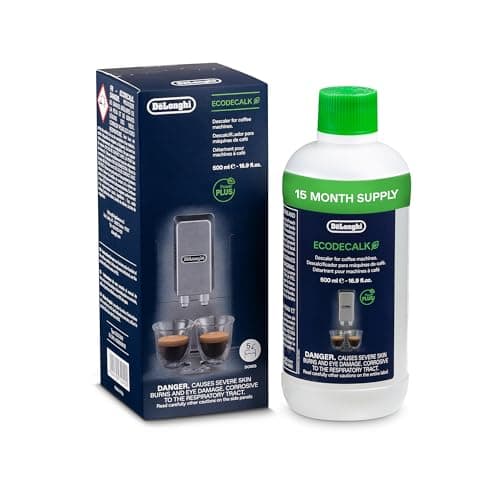
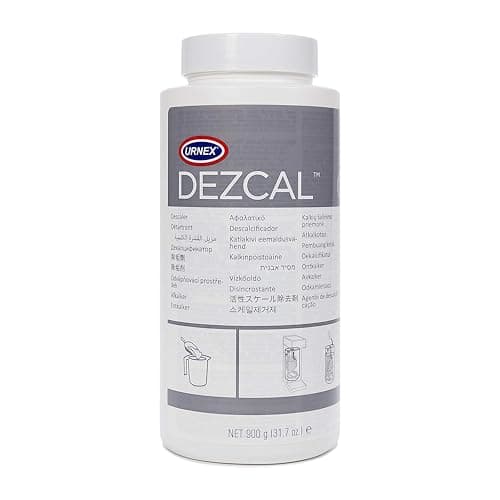
Use a descaler formulated for coffee equipment and follow the dose on the bottle. Do not use vinegar: it attacks seals and aluminium, and the smell lingers in the water path for weeks. If your machine takes a water filter — Philips AquaClean, De'Longhi and Breville all sell them — using one genuinely extends the interval between descales, and on the Philips system the manufacturer rates it for a long run of cups before a descale is required. Prevention is cheaper than the cure here; see water filters for espresso machines.
The routine, by frequency
| When | Job | What it prevents |
|---|
| After every milk drink | Run the milk rinse; empty leftover milk from the carafe | Soured milk lines and blocked frothers — the most common failure |
| Daily | Empty drip tray and dregs drawer; wipe the spout | Mould in the dregs drawer and a sticky, smelling machine |
| Weekly | Remove and rinse the brew group (water only); brush the cavity | Coffee-oil buildup that makes every shot taste harsh |
| Weekly | Strip and wash the milk carafe or frother parts, including the air hole | Thin, inconsistent foam and hidden milk residue |
| Monthly | Wipe out the bean hopper dry; brush the chute | Rancid bean oil tainting fresh beans |
| Every 1-3 months (water-dependent) | Descale with a coffee-equipment descaler | A scaled heater, low brew temperature and eventual flow failure |
| Per manufacturer | Replace the water filter | Scale forming in the first place; long descale intervals |
What we do not have a pick for, and what to buy instead
Two consumables in this routine are not in our picks above, and we would rather say so than substitute something that does not fit. The first is a dedicated milk-system cleaner — the alkaline liquid or powder that De'Longhi, Philips, Jura and Gaggia each sell for their own carafes. Buy the one your manufacturer names, because the dose and the cycle are built into the machine's menu. The second is a brew-group or coffee-oil cleaning tablet for bean-to-cup machines, which again is usually brand-specific. For both, the manufacturer's part is the right answer and a generic is not worth the risk on a sealed machine.
The three mistakes that cause most damage
Vinegar. It is acidic enough to descale and aggressive enough to degrade seals and aluminium, and the smell survives many rinse cycles. A proper descaler costs a few dollars more and does not do that.
Detergent in the brew group. Unless the manual says otherwise, rinse it with water only. Residue in a brew group taints shots for weeks and is hard to flush out of a part full of small channels.
Ignoring the descale alert. The alert is calculated from flow, and dismissing it does not change the scale already forming. By the time a machine runs slow, the fix is often a service visit that costs a meaningful fraction of the machine.
Oily beans are a maintenance decision, not a taste one
Dark, visibly oily beans clog bean-to-cup grinders and chutes faster than anything else you can put in the hopper, and several manufacturers say so in their manuals. If your machine is grinding inconsistently or the chute keeps blocking, the beans are the first thing to change, before any cleaning product. That is why we keep a separate bean list for these machines rather than pointing at our general espresso bean ranking.
How long should a super-automatic last?
Long enough that maintenance is the deciding variable. These are sealed appliances with a pump, a heater, a grinder and a brew group, and the failure that ends most of them is not wear — it is scale in the water path or a milk circuit that was never properly rinsed. Both are entirely within your control, and both are cheaper to prevent than to repair. Treat the descaler and the filter as the running cost of owning the machine, not an optional extra.