A double espresso is roughly 36 grams of liquid, and about 35 of those grams are water. It is the largest single ingredient in your coffee by an enormous margin, and it is the only one most people never think about. It is also the thing that quietly destroys espresso machines: calcium and magnesium in hard water precipitate out as limescale on hot surfaces, coating the boiler and heating element, narrowing water lines and eventually seizing valves.
The complication is that you cannot simply remove everything. Water needs dissolved minerals to extract coffee properly — they participate in binding the flavor compounds, which is why distilled water makes famously flat, hollow coffee. The Specialty Coffee Association publishes a target of about 150 ppm total dissolved solids with an acceptable range of 75–250 ppm, calcium hardness of 50–175 ppm as CaCO₃, total alkalinity of roughly 40–70 ppm, and a pH near 7. So the job is not filtration, it is targeting: get the right minerals in the right quantity, and keep the scale-forming excess out.
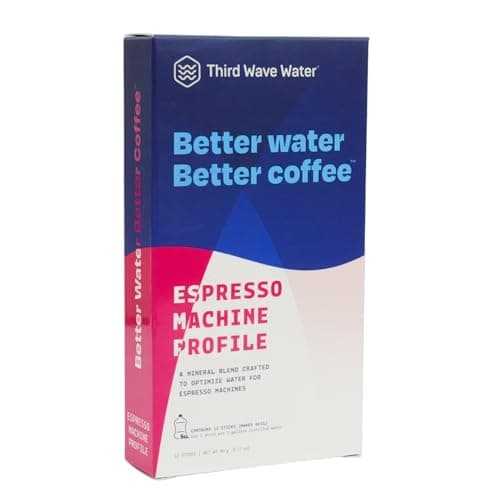
There are three ways to do that at home, and the picks below cover all three: filter the water going into the tank, strip it to zero and rebuild it, or filter inside the machine itself.
Start by measuring, not buying
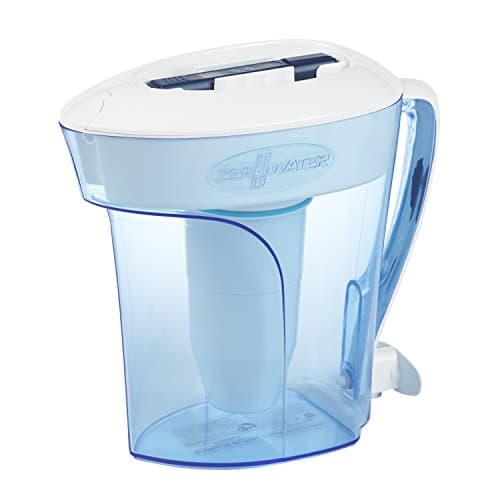
Everything here depends on what comes out of your tap, and that varies enormously between towns. Buy a cheap TDS meter — the ZeroWater pitcher includes one — and measure. If you land between about 75 and 250 ppm with no strong chlorine smell, you are inside the SCA’s published range and an in-tank charcoal filter is all you need. If you are at 400 ppm, you have a scale problem to solve. If you are at 30 ppm, your coffee is probably tasting hollow and you need minerals, not filtration. Buying a solution before measuring is how people end up with the wrong one.
The SCA targets, in one place
| Parameter | Target | Acceptable range |
|---|
| Total dissolved solids | 150 ppm | 75–250 ppm |
| Calcium hardness | Mid-range | 50–175 ppm CaCO₃ |
| Total alkalinity | ~40 ppm | 40–70 ppm CaCO₃ |
| pH | 7.0 | 6.5–7.5 |
| Chlorine | Zero | Zero |
Espresso machines are the special case: many manufacturers and espresso-focused guides recommend staying toward the softer end of that range, because the same minerals that help extraction are the ones that precipitate as scale on a boiler running all day.
Why distilled water is not the answer
It seems logical — no minerals, no scale — and it fails on two counts. Coffee extraction depends on dissolved minerals binding flavor compounds, so distilled water produces a famously flat, thin cup. And very pure water is aggressive: with nothing dissolved in it, it will dissolve what it touches, which is not what you want inside a boiler. Distilled water is a base to build on, never a finished product.
Filtering does not replace descaling
Every option here reduces the rate at which scale forms. None reduces it to zero except a fully controlled mineral profile, and even then you should descale on a schedule. Treat water treatment as extending the interval, not eliminating the job — the method, the schedule and what to use are in how to descale an espresso machine, and the products are in our cleaning supplies roundup.
What to do if you just want the simple answer
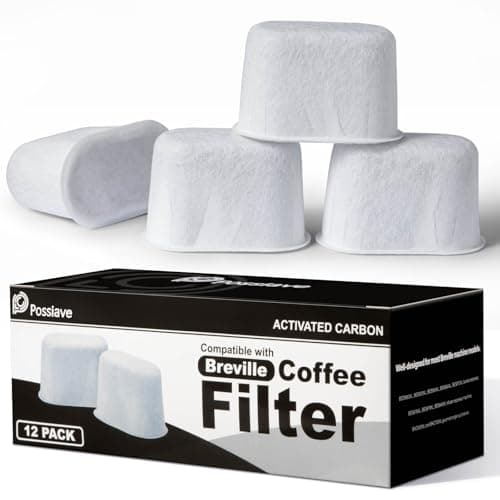
Buy the in-tank filter your machine takes, change it on schedule, and descale twice a year. That covers the overwhelming majority of homes with normal municipal water, costs very little, and requires no new habits. Move up to zero-TDS-plus-minerals only if you have measured genuinely hard water, or if you have reached the point where you are chasing the last few percent of shot quality — at which point the water is a legitimate variable and one of the last ones left.
What this is actually buying you
Water treatment is not really a taste purchase, though it helps there too. It is the cheapest way to extend the life of the machine, because limescale — not wear — is what ends most domestic espresso machines, and on a sealed machine a scaled heating path is usually terminal. The arithmetic of that, by machine type, is on how long do espresso machines last.
Filtering is not the same question as which water
This page ranks hardware for reducing what is in your water. The prior question is what should be in it, and the answer is not “as little as possible”: minerals, chiefly magnesium and calcium, are what bind to flavour compounds and carry them out of the coffee, which is why distilled and reverse-osmosis water make a flat, hollow cup and can be corrosive to some boilers. The Specialty Coffee Association targets around 150 mg/L total dissolved solids within roughly 75 to 250, chlorine-free. Test your tap water before buying anything — plenty of readers are already in range and need only a carbon filter. The full comparison of distilled, bottled, softened and filtered is in what water to use in an espresso machine.
How we picked
We did not lab-test this gear
Everyone in this category says they tested twenty machines. We have not lab-tested any of these, and we say so. What we did instead: compiled the published manufacturer specifications, read the manuals, ran the math where there was math to run (heat-up time, pressure, dose capacity, grind range, cost per cup), and scored each pick against a published rubric. The scores are judgments from documented research — not measurements we took, because we do not have a lab and we will not pretend we do. Where a number came from someone else's work, we name them in Sources.