Use filtered water with some mineral content in it — not distilled, not softened by a salt-based softener, and not untreated hard tap water. Those three are the ways people go wrong, and each fails differently: distilled and reverse-osmosis water makes flat, hollow coffee and can be corrosive to a boiler, salt-based softener output trades hardness for sodium and does not stop scale properly, and hard tap water will scale up the machine from the inside until it dies. Before buying anything, find out what your own tap water actually is— a cheap TDS meter settles it, and for a lot of readers the answer is that their tap water is already fine through a basic filter.
Two separate problems are hiding inside this question, and almost every answer online conflates them. Taste is about what minerals the water carries, because minerals are what pull flavour out of coffee. Scaleis about what those same minerals leave behind when the water is heated. The ideal water is a compromise between them, which is why “as pure as possible” is wrong.
Why minerals have to be in the water
Brewing is extraction, and extraction is partly a chemical process in which dissolved minerals — principally magnesium and calcium — bind to flavour compounds in the coffee and carry them into solution. Magnesium is particularly associated with pulling out the fruity, sweet notes; calcium with body. Water with nothing in it has nothing to do that work with.
The practical result is familiar to anyone who has tried it: coffee brewed with distilled water tastes hollow, flat and strangely empty, even at a perfect ratio and grind. It is not subtle. This is the single most useful thing to know about water and coffee, because it reverses the instinct that purer must be better.
The Specialty Coffee Association publishes a water standard for brewing, and the headline figures are a total dissolved solids target around 150 mg/Lwithin an acceptable range of roughly 75–250 mg/L, water that is odour-free and chlorine-free, and a pH near neutral. Those numbers are written for brewed coffee; for an espresso machine the same range applies with an extra constraint, because the machine has a heated boiler and the brewing standard does not care about boilers.
Why the same minerals destroy the machine
When water is heated, dissolved calcium and magnesium come out of solution and deposit as limescaleon the hottest surfaces — the heating element, the boiler walls, the narrow passages feeding the group. This is the mechanism behind most espresso machine deaths that are not electrical.
It fails in a specific and sneaky order. Scale is an insulator, so the first symptom is not a breakdown but a drop in brew temperature: the element is working through a layer of mineral and the water arrives cooler than the display claims. Cooler water under-extracts, so your shots turn sour for no reason you can see, and you chase it with grind changes that do not help. Later, scale narrows the passages, flow drops and pressure behaves oddly. By the time a machine is visibly failing, the deposit has usually been building for a long time. If that sequence matches what your machine is doing now, start at why is my espresso machine not building pressure.
So the target is water with enough mineral content to extract coffee properly and little enough to scale slowly. That is the whole brief, and it is why the answer is a narrow band rather than an extreme.
The options, ranked by whether we would use them
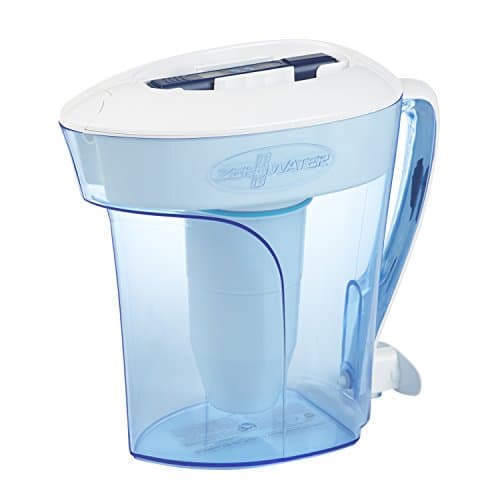
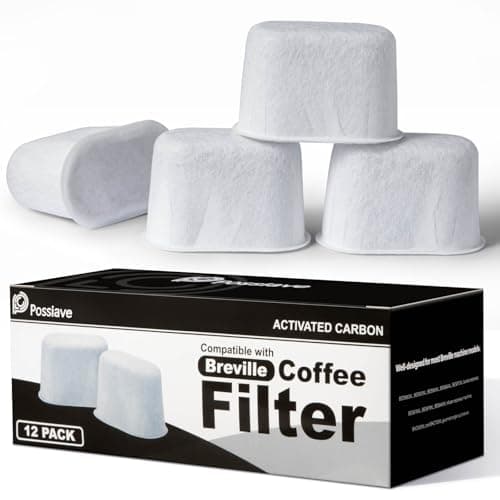
Filtered tap water — the right default for most people. A carbon filter removes chlorine, which the SCA standard explicitly requires and which is a very common cause of flat, swimming-pool-tasting coffee. Crucially, carbon filtration does not remove much hardness, so you keep the minerals you need. If your tap water is moderately hard this is a sound answer paired with regular descaling.
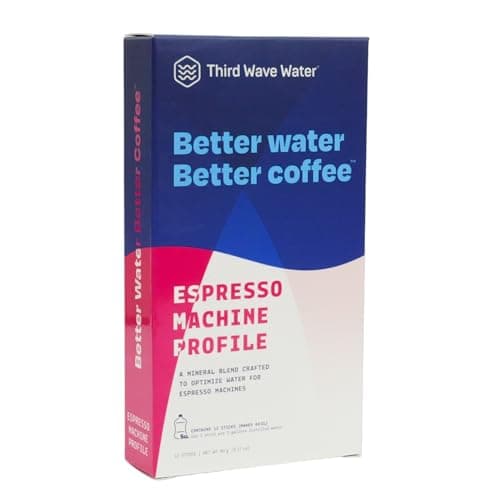
Zero-TDS water plus mineral packets — the most controlled. Strip the water to nothing, then add back a measured, known mineral profile. This is the only approach where you actually know what is in your water, and espresso-specific formulations exist precisely because the brewing profiles are not designed with boilers in mind. The cost is faff: you are mixing water in a jug rather than filling a tank from the tap.
Bottled water — works if you read the label, which is the problem. Bottled waters vary enormously, from nearly mineral-free to extremely hard; some popular mineral waters are well above the top of the SCA range and will scale a machine faster than many tap supplies. If a bottled water publishes its mineral analysis and it sits in range, it is perfectly usable. The expense and the waste make it a poor long-term plan.
Distilled or reverse-osmosis water alone — do not. Flat, hollow coffee, and a genuine corrosion concern: very low-mineral water is aggressive toward some metals, and a number of manufacturers warn against it in their own manuals. Use it as a baseto remineralise, never as the finished article. Check your own machine’s manual — this is one place where manufacturer guidance beats general advice.
Salt-based softened water — no. An ion-exchange household softener swaps calcium and magnesium for sodium. You lose the minerals that extract coffee, you gain sodium that makes it taste odd, and the bicarbonate that drives one form of scale is not removed. If your house has a softener, draw espresso water from an unsoftened tap if there is one.
Test before you buy anything
This is the step that saves money, and most people skip it. A TDS meter costs very little and tells you where you actually stand against the 75–250 mg/L range — and for plenty of readers the honest answer is that a carbon filter is all they need and the rest of this page is a solution to a problem they do not have. Your water utility also publishes an annual water quality report with hardness figures, which is free. If you are above the range, the products below are the realistic routes down; if you are inside it, just filter for chlorine and descale on schedule.
Note one limit of a TDS meter: it reports how much is dissolved, not what. Two supplies at the same reading can scale very differently depending on their bicarbonate content. For home purposes TDS plus your utility’s hardness figure is enough to choose between the options below.
Decision shortcut
Test first.TDS under about 75 mg/L: your water is too soft — you need minerals, not filtration. Between 75 and 250: you are in range, so filter for chlorine and descale on schedule, and buy nothing else. Above 250, or your utility reports hard water: either go the zero-TDS-plus-minerals route, or keep filtering and descale noticeably more often. Very hard water and an expensive machine is the one combination where we would not compromise.
Filtering does not replace descaling
This is the most common false economy in the category. Every in-tank filter and every carbon pitcher reduces the rateat which scale forms; none of them stops it, and all of them are exhausted long before you notice. Keep to your manufacturer’s descaling interval regardless of what water you use — the procedure is in how to descale an espresso machine, the products are on best espresso machine cleaning supplies, and for bean-to-cup machines the whole routine is in super-automatic espresso machine maintenance. The only honest exception is a machine run exclusively on remineralised zero-TDS water, where there is very little scale-forming mineral going in — and even then, follow the manual rather than our word.
Super-automatic machines are stricter
A bean-to-cup machine has more narrow internal passages, more valves and usually a milk circuit, so scale has more places to cause trouble and the machine is harder to service when it does. Several manufacturers sell their own in-tank filters and some models prompt for replacement on a counter. Follow that prompt, and do not substitute a dramatically different water type without checking the manual — this is the category where water mistakes are most expensive. The roundup is best super-automatic espresso machines, and lifespan is covered in how long do espresso machines last.
If your coffee tastes flat and you have done everything else
Water is the variable people check last and should check third, after beans and grind. The tell is specific: coffee that is correctly strong but somehow empty, with no sweetness and no finish, across different beans and different brewers. That is usually water with too little mineral content or a chlorine taste you have stopped noticing. The whole-category ranking of filtration hardware is best water filters for espresso machines, and the ratio side of a flat cup is in coffee to water ratio.