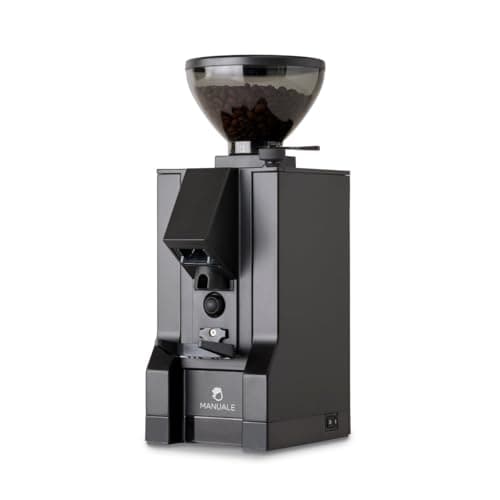
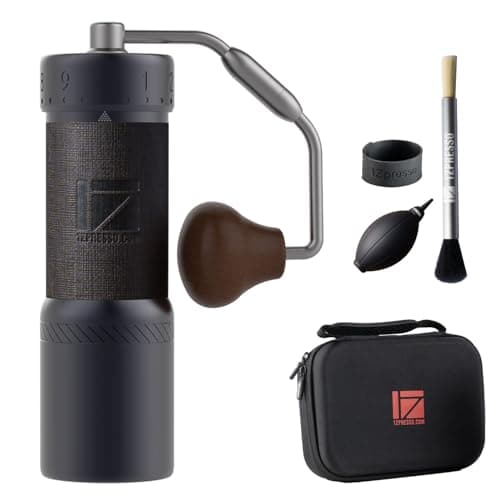
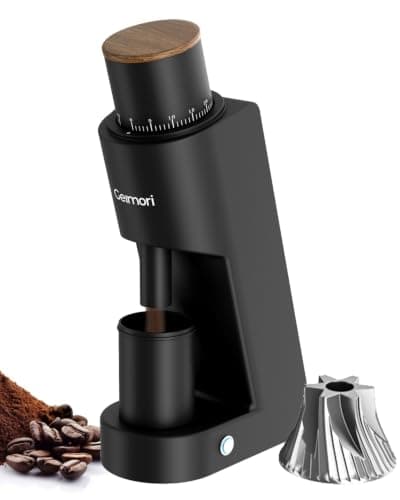
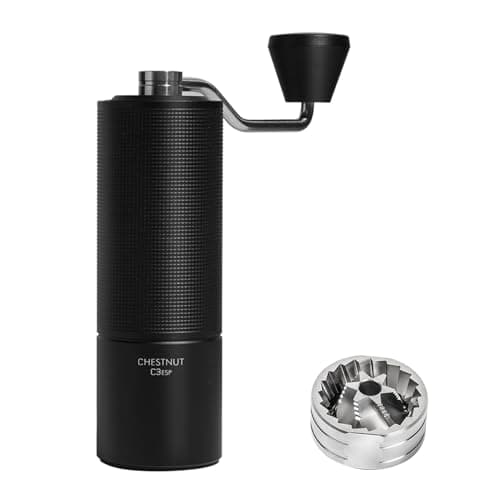
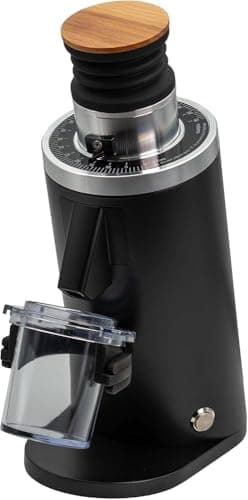
The verdict: the DF54 Single Dose is the best espresso grinder under $300, because it is the cheapest way to get flat burrs, stepless adjustment and near-zero retention in one machine — the three things that decide whether you can dial a shot in. If you would rather have an Italian hopper grinder that doses straight into the portafilter, buy the Eureka Mignon Notte. And if you can live with cranking, the 1Zpresso J-Ultra out-adjusts both and costs half as much. The budget pick is the Timemore Chestnut C3 ESP, the cheapest grinder here that reaches real espresso fineness.
Three hundred dollars is a strange bracket for espresso, and it helps to know why. The burr sets at this price are mostly fine: 38mm to 54mm conicals and flats that are perfectly capable of grinding fine enough for a 9-bar shot. What separates the grinders is not how well they cut the coffee — it is whether the adjustment can land on espresso. Espresso lives in a window perhaps two or three percent wide in particle size. Outside it a shot either gushes in twelve seconds or chokes to a drip. A grinder whose clicks are coarser than that window cannot be dialed in at all, no matter how good its burrs are.
That is why this page is ordered the way it is, and why it is not a re-cut of our best coffee grinders under $200 page, which asks whether a grinder is capable at all, or of best coffee grinders under $500, which is organized around the flat-versus-conical fork across every brewing method. This one is espresso-only, which means a grinder that makes beautiful pour-over and cannot reach espresso fineness does not appear at all — and several of the usual recommendations at this price are exactly that grinder.
The criteria, in the order they decide this page: espresso adjustment resolution first; retention per dose second, because an espresso dose is small and a gram of yesterday's coffee is a bigger fraction of 18g than it is of a filter dose; setting recoverability third, since a grinder you cannot return to a known number costs you a re-dial every time you switch beans; workflow fourth; value fifth. Every pick here already appears somewhere on this site, and key specifications, pros and cons are carried over unchanged from those entries with the source named in each pick. The metric labels are re-cut for this page's axes; the scores are judgments from published manufacturer specifications and documented owner reports, not lab measurements, because we do not have a lab. Prices are live from the price layer with the date they were read, so a grinder that drifts over $300 will show it rather than hide behind a claim.
Why adjustment, not burrs, decides this bracket
Espresso asks more of a grinder than any other brewing method, and not because it needs the finest coffee. It needs the most precise coffee. A pour-over recipe tolerates a wide grind window because the water passes through under gravity; espresso forces water through a compacted puck at around nine bars, and the resistance the puck offers is set almost entirely by particle size. Move the grind a hair coarse and the water finds a path and gushes. A hair fine and it chokes. The window is narrow enough that a grinder with coarse clicks can skip straight over it.
Under $300 almost every grinder has burrs that are good enough to sit inside that window. What they do not all have is a way to get there. That is the whole argument of this page, and it is why a $160 hand grinder with a numbered ring out-ranks a $200 electric with 60 stepped settings on the criteria that matter most, while losing on the one that decides whether you will still be using it in six months.
The five criteria, in the order they matter here
1. Espresso adjustment resolution
Stepless is infinite; micrometric numbered rings are fine and countable; stepped grinders are as fine as their click spacing and no finer. For espresso the order is numbered micrometric, then stepless, then stepped — and a grinder marketed with “40 settings” across the whole range from Turkish to French press has perhaps six of them in the espresso window.
2. Retention per dose
This matters more for espresso than for anything else, purely as arithmetic. An espresso dose is 16 to 20 grams. A hopper grinder that holds back a gram in the chute is therefore carrying over five percent of your next dose from the last bean you ground. In a 60g filter dose the same gram is under two percent. If you only ever grind one coffee it changes nothing; if you rotate, single dosing is the format that fixes it, and we rank it on best single dose grinders.
3. Setting recoverability
A dialed-in setting is work: three or four shots of beans to find it. A grinder that lets you write the setting down turns that work into a one-time cost per bag. A stepless collar with no markings does not, which is why owners mark them by hand. This is the most underrated specification in espresso grinding and almost nobody lists it.
4. Workflow
Does it grind into the portafilter, into a dosing cup, or into a tray you tip? Does it need a bellows puff to clear the chamber? Does it need a minute of cranking? None of this changes the coffee and all of it changes whether you make coffee. Be honest about how many drinks the house makes in a morning before you buy a hand grinder.
5. Value
Last on purpose, because every grinder here is under $300 and the differences are smaller than the differences in capability. The one place value genuinely decides something is at the bottom of the page, where the budget pick frees up enough money to upgrade the machine or the beans instead.
What $300 cannot buy for espresso
Three things, named so you stop looking. There is no 64mm or 83mm flat-burr espresso grinder in this bracket — the step to those is the main reason to spend more, and we cover it on best coffee grinders under $500. There is no grind-by-weight here that is actually weighing anything; the machines that claim it are weighing the output of a timer. And there is no electric grinder at this price that is simultaneously stepless, numbered and zero-retention — you pick two, which is exactly what the top three picks each do.
Which machine you own changes the answer
A pressurized basket machine — the Dedica, the Stilosa, most sub-$200 machines — generates its own back-pressure, so it tolerates a less precise grind and the cheapest pick on this page is enough. A single-wall 54mm or 58mm basket does not, and that is where adjustment resolution starts paying for itself immediately. Our pressurized vs non-pressurized portafilter page explains the mechanism, the machines are ranked on best espresso machines under $500, and the starting settings are in our coffee grind size chart.
How we picked
We did not lab-test this gear
Everyone in this category says they tested twenty machines. We have not lab-tested any of these, and we say so. What we did instead: compiled the published manufacturer specifications, read the manuals, ran the math where there was math to run (heat-up time, pressure, dose capacity, grind range, cost per cup), and scored each pick against a published rubric. The scores are judgments from documented research — not measurements we took, because we do not have a lab and we will not pretend we do. Where a number came from someone else's work, we name them in Sources.