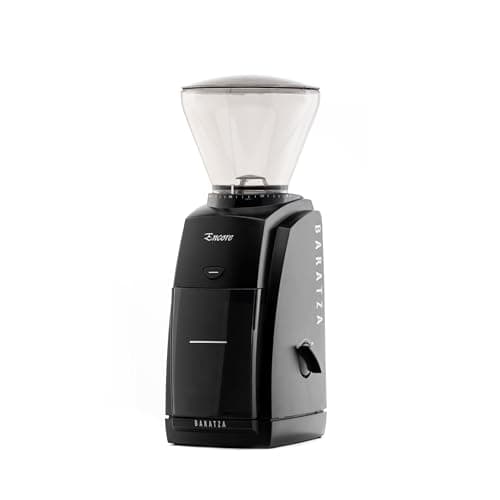
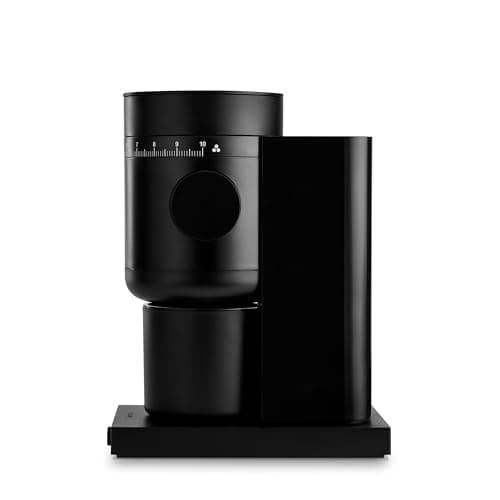
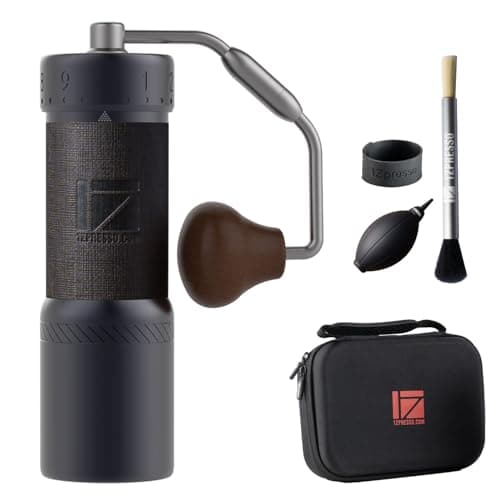
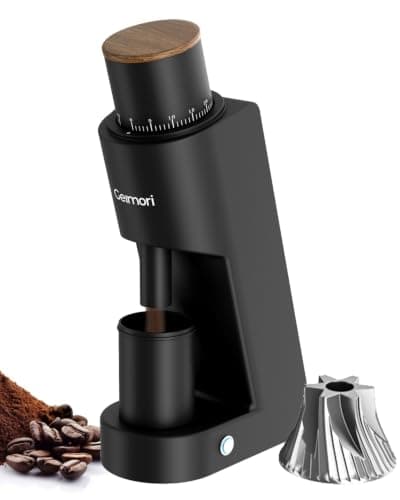
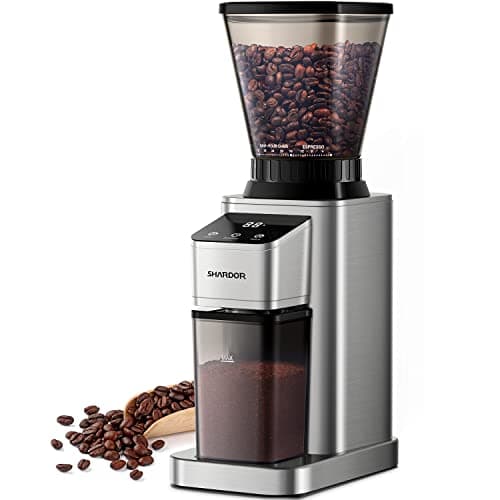
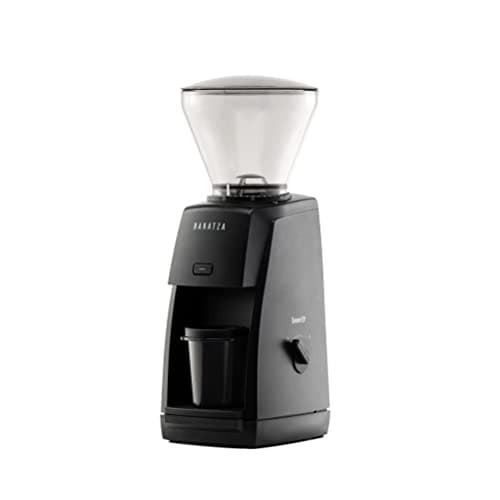
The verdict: the Baratza Encore ESP is the best coffee grinder under $200 for most people, because it is the cheapest grinder here that can go fine enough to choke an espresso machine and coarse enough for French press, with small enough steps to actually dial a shot in. If you will never make espresso, buy the Baratza Encore instead and keep the difference — it grinds filter coffee just as well for a bracket less. The budget pick is the SHARDOR Professional Conical Burr, the cheapest electric here that does the job of a real burr grinder, with the build compromises that price implies.
Two hundred dollars is the most consequential bracket in home coffee, because it is where the grinder stops being the weakest thing on your counter. Below roughly $100 you are buying a burr grinder that is better than a blade and worse than everything above it. Above $200 you are buying bigger burrs, finer adjustment and better workflow. Inside this bracket you are buying the one capability that actually changes what you can make: a fine enough range, in small enough increments, to dial espresso in rather than guess at it.
That is why the ranking here looks different from a general grinder ranking. The order is espresso capability first, adjustment resolution second, retention third, build fourth. A grinder that cannot go too fine cannot be dialed in — if every setting gushes, there is no setting that is correct — so a grinder with an espresso range beats a better-built grinder without one, for anyone who owns or wants an espresso machine. If you only ever brew filter, flip the first two criteria and the answer changes, which is exactly what the number-two pick is for.
Every pick here already appears somewhere on this site. Specifications, pros and cons are carried over unchanged from those entries and each pick says where it came from; what is new is the bracket and the order. Nothing on this page was re-scored to make a ranking come out a particular way, and no pick is a product we have lab-tested, because we do not have a lab. Prices are live from the price layer with the date they were read, so a grinder that drifts over $200 will show it rather than hide behind a claim.
How to choose a grinder under $200
Four questions, in the order that actually decides the purchase.
1. Will you ever pull espresso?
This is the whole ranking in one question. Espresso needs a grind fine enough to build nine bars of resistance, and it needs that grind to be adjustable in increments small enough to move a shot from thirty seconds to twenty-five without landing on fifteen. A filter grinder at its finest setting still gushes, and no amount of tamping fixes it. If espresso is in your future, the Encore ESP, the Opus 2 and the J-Ultra are your list; the Encore is not, and the SHARDOR only is if your machine has pressurized baskets, which do some of the work for you. Our pressurized vs non-pressurized portafilter page explains which basket you have.
2. Stepped or stepless, and how fine are the steps?
Range gets quoted; resolution is what you feel. A grinder with forty espresso steps between choking and gushing lets you walk a shot in. A grinder with twelve steps across its whole range will jump straight over the setting you wanted. Stepless adjustment, like the Opus 2's dial, has infinite resolution and no repeatability — you cannot count clicks back to where you were — while numbered external adjustment like the J-Ultra's gives you both. For one bean and one drink, stepped is fine and easier. For switching between espresso and pour-over daily, numbered beats stepless beats stepped.
3. How much coffee does it keep?
Every hopper grinder holds some grounds in the chute between doses, which means the first few grams of today's shot are yesterday's bean. It matters not at all if you drink one coffee from one bag, and quite a lot if you rotate roasters or share the grinder between espresso and filter. Single-dose grinders — the Opus 2 and the Wirsh here — are built to hold nothing, and a hand grinder holds least of all. That is the entire argument for the format, and it is a workflow argument rather than a flavor one.
4. Can you still buy parts in five years?
Burrs dull. Motors and gearboxes fail. Baratza's unusual position in this bracket is that it publishes parts and sells replacement burrs, so a dead grinder is often a repair rather than a replacement. Most of the rest of this bracket is a two-year warranty and then goodwill. That difference does not show up in a spec table and it is worth real money over a decade — it is part of why both Baratzas rank where they do.
What a grinder under $200 cannot buy
Three things, named so you are not searching for them. There is no 64mm flat-burr grinder in this bracket — flats start well above it, and the step up in uniformity at espresso fineness is the main reason to spend more, which is what our best espresso grinders ranking is about. There is no grinder here with a built-in scale or grind-by-weight. And there is no electric grinder here that matches the J-Ultra's grind quality, which is the honest reason a hand grinder is still on this list at all.
Buy the grinder before the machine
If you are choosing between spending this bracket on a grinder or on a brewer, spend it on the grinder. A good grinder with a cheap brewer makes better coffee than a good brewer with pre-ground coffee, and that is true for espresso, drip and pour-over alike. The counterpart pages are best coffee makers under $200 and best espresso machines under $200, and both of them say the same thing in their own words. Once the grinder is chosen, the grind sizes to set it to are in the coffee grind size chart.
How we picked
We did not lab-test this gear
Everyone in this category says they tested twenty machines. We have not lab-tested any of these, and we say so. What we did instead: compiled the published manufacturer specifications, read the manuals, ran the math where there was math to run (heat-up time, pressure, dose capacity, grind range, cost per cup), and scored each pick against a published rubric. The scores are judgments from documented research — not measurements we took, because we do not have a lab and we will not pretend we do. Where a number came from someone else's work, we name them in Sources.