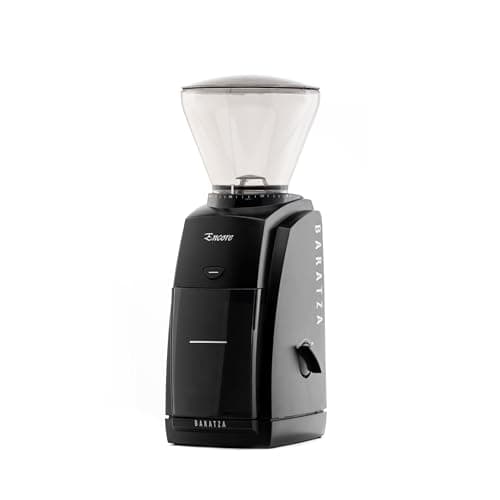
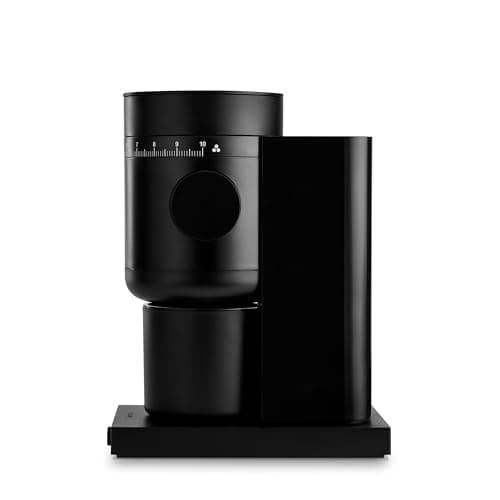
These two grinders get cross-shopped constantly, and for good reason: they sit roughly one price bracket apart, they are both aimed squarely at the home brewer, and they are both the grinder a knowledgeable friend would tell you to buy. They are also solving slightly different problems, and almost every comparison of them leads with burr size when burr size is not what decides it.
Here is the decision in one sentence, before the detail. If espresso is anywhere in your plans, the Opus 2 is the only one of these two that can do it; if espresso is not, the Encore does the job for less money and is the easier machine to own for a decade. Everything below is the reasoning, the published specifications behind it, and the cases where that sentence is wrong.
A note on what this page is and is not. We do not have a grind-distribution lab, so there are no particle-size measurements of our own here. What you get is what Baratza and Fellow publish, read carefully; the mechanism behind each spec explained so you can tell which ones matter to you; and our scores, which are judgments from that documented research rather than bench measurements — as how we review says in those words.
The two machines, in their own manufacturers’ numbers
The Baratza Encore uses a 40mm conical steel burr with 40 stepped settings. Baratza’s spec sheet is unusually forthcoming about the drivetrain: a high-torque DC motor turning the burr through a gear-reduction transmission, which keeps burr speed in the hundreds of RPM rather than the thousands. The housing and grounds bin are plastic. Baratza’s whole business model is parts and repair, and the Encore is built from discrete replaceable components with long-term support behind them. Its published scope is filter coffee: drip, pour-over, French press, cold brew.
The Fellow Opus 2 uses 48mm stainless conical burrs with a stepless side dial— though Fellow’s own FAQ also cites 48 adjustable settings, so the page does not make entirely clear whether the dial clicks through discrete positions or runs continuously. Power is published as 300 W. It is a single-dose design: a 100 g load bin, a 100 g catch cup and a separate 30 g espresso dosing cup that Fellow states is compatible with 54mm and 58mm portafilters. There is an integrated anti-static ionizer. The body measures 206 × 130 × 267 mm (8.1 × 5.1 × 10.5 in) and it weighs 2.3 kg (5.1 lb). Burr access is tool-free. The warranty is published as two years, with an option to extend.
Note two absences, so you know they are missing rather than assume we left them out. Fellow publishes no grind range in microns on its own product page and no motor RPM. Retailer listings for the Opus 2 do quote a 200–1200 micron range, but that figure is not on Fellow’s page, so we are flagging it as a retailer claim rather than passing it on as a manufacturer specification. Baratza, for its part, publishes no micron range for the Encore either.
The difference that actually decides it
Espresso capability. Not burr size, not settings count, not the anti-static ionizer.
The Encore cannot grind fine enough for espresso. That is not a close call or a matter of technique — the standard Encore’s adjustment range tops out too coarse, which is precisely why Baratza built the Encore and then built a separate Encore ESP with a recalibrated range for espresso. Our Encore vs Encore ESP comparison is the page for that decision, and if you are reading this one you should read that one too, because it is the other half of the same question.
The Opus 2 is specified across an espresso-to-cold-brew range and ships with a 30 g espresso dosing cup sized for 54mm and 58mm portafilters. That is Fellow stating, in hardware, that espresso is in scope.
So the practical test is brutally simple. Do you own an espresso machine, or will you buy one? If yes, the Encore is off the list no matter what else it does well, because a grinder that cannot reach espresso fineness is not a grinder you can use for espresso, and no technique or accessory changes that. If no — if you brew drip, pour-over, French press or cold brew and intend to keep doing that — then the Encore’s inability to do something you were never going to ask of it is not a flaw, and the money it saves is real.
One caveat that matters more than the marketing suggests. “Can reach espresso fineness” and “is a good espresso grinder” are different claims. A 48mm conical burr with a stepless dial will get you to espresso territory, and on a machine with a single-wall basket you will be able to dial a shot in. It is not going to compete with a dedicated espresso grinder on step resolution, and if espresso is the primary thing you do rather than something you also do, our best espresso grinders ranking is where the honest advice for you lives. What the Opus 2 genuinely offers is a single grinder that covers espresso andeverything else without being bad at either — which, for a household that makes a flat white and a pot of drip on the same morning, is worth a great deal.
Burr size: 40mm versus 48mm, honestly
48mm is bigger than 40mm, and bigger burrs are genuinely better, but not for the reason most comparisons imply. The gains are mostly throughput and heat: a larger burr set clears a dose in fewer rotations, so the grind takes less time and the coffee spends less time being warmed by friction. For a single-dose grinder like the Opus 2, which grinds one brew at a time, that is a real quality-of-life improvement and a modest flavor one.
What a 20% larger conical burr does not buy you is a step change in grind consistency. Burrgeometry and alignment matter more than diameter in that range, and both of these are conical steel burrs of broadly similar design. Anyone telling you 48mm produces a dramatically more uniform grind than 40mm is overselling an eight-millimeter difference. If you want the comparison where burr design genuinely changes the cup, that is conical versus flat, and it is covered in conical vs flat burr grinders.
Stepped versus stepless adjustment
The Encore has 40 discrete steps. The Opus 2 has a stepless dial — with the caveat noted above that Fellow’s FAQ also mentions 48 settings, so the documentation is not fully consistent on whether the dial detents.
Stepped adjustment is a feature, not a limitation, for brewed coffee. Forty positions is plenty of resolution for drip through French press, and because each position is a defined click you can write down “setting 18 for the Chemex” and return to it exactly, every time, for years. That repeatability is worth more in daily use than infinite granularity you cannot reproduce.
Stepless adjustment is the right answer for espresso and a mild inconvenience for everything else. Espresso needs resolution between steps — the difference between a choked shot and a gusher can be a fraction of a step on a coarse grinder — so a continuous dial is not a luxury there, it is the mechanism that makes dialing in possible. The cost is that returning to a setting means trusting a mark on a dial rather than counting clicks, so if you switch between espresso and pour-over regularly you will spend a few seconds re-finding your place. That is the trade, and which side of it you want follows directly from the espresso question above.
Retention, static and the single-dose design
This is where the Opus 2’s design philosophy shows, and it is a genuine advantage for a specific kind of user.
A hopper grinder like the Encore holds a reservoir of beans and grinds from it, and some ground coffee stays trapped in the chute and burr chamber between uses. If you drink the same coffee every day, that retention is irrelevant — the stale grams get pushed through by the next dose and nobody notices. If you switch beans often, or brew a decaf in the evening and a light roast in the morning, retained grounds from the last coffee end up in the next one.
The Opus 2 is built around single dosing: you put in exactly the beans for one brew and grind them all. Fellow publishes a 100 g load bin, a 100 g catch cup and a 30 g espresso cup, plus an integrated anti-static ionizer — static is what makes fine grounds cling to every plastic surface they touch, which is both the mess problem and part of the retention problem, and ionizing the grounds as they exit measurably reduces the clinging. Fellow also states that burr access is tool-free, which matters because single-dosers get cleaned more often than hopper grinders.
Our single dose grinder ranking covers this design philosophy properly if it is what you are after. For the Encore, the honest position is the one on our coffee grinder ranking: retention is average for a hopper grinder, which is fine if you are a one-bean household and a mild annoyance if you are not.
Noise, build and what it is like to live with
The Encore’s drivetrain is its quiet advantage, and it is a published one rather than an impression. Baratza’s spec sheet describes a high-torque DC motor driving the burr through a gear reduction, which keeps burr RPM low. Pitch is what carries through a wall, and a low-speed grinder is lower-pitched than a direct-drive one — which is why the Encore earns a place on our quiet coffee grinder ranking. What it lacks is mass: the plastic housing and bin resonate, and a folded towel underneath fixes most of that for free.
Fellow publishes no RPM figure and no dB figure for the Opus 2, so we have nothing to compare on noise and are not going to assert one. What Fellow does publish is 300 W of power, a 2.3 kg body, and tool-free burr access. The 2.3 kg figure is worth noting as a plus and a minus: it is substantial enough not to walk around the counter while grinding, and light enough to move.
On long-term ownership, the Encore wins on a point that does not appear on any spec sheet. Baratza’s parts-and-repair support is the best in the category and has been for over a decade — burrs, motors, gearboxes and bins are all orderable, and the machine is designed to be opened. Fellow publishes a two-year warranty with an option to extend, which is a year longer than most appliances and shorter than Technivorm’s five. If you expect to own a grinder for ten years and fix it twice, that difference is the most important thing on this page after the espresso question.
The honest verdict
Buy the Fellow Opus 2 if espresso is in your plans at all, if you switch between coffees often enough that retention bothers you, or if you want one grinder that covers espresso through cold brew without owning two machines. It is the more capable grinder, it costs a bracket more, and the capability it adds is the specific one the Encore cannot reach.
Buy the Baratza Encore if you brew filter coffee and expect to keep brewing filter coffee. It will make excellent drip, pour-over and French press, the 40 stepped settings are easier to live with than a stepless dial for that job, it is quieter by design, it costs less, and Baratza will still be selling you parts for it in eight years. Buying the Opus 2 for its espresso range and then never making espresso is money spent on a capability you did not use.
Buy neither if you are about to pair a grinder with a real espresso machine as your main drink. In that case you want a grinder designed for espresso first, and best espresso grinders is the right page. If you are specifically in the Baratza family, the Encore versus Encore ESPquestion is the one to settle, because the ESP is Baratza’s own answer to the gap this page is about.
Side by side, on published specifications only
| | Baratza Encore | Fellow Opus 2 |
|---|
| Burrs | 40mm conical steel | 48mm conical stainless steel |
| Adjustment | 40 stepped settings | Stepless side dial (Fellow’s FAQ also cites 48 settings) |
| Espresso capable | No — range tops out too coarse | Yes — espresso to cold brew, with a 30 g espresso dosing cup |
| Drivetrain | High-torque DC motor through gear reduction | Not described; 300 W published |
| Workflow | Hopper | Single dose — 100 g load bin, 100 g catch cup, 30 g espresso cup |
| Anti-static | Not published | Integrated ionizer |
| Dimensions | Not published by Baratza | 206 × 130 × 267 mm (8.1 × 5.1 × 10.5 in) |
| Weight | Not published by Baratza | 2.3 kg (5.1 lb) |
| Grind range in microns | Not published | Not published by Fellow (retailer listings quote 200–1200) |
| Motor RPM | Not published as a number | Not published |
| Noise figure | Not published | Not published |
| Warranty | Backed by Baratza’s parts and repair program | 2 years, extendable |
| Burr access | Designed to be opened and serviced | Tool-free |
Every row above is either a figure the manufacturer publishes or an explicit “not published.” We have not filled a single gap with a number from a review site or a retailer, except the one retailer micron range, which is labeled as such. If you see a side-by-side table elsewhere with a complete set of numbers for both machines, check where the missing ones came from.
Four questions that settle it faster than any spec
Will you ever make espresso on it? Yes means the Opus 2 and the Encore is out. No means the question is price and ownership, and the Encore leads on both. This is the only question on the list that is decisive by itself.
Do you drink one coffee or several?One bag at a time, finished before you open the next: the Encore’s hopper retention is a non-issue and the convenience of pouring beans in and walking away is a real plus. Two or three bags going at once, or a decaf for the evening: the Opus 2’s single-dose design stops the last coffee turning up in the next one.
How long do you intend to own it?Three to five years and then upgrade: both are fine. Ten years with a repair in the middle: Baratza’s parts ecosystem is the best in the business and is the reason the Encore keeps winning value arguments a decade after launch.
Who else is in the house at 6 a.m.?If grinding wakes somebody, the Encore has the published mechanism in its favor — a geared-down DC motor runs the burr at low RPM, and low RPM means lower pitch, which is what carries through a wall. Neither manufacturer publishes a dB figure, so that is as far as the evidence goes, and the detail is in our quiet grinder ranking.
What neither of these will fix
Both grinders are a large upgrade over a blade grinder and a modest upgrade over each other. The mechanism is worth knowing because it tells you where the next improvement is: a burr grinder crushes beans between two surfaces set a fixed distance apart, so particles come out roughly uniform and the whole dose extracts together; a blade grinder smashes, producing dust and boulders that extract at completely different rates in the same cup. Burr vs blade grinder has the full explanation. If you are coming from a blade grinder, either of these two will be the biggest single improvement to your coffee available for the money, and the choice between them is a detail by comparison.
What neither fixes is stale coffee or the wrong dose. A perfect grind of a bag roasted four months ago is still a cup of flat coffee, and a perfectly ground dose measured by a scoop rather than a scale will still vary enough to swamp the difference between these two machines. Our coffee to water ratio guide and best coffee scales cover both, and they are cheaper than the gap between these grinders.
Where each one sits in the wider market
Neither of these is the best grinder available at any price, and it is worth knowing what is above them so you can decide whether to stretch.
Above the Opus 2, the next real step is a 64mm flat-burr grinder, which changes the flavor profile rather than just the consistency — flat burrs tend to produce a more uniform, higher-clarity grind and a different cup, which is a preference rather than a ranking. Conical vs flat burr grinders is the page for that, and Fellow’s own Ode Gen 2is the brew-only flat-burr machine that sits directly above the Opus in Fellow’s range.
Below the Encore, the budget bracket is real but the compromises are steeper than people expect — usually fewer settings and a coarser-leaning range, which is survivable for drip and fatal for espresso. Our best budget coffee grinders ranking is honest about what that bracket can and cannot do. And for one or two cups a day, a good hand grinder out-grinds electrics several times its price at the cost of a minute of your morning: best manual coffee grinders covers those, and manual vs electric is the decision behind it.