Skip to content
Tamp & Pour

Roundups & reviews · Grinders

Manual vs electric coffee grinders

Hand grinders win on grind-per-dollar; electrics win on the mornings you are late. Here is where the crossover point actually falls, and what to buy on each side.

By Stephen V.Updated How we review
#ad

We earn a commission when you buy through our Amazon links, at no extra cost to you. It never changes a verdict, and we say so when the cheaper product is the better buy. How this works.

The honest version of this comparison is short. Below about $200, a manual grinder produces a better, more uniform grind than any electric at the same price, because none of its cost goes to a motor. Above about $300, electrics catch up and then pull away, because they can afford large flat burrs and precise adjustment that no reasonable hand grinder carries. In between is the interesting part, and the deciding factor is not grind quality at all — it is how much coffee you make and how you feel about a minute of cranking.

The short answer

Buy manual if you make one or two cups a day, your budget is under $200, you travel, or you single-dose different beans and hate retention. Buy electric if you brew a full pot for a household, you make several espressos back to back, your budget clears $300, or grip strength or time pressure would realistically stop you using a hand grinder.

Side by side

 Manual (hand) grinderElectric grinder
Grind quality per dollarMuch higher under ~$200Higher above ~$300
Time per double espresso dose~40–60 seconds of cranking~10–20 seconds, hands-free
Time per full French press2–3 minutes~30 seconds
RetentionNear zero1–5g typical in chute and burr chamber
NoiseQuiet enough for a sleeping houseLoud for the duration
Counter spaceFits in a drawerPermanent footprint, often tall
TravelPacks into a bagStays home

The short answer

Quick picks

  • 01
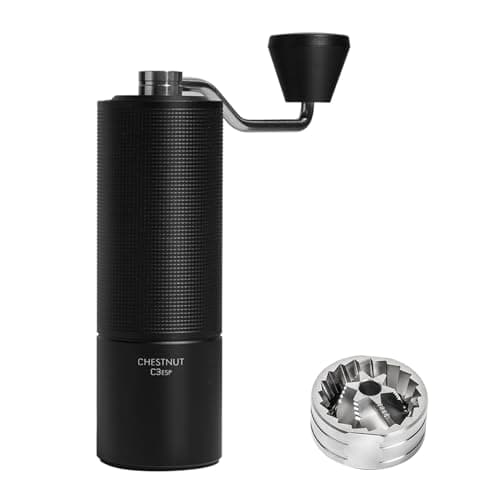
    Timemore Timemore Chestnut C3 ESP
    Timemore Chestnut C3 ESP

    The clearest illustration of the manual argument: stainless burrs and espresso-capable adjustment for under a hundred dollars, which no electric comes close to matching.

    7.7Best manual under $100
  • 02
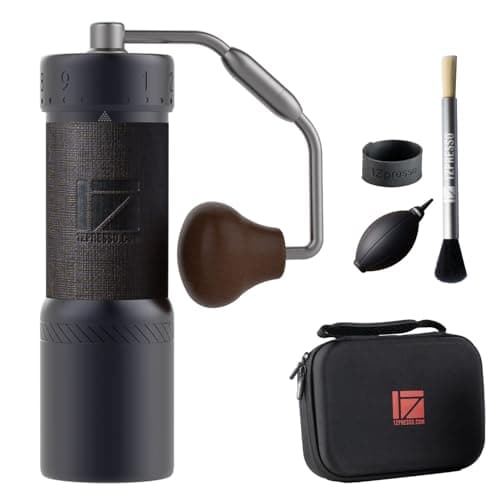
    1Zpresso 1Zpresso J-Ultra
    1Zpresso J-Ultra

    The manual case at its strongest: an external numbered dial, fast heptagonal burrs and espresso-grade micro-adjustment that rivals electrics several times the price.

    8.4Best manual overall
  • 03
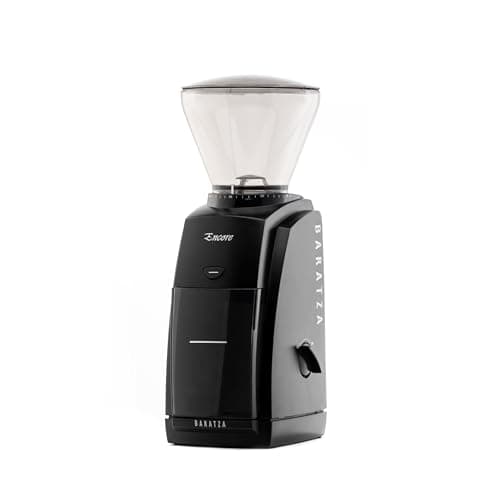
    Baratza Baratza Encore
    Baratza Encore

    The electric case for filter drinkers: press a button, get a full pot's worth of consistent grounds in seconds, and keep the machine alive for years with replaceable parts.

    7.8Best electric for filter
  • 04
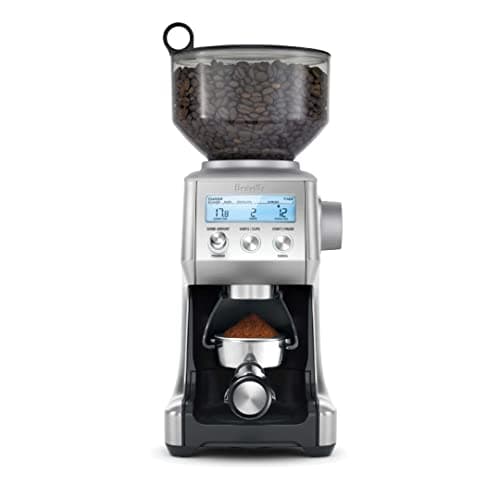
    Breville Breville Smart Grinder Pro (BCG820)
    Breville Smart Grinder Pro (BCG820)

    The electric case for espresso households: 60 settings, a programmable dose timer and a cradle that grinds straight into a portafilter, so back-to-back drinks are effortless.

    7.4Best electric for espresso households

#ad · Live prices from the Amazon Product API, as of Sep 2, 2026. Where we have no verified live price, we show none — a gap beats a number that has rotted.

In detail

The picks, in full

01
Timemore Timemore Chestnut C3 ESP

Best manual under $100

Timemore Chestnut C3 ESP

Stainless S2C conical burrEspresso-capable fine rangeManualNear-zero retention
7.7/10

The clearest illustration of the manual argument: stainless burrs and espresso-capable adjustment for under a hundred dollars, which no electric comes close to matching.

Grind consistency
7.5
Speed
5
Retention
9
Build
7.5
Value
9.5

Pros

  • Grind quality that electrics twice the price cannot match
  • Almost no retention, so switching beans costs you nothing
  • Silent enough to use at 5am without waking anyone

Cons

  • About a minute of cranking per double dose
  • Slow for large filter doses

Don't buy this if…

you brew a full carafe every morning — three minutes of grinding before coffee is how a grinder ends up in a cupboard.

$99.00View on Amazon

Price as of Sep 2, 2026. Prices change — Amazon's at checkout is the one that counts.

#ad · we may earn a commission from this link to Timemore Chestnut C3 ESP

02
1Zpresso 1Zpresso J-Ultra

Best manual overall

1Zpresso J-Ultra

Heptagonal stainless burrExternal numbered adjustment dialEspresso to filter rangeFast grinding for a manual
8.4/10

The manual case at its strongest: an external numbered dial, fast heptagonal burrs and espresso-grade micro-adjustment that rivals electrics several times the price.

Grind consistency
9
Speed
6.5
Retention
9
Build
9
Value
8.5

Pros

  • External dial makes settings readable and repeatable — the usual manual weakness, solved
  • Grinds noticeably faster than budget hand grinders
  • Espresso-capable micro-adjustment at a fraction of an equivalent electric

Cons

  • Costs as much as a decent entry electric
  • Still a hand grinder — big filter doses are still work

Don't buy this if…

you want to press a button. This is the best manual answer, not an argument that manual suits everyone.

$199.00View on Amazon

Price as of Sep 2, 2026. Prices change — Amazon's at checkout is the one that counts.

#ad · we may earn a commission from this link to 1Zpresso J-Ultra

03
Baratza Baratza Encore

Best electric for filter

Baratza Encore

40mm conical burr40 stepped settingsGear-reduced DC motorFully documented parts
7.8/10

The electric case for filter drinkers: press a button, get a full pot's worth of consistent grounds in seconds, and keep the machine alive for years with replaceable parts.

Grind consistency
7.5
Speed
8.5
Retention
6.5
Build
7.5
Value
9

Pros

  • A carafe dose in seconds rather than minutes
  • Repairable, so it can outlast several cheaper grinders
  • Consistent enough across the filter range that most people never need more

Cons

  • No espresso capability
  • Retains a few grams in the chute

Don't buy this if…

espresso is in your future — the standard Encore cannot grind fine enough, and the Encore ESP is the version to buy instead.

The full assessment is in our Baratza Encore review, including why the ESP version is the one to buy if espresso is anywhere in your plans.

$149.95View on Amazon

Price as of Sep 2, 2026. Prices change — Amazon's at checkout is the one that counts.

#ad · we may earn a commission from this link to Baratza Encore

04
Breville Breville Smart Grinder Pro (BCG820)

Best electric for espresso households

Breville Smart Grinder Pro (BCG820)

Stainless conical burr60 grind settingsProgrammable dose timerGrinds into portafilter or container
7.4/10

The electric case for espresso households: 60 settings, a programmable dose timer and a cradle that grinds straight into a portafilter, so back-to-back drinks are effortless.

Grind consistency
7.5
Speed
9
Retention
5.5
Build
7
Value
8

Pros

  • Dose timer means the same grams every morning with no scale fiddling
  • Covers espresso through French press in one machine
  • Grinding into the portafilter keeps a multi-drink session fast and tidy

Cons

  • Retains grounds in the chute — single-dosing needs purging
  • Stepped adjustment can land espresso between two clicks

Don't buy this if…

you single-dose several different beans a day — retention will annoy you and a hand grinder handles that better.

$199.95View on Amazon

Price as of Sep 2, 2026. Prices change — Amazon's at checkout is the one that counts.

#ad · we may earn a commission from this link to Breville Smart Grinder Pro (BCG820)

Why manual wins on grind quality per dollar

A hand grinder has no motor, no gearbox, no housing to contain vibration and no hopper. All of the money goes into burrs, the shaft that holds them true, and the bearings that keep the shaft from wobbling. Wobble is the enemy of uniformity — if the burrs move relative to each other during grinding, the gap changes and particle size scatters. A $100 hand grinder can afford properly machined stainless burrs on a double-bearing shaft; a $100 electric cannot, because it has spent half its budget on the motor.

Why electric wins on everything else

Speed is the obvious one, but volume is the real one. Grinding 15 grams by hand is pleasant; grinding 60 grams for a French press is a chore you will avoid, and a grinder you avoid is a grinder that has stopped improving your coffee. Electrics also let you dose by timer, which removes a step from a rushed morning, and their weight means you can operate them one-handed while doing something else. Any household making several drinks at different times of day is better served by an electric.

Retention: the argument nobody mentions

Every electric grinder keeps some coffee inside the burr chamber and exit chute — typically one to five grams. That coffee comes out at the start of your next grind, stale. If you drink one bean all week this barely matters. If you switch beans, or you are dialing in espresso and need to know that what you just ground is only the beans you just added, retention is a real problem, and it is the reason many enthusiasts single-dose or use a hand grinder despite owning an electric.

The crossover point in practice

Under $100:manual, comfortably. Nothing electric at this price grinds as well — see our budget grinder ranking.

$100–$250: genuinely close. A premium hand grinder out-grinds an entry electric, but an entry electric is more practical. Decide on volume: one or two cups a day means manual, a household pot means electric.

Above $300: electric, unless portability or silence is a hard requirement. At this level electrics get large flat burrs, precise or stepless adjustment and low-retention designs, and hand grinders stop keeping up on convenience without gaining much on quality.

You can reasonably own both

It is a common and sensible end state: an electric on the counter for daily volume, and a hand grinder for travel, for single-dosing an unusual bag, or for early mornings when the noise would wake the house. A good hand grinder is cheap enough that the second purchase is not extravagant, and the two solve genuinely different problems.

How we picked

We did not lab-test this gear

Everyone in this category says they tested twenty machines. We have not lab-tested any of these, and we say so. What we did instead: compiled the published manufacturer specifications, read the manuals, ran the math where there was math to run (heat-up time, pressure, dose capacity, grind range, cost per cup), and scored each pick against a published rubric. The scores are judgments from documented research — not measurements we took, because we do not have a lab and we will not pretend we do. Where a number came from someone else's work, we name them in Sources.
Questions

Frequently asked

Is a manual coffee grinder better than an electric one?
Under about $200, yes on grind quality — all of the money goes into burrs rather than a motor. Above about $300, electrics pull ahead with bigger burrs and finer adjustment. Below that, the real question is how much coffee you grind at a time.
How long does it take to grind coffee by hand?
Roughly 40–60 seconds for a double espresso dose on a good hand grinder, and two to three minutes for a full French press. Burr quality and bean density both change that meaningfully.
Do hand grinders work for espresso?
The right ones do, and very well — espresso needs fine, precise, repeatable adjustment, which good hand grinders provide cheaply. Make sure the model is espresso-capable; many hand grinders are tuned for filter only.
Are electric grinders louder?
Considerably. A hand grinder makes a soft crunching sound; an electric is loud enough to be a consideration in a small apartment or an early morning. It is a short burst, but it is a real difference.
Which has less waste between beans?
Manual, by a wide margin. Hand grinders retain almost nothing, while electrics typically hold one to five grams in the chute and burr chamber that carries over to your next grind.

Keep reading

Receipts

Sources

We do not run a testing lab, and we do not pretend to. Where a measured number came from someone else's work, we name them and link them. Where we could not verify something, we say so on the page rather than quietly leaving it out. Read our full method.