Skip to content
Tamp & Pour

Roundups & reviews · Espresso Machines

The best espresso machines under $200

What $200 really buys: a pressurized basket, a steam wand and a genuine way to find out if you like this. Ranked honestly, with live prices.

By Stephen V.Updated How we review
#ad

We earn a commission when you buy through our Amazon links, at no extra cost to you. It never changes a verdict, and we say so when the cheaper product is the better buy. How this works.

Let us be straight about this price band before ranking anything. Under $200, essentially every machine ships with a pressurized (dual-wall) portafilter basket: a basket with a single small exit hole behind a second chamber, which creates artificial back-pressure so that almost any grind produces a foam that looks like crema. It is a clever piece of engineering and it is doing the job your grinder should be doing.

The consequence is a hard ceiling. Because the basket, not the coffee, is creating the resistance, buying a better grinder will not improve your shot much. You get consistent, drinkable, milk-friendly espresso-style coffee, and that is where it stops. Anyone telling you a $99 machine makes cafe espresso is selling something.

That said, this band does two things genuinely well. It answers the question “do I actually enjoy making espresso?” for the price of a few weeks of cafe coffee, and it makes perfectly good milk drinks, where the milk hides most of what the basket costs you. The picks below are ranked on the things that actually differ at this price: whether the steam wand is a real wand, build quality, and how usable the machine is day to day.

The short answer

Quick picks

#ad · Live prices from the Amazon Product API, as of Sep 2, 2026. Where we have no verified live price, we show none — a gap beats a number that has rotted.

In detail

The picks, in full

01
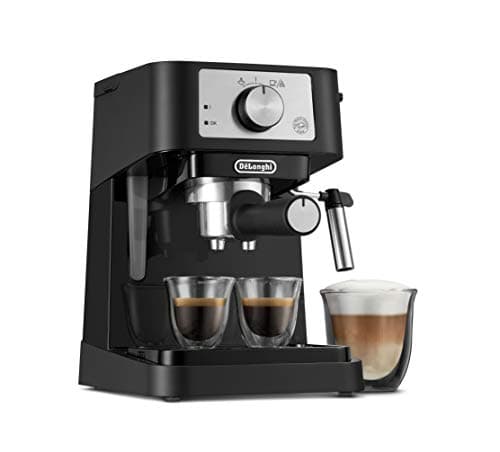
De'Longhi De'Longhi Stilosa (EC260)

Best overall under $200

De'Longhi Stilosa (EC260)

Pressurized portafilter15-bar pumpManual steam wandTamper includedCompact footprint
7.0/10

The safest buy under $200: a real manual steam wand, a tamper in the box, and a major manufacturer behind it — the honest 'is this hobby for me' machine.

Shot quality
6
Steam wand
6.5
Build
6
Ease of use
8
Value
8.5

Pros

  • A genuine manual steam wand you can learn real milk texturing on, not a plastic frothing sleeve
  • Backed by a manufacturer with parts, service and a long track record at this price
  • Simple and compact — nothing to go wrong and nowhere it will not fit
  • The cheapest legitimate way to find out whether espresso is your hobby

Cons

  • Pressurized basket puts a hard ceiling on shot quality
  • Plastic-heavy build; this is not a machine you grow into
  • Weak steam power means slow texturing and a narrow working window
  • No grinder, though at this price a cheap burr grinder is enough

Don't buy this if…

you already know you are serious about espresso. You will outgrow the pressurized basket within months and wish the money had gone toward a Bambino or a Gaggia.

$149.95View on Amazon

Price as of Sep 2, 2026. Prices change — Amazon's at checkout is the one that counts.

#ad · we may earn a commission from this link to De'Longhi Stilosa (EC260)

02
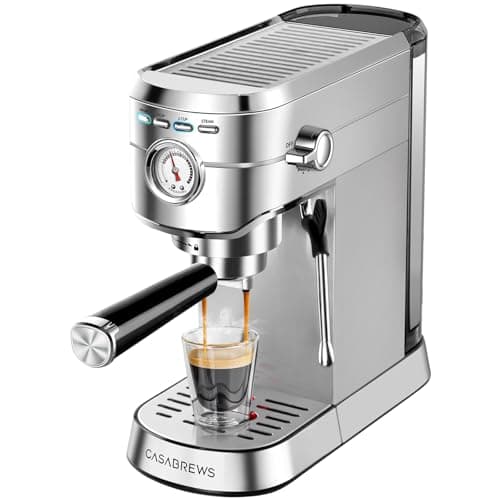
CASABREWS CASABREWS CM5418 Compact Espresso Machine

Best equipped

CASABREWS CM5418 Compact Espresso Machine

Pressurized portafilter20-bar pumpSteam wandStainless steel housingPressure gauge
7.1/10

The best-equipped budget machine: a stainless body, a pressure gauge and a real steam wand, in a compact package that looks and feels well above its price.

Shot quality
6
Steam wand
6.5
Build
7
Ease of use
7.5
Value
8.5

Pros

  • Stainless housing rather than the all-plastic bodies typical at this price
  • A pressure gauge is a genuinely useful learning tool — you can see what the puck is doing
  • Real steam wand rather than a panarello sleeve
  • Compact and tidy on a counter

Cons

  • '20 bar' is a pump maximum, not what reaches the coffee — espresso is brewed at about 9 bars
  • Pressurized basket, so the same ceiling as everything else here
  • Steam power is modest; texturing a full pitcher is slow
  • Thinner long-term parts and service story than De'Longhi

Don't buy this if…

you plan to buy non-pressurized baskets later — this platform is built around the pressurized basket and does not have a real upgrade path.

$118.99View on Amazon

$139.9915% off

Price as of Sep 2, 2026. Prices change — Amazon's at checkout is the one that counts.

#ad · we may earn a commission from this link to CASABREWS CM5418 Compact Espresso Machine

03
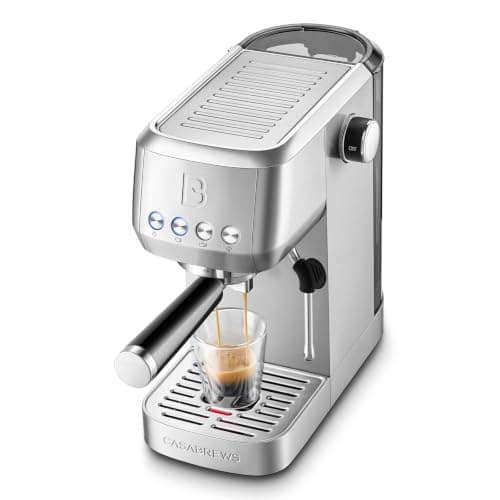
CASABREWS CASABREWS 3700 Essential Espresso Machine

Cheapest with a real wand

CASABREWS 3700 Essential Espresso Machine

Pressurized portafilter20-bar pumpManual steam wandStainless steel housing
6.9/10

The cheapest machine here with an actual steam wand and a stainless body — a legitimate hundred-dollar entry rather than a toy.

Shot quality
5.5
Steam wand
6
Build
6.5
Ease of use
7.5
Value
9

Pros

  • Around a hundred dollars for a machine with a real wand and a metal shell
  • Simple two-button operation with essentially no learning curve
  • Small enough for a dorm, office or first apartment

Cons

  • Lowest steam power on this page — milk takes real patience
  • Pressurized basket ceiling
  • Small water tank
  • Not a machine to keep once you get serious

Don't buy this if…

you make more than one milk drink at a time — the boiler will not keep up and you will be waiting between drinks.

$98.99View on Amazon

$109.9910% off

Price as of Sep 2, 2026. Prices change — Amazon's at checkout is the one that counts.

#ad · we may earn a commission from this link to CASABREWS 3700 Essential Espresso Machine

04
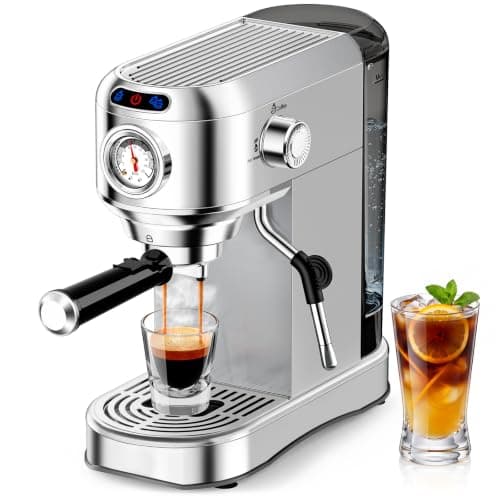
AERCANA AERCANA Espresso Machine 20 Bar with Milk Frother

Best compact budget option

AERCANA Espresso Machine 20 Bar with Milk Frother

Pressurized portafilter20-bar pumpMilk frotherStainless steel housingCompact body
6.5/10

A compact stainless machine with a frother at the hundred-dollar mark — capable for milk drinks, with the usual budget caveats about steam power and long-term support.

Shot quality
5.5
Steam wand
5.5
Build
6
Ease of use
7.5
Value
8

Pros

  • Small footprint and metal housing for around a hundred dollars
  • Makes perfectly acceptable milk drinks, which is what most buyers at this price actually want
  • Straightforward to operate

Cons

  • Pressurized basket, with all the ceiling that implies
  • Limited steam power, so milk texturing is slow and shallow
  • Generic-brand machine with a thin parts and service story

Don't buy this if…

you want to learn proper latte art — the steam here is not powerful enough to build a good whirlpool.

$99.99View on Amazon

$159.9938% off

Price as of Sep 2, 2026. Prices change — Amazon's at checkout is the one that counts.

#ad · we may earn a commission from this link to AERCANA Espresso Machine 20 Bar with Milk Frother

05
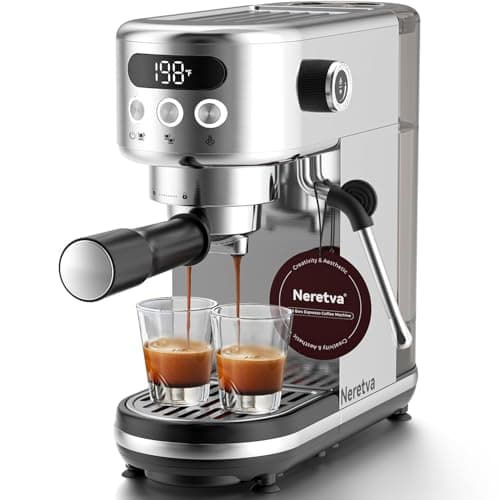
Neretva Neretva Espresso Machine 20 Bar

Smallest footprint

Neretva Espresso Machine 20 Bar

Pressurized portafilter20-bar pumpSteam wandStainless steelVery compact
6.4/10

The smallest sensible option: a super-compact stainless machine for under a hundred dollars, for a kitchen where footprint outranks everything else.

Shot quality
5.5
Steam wand
5.5
Build
6
Ease of use
7
Value
8

Pros

  • Genuinely tiny — fits where even the Stilosa struggles
  • Cheapest machine on this page
  • Stainless shell rather than plastic

Cons

  • Smallest water tank here, so frequent refilling
  • Weakest steam of the group
  • Pressurized basket ceiling, and no upgrade path
  • Generic-brand support

Don't buy this if…

counter space is not your binding constraint — the Stilosa is better in almost every other way for a little more money.

$104.99View on Amazon

$119.9913% off

Price as of Sep 2, 2026. Prices change — Amazon's at checkout is the one that counts.

#ad · we may earn a commission from this link to Neretva Espresso Machine 20 Bar

The pressurized basket, explained once and properly

Look inside a budget portafilter and you will find a basket with a solid underside and one tiny pinhole, sometimes with a plastic insert. Coffee sits in the upper chamber; water passes through it, collects in the lower chamber, and is forced out of the pinhole. That restriction creates back-pressure regardless of how the coffee is ground, and the jet of coffee emerging from the pinhole aerates into a foam that looks like crema.

The upside is real: you can use pre-ground supermarket coffee and a blade grinder and still get a drinkable, foamy shot. The downside is that your grind no longer controls the extraction, so the ceiling is fixed in hardware. A non-pressurized (single-wall, or “precision”) basket has dozens of tiny holes and no cheat chamber, so the puck itself provides the resistance — which is why machines with those baskets need a real grinder and reward one indefinitely.

Ignore the bar number

Every machine here advertises 15 or 20 bars. That figure is the pump’s maximum, measured with no coffee in the way. Espresso is brewed at roughly 9 bars at the puck, and every one of these machines has a valve limiting it to about that. A 20-bar machine is not more powerful than a 15-bar one, and a higher number is a marketing decision rather than a performance one.

The steam wand is the spec that actually varies

This is where these machines genuinely differ, and it is worth checking before you buy. A real steam wandis a bare metal tube with a tip — you control the aeration, and with practice you can make proper microfoam. A panarello or “cappuccino” frother is a plastic sleeve over that tube that draws in air automatically, producing stiff bubbly foam that sits on top of a cappuccino and collapses in a latte. Every pick on this page has a real wand, because a frothing sleeve at this price is the one thing that makes a cheap machine genuinely disappointing. Steam powerstill varies, and all of these are modest — expect to texture slowly and in a small pitcher.

What to spend the rest of your budget on

Counterintuitively, do not spend much on a grinder for these machines. With a pressurized basket the grind barely matters, so a basic burr grinder is plenty and a $200 grinder is wasted. Do spend $12 on a 12oz milk pitcher sized to the drink, because the oversized pitchers these machines sometimes ship with make texturing much harder on a weak wand. A cheap scale helps you keep the dose consistent. Fresh beans matter here as much as anywhere.

Three things to buy instead, honestly

A moka pot. For $35–$50 a Bialetti Moka Express makes a strong, genuinely good concentrated coffee that is better than what a $99 pressurized machine produces, with nothing to break.

An AeroPress. Around $32 for a brewerthat makes a cleaner, better cup than anything on this page — if you can live without steamed milk.

Or save up.The jump from a pressurized basket to a real 54mm or 58mm non-pressurized machine is the single biggest step in home espresso, and it happens at around $300 with the plain Breville Bambino. If espresso is going to be a lasting interest, waiting two months is a better decision than buying twice — see espresso machines under $500.

Getting the best out of a machine at this price

Warm everything: run a blank shot through the group and into your cup before brewing, because a cold portafilter and cold cup will drop the shot temperature more on a small machine than a large one. Use fresh beans and a medium-fine grind — the basket forgives grind errors, but stale coffee still tastes stale. Steam with cold whole milk in a small pitcher, and start the aeration immediately, because you have less steam and therefore less time. And descale on schedule; small machines with narrow water paths scale up quickly, and a scaled budget machine brews cool, which is the most common reason one starts tasting sour.

How we picked

We did not lab-test this gear

Everyone in this category says they tested twenty machines. We have not lab-tested any of these, and we say so. What we did instead: compiled the published manufacturer specifications, read the manuals, ran the math where there was math to run (heat-up time, pressure, dose capacity, grind range, cost per cup), and scored each pick against a published rubric. The scores are judgments from documented research — not measurements we took, because we do not have a lab and we will not pretend we do. Where a number came from someone else's work, we name them in Sources.

Questions

Frequently asked

Can you get a good espresso machine for under $200?
You can get a genuinely usable one that makes drinkable espresso and decent milk drinks — the De’Longhi Stilosa is the safest pick. What you cannot get is a machine without a pressurized basket, and that puts a hard ceiling on shot quality no grinder can lift.
What is a pressurized portafilter, and does it matter?
A basket with one small exit hole that creates artificial back-pressure, so almost any grind produces crema-like foam. It makes cheap machines forgiving, and it means a better grinder cannot improve your shot — the basket, not the coffee, is doing the work.
Is a 20-bar espresso machine better than a 15-bar one?
No. That number is the pump’s maximum with no coffee in the way. Espresso is brewed at around 9 bars at the puck, and both machines limit to roughly that. It is a marketing figure.
Do I need an expensive grinder for a machine under $200?
No, and this is the one case where we say that. With a pressurized basket the grind has limited influence, so a basic burr grinder is enough. Save the grinder budget for when you upgrade to a machine with non-pressurized baskets.
Should I buy a cheap espresso machine or save for a better one?
Buy cheap if you are genuinely unsure whether you will enjoy the process — it answers that for the cost of a few weeks of cafe coffee. Save up if you already know you are interested, because the real step change happens at around $300 with a non-pressurized machine.
Can you make latte art on a machine this cheap?
It is difficult. These machines have real steam wands but modest steam power, so building the whirlpool that creates microfoam is slow and the window is narrow. Possible with practice and a small pitcher; frustrating compared with a stronger machine.

Keep reading

Receipts

Sources

We do not run a testing lab, and we do not pretend to. Where a measured number came from someone else's work, we name them and link them. Where we could not verify something, we say so on the page rather than quietly leaving it out. Read our full method.