Skip to content
Tamp & Pour

Roundups & reviews · Espresso Machines

De'Longhi Stilosa review

About a hundred dollars for a real pump, a real steam wand and a stainless boiler. What it does well, what the pressurized basket permanently caps, and when to spend more.

By Stephen V.Updated How we review
#ad

We earn a commission when you buy through our Amazon links, at no extra cost to you. It never changes a verdict, and we say so when the cheaper product is the better buy. How this works.

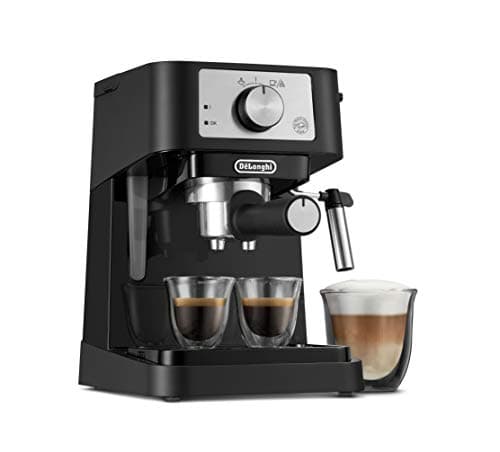
The Stilosa exists to answer one question cheaply: do you actually enjoy making espresso, or do you just like the idea of it? That is a genuinely useful question and most people answer it wrong before spending $700. For roughly the price of a month of café lattes you get a 15-bar pump, a stainless steel boiler, a 1-liter removable tank and a manual steam wand — the real components, in miniature, with one significant compromise.

That compromise is the pressurized basket, and it defines the machine more than any other spec. Understanding it is the difference between being happy with a Stilosa for two years and being frustrated with it in two weeks, so most of this review is about what it does.

01
De'Longhi De'Longhi Stilosa (EC260)

Finding out whether home espresso is for you

De'Longhi Stilosa (EC260)

15-bar pumpStainless steel boiler1L removable water tankPressurized (dual-wall) baskets, 1-cup, 2-cup and ESE pod1100W, manual steam wand
6.9/10

The cheapest machine we will recommend without an apology: real pump pressure, a real steam wand and a stainless boiler, held back by a pressurized basket that flatters bad grind and caps good grind.

Shot quality
6
Steam power
6
Build
6
Ease of use
8
Value
8.5

Pros

  • By far the cheapest honest entry point — a real pump machine rather than a steam toy
  • The pressurized basket means drinkable espresso even with a supermarket grind, which is exactly right for someone testing the water
  • Manual steam wand rather than an automatic frother, so milk texturing is a skill you can actually practice on it
  • Tiny footprint and a removable 1L tank that fills at the sink rather than under the machine
  • Takes ESE pods as well as ground coffee, which is a useful escape hatch for guests and decaf

Cons

  • The pressurized basket is the ceiling: it manufactures back-pressure, so a better grinder cannot make the shot better
  • Plastic-heavy build; this is not a machine anyone rebuilds at year eight
  • Steam power is modest — texturing a 12oz pitcher takes patience and the wand runs out of puff
  • No PID, no shot timer, no pressure gauge: you are timing by eye and judging by taste
  • Drip tray clearance is limited, so tall cups and travel mugs do not fit under the group

Don't buy this if…

you already know espresso is going to be a hobby. You will hit the pressurized-basket ceiling within a few months and wish the money had gone toward a Bambino or a Barista Express.

The pressurized basket, explained properly.A normal espresso basket is a metal cup with dozens of fine holes; resistance comes from the puck of coffee itself, so grind size and tamp decide how the shot flows. The Stilosa’s basket has a second chamber behind it with one tiny exit hole. That hole creates back-pressure artificially, which means almost any grind produces a slow, foamy pour that looks like espresso. It is a genuinely clever piece of design for a beginner: it removes the two hardest variables on day one. It also permanently limits you, because when the basket is doing the work, improving the grind changes almost nothing. The foam on top is aerated rather than extracted crema, and it collapses faster than the real thing.

What the 15 bars mean, which is less than you think. Espresso is brewed at around nine bars. Every pump in this class is rated at 15 because that is what an off-the-shelf vibratory pump delivers unrestricted, and the number goes on the box because it is large. It is not a quality indicator, and a 20-bar machine is not better than a 15-bar one. What matters is whether the machine gets to nine bars at the puck and holds a stable temperature getting there, and at this price nobody publishes that.

The steam wand is the underrated part.Plenty of sub-$150 machines fit a panarello sleeve — a plastic shroud that injects air automatically and produces stiff, bubbly foam that cannot be poured. The Stilosa gives you a plain wand, which is harder and better: with practice you can produce real microfoam on it, slowly. This is the single feature that makes it a learning machine rather than a novelty, and it is why we rank it above cheaper competitors that automate the milk.

Living with it.Heat-up is a few minutes, and as with any small machine you should run a blank shot through the group first to bring the head up to temperature — the metal steals heat from your shot otherwise. The 1L tank is removable, which sounds trivial and is the difference between filling it at the tap and jugging water across the kitchen. Cleaning is simple: rinse the basket, wipe the wand immediately after steaming, and descale on a schedule matched to your water. It has no solenoid valve, so the puck comes out wet and sloppy — a minor daily annoyance rather than a fault.

The upgrade path, and its limit. Some owners buy a non-pressurized basket to try to unlock the machine. It can work, but be realistic: without stable temperature control and with a modest pump, you are asking a $100 machine to behave like a $500 one, and you will need a genuinely good espresso grinder to have any chance. If you are buying a $300 grinder to improve a $100 machine, the money is in the wrong place. The honest upgrade is the machine.

$149.95View on Amazon

Price as of Sep 2, 2026. Prices change — Amazon's at checkout is the one that counts.

#ad · we may earn a commission from this link to De'Longhi Stilosa (EC260)

What to buy alongside it (and what not to)

Very little, deliberately. A tamper is included, and while it is unremarkable, a pressurized basket does not reward a better one — so skip the upgrade until you skip the basket. A cheap 0.1g scale is worth it, because weighing your dose and your yield teaches you more about espresso than any accessory. If you make milk drinks, a properly sized 12oz pitcher matters far more here than on a powerful machine, because a smaller volume of milk textures faster on a wand with limited steam. Do not buy a distribution tool, a puck screen or a bottomless portafilter for this machine; none of them can do anything through a pressurized basket.

Stilosa vs Dedica

The Dedica (EC685) is De’Longhi’s next rung: narrower, better built, faster to heat, with a nicer frother — and still pressurized. It is the better object and it does not change the fundamental ceiling. If the extra money is available, our view is that it is better spent jumping to a machine with non-pressurized baskets than on a nicer version of the same compromise. The comparison across the brand is in De’Longhi vs Breville.

When to upgrade, and to what

The signal is boredom rather than breakage. When you find yourself wondering why your shots all taste the same no matter what you change, the basket is the answer, and it is time to move. The natural next machines are the Bambino Plus if you want milk drinks handled for you, or the Barista Express if you want a grinder in the same box. Both ship with non-pressurized baskets, which is the actual upgrade you are buying. Everything at that level is ranked in machines under $500.

Who this machine is genuinely right for

Three people. Someone who wants to find out whether the hobby appeals before committing real money. Someone who makes one milk drink a day and does not care about straight espresso — milk hides a great deal, and a latte off a Stilosa is honestly fine. And someone with almost no counter space and a firm budget, who would otherwise buy a pod machine. If you are none of those, spend more once rather than twice.

How we picked

We did not lab-test this gear

Everyone in this category says they tested twenty machines. We have not lab-tested any of these, and we say so. What we did instead: compiled the published manufacturer specifications, read the manuals, ran the math where there was math to run (heat-up time, pressure, dose capacity, grind range, cost per cup), and scored each pick against a published rubric. The scores are judgments from documented research — not measurements we took, because we do not have a lab and we will not pretend we do. Where a number came from someone else's work, we name them in Sources.

Questions

Frequently asked

Is the De'Longhi Stilosa good for beginners?
Yes, with one caveat. The pressurized basket makes it very forgiving, so you get drinkable espresso immediately without a great grinder. The same basket means you learn less about what actually controls a shot, and you will outgrow it if the hobby sticks.
Does the Stilosa make real espresso?
It makes a genuine pump-pressure shot — it is not a steam toy. But the foam on top is largely produced by the basket’s pressure chamber rather than by extraction, so it is thinner and shorter-lived than crema from a non-pressurized basket.
What does 15 bar mean on the Stilosa?
It is the pump’s unrestricted rating, not the brewing pressure. Espresso is extracted at roughly nine bars, and every machine in this class is rated at 15 for the same reason: that is the standard vibratory pump. A higher number on the box does not mean a better shot.
Can you use a non-pressurized basket in a Stilosa?
Some owners do, and it can improve the shot — but only with a genuinely espresso-capable grinder, and the machine has no PID to stabilize temperature. If you are buying a $300 grinder to fix a $100 machine, upgrade the machine instead.
Stilosa or Dedica?
The Dedica is better built, narrower and faster, and still pressurized. If you have the extra money, we would rather see it go toward a machine with non-pressurized baskets than toward a nicer version of the same ceiling.
Do I need a good grinder for the Stilosa?
Not really, and that is the point of it. A pressurized basket flatters an inconsistent grind. Any burr grinder will do; a blade grinder is still worse, but this is the one machine where the difference is muted. When you upgrade the machine, buy the grinder at the same time.

Keep reading

Receipts

Sources

We do not run a testing lab, and we do not pretend to. Where a measured number came from someone else's work, we name them and link them. Where we could not verify something, we say so on the page rather than quietly leaving it out. Read our full method.