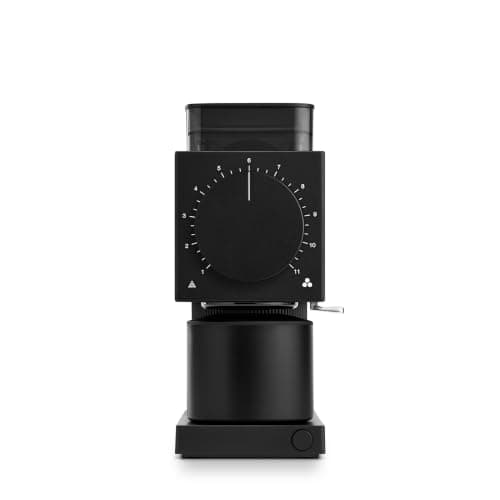
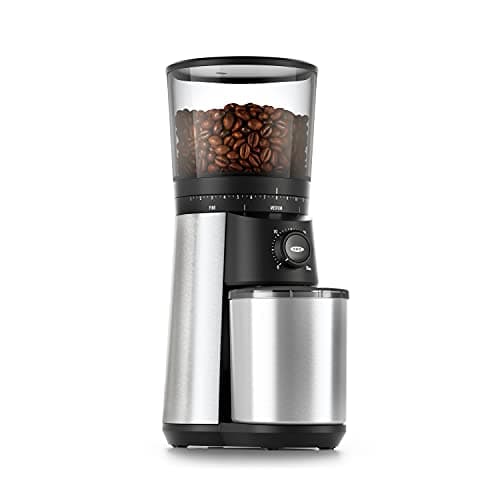
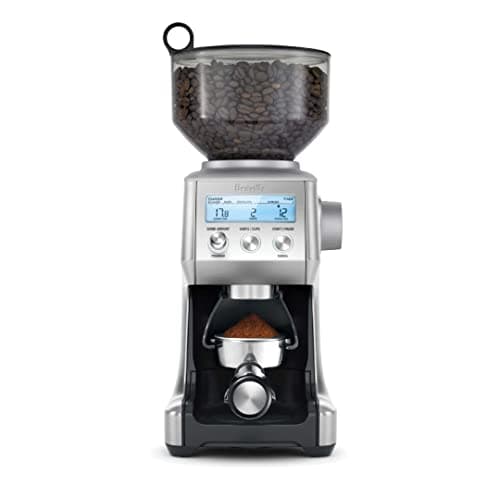
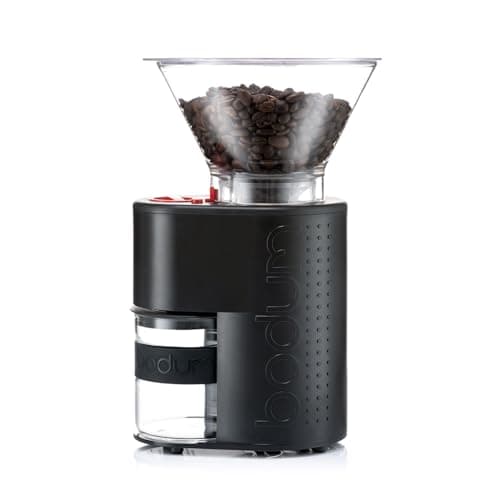
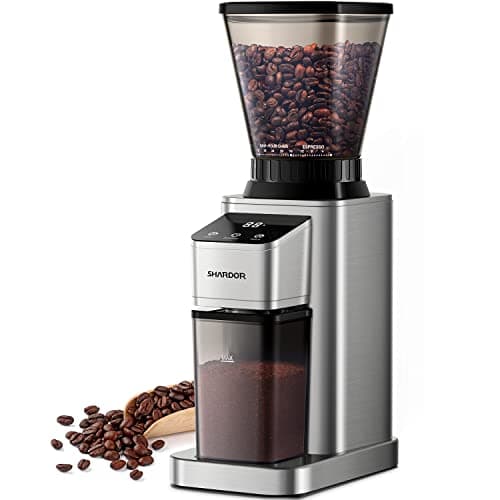
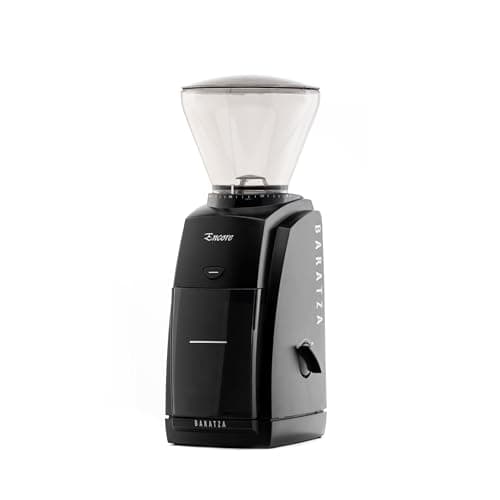
The verdict: the Baratza Encore is the best grinder for drip coffee for most people: it is built for the brewed range, it has forty settings across it, and Baratza sells replacement burrs and parts years later. If drip and pour-over are all you will ever brew and you want the best grounds money buys, the Fellow Ode Gen 2 is a 64mm flat-burr grinder that is deliberately brew-only. The budget pick is the SHARDOR Professional Conical Burr, the cheapest electric here that is genuinely a burr grinder rather than a blade chopper — and for a drip machine that distinction is the whole game.
Drip coffee is the brew method where the grinder does the most and gets the least credit. Your machine controls temperature and flow and you control neither; agitation is whatever the shower head provides; contact time is four to six minutes whether you like it or not. The one variable you own outright is the grind, and in a flat-bottomed paper-filtered basket what matters is not how fine it is but how even it is.
Here is the mechanism, because it explains the whole ranking. A grind with lots of fines alongside larger particles extracts at two speeds at once: the dust gives up everything in the first minute and keeps going into bitterness, while the boulders are still under-extracted when the cycle ends. You taste both at the same time, and the result reads as muddy and simultaneously sharp and weak. A paper filter makes it worse, because fines clog the filter bed and slow the flow, which extends contact time for everything above them. A blade grinder produces exactly this distribution at every setting, which is why no drip machine at any price can be rescued by one.
So we ranked on uniformity at medium settings first, fines production second, retention third and convenience fourth. Espresso capability is deliberately not a criterion here — the top two picks cannot grind for espresso at all, and on a drip-only page that costs them nothing. If espresso is in your future, use best coffee grinders under $200 instead, which ranks the same field with espresso first. Every pick here already appears elsewhere on this site; specifications, pros and cons are carried over unchanged from those entries, and what is new is how each behaves in a drip basket.
What a drip basket actually wants from a grinder
Four things, and they are not the same four an espresso machine wants.
1. Uniformity, not fineness
Drip wants a medium grind, roughly the texture of coarse sand, and that setting is available on every grinder ever made — including blade grinders, which is why "it has a medium setting" means nothing. What separates grinders at that setting is the spread of particle sizes around it. Burrs crush coffee between two surfaces set a fixed distance apart, so the output clusters around one size. Blades smash coffee with a spinning knife until you stop, so the output is dust and boulders at the same time, and grinding longer makes it finer and wider. There is no setting on a blade grinder that produces an even grind, which is why the cheapest burr grinder here beats the most expensive blade grinder.
2. Few fines, because paper filters punish them
Fines are the dust fraction, and they cause two problems in a drip basket at once. They over-extract immediately, adding bitterness. And they migrate down and clog the paper filter, slowing the flow so everything else extracts longer than intended. That is the mechanism behind the classic bad drip cup: bitter and weak simultaneously. Larger, flatter burrs and slower motors both reduce fines, which is why the 64mm flat-burr pick scores highest on this axis and the cheapest conical scores lowest.
3. Enough adjustment steps in the range you use
Forty settings spread across the brewed range is more useful for drip than sixty settings spread from espresso to French press, because the clicks you use are closer together. This is the single most overlooked spec on a grinder box: total step count tells you nothing without knowing where the steps are. A grinder designed for brewed coffee spends its resolution where a drip drinker lives. The settings themselves are in the coffee grind size chart, and the mechanism behind burrs is in burr vs blade grinder.
4. Retention, if you change beans
Hopper grinders keep a few grams in the chute, so the start of today's dose is the end of yesterday's bag. For one bean and one brewer this is invisible. If you rotate roasters, it is the reason single-dose grinders exist — and on this page the Ode is the one built that way. For a drip machine the stakes are lower than for espresso, because a few stale grams in a sixty-gram dose is a small fraction, but it is worth knowing which problem you are buying out of.
Flat burrs or conical, for drip?
Both work, and the honest answer is that geometry and alignment matter more than type at any given price. In broad terms a large flat burr tends to produce a narrower particle distribution, which is why the Ode is the best grind on this page; a conical burr tends to be cheaper to make well at small sizes, which is why everything under a hundred dollars here is conical. What is not true is that a bigger number is automatically better: moving from 40mm to 48mm buys throughput and less friction heat rather than a step change in uniformity. Anyone selling you eight millimetres as a transformation is overselling it.
How much to spend, honestly
The improvement curve is steep and then flat. Going from pre-ground or blade-ground coffee to any burr grinder is the biggest single change available to a drip drinker, and the cheapest burr grinder here delivers most of it. Going from that to the Encore buys you better resolution and a repair path. Going from the Encore to the Ode buys measurably more even grounds and a nicer object. If your machine is a basic drip machine, spend at the bottom of that ladder and put the difference into fresher beans from best coffee beans for drip coffee. If your machine brews to a published temperature window, the grinder is now the weak link and spending up is justified — see best coffee makers under $200 for where that line falls.
Two habits that matter more than the grinder you buy
Grind immediately before brewing, not the night before. Ground coffee loses its aromatics in days, and a drip machine's long contact time makes stale grounds taste flat rather than obviously bad — which is worse, because you stop noticing. And weigh the dose: the working ratio is about 1 gram of coffee to 16 grams of water, most included scoops under-deliver against it, and most "my drip coffee is weak" complaints are dose rather than grind. The arithmetic is in coffee to water ratio and the scales are in best coffee scales. Clean the burrs every few months too — how to clean a coffee grinder covers it.
How we picked
We did not lab-test this gear
Everyone in this category says they tested twenty machines. We have not lab-tested any of these, and we say so. What we did instead: compiled the published manufacturer specifications, read the manuals, ran the math where there was math to run (heat-up time, pressure, dose capacity, grind range, cost per cup), and scored each pick against a published rubric. The scores are judgments from documented research — not measurements we took, because we do not have a lab and we will not pretend we do. Where a number came from someone else's work, we name them in Sources.