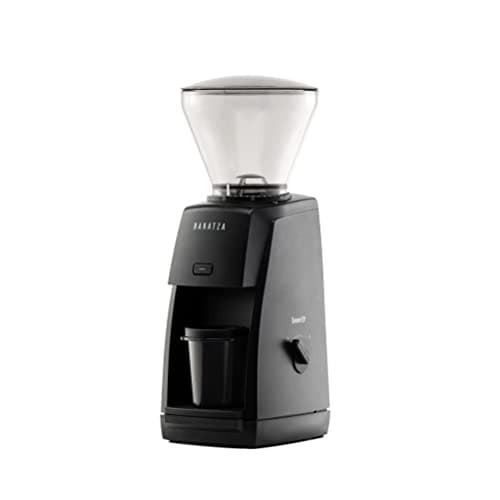
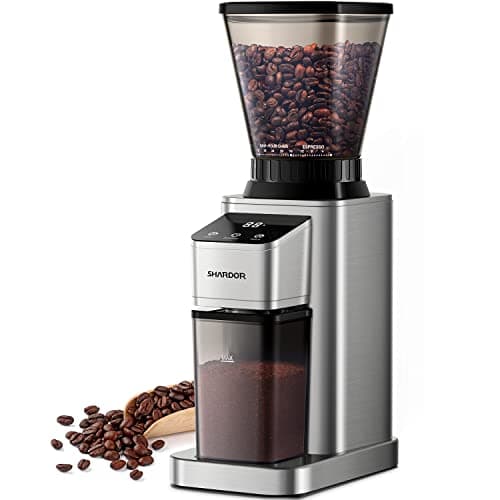
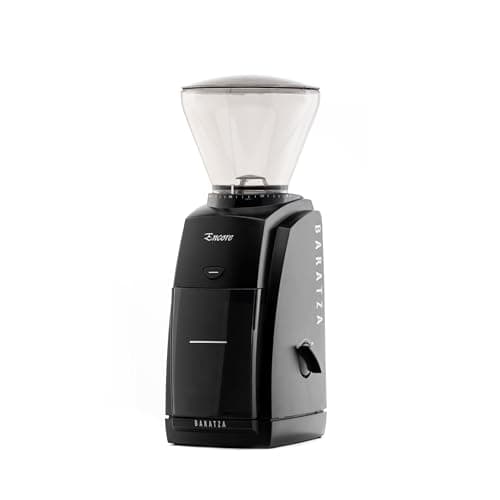
The verdict: the Baratza Encore is the best coffee grinder for a beginner, because its forty settings are numbered clicks you can count, return to and write down, and because Baratza sells the parts that keep it alive for a decade. If an espresso machine is anywhere in your plans, buy the Baratza Encore ESP instead — the same grinder with a range that can actually choke a machine. The budget pick is the SHARDOR Professional Conical Burr, the cheapest electric here that does the real job of a burr grinder, with the build compromises that price implies.
A first grinder is not a smaller version of an expert's grinder. The thing that makes one good for a beginner is that it reduces the number of ways you can be wrong. There are only three variables in brewing you control — grind, dose and water — and the grind is the one that moves everything else. A grinder whose settings you cannot count, or cannot get back to after you change them, turns a solvable problem into guesswork.
So the ranking is unusual on purpose. Countable, repeatable adjustment comes first: stepped clicks and numbered dials beat a stepless knob for a beginner, even though stepless is the better mechanism for an expert dialing in espresso. Recoverability comes second — how easily you get back to the setting that worked. Parts and support come third, because a first grinder should still be working when you are no longer a beginner. Raw grind quality is fourth, which is the opposite of how enthusiast rankings are ordered, and it is deliberate: the best burrs in the world do not help if you cannot find the setting.
One thing to settle before the picks. Buy a burr grinder, not a blade grinder. A blade grinder chops at random and produces boulders and dust in the same batch, so there is no setting to find. That is not snobbery, it is mechanism — our burr vs blade grinder page explains why in detail. Every pick here already appears elsewhere on this site; specifications, pros and cons are carried over unchanged and each pick says where it came from. Prices are live from the price layer with the date they were read.
The short answer
Quick picks
01Baratza EncoreThe first grinder that teaches you rather than confusing you: forty numbered clicks across the whole filter range, and a manufacturer that will still sell you burrs in five years.
8.7Best overall first grinder 02Baratza Encore ESPThe same beginner-friendly grinder with an espresso range: forty espresso steps between choking and gushing, which is enough resolution to learn on without a stepless dial's guesswork.
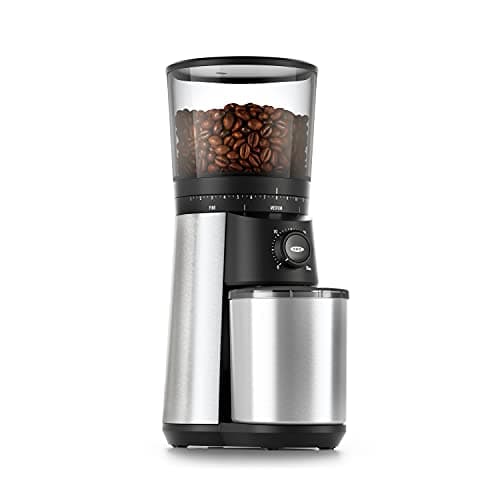
8.6Best if espresso is coming 03OXO Brew Conical Burr GrinderThe simplest grinder here to live with: a stainless conical burr with a one-touch timer that remembers your last setting, so an ordinary morning asks nothing of you.
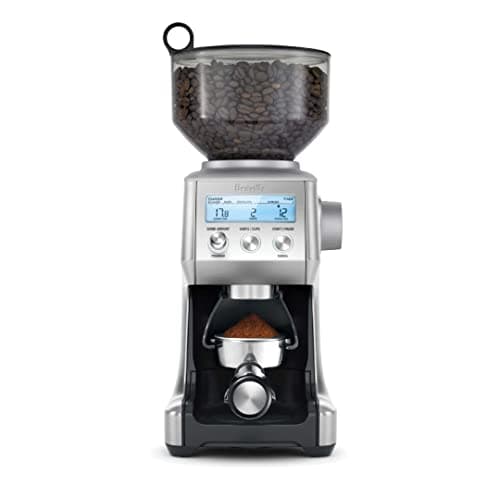
7.5Best for a simple routine 04Breville Smart Grinder Pro (BCG820)The grinder with the display: 60 settings, a dose timer and a screen that tells you what you set, which turns dialing in from memory into reading.
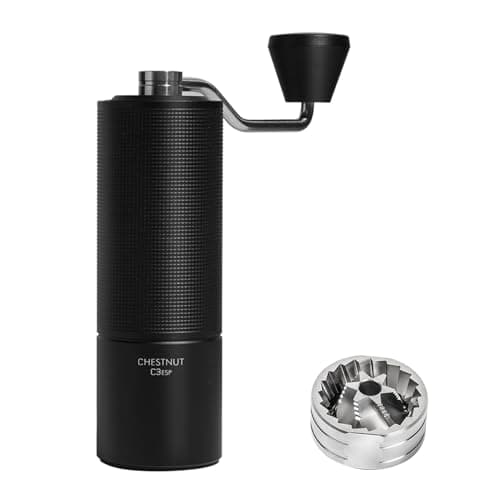
7.7Best for seeing what you set 05Timemore Chestnut C3 ESPThe cheapest honest route to a genuinely good grind: a hand grinder with an espresso-capable burr set, no motor to pay for, and nothing to retain between doses.
7.7Best manual first grinder
| # | Product | Best for | Score | Price |
|---|
| 01 | Baratza EncoreThe first grinder that teaches you rather than confusing you: forty numbered clicks across the whole filter range, and a manufacturer that will still sell you burrs in five years. | Best overall first grinder | | $149.95·Amazon |
| 02 | Baratza Encore ESPThe same beginner-friendly grinder with an espresso range: forty espresso steps between choking and gushing, which is enough resolution to learn on without a stepless dial's guesswork. | Best if espresso is coming | | $199.95·Amazon |
| 03 | OXO Brew Conical Burr GrinderThe simplest grinder here to live with: a stainless conical burr with a one-touch timer that remembers your last setting, so an ordinary morning asks nothing of you. | Best for a simple routine | | $82.49·Amazon |
| 04 | Breville Smart Grinder Pro (BCG820)The grinder with the display: 60 settings, a dose timer and a screen that tells you what you set, which turns dialing in from memory into reading. | Best for seeing what you set | | $199.95·Amazon |
| 05 | Timemore Chestnut C3 ESPThe cheapest honest route to a genuinely good grind: a hand grinder with an espresso-capable burr set, no motor to pay for, and nothing to retain between doses. | Best manual first grinder | | $68.00·Amazon |
| 06 | | Budget pick | | $59.99·Amazon |
#ad · Live prices from the Amazon Product API, as of November 22, 2026. Where we have no verified live price, we show none — a gap beats a number that has rotted.
In detail
The picks, in full
Best overall first grinder
Baratza Encore
40mm conical burr40 numbered stepped settingsCold brew through fine drip rangeReplaceable burrs, published parts
The first grinder that teaches you rather than confusing you: forty numbered clicks across the whole filter range, and a manufacturer that will still sell you burrs in five years.
- Countable adjustment
- 9
- Recoverability
- 9
- Parts and support
- 9.5
- Grind quality
- 7
- Value
- 9
Pros
- +Forty numbered clicks means a setting is a number - you can write down what worked and return to it exactly, which is the single most useful property of a first grinder
- +The range covers every brewer a beginner is likely to own, from French press to fine drip
- +Baratza publishes parts and sells burrs, so a problem in year five is a repair rather than a new purchase
- +One dial, one switch and nothing else to configure - there is almost nothing here to get wrong
Cons
- −Not fine or precise enough for real espresso, which is the one plan it cannot support
- −Plastic housing feels basic next to metal-bodied grinders
- −A little retention in the chute, so the first grams of a dose carry over from the last bag
- −Costs more than the budget electric below for a grind that is better but not transformed
Don't buy this if…
…espresso is anywhere in your plans. The standard Encore tops out too coarse to choke a machine, and the Encore ESP exists for exactly that reason.
Who it is for: the reader buying their first real grinder for drip, pour-over, French press or cold brew. Specifications, pros and cons are carried over unchanged from our Baratza Encore review. It wins because of the two things a beginner needs most and enthusiasts rarely rank: a setting you can count to, and a company that answers the phone. The grind is good rather than exceptional, and that is the correct trade for a first purchase — our best coffee grinders under $500 page is where the grind quality conversation starts.
Best if espresso is coming
Baratza Encore ESP
40mm conical burrsEspresso-capable fine rangeStepped adjustment, 40 espresso stepsReplaceable burrs
The same beginner-friendly grinder with an espresso range: forty espresso steps between choking and gushing, which is enough resolution to learn on without a stepless dial's guesswork.
- Countable adjustment
- 8.5
- Recoverability
- 9
- Parts and support
- 9.5
- Grind quality
- 7.5
- Value
- 8.5
Pros
- +Forty espresso steps is enough resolution to walk a shot from gushing to correct, one countable click at a time
- +Also covers the full filter range, so it is not stranded if you brew pour-over too
- +The same parts, support and simplicity as the standard Encore
- +Cheapest espresso-capable grinder we recommend to anyone learning
Cons
- −Costs meaningfully more than the standard Encore for a range you only need if you own an espresso machine
- −Stepped rather than stepless, so between two adjacent espresso settings there is nothing
- −40mm burrs grind a dose slowly compared with larger grinders
- −Chute retention matters more in espresso than in filter, and this grinder has some
Don't buy this if…
…you are certain you will never make espresso. The standard Encore is the same grinder for filter coffee at a lower price, and the espresso range would be money for nothing.
Who it is for: the beginner who has just bought, or is about to buy, an espresso machine. Specifications, pros and cons are carried over unchanged from its entry on our best coffee grinders under $200 ranking. It is second rather than first only because most first-grinder buyers are not making espresso; the moment you are, this is the pick and the standard Encore is not an option. The Encore vs Encore ESP comparison is the page to read if you are deciding between them.
Best for a simple routine
OXO Brew Conical Burr Grinder
Stainless conical burrs15 settings plus micro-adjustmentOne-touch timer that remembers the last durationRemovable hopper and grounds container
The simplest grinder here to live with: a stainless conical burr with a one-touch timer that remembers your last setting, so an ordinary morning asks nothing of you.
- Countable adjustment
- 7
- Recoverability
- 8.5
- Parts and support
- 6.5
- Grind quality
- 7
- Value
- 8.5
Pros
- +The timer remembers your last setting, so the daily routine is one button and no thought
- +Stainless burrs and a metal body at a price where plastic is normal
- +Fewer settings than the Baratzas, which for a beginner is a feature rather than a limitation
- +Easy to take apart and clean, which is the maintenance beginners actually skip
Cons
- −Fifteen main settings is coarse resolution - fine for filter, not enough for espresso
- −Dosing by time rather than weight drifts as beans age and as the burrs season
- −Not espresso capable in any serious sense
- −Less parts support than Baratza, which is the long-term difference between these two brands
Don't buy this if…
…you want to dose by weight or make espresso. Timer dosing is a convenience that trades precision away, and a scale plus a Baratza is the more accurate pairing.
Who it is for: the reader who wants good filter coffee with the least possible daily thought. Specifications, pros and cons are carried over unchanged from its entry on our best coffee grinders ranking. The honest comparison with the Encore above: this grinder is easier to live with and the Encore is easier to learn on, because a number you can count beats a timer you have to trust.
Best for seeing what you set
Breville Smart Grinder Pro (BCG820)
Stainless conical burrs60 grind settingsLCD display with dose timingDirect-to-portafilter grinding cradle
The grinder with the display: 60 settings, a dose timer and a screen that tells you what you set, which turns dialing in from memory into reading.
- Countable adjustment
- 8.5
- Recoverability
- 9
- Parts and support
- 6.5
- Grind quality
- 7
- Value
- 7.5
Pros
- +A display showing grind setting and dose time removes the guesswork that trips beginners up most
- +60 settings is real resolution, and the espresso end genuinely reaches fine enough for pressurized baskets
- +Grinds directly into a portafilter or a container, which is a real convenience with a Breville machine
- +Programmable doses make a repeatable morning easy to set up once and forget
Cons
- −Dosing is still by time, so the display is precise about a measurement that drifts
- −Retention in the chute is higher than the Baratzas, which matters if you switch beans
- −Plastic hopper and a build that feels less solid than the price suggests
- −More buttons and menus than a first grinder strictly needs
Don't buy this if…
…you want the simplest possible grinder. Every feature here is one more thing to learn, and the Encore gets a beginner to good coffee with fewer of them.
Who it is for: the beginner who owns a Breville machine, or who wants to read their settings off a screen rather than count clicks. Specifications, pros and cons are carried over unchanged from its entry on our best grinders for Breville espresso machines ranking, which is the page to read if that is your machine.
Best manual first grinder
Timemore Chestnut C3 ESP
Espresso-capable conical burrManual, stepped adjustmentEssentially zero retentionCompact and portable
The cheapest honest route to a genuinely good grind: a hand grinder with an espresso-capable burr set, no motor to pay for, and nothing to retain between doses.
- Countable adjustment
- 7
- Recoverability
- 7
- Parts and support
- 6.5
- Grind quality
- 8.5
- Value
- 9.5
Pros
- +A hand grinder puts the whole price into burrs, so the grind beats electrics costing twice as much
- +Espresso capable at a price where no electric is, which makes it the cheapest route to a dialed-in shot
- +Essentially zero retention - what you put in comes out, so switching beans costs nothing
- +Small enough to travel with, which no other pick here is
Cons
- −Manual - roughly a minute of cranking per double shot, every time
- −Grinding a large filter dose is genuine work
- −Adjustment is inside the grinder rather than on an external numbered dial, so returning to a setting takes care
- −Nobody else in the household will want to use it
Don't buy this if…
…you make coffee for more than one person, or mornings are rushed. Hand grinding is pleasant once and tedious four times.
Who it is for: the single-cup drinker who wants the best grind the least money can buy and does not mind cranking. Specifications, pros and cons are carried over unchanged from its entry on our best manual coffee grinders ranking, and the 1Zpresso vs Timemore comparison covers where Timemore sits against the pricier hand grinders.
Budget pick
SHARDOR Professional Conical Burr Coffee Grinder
Conical burrs48 grind settingsRemovable grounds containerElectric, hopper-fed
The budget pick: the cheapest electric here that does the actual job of a burr grinder, with 48 settings and the build compromises that price implies stated plainly.
- Countable adjustment
- 6.5
- Recoverability
- 6
- Parts and support
- 3
- Grind quality
- 5.5
- Value
- 9
Pros
- +A real burr grinder at a price where blade grinders are the norm, which is the single biggest upgrade in home coffee
- +48 settings is more resolution than the price suggests, and the fine end works behind a pressurized basket
- +Cheap enough to pair with a brewer in one modest budget
- +Simple hopper-and-button operation with nothing to configure
Cons
- −Build quality is where the money was saved - plastic, and it feels it
- −Setting consistency and alignment are not in the class of the Baratzas, so the same number does not always mean quite the same grind
- −No parts or repair path to plan around
- −Not suitable for a non-pressurized espresso basket, where a bad grind has nowhere to hide
Don't buy this if…
…you own an espresso machine with a bottomless or non-pressurized basket, or you expect to keep the grinder for a decade. Both are reasons to stretch to the Encore.
Who it is for:the reader replacing a blade grinder on the smallest budget that still buys burrs. It is the budget pick because it is the cheapest product here that does the category's real job — grinding between burrs to a setting you choose — and the step from a blade grinder to this one is larger than the step from this one to anything above it. Specifications, pros and cons are carried over unchanged from its entry on our best budget coffee grinders ranking.
Burrs, not blades - and why that is mechanism, not snobbery
A blade grinder is a propeller in a cup. It chops whatever is in its path, so the same batch contains boulders and dust, and the longer you run it the more dust you make. Boulders under-extract and dust over-extracts, in the same cup, at the same time — which is why blade-ground coffee tastes both weak and bitter and why no setting fixes it. A burr grinder crushes beans between two surfaces a fixed distance apart, so the particles come out roughly the same size and the distance is a setting. That is the whole argument, and our burr vs blade grinder page has the detail.
What makes a grinder beginner-friendly
1. A setting you can name
The first weeks of making good coffee are a loop: brew, taste, change one thing, brew again. That loop only works if you can describe where you are. Numbered clicks let you write "18 for pour-over, 11 for the moka pot" on a sticky note. A stepless dial with no markings does not, which is why stepless grinders — genuinely better mechanisms for espresso — are harder to learn on.
2. A mistake you can undo
Someone will change the grind. You will change it to try something and want to go back. On a clicked grinder you count back. On a timer-dosed grinder you reset the duration. On an unmarked dial you start over. Recoverability is a property almost nobody ranks and every beginner needs.
3. Parts, because you will not be a beginner for long
A first grinder bought well lasts a decade and several brewers. Baratza publishes parts and sells burrs; most of this price range offers a warranty and then goodwill. That difference does not appear on a spec sheet and it is the main reason both Baratzas rank at the top here.
How much to spend, honestly
More than feels comfortable, and here is the reason: the grind sets the ceiling on everything else. A modest brewer with a good grinder makes better coffee than an expensive brewer with pre-ground coffee, every single time. If a fixed budget has to cover both, the split most people regret least puts the grinder first. Our best budget coffee grinders page is the sub-$100 field if that is the ceiling, and is making espresso at home worth it is the broader version of the question.
Three beginner mistakes worth naming
Buying a grinder that cannot reach espresso fineness and then buying an espresso machine — the order matters, and a grinder that cannot go too fine cannot be dialed in. Dosing by scoops instead of weight, which makes every brew a different recipe; a scale fixes it for very little. And grinding a week of coffee at once, which throws away most of what a grinder bought you. Whichever grinder you choose, the settings to start from are in the coffee grind size chart, and the ratios are in coffee to water ratio.
How we picked
We did not lab-test this gear
Everyone in this category says they tested twenty machines. We have not lab-tested any of these, and we say so. What we did instead: compiled the published manufacturer specifications, read the manuals, ran the math where there was math to run (heat-up time, pressure, dose capacity, grind range, cost per cup), and scored each pick against a published rubric. The scores are judgments from documented research — not measurements we took, because we do not have a lab and we will not pretend we do. Where a number came from someone else's work, we name them in Sources.
Questions
Frequently asked
What is the best coffee grinder for a beginner?+
The Baratza Encore. Forty numbered clicks mean you can write down the setting that worked and return to it exactly, the range covers every brewer a beginner is likely to own, and Baratza sells replacement burrs and parts so it lasts. If you own or want an espresso machine, buy the Encore ESP instead - the standard Encore cannot grind fine enough.
How much should a first coffee grinder cost?+
Enough to get burrs rather than blades, which starts at well under $100, and ideally enough to get countable settings and real parts support, which is roughly the Encore's price. Spending less is a real option and the budget pick on this page is there for that; spending more buys grind quality you will appreciate later rather than ease now.
Is a hand grinder a good first grinder?+
For one or two cups a day, yes - and it is the cheapest way to a genuinely good grind, because there is no motor in the price. For a household, no: a minute of cranking per double shot stops being charming by the third drink.
Do I need a scale as well as a grinder?+
Yes, and it is the cheapest upgrade in coffee. Grinding well and then dosing by scoops means every brew is a different recipe, so you cannot tell what your grind change did. A basic
coffee scale turns brewing into something repeatable.
Can a beginner grinder make espresso?+
Only some of them, and only with the right basket. Espresso needs a genuinely fine range and small adjustment increments; the Encore ESP and the Timemore C3 ESP here have both. A budget electric with a "fine" setting will usually work behind a pressurized basket and not behind a bottomless one.
Should I buy the grinder or the coffee maker first?+
The grinder. Pre-ground coffee is already stale and already the wrong size for whatever you own, and no brewer compensates for either. A modest brewer plus a real grinder beats the reverse at the same total price, every time.
Receipts
Sources
We do not run a testing lab, and we do not pretend to. Where a measured number came from someone else's work, we name them and link them. Where we could not verify something, we say so on the page rather than quietly leaving it out. Read our full method.