Skip to content
Tamp & Pour

Roundups & reviews · Espresso Machines

The best cappuccino makers, ranked

A cappuccino is not a small latte, and the milk it needs is not microfoam. Ranked on foam stiffness and volume first, with honest cons and a 'don't buy if' on every pick.

By Stephen V.Updated How we review
#ad

We earn a commission when you buy through our Amazon links, at no extra cost to you. It never changes a verdict, and we say so when the cheaper product is the better buy. How this works.

The verdict: the De'Longhi Magnifica Evo is the best cappuccino maker for most households, because its LatteCrema carafe has a dedicated cappuccino recipe and an adjustable foam density, which means it makes stiff foam on purpose rather than making latte milk and hoping. If you would rather texture the milk yourself in a pitcher, buy the Breville Bambino Plus, whose driest texture setting is the closest a hands-off wand gets to real cappuccino foam. The budget pick is the De'Longhi Dedica Deluxe, whose much-criticized panarello sleeve happens to make exactly the dry, bubbly foam a cappuccino wants.

Start with the drink, because almost every “best cappuccino machine” list on the internet quietly ranks latte machines. A cappuccino is roughly a third espresso, a third steamed milk and a third foam, and that top third is supposed to be dry— stiff enough to hold a dome above the rim of a 5 to 6oz cup and to sit still while you drink through it. A latte wants the opposite: wet, glossy, paint-like microfoam that folds into the milk and pours a pattern. Those are two different products out of the same steam wand, and a machine tuned to make one is not automatically good at the other.

That single fact reorders the field, and it is why this page exists alongside our best espresso machines with a milk frother ranking, which sorts machines by how good their milk is in general and treats microfoam as the top of the scale. Here, microfoam is not the top of the scale. Foam that holds a dome is. The practical consequence is that hardware the espresso world calls a compromise — the panarello sleeve that aerates automatically, the sealed carafe on a bean-to-cup machine — is genuinely well suited to this one drink, and a microfoam-optimized automatic wand has to be run at its driest setting and still lands a little wet.

So the criteria, in the order they decide this page: foam stiffness and volume first; back-to-back capability second, because cappuccinos are rarely made one at a time; cup clearance third, since a 6oz cappuccino cup has to fit under the spout with the foam on top; shot strength under milk fourth, because a third of the drink is espresso and a thin shot vanishes beneath foam; and cleanup per drink fifth. Every pick here already appears elsewhere on this site. Key specifications, pros and cons are carried over unchanged from those entries, and each pick names where it came from. What is new is the drink, the rubric and the order. The metric labels are re-cut for this page's axes; the scores are judgments from published specifications and documented owner reports, not lab measurements, because we do not have a lab. Prices are live from the price layer with the date they were read.

The short answer

Quick picks

#ad · Live prices from the Amazon Product API, as of November 24, 2026. Where we have no verified live price, we show none — a gap beats a number that has rotted.

In detail

The picks, in full

01
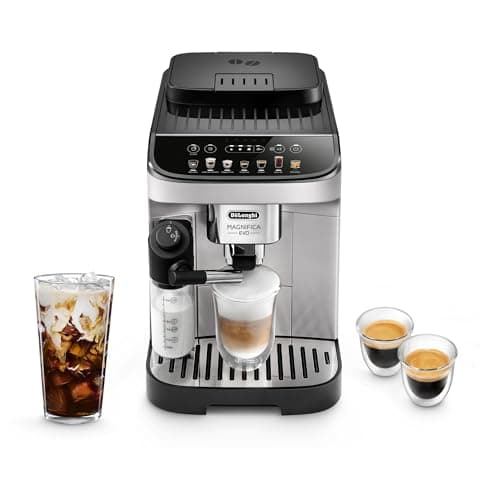
De'Longhi De'Longhi Magnifica Evo (with LatteCrema)

Best cappuccino maker overall

De'Longhi Magnifica Evo (with LatteCrema)

Conical burr, 13 grind settingsLatteCrema automatic milk system7 one-touch recipes + My Latte60oz tank / 8.8oz bean hopper
7.7/10

The only machine here with a cappuccino recipe and a foam-density dial: the LatteCrema carafe aerates to a set stiffness and pours the drink, so dry foam is a setting rather than a skill.

Foam stiffness & volume
8.5
Back-to-back drinks
8.5
Cup clearance
7.5
Shot strength under milk
7.5
Cleanup per drink
6.5

Pros

  • Automatic LatteCrema carafe froths milk and pours a cappuccino or latte macchiato at one touch, with no wand technique to learn
  • 13 grind settings and adjustable strength give more control than most machines at this price
  • Removable brew group lifts out for rinsing, and it routinely sells below its list price

Cons

  • Mostly plastic build, so it feels like the value machine it is
  • The milk carafe is another part to detach, rinse and store after milk drinks
  • No control over brew pressure or temperature the way an enthusiast semi-auto allows

Don't buy this if…

…you want to learn to pull and steam by hand. The Evo does all of that behind a sealed brew group, so a Breville Bambino or Barista Express is the better teacher.

Who it is for: the household that drinks cappuccinos on weekday mornings and does not want a project. Specifications, pros and cons are carried over unchanged from its entry on our best super-automatic espresso machines under $1,000 ranking, and the long version is our De'Longhi Magnifica Evo review. It wins this page on criterion one and nothing else. The carafe has a physical foam adjuster on its lid and a named cappuccino program, which together mean the machine is aiming at dry foam by design — and because the milk comes from a sealed carafe rather than a pitcher you judge by hand, drink two is identical to drink one. Note the score: two picks below it total higher. They beat it on cup clearance, shot strength and cleanup, which this page ranks third, fourth and fifth, and they both lose on the one criterion that decides what a cappuccino is. If you would reorder those criteria, reorder the page.

$549.95View on Amazon

$899.9539% off

Price as of November 24, 2026. Prices change — Amazon's at checkout is the one that counts.

#ad · we may earn a commission from this link to De'Longhi Magnifica Evo (with LatteCrema)

02
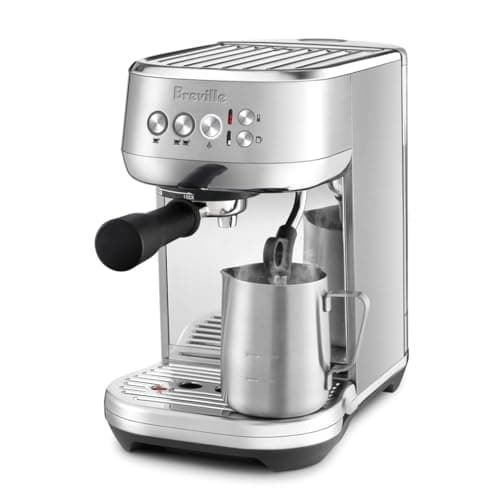
Breville Breville Bambino Plus (BES500)

Best automatic wand

Breville Bambino Plus (BES500)

54mm portafilterThermoJet 3s heat-upAutomatic milk texturingNo built-in grinder
7.9/10

The best texture control per dollar: three texture settings on an automatic wand, where the driest one is the closest a hands-off machine gets to real cappuccino foam.

Foam stiffness & volume
8
Back-to-back drinks
7
Cup clearance
8.5
Shot strength under milk
8.5
Cleanup per drink
7.5

Pros

  • Near-instant heat-up - from cold to shot in seconds
  • Automatic steam wand sets milk temperature and texture hands-free
  • Tiny footprint; genuine 54mm shots despite the size

Cons

  • No grinder - you must budget for a separate one
  • Small machine means a small drip tray and water tank to refill often
  • The texture dial is tuned around pourable microfoam, so its driest setting still wants finishing by hand for a cappuccino

Don't buy this if…

…you don't already own (or plan to buy) a real grinder - the Bambino assumes you bring your own, and pairing it with a blade grinder wastes it.

Who it is for: the reader who wants a cappuccino that tastes of espresso and is happy to pour the milk themselves. Specifications, pros and cons are carried over unchanged from our Breville Bambino Plus review. It scores higher than the winner and sits second, which needs saying plainly: as a machine it is better, because a 54mm single-wall basket makes a stronger, cleaner shot than a sealed bean-to-cup brew group and it leaves far more room under the group for a real cappuccino cup. What it does not do is aim at dry foam. The texture dial runs from wet to dry and its dry end is still tuned around pourable microfoam, so a cappuccino made here wants an extra swirl and a firm tap to tighten the foam before you pour. That is a technique, and techniques get skipped on a Tuesday. Budget for a grinder from our best espresso grinders ranking before you buy it.

$499.95View on Amazon

Price as of November 24, 2026. Prices change — Amazon's at checkout is the one that counts.

#ad · we may earn a commission from this link to Breville Bambino Plus (BES500)

03
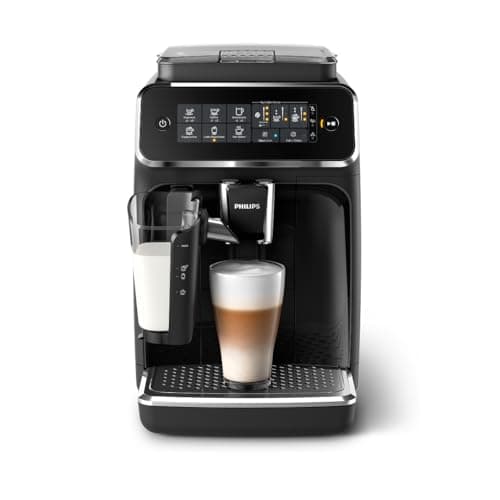
Philips Philips 3200 Series LatteGo (EP3241)

Best for cleanup

Philips 3200 Series LatteGo (EP3241)

100% ceramic grinder, 12 settingsLatteGo tubeless milk (cleans ~15s)5 drinks + hot waterAquaClean: up to 5,000 cups between descales
8.0/10

The cappuccino maker you will still be using in a year, because the milk system is two snap-off parts with no tubes and rinses in about fifteen seconds.

Foam stiffness & volume
8
Back-to-back drinks
8.5
Cup clearance
7.5
Shot strength under milk
7
Cleanup per drink
9

Pros

  • LatteGo milk system is two parts with no tubes to clog, rinsed under the tap in about 15 seconds or dropped in the dishwasher
  • 100% ceramic burrs run cooler than steel and are rated for roughly 20,000 cups
  • AquaClean filter means no descaling for up to 5,000 cups, and the touch display keeps it simple

Cons

  • Philips lists the EP3241 as no longer available in the US, so you are buying remaining stock of a discontinued model
  • Only five drink presets, with no big menu of specialty one-touch drinks
  • Milk foam is good but a touch less refined than a twin-chamber carafe system
  • No foam-density adjustment, so you get one kind of foam rather than an adjustable one

Don't buy this if…

…you want a long menu of one-touch specialty drinks. This keeps it to the core five, so a Gaggia Cadorna or a Jura suits a big-menu household better.

Who it is for: the household whose last milk machine died of neglect. Specifications, pros and cons are carried over unchanged from its entry on our best super-automatic espresso machines under $1,000 ranking, and the head-to-head with its stablemate is Philips 2200 vs 3200 LatteGo. It is third rather than first because the LatteGo jug has no foam-density adjustment: it makes one kind of foam, which is decent cappuccino foam but not adjustable cappuccino foam. What it does better than anything else here is survive real life. A milk system with no tubes cannot clog with soured milk, and that is the failure mode that turns a cappuccino machine into an espresso machine within a month. Read the first con carefully before buying: Philips treats this model as discontinued in the US, so you are buying remaining stock.

$536.04View on Amazon

Price as of November 24, 2026. Prices change — Amazon's at checkout is the one that counts.

#ad · we may earn a commission from this link to Philips 3200 Series LatteGo (EP3241)

04
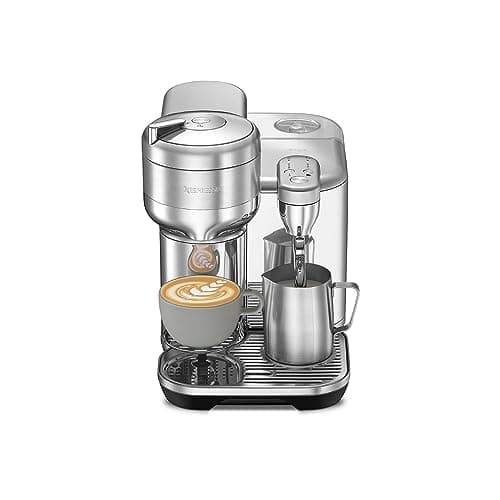
Nespresso Nespresso Vertuo Creatista by Breville (BVE850)

Best pod cappuccino maker

Nespresso Vertuo Creatista by Breville (BVE850)

6 sizes: 5, 8, 12, 18oz + single/double espressoBarista steam wand, 3 textures + 3 temperatures2L (67.6oz) tank, stainless milk jug included30-second heat-up, automatic pod ejection
7.1/10

The only pod machine with a real steam wand and a texture setting labeled cappuccino, which is as close as capsules get to the drink.

Foam stiffness & volume
8.5
Back-to-back drinks
6.5
Cup clearance
8
Shot strength under milk
6.5
Cleanup per drink
6

Pros

  • A genuine steam wand rather than a frothing jug: it textures milk in the pitcher, which is the only way to pour latte art at home
  • The texture setting is labeled by drink - flat white and latte, cappuccino, latte macchiato - so you are choosing an outcome rather than guessing a number
  • Six sizes is the full Vertuo range, including the 18oz alto that no other machine here reaches
  • The 2L tank and automatic used-pod ejection make it the least hands-on machine on this page to live with
  • Breville's build: stainless body, milk jug included, cleaning and descaling alerts on the panel

Cons

  • It costs several times what the Pop+ costs, and brews exactly the same capsule
  • A steam wand has to be purged and wiped after every drink, so the zero-cleanup promise of pods is gone
  • Still Vertuo-only capsules, so the premium machine buys you no pod freedom whatsoever
  • At 19.2lb and roughly 16.5 inches on its longest side, it is a large appliance for what is still a pod brewer

Don't buy this if…

…you are not going to steam milk. Without the wand this is a very expensive way to brew the same capsule the Pop+ brews, and the money is better spent on a real machine from our espresso roundups.

Who it is for: the reader who wants cappuccinos without grinding, dosing or tamping anything. Specifications, pros and cons are carried over unchanged from its entry on our best Nespresso machines ranking. It earns fourth on one detail that no other machine here matches: the texture control is labeled by drink, and one of those labels is cappuccino, so the aeration target is chosen for you and it is the right one. What holds it down the page is the third of the drink that is not milk. A Vertuo capsule makes a crema-topped coffee rather than a pressure-extracted shot from fresh grounds, and under a dome of foam that difference shows — the drink tastes of milk more than it tastes of coffee. Pod cost is the other long-term consideration, and alternatives to Nespresso puts numbers on it.

$454.00View on Amazon

$699.9535% off

Price as of November 24, 2026. Prices change — Amazon's at checkout is the one that counts.

#ad · we may earn a commission from this link to Nespresso Vertuo Creatista by Breville (BVE850)

05
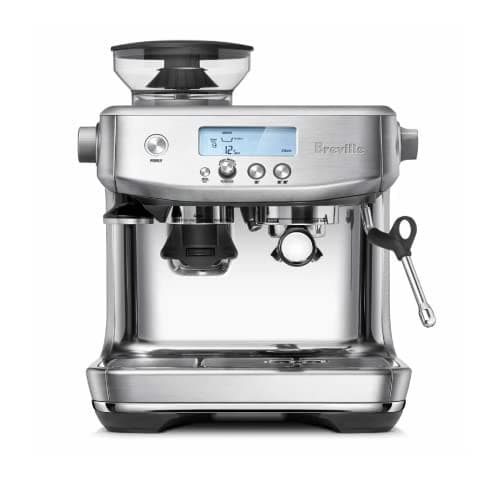
Breville Breville Barista Pro (BES878)

Best manual steam wand

Breville Barista Pro (BES878)

54mm stainless steel portafilterIntegrated conical burrs, 30 espresso grind settingsThermoJet heating, about 3 seconds to temperatureDigital PID temperature, adjustable in the menu2L (68 fl oz) tank, 250g bean hopper
7.8/10

The ceiling, if you are willing to learn: a bare wand can make any foam you want, including the stiff dome a cappuccino wants, and the grinder is already in the box.

Foam stiffness & volume
9
Back-to-back drinks
6
Cup clearance
8
Shot strength under milk
9
Cleanup per drink
7

Pros

  • A bare steam wand is the only milk hardware here that can make wet microfoam AND stiff cappuccino foam, because the aeration is yours to control
  • Thirty grind settings instead of sixteen, which is the difference between being able to dial in a light roast and giving up on it
  • ThermoJet reaches optimum extraction temperature in about three seconds, so there is no warm-up ritual standing between you and a shot
  • Brew temperature is adjustable from the menu, so you can raise it for light roasts instead of living with one fixed number
  • Complete in the box: single and dual wall baskets in both sizes, the Razor dose trimming tool, a 480ml stainless milk jug, a water filter and a cleaning kit

Cons

  • The foam is a skill, not a setting - the first few weeks of cappuccinos will be worse than the Magnifica Evo's
  • Single boiler: you pull, then you steam. There is no doing both at once
  • No pressure gauge. The Express has one, and it is the cheapest way to see that a puck is choking or gushing before you taste it
  • The integrated grinder is the ceiling. It retains roughly half a gram internally, clumps into the basket, and will not match a good standalone grinder
  • Loud. One reviewer's blunt summary was that you could not sneak an early espresso without waking the household

Don't buy this if…

…nobody in the house wants to learn to steam milk. An unlearned wand makes worse cappuccinos than a cheap panarello, and the money would be better spent on an automatic system.

Who it is for: the reader who wants the best cappuccino in the house and accepts that it will take a month of practice. Specifications, pros and cons are carried over unchanged from our Breville Barista Pro review. It scores highest on criterion one and sits fifth, and that is the honest shape of this category: a bare wand has the highest ceiling and the lowest floor. Aeration depth is entirely up to where you hold the tip, so stiff cappuccino foam, wet latte microfoam and a jug of hot bubbles are all one technique apart. The single boiler is what costs it the places: pulling, waiting for the steam thermoblock, then steaming makes two cappuccinos a slow job. Our how to froth milk guide is the technique, and latte vs cappuccino is the target you are aiming the wand at.

$629.95View on Amazon

$849.9526% off

Price as of November 24, 2026. Prices change — Amazon's at checkout is the one that counts.

#ad · we may earn a commission from this link to Breville Barista Pro (BES878)

06
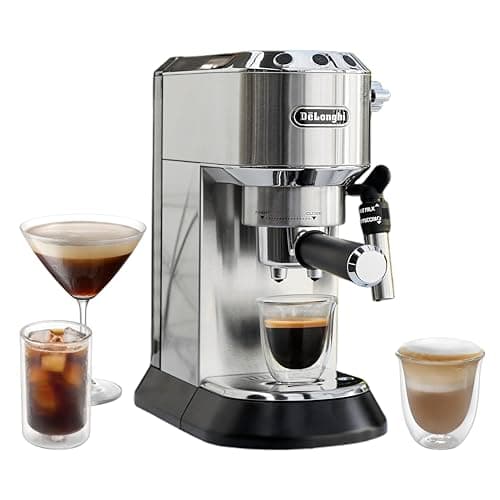
De'Longhi De'Longhi Dedica Deluxe (EC685)

Budget pick

De'Longhi Dedica Deluxe (EC685)

Pressurized portafilter (51mm)Slim 6-inch widthFast thermoblock heat-upAdjustable cappuccino frother
7.3/10

The budget pick, and an accidental cappuccino specialist: the adjustable panarello sleeve sucks in air automatically and makes stiff, bubbly foam - which is the foam this drink wants.

Foam stiffness & volume
7.5
Back-to-back drinks
6.5
Cup clearance
9
Shot strength under milk
6
Cleanup per drink
7.5

Pros

  • The frother is a panarello sleeve, and a panarello's weakness - it aerates automatically and cannot make microfoam - is exactly what a cappuccino needs
  • One of the narrowest real espresso machines, so a 6oz cappuccino cup fits under it on a crowded counter
  • Quick heat-up and simple one/two-cup buttons, which is as close to a capsule machine's interface as a portafilter machine gets
  • The pressurized basket generates its own back-pressure, so a mediocre grind or pre-ground coffee still produces a crema-topped shot

Cons

  • Still a pressurized basket, so a performance ceiling - the espresso third of the drink is the weakest here
  • The sleeve has one aeration behavior, so there is no dialing the foam wetter for a latte later
  • No grinder included, though unlike the Bambino it does not strictly need one
  • 51mm accessory size, which is the thinnest of the three home portafilter markets

Don't buy this if…

…lattes and flat whites are also on the menu. The sleeve cannot make the wet microfoam those drinks need, so a household that drinks both should buy an adjustable wand instead.

Who it is for: the cappuccino-only drinker on a tight budget and a tight counter. Specifications, pros and cons are carried over unchanged from our De'Longhi Dedica review and its entry on best compact espresso machines. It is the budget pick because it is the cheapest machine here that does this page's actual job, and the reason is a little funny: most enthusiast reviews mark the panarello down for making stiff, bubbly foam instead of microfoam, and stiff, bubbly foam is what sits on a cappuccino. If the only milk drink in your house is a cappuccino, the sleeve is not a compromise — it is the correct tool, and it costs a fraction of an adjustable wand. The honest ceiling is the other two-thirds of the cup: pressurized vs non-pressurized portafilter explains what the basket is doing to the shot, and De'Longhi Dedica alternatives ranks the machines to buy instead if that ceiling bothers you.

$199.99View on Amazon

Price as of November 24, 2026. Prices change — Amazon's at checkout is the one that counts.

#ad · we may earn a commission from this link to De'Longhi Dedica Deluxe (EC685)

Dry foam, not microfoam: the distinction this page is built on

Steaming milk does two things at once. It heats the milk, and it folds air into it. How long the tip of the wand sits near the surface decides how much air goes in, and that is the only variable that separates a cappuccino from a latte. A lot of air early gives you stiff, visibly bubbly foam that holds a dome — cappuccino milk. A little air, stretched and then rolled under the surface, gives you glossy microfoam with a wet-paint sheen that folds into the drink — latte milk. Our latte vs cappuccino page covers the drinks themselves; what matters here is that machines are built to aim at one or the other.

That means the usual quality ladder inverts on this one page. A panarello sleeve sits at the bottom of most espresso buying guides because it cannot make microfoam, and it is a perfectly good cappuccino tool. An automatic wand with a texture dial sits near the top of those guides because its target is microfoam, and for a cappuccino you have to run it at its driest setting and finish the job by hand. A sealed carafe on a bean-to-cup machine is dismissed as the least controllable option, and the better ones have a physical foam-density adjuster that makes it the most controllable thing here for this specific drink.

The five criteria, in the order they matter here

1. Foam stiffness and volume

A cappuccino needs enough foam to fill a third of the cup and hold its shape above the rim. Volume is a real constraint, not just stiffness: some automatic systems texture a precise small measure of milk, which is right for one drink and short for two. Ask of any machine whether its foam target is adjustable, and whether its driest setting is dry enough.

2. Back-to-back drinks

Cappuccinos are social. On a single-boiler machine — which is every semi-automatic on this page — you pull the shot, wait for the heater to switch over to steam, texture, then wait again before pulling the second shot. That is fine for one drink and tedious for four. A bean-to-cup machine with a carafe just makes the second drink, which is the single biggest practical advantage of the format and the reason the top of this page looks different from the top of our main espresso machine ranking.

3. Cup clearance

A cappuccino cup is wide and short — typically 5 to 6oz — and the foam goes in after the espresso on a manual machine, before it on an automatic one. Automatic machines with a milk spout need vertical room for the whole finished drink under the dispenser, and several have adjustable spout heights for exactly this reason. Measure the gap, then measure your cups. Our best espresso cups page covers the 6oz cappuccino sizes.

4. Shot strength under milk

Milk and foam flatten coffee flavor, which is why a cappuccino is traditionally built on a short, strong shot rather than a long one. Anything that weakens the shot is amplified in this drink: a pressurized basket, a pod, a grinder too coarse to build resistance, or a double-sized dose stretched into too much water. This is where the semi-automatic machines earn their places, and where the pod machine loses one.

5. Cleanup per drink

Milk is the reason cappuccino machines get abandoned. A bare wand needs a purge and a wipe within seconds of use, every time. A carafe needs detaching and rinsing, and the tubed ones need a rinse cycle. A tubeless two-part jug goes in the dishwasher. None of this is hard and all of it is daily, so weigh it honestly against how often you will actually make the drink.

What none of these machines will do

Three things, named so you stop looking for them. None of them makes good cappuccino foam from skim milk and a bad technique at the same time — protein and fat do the work, and our best milk for frothing page is the short version. None of them pours latte art anda domed cappuccino at one touch; the drinks want opposite milk, so an automatic system picks a lane. And none of the semi-automatic machines here steams while it brews, because they are single-boiler machines — if simultaneous brewing and steaming is what you want, that is a dual boiler and it costs several times the top of this page.

Still buy the grinder, if the machine needs one

Two of the six picks ship without a grinder, and a cappuccino built on a weak shot is a cup of warm milk. If the budget is fixed, spend less on the machine and more on the grinder than feels natural: the best espresso grinders under $300 is the bracket most of these machines deserve, and the settings to start from are in our coffee grind size chart. The bean-to-cup picks have a grinder inside and are the honest answer for anyone who does not want a second appliance.
How we picked

We did not lab-test this gear

Everyone in this category says they tested twenty machines. We have not lab-tested any of these, and we say so. What we did instead: compiled the published manufacturer specifications, read the manuals, ran the math where there was math to run (heat-up time, pressure, dose capacity, grind range, cost per cup), and scored each pick against a published rubric. The scores are judgments from documented research — not measurements we took, because we do not have a lab and we will not pretend we do. Where a number came from someone else's work, we name them in Sources.

Questions

Frequently asked

What is the best cappuccino maker?
The De'Longhi Magnifica Evo, because its LatteCrema carafe has a dedicated cappuccino program and a foam-density adjuster, so it aims at stiff foam rather than at latte microfoam. If you would rather texture milk yourself, the Breville Bambino Plus is the better machine and the Breville Barista Pro has the highest ceiling of anything here.
Is a cappuccino maker different from an espresso machine?
Not as hardware, only as emphasis. Every machine on this page makes espresso; what makes it a cappuccino maker is whether its milk system can produce stiff, dry foam in enough volume to fill a third of the cup. Plenty of excellent espresso machines are tuned for wet microfoam instead, which is the wrong milk for this drink.
Can a super-automatic machine make a real cappuccino?
Yes, and for most households it makes a more consistent one than a wand does, because the aeration is set by the machine rather than judged by hand. The trade is that the espresso underneath comes out of a sealed brew group you cannot adjust, so the ceiling on the coffee is lower than a semi-automatic with a good grinder.
Is a panarello frother good enough for cappuccino?
For cappuccino, genuinely yes. A panarello sleeve pulls in air automatically and makes stiff, bubbly foam, which is what sits on top of a cappuccino. Its real limitation is that it cannot make the wet microfoam a latte or flat white needs, so it is the right tool for a one-drink household and the wrong one for a mixed one.
How much milk does a cappuccino need?
Roughly 4oz of cold milk for a 6oz cup, since aerating it increases the volume. That is one drink from most automatic systems and the reason two-cappuccino mornings are slower than they look — check the texturing capacity before you buy if the house drinks two at a time.
Do I need a separate milk frother?
Only if your machine has no steam system at all, or if you want to make foam while the machine is busy brewing. Every pick here textures milk itself. If you already own a machine you like, a standalone unit from our best milk frothers ranking is far cheaper than replacing the machine.

Keep reading

Receipts

Sources

We do not run a testing lab, and we do not pretend to. Where a measured number came from someone else's work, we name them and link them. Where we could not verify something, we say so on the page rather than quietly leaving it out. Read our full method.