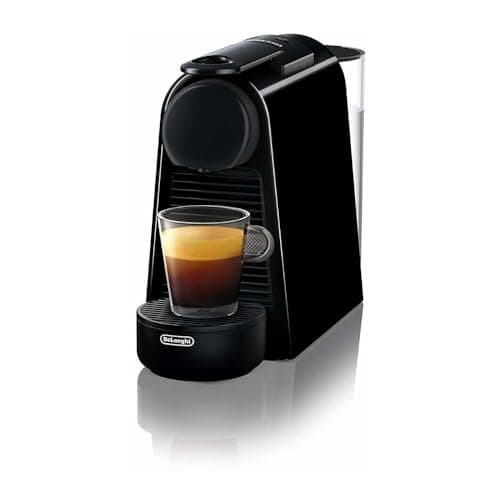
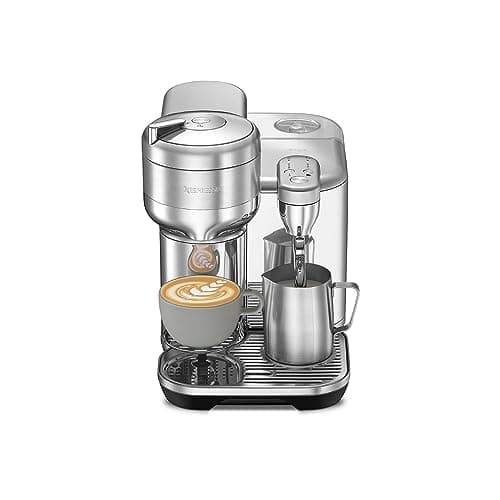
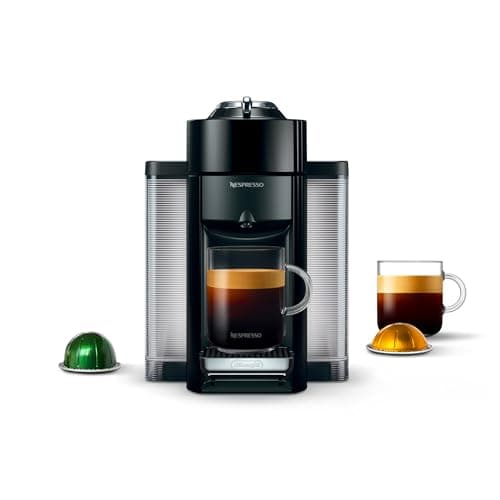
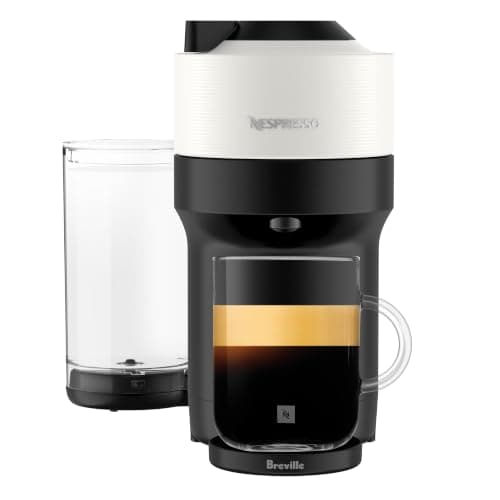
Buying a Nespresso is really two decisions, and almost everyone makes them in the wrong order. The first is the line: Vertuo and Original take different pods, and the pod you can buy for the next five years matters far more than any feature on the machine. The second is the machine itself, which changes how many drink sizes you get, how often you refill, and whether milk is included — not how good the coffee is.
The lines work differently. Original machines pump water through a small capsule at up to 19 bar, which is real pressure extraction: short, strong, espresso-style shots with crema, in two sizes. Vertuo machines spin a larger, barcoded capsule instead — Nespresso calls it Centrifusion — and the barcode tells the machine its own volume, temperature and spin speed. That is why Vertuo covers everything from a 1.35oz espresso to an 18oz mug and produces a thick, foamy crema, and why a Vertuo cannot be dialed in: the capsule decides. Which one suits you is worked through in Vertuo vs Original.
The part no one selling these will lead with: pods are where the money goes. Original capsules are made by dozens of third parties, so you can shop on price and roaster. Vertuo capsules are effectively Nespresso-only, because the barcode has to be there for the machine to brew at all — so choosing Vertuo is choosing one supplier for the life of the machine. Neither line is cheap per cup next to whole beans, and that is the trade you are making: convenience, bought knowingly.
So this ranking judges the machines on what genuinely differs between them — the sizes they offer, the water tank, the used-capsule bin, the milk system and the price — and holds cup quality roughly constant inside each line, because within a line it is. A more expensive Vertuo does not brew a better capsule than a cheaper Vertuo. It gives you more sizes, a bigger tank, or a way to froth milk.
Vertuo or Original: the decision that comes first
| Vertuo | Original |
|---|
| How it brews | Spins a barcoded capsule (Centrifusion) | Pumps water through at up to 19 bar |
| Drink sizes | Espresso through an 18oz mug, by model | Espresso (40ml) and lungo (110ml) |
| Crema | Thick and foamy, produced by the spin | Finer, produced by pressure |
| Who makes the pods | Nespresso, essentially alone | Nespresso plus dozens of third parties |
| Buy it for | Mugs of coffee with crema, zero decisions | Espresso-style shots and cheaper capsules |
Get this right and the machine almost picks itself. Get it wrong and no amount of money fixes it, because the two capsule formats do not interchange in either direction. The longer version of this argument, including what each line does to the cup, is in Vertuo vs Original.
What actually changes between Nespresso models
| Feature | What it changes | Worth paying for? |
|---|
| Cup sizes offered | Whether your usual drink exists as a button | Yes — the most overlooked spec in the range |
| Water tank | How often you refill | Yes, if more than one person drinks |
| Used-capsule bin | How often you empty it | Minor, but it is the other daily chore |
| Aeroccino frother | Milk foam, in a jug you wash | Yes, if you drink lattes; otherwise no |
| Steam wand | Textured milk you can pour art with | Only if you will actually steam |
| Motorized head / auto ejection | A lever you do not pull | Convenience only |
| Brew quality | Nothing, within a line | No — the capsule sets the ceiling |
The pod-cost math, done properly
A Nespresso capsule holds roughly 5–7 grams of coffee on the Original line and more on Vertuo’s larger formats. A pound of whole beans is 454 grams, so the same weight of coffee that fills a bag costs several times more in capsules — and that ratio does not improve with a better machine. Original buyers get one lever the Vertuo buyer does not: third-party capsules, which are made by a long list of roasters and supermarkets and are usually much cheaper than Nespresso’s own. Vertuo has no equivalent market, because a capsule without the right barcode simply will not brew. That is not a reason to avoid Vertuo — it makes a better mug of coffee than Original does — but it is the reason to be honest with yourself about years, not months, of buying pods.
Milk: frother, steam wand, or neither
There are three answers and they are genuinely different. An Aeroccino (included with the Deluxe bundles) is a jug with a whisk: you press one button, it makes hot or cold foam, and you wash it. It is foam rather than textured microfoam, which is fine in a cappuccino and obvious in a flat white. A steam wand (the Creatista alone in this lineup) injects steam into milk in a pitcher, which is how cafes do it and the only route to pourable art at home. Neither is the right answer for black-coffee drinkers, and it is worth being honest about that before paying for the bundle — a separate frother from our milk frother roundup can always be added later, usually for less than the bundle premium.
What a Nespresso is not
It is not an espresso machine, and the Original line gets closest without getting there. You cannot change the dose, the grind or the ratio; the capsule fixes all three, which is exactly why the machine is so easy to live with. If what you actually want is to pull a shot and adjust it, the entry point is a real machine and a grinder — see best espresso machines for beginners and our pressurized vs non-pressurized basket explainer, which is the spec that decides how much a cheap machine can teach you.
Descaling is what kills these machines
Every machine here is a small water heater, and scale is what ends them. Nespresso builds a descaling alert into the newer panels for a reason: scale coats the heating element, brew temperature falls, and the coffee gets weaker long before anything looks broken. Descale on the machine’s schedule with a proper descaler rather than vinegar — the routine is in our descaling guide and it applies to pod machines identically. Rinse the capsule bin too: it sits wet, and it is the part that smells first.
If you are weighing up leaving the system
Plenty of people arrive here deciding between another Nespresso and something else entirely, and the three reasons for the second have three different answers: capsule cost, the fixed ceiling of a pre-ground sealed dose, and lock-in. Only one of those is solved by a different Nespresso. We set the options out — including the ones that keep pressure extraction and crema, which is the thing most switchers miss — in alternatives to Nespresso.
How we picked
We did not lab-test this gear
Everyone in this category says they tested twenty machines. We have not lab-tested any of these, and we say so. What we did instead: compiled the published manufacturer specifications, read the manuals, ran the math where there was math to run (heat-up time, pressure, dose capacity, grind range, cost per cup), and scored each pick against a published rubric. The scores are judgments from documented research — not measurements we took, because we do not have a lab and we will not pretend we do. Where a number came from someone else's work, we name them in Sources.