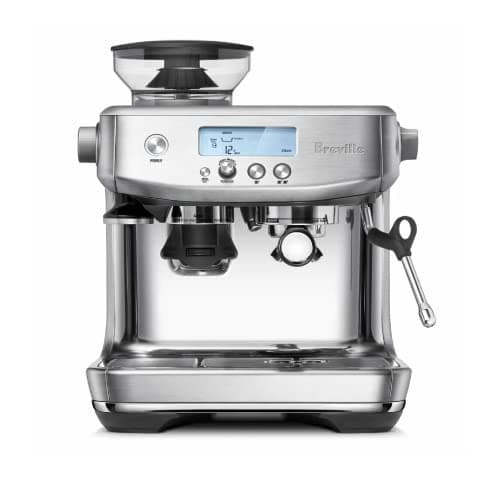
A thousand dollars is the most interesting budget in home espresso, because it is the first point where you can genuinely choose your priority instead of taking what you are given. Below $500 you buy whatever the price allows. Above $1,500 you buy a dual boiler. In between sits a real decision: one very good all-in-one, or a simpler machine plus a grinder that will outlive it.
Here is what the money actually changes on the way up from $500. You get temperature control you can trust — a PID or a fast heater holding the brew water in a narrow window instead of a thermostat swinging around a target. You get steam that keeps up, which is the difference between texturing a 12oz pitcher smoothly and chasing dying pressure. You get metal where it matters: brass group heads, real portafilters, machines that are worth repairing at year six. What you generally do not get is simultaneous brewing and steaming — that is the dual boiler line, and it sits above this band.
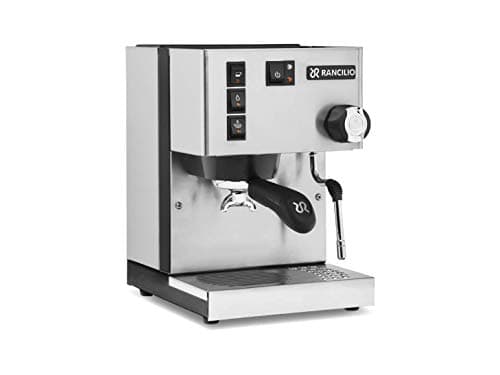
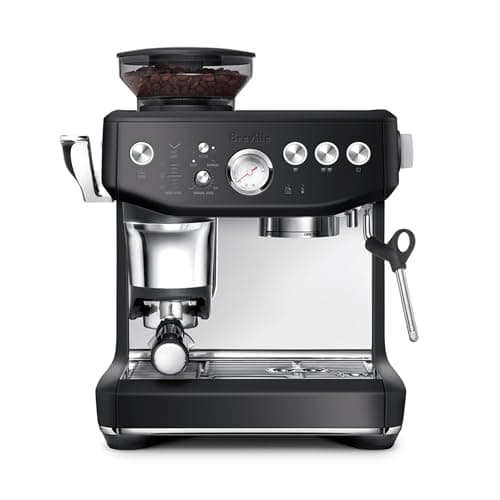
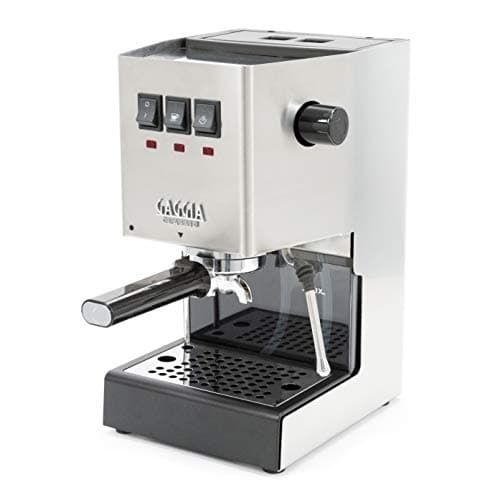
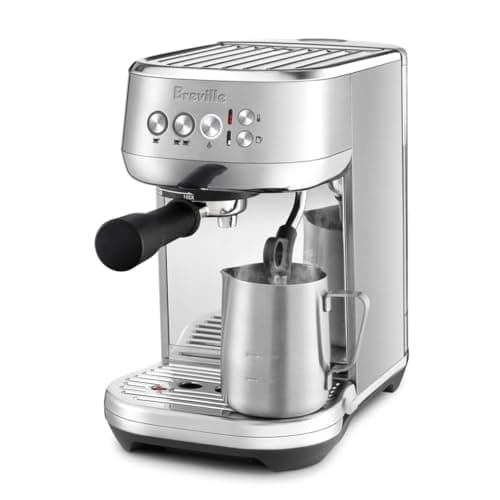
So the ranking below is not one list of machines; it is two philosophies. The Breville entries put everything in one chassis and give you a competent grinder for free. The Gaggia and the Rancilio give you a 58mm commercial group and nothing else, which means budgeting $250–$400 more for a grinder. The Gaggia leaves room for that inside the thousand; the Rancilio does not, and pushes the real total past it. Both are right answers. The wrong answer is spending the whole thousand on a machine and pairing it with a blade grinder — at that point you have bought a very precise instrument and fed it noise.
The split-your-budget math
Take the whole $1,000 and think of it as one number covering two appliances. A Barista Pro spends about 85% of it on the machine and gets a decent grinder thrown in. A Gaggia Classic Pro plus a $450 grinder spends roughly half on each — and that grinder will be noticeably better than any internal burr set here, will grind for pour-over as well, and can move to your next machine. Because grind consistency drives extraction more than any machine feature at this level, the split usually makes a better cup. It also makes a slower, fussier morning and takes more counter. That is the trade, stated plainly.
What a PID actually does, and who needs one
A PID is a controller that holds brew water in a narrow band instead of letting a thermostat swing above and below a target. The reason it matters is that extraction is temperature sensitive: the same coffee, ground the same, pulled two degrees cooler, tastes sourer. On a non-PID machine like the Rancilio you get the same result by routine — wait for the heating light, flush briefly, pull on the same schedule every time — and it works, because consistency of habit substitutes for consistency of hardware. If you make one or two drinks a day the same way, you may never need a PID. If you switch beans often and want to troubleshoot by taste, it removes a whole variable.
Steam power is the spec people under-weight
Everything in this band is a single boiler, so you pull the shot, switch to steam mode and wait for the boiler to climb. The differences show up in how much dry steam the machine can deliver before pressure sags. The Rancilio’s commercial wand is the strongest here and textures a 20oz pitcher without complaint; the Bambino Plus takes the opposite approach and removes the skill entirely with automatic texturing. If milk drinks are 90% of what you make, weight this more heavily than shot specs — and read how to froth milk before you decide you need a bigger boiler.
Portafilter size: 54mm or 58mm
58mm is the commercial standard, which means the accessory market is enormous and cheap: precision baskets, distribution tools, bottomless portafilters and tampers at every price. Breville uses 54mm, and its aftermarket is narrower and dearer. This does not make 58mm shots better on its own — the puck does not know the diameter — but if you expect to buy upgrade parts over the next few years, starting on 58mm means never re-buying them. The full argument is in our bottomless portafilter roundup.
What to skip in this band
Skip anything advertising 15 or 20 bars as a headline feature: espresso is brewed at about nine, and every pump here is capable of it. Skip machines with pressurized-only baskets at this price — at $1,000 the grinder should be doing that work. And skip the temptation to buy the whole budget as one beautiful machine with no grinder plan; a $900 machine and a $40 blade grinder makes worse coffee than a $250 machine and a $250 burr grinder, every single time. The reasoning is in burr vs blade.
If your ceiling is really $2,000
One last thing worth knowing before you spend a thousand dollars: the band above this one does not buy a better shot, it buys a solved inconvenience — simultaneous brewing and steaming, automated puck prep, or a machine that makes the coffee without you. If any of those three is what has been bothering you, read the best espresso machines under $2,000 before buying here, because the money is better spent one rung up. If none of them is, stay in this band and put the difference into burrs.
How we picked
We did not lab-test this gear
Everyone in this category says they tested twenty machines. We have not lab-tested any of these, and we say so. What we did instead: compiled the published manufacturer specifications, read the manuals, ran the math where there was math to run (heat-up time, pressure, dose capacity, grind range, cost per cup), and scored each pick against a published rubric. The scores are judgments from documented research — not measurements we took, because we do not have a lab and we will not pretend we do. Where a number came from someone else's work, we name them in Sources.