Skip to content
Tamp & Pour

Roundups & reviews · Espresso Machines

Rancilio Silvia review

A brass commercial group in a steel box, with no PID, no grinder and no guidance. Twenty years on, still the machine people keep — if they are willing to learn it.

By Stephen V.Updated How we review
#ad

We earn a commission when you buy through our Amazon links, at no extra cost to you. It never changes a verdict, and we say so when the cheaper product is the better buy. How this works.

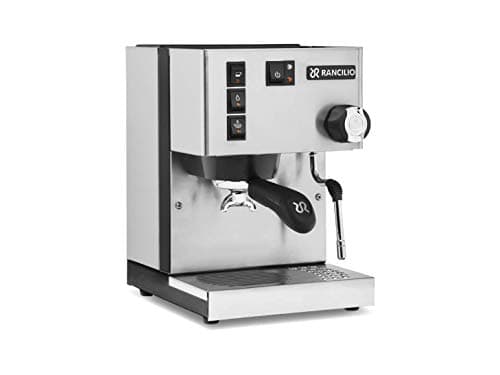
The Rancilio Silvia has outlived almost every machine it launched against, and the reason is not nostalgia. Rancilio builds commercial espresso equipment and the Silvia is a home machine assembled out of that parts bin: a brass group head, a stainless body, a proper steam wand and a 2-liter tank, weighing about 30.8 pounds. It is designed to be opened, serviced and kept.

What it does not have is anything that makes espresso easier. There is no PID from the factory — Rancilio lists temperature regulation as a manual thermostat — no shot timer, no pressure gauge and no grinder. Buying one means accepting that the machine will not meet you halfway. This review is about whether that trade is worth it in 2026, when a Breville at the same price will do considerably more for you.

01
Rancilio Rancilio Silvia

The machine you keep and service

Rancilio Silvia

58mm commercial portafilter, brass group head0.3L boiler, 2L removable water tankVibration pump; manual thermostat regulationStainless steel body, ~30.8 lb (14 kg)950-1000W at 120V
8.0/10

A commercial parts bin in a home-sized steel box: brass 58mm group, real steam, and a service life measured in decades — sold to someone willing to supply the temperature control themselves.

Shot quality
8.5
Steam power
8.5
Build
9.5
Ease of use
6
Value
7.5

Pros

  • The brass group is the argument: real thermal mass means the temperature at the puck holds through the shot instead of sagging
  • 58mm commercial sizing opens the entire professional accessory market — precision baskets, bottomless portafilters, tampers, all cheap and plentiful
  • Built to be serviced, with standard gaskets, valves and switches and a documented parts supply going back years
  • A genuinely strong steam wand for a single boiler — it textures a large pitcher without running out of pressure
  • A 2-liter tank, which is more than double what most compact machines hold and means far fewer refills

Cons

  • No PID as standard, so brew temperature swings with the thermostat cycle and you compensate by routine
  • No grinder, no timer, no gauge — every convenience is something you add
  • Heavy and tall at about 30.8 lb and 13.4 inches; it is furniture, not an appliance you move
  • Group clearance is tight, so tall mugs will not fit under it
  • Long warm-up: it wants 20 minutes or more to bring that brass mass to temperature

Don't buy this if…

you want reliable drinks in your first week. The learning curve is real and steep, and a Breville Barista Pro at the same money will make you a better cappuccino tomorrow morning.

Thermal mass is the whole design.The Silvia’s group head is brass, and brass is a heat reservoir. Once it is up to temperature it holds that temperature through the twenty-five seconds of a shot, which is why the machine tastes more stable than its lack of electronics suggests. It is also why the warm-up is long: you are not waiting for water, you are waiting for metal. Owners who switch it on and pull a shot five minutes later are brewing through a cold group and wondering why the coffee is sour. Give it twenty minutes with the portafilter locked in.

Temperature surfing, honestly described. With a thermostat rather than a PID, the boiler heats past a target, switches off, drifts down, and switches on again. Brew temperature depends on where in that cycle you pull. The technique is simple and it works: wait for the heating light to go out, run a short flush through the group to draw fresh water in, wait a few seconds, then pull. Do it identically every time. It takes about two weeks to become automatic, and it is the single thing that decides whether someone loves this machine or sells it.

The PID question.Aftermarket PID kits for the Silvia are mature and common, and they remove the entire issue — you set a temperature and the machine holds it. Two honest cautions. Fitting one is user modification, so treat the warranty as forfeit and either do the work competently or have someone who can. And Rancilio also sells the Silvia Pro X, a dual-boiler PID machine at roughly twice the price; if the factory version of these features is what you want, buying it is cleaner than modifying the base machine.

Steam is a genuine strength.Single boiler means you pull, switch to steam, wait for the boiler to climb, then texture — there is no brewing and steaming at once. But when it gets there, the wand delivers real dry steam through a proper tip, with no panarello sleeve softening it. You can learn actual microfoam on this machine, and the technique transfers directly to commercial equipment. The method is in how to froth milk.

What it demands from the rest of your setup. Non-pressurized 58mm baskets mean the grind is doing all the work, so an espresso-capable grinderis not optional here — it is half the purchase. Budget at least $250 and preferably more. Add a 58.5mm tamper, because a nominal 58mm tamper leaves an unsealed ring at the basket wall that water will channel straight through.

$995.00View on Amazon

Price as of Sep 2, 2026. Prices change — Amazon's at checkout is the one that counts.

#ad · we may earn a commission from this link to Rancilio Silvia

The full setup, and what it costs

Plan the whole station before you buy the machine. A capable espresso grinder is mandatory and is the largest additional cost. A 58.5mm tamper, a 0.1g scale, a WDT tool and a knock boxadd up to well under $150 and complete it. Because the machine is 58mm, every one of those parts is cheap and interchangeable — which is exactly the long-run argument for buying commercial sizing in the first place.

Silvia vs Silvia Pro X

The Pro X is a different machine that shares a name: dual boilers, PID temperature control, a pressure gauge and simultaneous brewing and steaming, at roughly twice the price. If your objection to the base Silvia is temperature management, the Pro X solves it from the factory and is the honest upgrade rather than a mod. If your objection is that the base Silvia has no grinder, the Pro X does not help — it does not have one either.

Silvia vs Gaggia Classic Pro

These are the two 58mm single boilers people cross-shop, and the split is clean. The Gaggiais substantially cheaper, lighter, and has a 3-way solenoid that leaves the puck dry — a real daily convenience the Silvia lacks. The Silvia has more thermal mass, a bigger tank, more steam and a heavier build. If budget is the constraint, the Gaggia plus a better grinder is the stronger total package. If you want the more substantial machine and will keep it a decade, the Silvia is the one people still own.

Maintenance is the price of longevity

Backflush weekly with a blind basket and espresso machine detergent to clear oils behind the shower screen. Descale on a schedule matched to your water hardness, with a proper descaler — never vinegar, which attacks boiler seals. Replace the group gasket when the portafilter starts sitting further round than it used to; it is a cheap part and a twenty-minute job. Do these three things and the machine genuinely does last decades, which is the only reason its price makes sense. Our cleaning supply picks and descaling guide cover the details.

Who should buy something else

If you want a grinder in the box and guidance on the screen, buy a Breville all-in-one. If milk drinks are the entire point and you do not want to learn steaming, a Bambino Plus automates it well. If you need to pull and steam simultaneously for a household, you need a dual boiler, and the Silvia cannot do it at any price.

How we picked

We did not lab-test this gear

Everyone in this category says they tested twenty machines. We have not lab-tested any of these, and we say so. What we did instead: compiled the published manufacturer specifications, read the manuals, ran the math where there was math to run (heat-up time, pressure, dose capacity, grind range, cost per cup), and scored each pick against a published rubric. The scores are judgments from documented research — not measurements we took, because we do not have a lab and we will not pretend we do. Where a number came from someone else's work, we name them in Sources.

Questions

Frequently asked

Is the Rancilio Silvia still worth buying?
If you want a machine you service and keep, yes — the brass 58mm group, steel body and standard commercial parts are why fifteen-year-old examples are still in daily use. If you want convenience for the money, no: a Breville at the same price does far more for you.
Does the Rancilio Silvia have a PID?
Not as standard. Rancilio publishes temperature regulation as a manual thermostat, so owners either learn temperature surfing or fit an aftermarket PID kit. Rancilio’s own Silvia Pro X includes PID control from the factory.
What is temperature surfing on a Silvia?
Timing the shot against the boiler’s heating cycle. Wait for the heating light to go out, run a short flush through the group, wait a few seconds, then pull — the same way every time. Consistency of routine substitutes for the temperature control the machine does not have.
How long does a Rancilio Silvia take to warm up?
Give it twenty minutes or more with the portafilter locked in. The delay is the brass group reaching temperature rather than the water, and pulling before it does is the most common reason a new owner’s shots taste sour.
Rancilio Silvia or Gaggia Classic Pro?
The Gaggia if budget matters — it is cheaper, lighter and its 3-way solenoid leaves a dry puck, and the savings buy a better grinder. The Silvia if you want more thermal mass, more steam and a heavier machine you intend to keep for a decade.
What grinder do you need for a Rancilio Silvia?
A genuinely espresso-capable one, because the 58mm non-pressurized baskets put all the resistance on the puck. Budget at least $250 for something with fine, repeatable adjustment — the machine cannot compensate for an inconsistent grind, by design.

Keep reading

Receipts

Sources

We do not run a testing lab, and we do not pretend to. Where a measured number came from someone else's work, we name them and link them. Where we could not verify something, we say so on the page rather than quietly leaving it out. Read our full method.