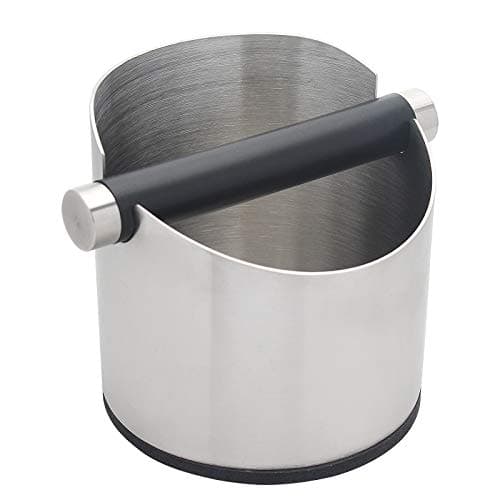
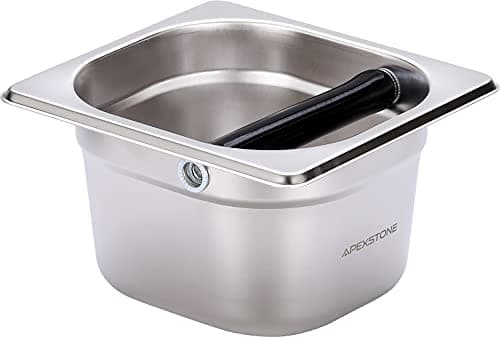
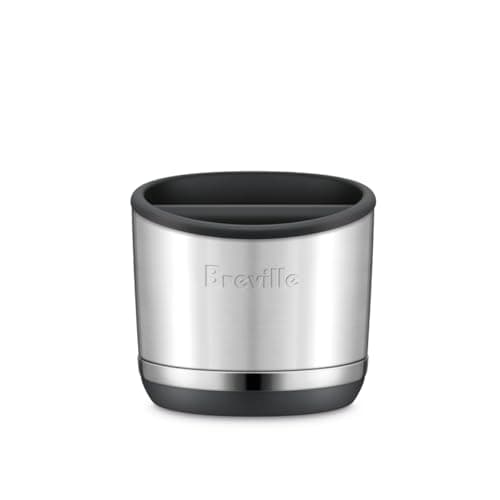
A knock box is the least glamorous piece of espresso equipment and one of the few that changes your kitchen rather than your coffee. Its job is to take the spent puck out of the portafilter in one motion, without you banging a hot metal basket against a bin edge, and without wet grounds going down a drain that will eventually block.
That drain point is the practical argument. Spent espresso pucks are compressed fines that clump and settle; a household that knocks them into the sink for a year usually meets a plumber. They also go straight into a compost heap or a garden bed, where used coffee grounds are a perfectly good soil amendment. A knock box just makes the right disposal the easy one.
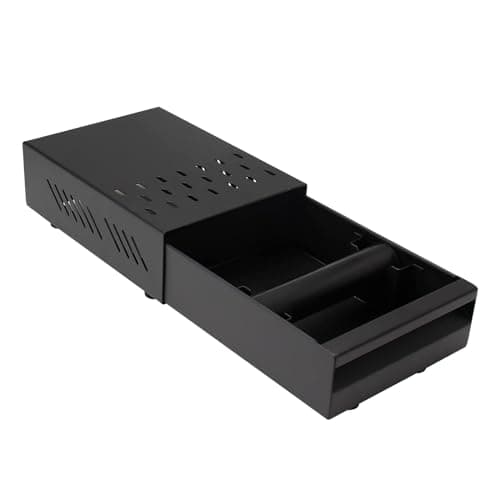
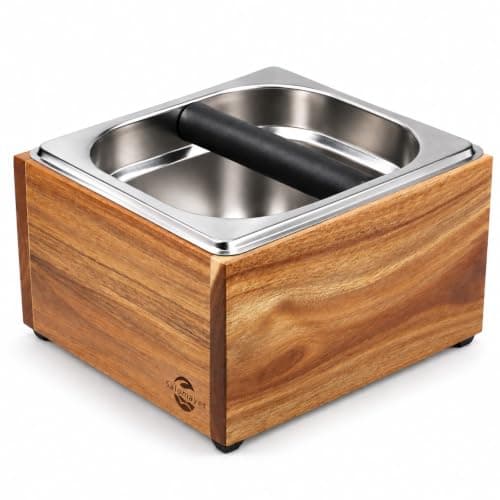
There are only three real decisions: countertop bin or under-machine drawer, how tall the knock bar sits, and how loud the thing is. The picks below are ranked on exactly those.
Bar height is the spec nobody lists
The knock bar has to sit high enough that a loaded portafilter clears the rim of the bin as you strike it, and low enough that the puck actually drops. Too low and you scrape your knuckles on the edge; too high and the puck bounces back out. Most boxes designed for home machines get this right for 54mm and 58mm portafilters, but very small or very deep bins can be awkward. If you use a bottomless portafilter, check that the bar clears the naked basket without the spout guard that normally protects it.
Countertop bin or under-machine drawer?
A countertop bin is simpler, cheaper and easier to carry to the compost. A drawer sits under the machine and costs you no additional counter footprint, which is the right answer in a small kitchen — but it raises the machine by an inch or two, and if you already struggle to lift the water tank out under a wall cabinet, that height will hurt. Measure the clearance above your machine before choosing a drawer.
Noise is a real specification in a shared home
Knocking a puck out is a sharp, percussive sound, and at 6am in an open-plan apartment it carries. A rubber-topped bar in a wood-bodied box is dramatically quieter than a bare metal bar in a metal bin. If that matters where you live, weight your choice toward the acacia box or a bin with a heavily damped bar — it is the one aspect of this purchase people regret ignoring.
Capacity, honestly
Manufacturers state capacity in pucks, which is a soft number because pucks vary with dose and basket. As a rule, a home box that claims ten pucks holds two to three days of a two-drink-a-day habit before it needs emptying, and you should empty it more often than that anyway — damp grounds left in a warm kitchen grow mold within a few days. Bigger is not automatically better here; a box you empty regularly stays clean.
Cleaning and what to do with the grounds
Choose a box whose bar comes out. Fixed bars trap a wet ring of grounds at the mounting point that you cannot properly reach, and that is where a knock box starts to smell. Empty it into compost or straight onto garden beds; used coffee grounds are close to pH-neutral once brewed and add organic matter and some nitrogen as they break down. Do not put them down the sink.
Who can skip a knock box entirely
If you use a pod machine or a super-automatic, skip it — a bean-to-cup machine collects its own pucks in an internal bin, so a knock box is redundant. Skip it, too, if you make one shot a day and already have a compost caddy within reach: knocking directly into a caddy with a firm rim works, it is just messier. Everyone running a portafilter machine several times a day will use one daily.
Before you buy one at all
A knock box is one of the few pieces of espresso equipment that changes your kitchen rather than your coffee, and it is genuinely unnecessary on a bean-to-cup or pod machine — those collect their own pucks internally. If you are not certain you need one, the honest version of that question, including the alternatives that work and the one that wrecks a drain, is on do you need a knock box.
If the puck will not come out cleanly
A puck that falls apart or sticks in the basket is usually waterlogged rather than badly prepared, and on machines without a three-way solenoid valve — most machines under about $500 — that is by design, because there is nothing to drain the water standing above the puck after the shot. Two practical notes: tip the water off into the sink before knocking out the solids, since fighting a soaked disc out of a basket is how baskets get bent, and do not try to dry the puck by over-dosing, which presses it into the shower screen and causes channeling. The full diagnosis is in why is my espresso puck wet.
How we picked
We did not lab-test this gear
Everyone in this category says they tested twenty machines. We have not lab-tested any of these, and we say so. What we did instead: compiled the published manufacturer specifications, read the manuals, ran the math where there was math to run (heat-up time, pressure, dose capacity, grind range, cost per cup), and scored each pick against a published rubric. The scores are judgments from documented research — not measurements we took, because we do not have a lab and we will not pretend we do. Where a number came from someone else's work, we name them in Sources.