Skip to content
Tamp & Pour

Roundups · Accessories

Do you need a knock box?

If you pull shots from a portafilter every day, yes — and mostly for the sake of your plumbing. If you use a bean-to-cup or pod machine, no. Here is the honest line between the two.

By Stephen V.Updated How we review
#ad

We earn a commission when you buy through our Amazon links, at no extra cost to you. It never changes a verdict, and we say so when the cheaper product is the better buy. How this works.

If you use a portafilter machine daily, buy one — the Breville Knock Box 10 is the best-judged countertop option, and the Apexstone 6.9-inch bin does the same essential job for very little. If you use a super-automatic or a pod machine, you do not need one at all: those machines collect their own pucks in an internal drawer, and a knock box has nothing to do.

A knock box is the least glamorous piece of espresso equipment and one of the few that changes your kitchen rather than your coffee. Its entire job is to get the spent puck out of the portafilter in one motion, without banging a hot metal basket on a bin edge and without wet grounds going down a drain. Nothing about it improves the cup, which is why the honest answer to “do I need one” is a question about your routine rather than your taste.

The real argument is the drain

Spent espresso pucks are compressed fines. In a drain they do not wash away — they clump, settle in the trap and bind with grease, and a household that knocks pucks into the sink for a year tends to meet a plumber. This is the single most practical reason to own a knock box, and it applies even to someone who makes one shot a day. Grounds belong in compost or on a garden bed, where brewed coffee is a perfectly reasonable soil amendment. The box just makes the right disposal the easy one.

The second argument is your portafilter

Knocking a hot portafilter against a bin rim, a counter edge or the lip of a trash can is how baskets get dented and how portafilter handles crack over time. A knock box gives you a padded bar at the right height to strike, which absorbs the impact instead of transmitting it into the handle. On a machine with a naked or bottomless portafilter, this matters more, because there is no spout assembly protecting the basket rim.

Who genuinely does not need one

Bean-to-cup and pod machine owners. A super-automatic ejects its pucks into an internal dregs drawer you empty every day or two, and a pod machine drops capsules into a bin. There is no portafilter to knock out, so the box is redundant.

One-shot-a-day drinkers with a compost caddy within reach. If you make a single espresso and you already keep a caddy with a firm rim next to the machine, knocking directly into it works. It is messier and harder on the basket, and it is genuinely fine.

Anyone whose counter is completely full.Not a reason to skip it — a reason to buy a drawer-style box that sits under the machine instead, which costs no additional counter area. We rank those on best knock boxes.

Alternatives that actually work, ranked honestly

A compost caddy with a rigid rim. The best free option. It needs a firm edge to strike, a liner you change often, and the acceptance that you will occasionally miss. Do not use a flimsy plastic tub; the rim flexes and the puck breaks apart on the way out.

A loaf tin or a sturdy bowl with a folded tea towel. Works, quiet, and looks exactly as improvised as it is. Fine as a stopgap while you decide.

Tapping the puck out with a spoon handle. Slow and it scratches baskets. It is what you do once when you cannot find anything else.

The sink. Not an alternative. See above.

If you do buy one, the three decisions

There are only three real variables, and they are the same three our full ranking is built on. Bar height: the knock bar has to sit high enough that a loaded portafilter clears the rim as you strike, and low enough that the puck drops rather than bouncing back. Countertop bin or under-machine drawer: a bin is simpler and easier to carry to the compost, a drawer costs no counter space but raises the machine an inch or two, which matters under a wall cabinet. Noise: a percussive strike at 6am carries in an open-plan home, and a rubber-topped bar in a wood body is dramatically quieter than bare metal in a metal bin. That last one is the variable people most regret ignoring.

Below are the three we would actually buy, chosen to cover those decisions rather than to fill a list.

The short answer

Quick picks

  • 01
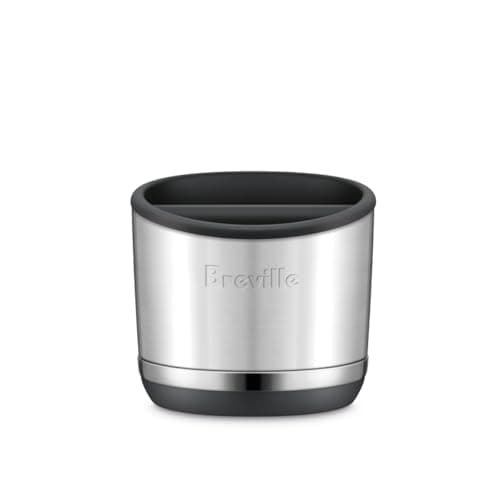
    Breville Breville Knock Box 10 (BEA501BSS)
    Breville Knock Box 10 (BEA501BSS)

    The best-judged countertop box here: a well-damped bar at the right height, a stainless body that wipes clean, and a size that suits a home machine rather than a café.

    8.0Best overall — for a daily portafilter routine
  • 02
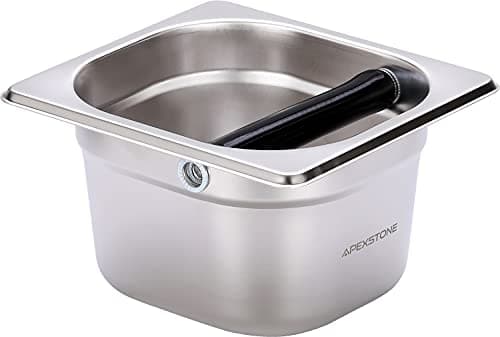
    Apexstone Apexstone Coffee Knock Box (6.9 inch)
    Apexstone Coffee Knock Box (6.9 inch)

    The cheap one that is genuinely fine: a small stainless bin with a built-in bar, sized for a single-machine home setup.

    7.2Cheapest sensible answer — for one or two shots a day
  • 03
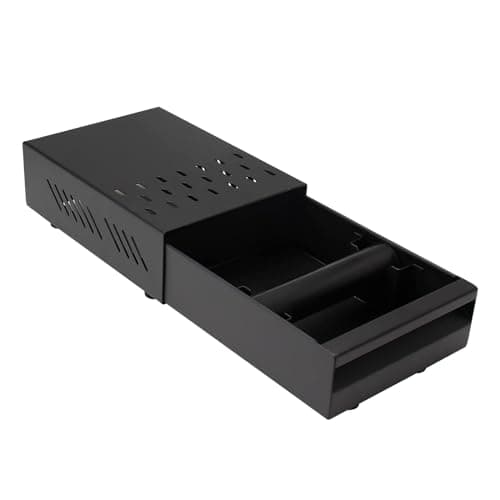
    DIBTSA DIBTSA Espresso Knock Box Drawer
    DIBTSA Espresso Knock Box Drawer

    The counter-space answer: a shallow drawer the machine sits on top of, so the knock box occupies no additional footprint at all.

    8.1Best for a full counter — for a small kitchen

#ad · Live prices from the Amazon Product API, as of October 17, 2026. Where we have no verified live price, we show none — a gap beats a number that has rotted.

In detail

The picks, in full

01
Breville Breville Knock Box 10 (BEA501BSS)

Best overall — for a daily portafilter routine

Breville Knock Box 10 (BEA501BSS)

Stainless steel bodyRemovable knock barAround 10-puck capacityNon-slip base
8.0/10

The best-judged countertop box here: a well-damped bar at the right height, a stainless body that wipes clean, and a size that suits a home machine rather than a café.

Bar height & feel
9
Capacity
7.5
Cleaning
9
Noise
7
Value
7.5

Pros

  • Knock bar sits at a height that clears a 54mm or 58mm portafilter comfortably
  • Bar unclips for cleaning, which is where cheaper boxes trap old grounds
  • Stainless body does not stain or hold coffee smell
  • Weighted enough to stay put when you knock firmly

Cons

  • More expensive than functionally similar generic boxes
  • Capacity suits a home routine, not a party
  • Metal body transmits more sound than a rubber-heavy design

Don't buy this if…

…your counter space is already gone — a drawer-style box under the machine uses vertical space you are not using anyway.

Who it is for: someone who pulls two or more shots a day and wants the decision made properly once. The bar height and the removable bar are the two things that separate a box you keep from one you replace, and this gets both right.

$33.95View on Amazon

Price as of October 17, 2026. Prices change — Amazon's at checkout is the one that counts.

#ad · we may earn a commission from this link to Breville Knock Box 10 (BEA501BSS)

02
Apexstone Apexstone Coffee Knock Box (6.9 inch)

Cheapest sensible answer — for one or two shots a day

Apexstone Coffee Knock Box (6.9 inch)

Stainless steel6.9-inch diameterBuilt-in knock barCompact footprint
7.2/10

The cheap one that is genuinely fine: a small stainless bin with a built-in bar, sized for a single-machine home setup.

Bar height & feel
7
Capacity
5.5
Cleaning
7
Noise
7
Value
9.5

Pros

  • Costs very little and does the essential job properly
  • Small diameter fits beside a machine on a shallow counter
  • Nothing to break — one bin, one bar

Cons

  • Small capacity means emptying it every day or two
  • Bar is fixed, so cleaning around it takes more care
  • Light enough to slide if you knock hard

Don't buy this if…

…you make several drinks a day for a household — you will be emptying it constantly.

Who it is for: the reader who accepts the drain argument and wants to spend the least possible money on it. At this price the decision is trivial, and a small bin emptied daily stays cleaner than a big one emptied weekly anyway.

$14.99View on Amazon

Price as of October 17, 2026. Prices change — Amazon's at checkout is the one that counts.

#ad · we may earn a commission from this link to Apexstone Coffee Knock Box (6.9 inch)

03
DIBTSA DIBTSA Espresso Knock Box Drawer

Best for a full counter — for a small kitchen

DIBTSA Espresso Knock Box Drawer

Under-machine drawerStainless steelRemovable rubber knock barMachine sits on top
8.1/10

The counter-space answer: a shallow drawer the machine sits on top of, so the knock box occupies no additional footprint at all.

Bar height & feel
8
Capacity
9
Cleaning
8
Noise
8
Value
7.5

Pros

  • Uses zero extra counter area — the machine stands on it
  • Larger capacity than most countertop bins
  • Pull-out drawer empties without lifting anything hot

Cons

  • Raises the machine, which can be a problem under low cabinets
  • Needs to be strong and level enough for your machine's weight
  • More expensive than a plain bin

Don't buy this if…

…your machine already sits tight under a wall cabinet — the extra height will make the water tank hard to fill.

Who it is for:the person whose objection to a knock box is space rather than need. Measure the clearance above your machine first — raising it an inch or two is what makes a top-filling water tank awkward. Our compact machine picks make the same point about overhead clearance.

$45.99View on Amazon

Price as of October 17, 2026. Prices change — Amazon's at checkout is the one that counts.

#ad · we may earn a commission from this link to DIBTSA Espresso Knock Box Drawer

Need it or not, by setup

Your machine / routineKnock box needed?Why
Portafilter machine, 2+ drinks a dayYesFastest puck ejection, protects the basket, keeps fines out of the drain
Portafilter machine, one drink a dayOptionalA rigid-rim compost caddy works; messier and harder on the basket
Super-automatic / bean-to-cupNoPucks go into an internal dregs drawer you empty anyway
Pod machineNoUsed capsules drop into the machine's own container
Manual lever / portable makerHelpful, not essentialSmall baskets eject easily, but the drain argument still applies
Full counter, portafilter machineYes — buy a drawerSits under the machine and costs no counter area

Why bar height is the spec nobody lists

The bar has to clear the rim of the bin when a loaded portafilter strikes it, and sit low enough that the puck drops free. Too low and you catch your knuckles on the edge; too high and the puck bounces back out. Boxes designed for home machines generally get this right for 54mm and 58mm portafilters, but very deep or very small bins can be awkward. If you use a naked portafilter, check that the bar clears the basket without the spout assembly that would normally protect it.

How often to empty it, and what to do with the grounds

Every day or two. Damp spent coffee in a warm kitchen starts growing mould within a few days, and that smell transfers to the bin permanently. Choose a box whose bar comes out: fixed bars trap a wet ring of grounds at the mounting point that you cannot properly reach, and that is where a knock box starts to smell. Empty into compost or straight onto garden beds — brewed grounds are close to pH-neutral and add organic matter as they break down, so the common claim that they strongly acidify soil is overstated.

Noise, if you share a home

Knocking a puck out is a sharp, percussive sound, and in an open-plan apartment at 6am it carries through walls. A rubber-topped bar in a wood-bodied box is noticeably quieter than a bare metal bar in a metal bin, and a silicone mat under the box damps what is left. If anyone in the house sleeps near the kitchen, weight your choice toward the quietest option rather than the cheapest — it is the aspect of this purchase people most often regret ignoring.

Where a knock box sits in the buying order

Below the things that change the coffee. A grinder, a correctly sized tamper and a 0.1g scale all move the cup; a knock box moves your kitchen. If you are assembling a setup from scratch, buy it after those three and before any of the nice-to-haves — the order we set out in the espresso accessories starter kit.
How we picked

We did not lab-test this gear

Everyone in this category says they tested twenty machines. We have not lab-tested any of these, and we say so. What we did instead: compiled the published manufacturer specifications, read the manuals, ran the math where there was math to run (heat-up time, pressure, dose capacity, grind range, cost per cup), and scored each pick against a published rubric. The scores are judgments from documented research — not measurements we took, because we do not have a lab and we will not pretend we do. Where a number came from someone else's work, we name them in Sources.

Questions

Frequently asked

Do I really need a knock box?
If you use a portafilter machine daily, it is the tidiest and quickest way to eject pucks, and it keeps compacted grounds out of your drain where they clump and cause blockages. If you have a bean-to-cup or pod machine with an internal puck bin, you do not need one.
What can I use instead of a knock box?
A compost caddy or a sturdy bin with a rigid rim works — strike the rim, accept some mess, and change the liner often. A loaf tin with a folded tea towel is a decent stopgap. What does not work is the sink.
Can you put espresso pucks down the sink?
You can, and it is a common cause of slow drains. Spent pucks are compressed fines that settle and bind in the trap. Compost them or put them on the garden instead.
Do you need a knock box with a super-automatic machine?
No. A bean-to-cup machine ejects pucks into an internal dregs drawer, which you empty every day or two as part of normal cleaning. There is no portafilter to knock out.
Are knock box drawers worth it?
In a small kitchen, yes — the machine sits on top, so the box costs no extra counter space and usually holds more. Check your overhead clearance first, because the drawer raises the machine by an inch or two.

Keep reading

Receipts

Sources

We do not run a testing lab, and we do not pretend to. Where a measured number came from someone else's work, we name them and link them. Where we could not verify something, we say so on the page rather than quietly leaving it out. Read our full method.