Skip to content
Tamp & Pour

Roundups & reviews · Espresso Machines

The best espresso machines under $2,000

The band where you stop buying features and start buying a solved problem: simultaneous steam, automated puck prep, or a machine you service for a decade. Ranked, with the honest case for spending less.

By Stephen V.Updated How we review
#ad

We earn a commission when you buy through our Amazon links, at no extra cost to you. It never changes a verdict, and we say so when the cheaper product is the better buy. How this works.

Two thousand dollars is the first budget in home espresso where no single feature is out of reach — and that is exactly what makes it hard to spend. Under $500 you take what the price allows. At $1,000 you choose between one good all-in-one and a simpler machine plus a real grinder. In this band you can buy any one of three different solved problems, and nothing on the market will sell you all three at once.

So we ranked these machines by the problem they solve rather than by a feature count, because the feature counts here are all high enough to be useless as a tiebreaker. The three problems are:

  • Simultaneity. A true dual boiler brews and steams at the same time with a stable brew temperature. If you make two milk drinks back to back, this is the only thing on the list that removes the waiting.
  • Skill. Assisted tamping, guided touchscreens and automatic milk texturing take over the two steps beginners get wrong — the puck and the milk — so good drinks start on day one instead of month three.
  • Attention. A bean-to-cup machine grinds, doses, brews, froths and dumps the puck behind a sealed group. You press one button and you never learn anything, which for most households is the feature, not the compromise.

One honest warning before the picks, because it is the single most useful thing on this page: none of these machines will out-pour a $600 machine paired with a $500 grinder in the hands of someone willing to learn. Grind quality sets the ceiling on espresso, and every machine here spends your money somewhere other than the burrs. If the best possible shot is the goal and you enjoy the process, buy less machine and more grinder. If what you want is a solved problem — no waiting, no learning curve, or no involvement at all — that is what this band sells, and it sells it well.

A note on how these are scored, since it matters when you compare the numbers below. Semi-automatic machines are scored on shot quality, steam power, build, ease of use and value; bean-to-cup machines are scored on coffee quality, milk system, ease and cleaning, drink range and value. Those are different axes, deliberately, because the two kinds of machine are not trying to do the same job — a Jura has no steam wand to score and a Rancilio has no drink menu. We would rather say that than invent one rubric that flatters neither. Every score here is a judgment from published specifications and aggregated owner reports, as how we review sets out in those words.

The short answer

Quick picks

  • 01
    Breville Breville Dynamic Duo (Dual Boiler + Smart Grinder Pro)
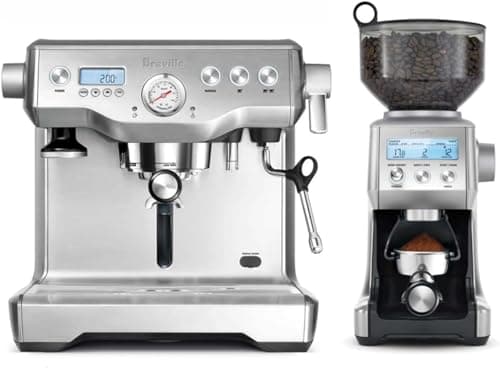
    Breville Dynamic Duo (Dual Boiler + Smart Grinder Pro)

    The best complete dual boiler setup: Breville's true dual-boiler machine bundled with its Smart Grinder Pro, which removes the awkward 'and now buy a grinder' step at this price.

    8.4Best overall under $2,000
  • 02
    Breville Breville Barista Touch Impress (BES881)
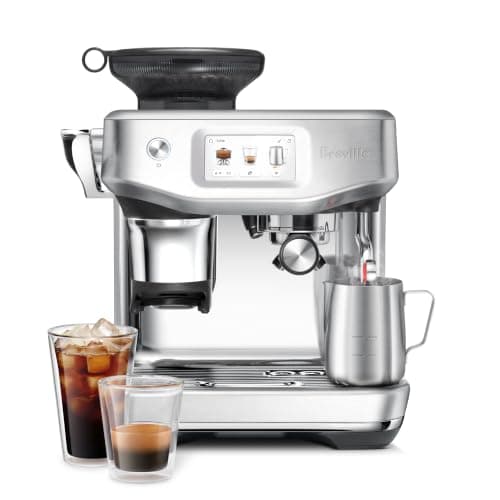
    Breville Barista Touch Impress (BES881)

    The 'I want cafe results with the least fuss and money is not the constraint' pick. Touchscreen guidance, assisted tamping and automatic milk take most of the skill out of it.

    8.1Best for good drinks on day one
  • 03
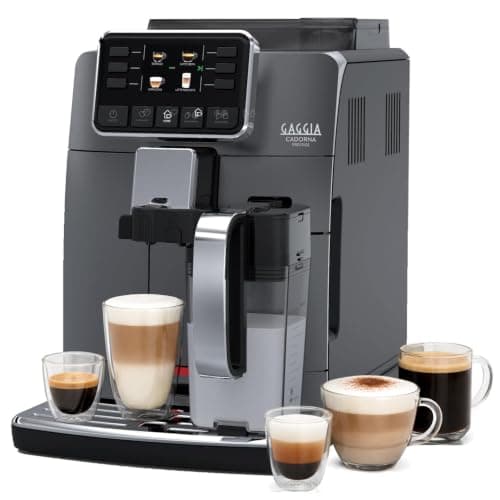
    Gaggia Gaggia Cadorna Prestige
    Gaggia Cadorna Prestige

    The automatic end of the range done properly: fourteen one-touch drinks, a fridge-storable auto-milk carafe, a color screen and four saved profiles, for a household where nobody orders the same thing.

    8.0Best one-touch machine for a mixed household
  • 04
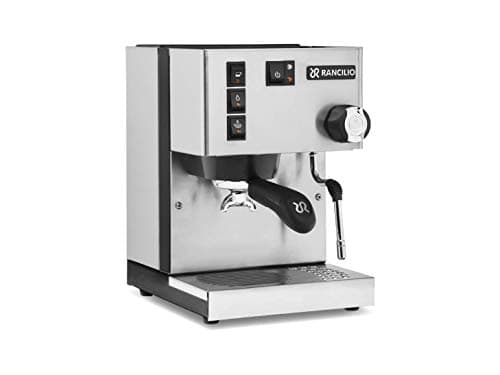
    Rancilio Rancilio Silvia
    Rancilio Silvia

    The commercial-parts machine: a brass 58mm group, a 0.3L boiler, a 2L tank and a steel body that is still being rebuilt fifteen years later. It gives you nothing automatic and everything durable.

    8.0Best build, and the best way to split this budget
  • 05
    Jura Jura E4
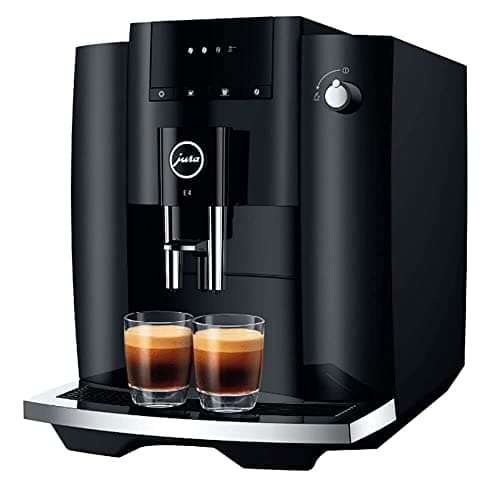
    Jura E4

    The ENA 4's argument in a full-size body: five specialties, still no milk system, but a 64oz tank and a 10oz bean hopper so a black-coffee household is not refilling it twice a day.

    7.5Best for a black-coffee household

#ad · Live prices from the Amazon Product API, as of October 18, 2026. Where we have no verified live price, we show none — a gap beats a number that has rotted.

In detail

The picks, in full

01
Breville Breville Dynamic Duo (Dual Boiler + Smart Grinder Pro)

Best overall under $2,000

Breville Dynamic Duo (Dual Boiler + Smart Grinder Pro)

True dual boiler (separate brew and steam boilers)58mm commercial portafilterPID temperature controlBundled with Smart Grinder Pro
8.4/10

The best complete dual boiler setup: Breville's true dual-boiler machine bundled with its Smart Grinder Pro, which removes the awkward 'and now buy a grinder' step at this price.

Temperature stability
9
Steam power
9
Build
8.5
Ease of use
7.5
Value
8

Pros

  • Genuine separate boilers — brew and steam simultaneously with a stable brew temperature
  • 58mm commercial group, so the whole professional accessory market fits
  • PID lets you set brew temperature by the degree rather than manage a cycling thermostat
  • The grinder is in the box, which at this price point is a meaningful saving over buying separately
  • Pre-infusion and adjustable shot parameters give real control

Cons

  • Expensive, and the bundle means you pay for a grinder you may already own
  • Large and heavy — this is a permanent counter installation
  • Two boilers means a longer warm-up and more descaling surface to maintain
  • The bundled Smart Grinder Pro is a good all-rounder rather than a precision espresso grinder

Don't buy this if…

…you already own a grinder you like — you would be paying for a second one, and a standalone dual boiler is the better buy in that case.

Who it is for: the household that makes two or more milk drinks every morning and has decided to stop waiting. On every other machine here with a steam wand you pull a shot, wait for the single boiler to climb to steam temperature, texture the milk — and then wait again, in the other direction, before the next shot. A true dual boiler deletes that. Two drinks take about as long as one, and the brew temperature does not move while the steam boiler is working.

It is also the only pick here that lands in this band as a complete 58mm station rather than a machine with a shopping list attached. That matters more than it sounds: 58mm is the commercial standard, so every precision basket, 58.5mm tamper, puck screen and bottomless portafilter on the market fits it, cheaply and indefinitely. The honest limit is the bundled grinder: the Smart Grinder Pro is a competent all-rounder, not a single-dose espresso grinder, and the people who eventually replace it are the same people who were always going to replace whatever grinder came in the box.

$1,699.95View on Amazon

Price as of October 18, 2026. Prices change — Amazon's at checkout is the one that counts.

#ad · we may earn a commission from this link to Breville Dynamic Duo (Dual Boiler + Smart Grinder Pro)

02
Breville Breville Barista Touch Impress (BES881)

Best for good drinks on day one

Breville Barista Touch Impress (BES881)

54mm portafilterImpress assisted tampingTouchscreen guidanceAuto milk texturing
8.1/10

The 'I want cafe results with the least fuss and money is not the constraint' pick. Touchscreen guidance, assisted tamping and automatic milk take most of the skill out of it.

Shot quality
8.5
Steam power
8
Build
8
Ease of use
9.5
Value
6.5

Pros

  • Assisted tamping fixes the puck-prep step most beginners struggle with
  • Touchscreen walks you through each drink; automatic milk is excellent
  • All-in-one: grinder, guidance and milk in a single machine

Cons

  • Expensive — you pay a large premium for the automation
  • So much is automated that you learn less about the craft

Don't buy this if…

…you're price-sensitive or you actually want to learn espresso by hand — the Barista Express does 90% of this for a fraction of the price.

Who it is for: someone who wants a semi-automatic machine — a real portafilter, a real wand, drinks they made themselves — without the eight-week apprenticeship that usually comes with it. It is the one machine in this band that attacks the learning curve directly instead of routing around it.

Each of its three headline features is aimed at a specific beginner failure. The Impress lever tamps with consistent force and a polish twist, which removes the uneven puck that causes channeling no matter how good the beans are. Breville publishes Auto MilQ texturing with dairy, soy, almond and oat settings, eight texture levels and a 104°F to 167°F range, which removes the other common failure: scalded milk full of big bubbles. The touchscreen carries 13 cafe presets plus up to 6 custom drinks, so the sequence is prompted rather than remembered. Published grinder spec is Baratza European Precision burrs with 30 settings, and ThermoJet heating reaches extraction temperature in about three seconds.

What you are paying for is time, not cup quality, and it is worth being clear-eyed about that: the shot it pulls is roughly what a Barista Express pulls once you have learned to tamp. For the full detail before you spend the money, we reviewed it on its own: Breville Barista Touch Impress review.

$1,439.99View on Amazon

Price as of October 18, 2026. Prices change — Amazon's at checkout is the one that counts.

#ad · we may earn a commission from this link to Breville Barista Touch Impress (BES881)

03
Gaggia Gaggia Cadorna Prestige

Best one-touch machine for a mixed household

Gaggia Cadorna Prestige

14 one-touch drinksAuto-milk carafe (0.6L, fridge-storable)100% ceramic grinder, 10 settingsColor TFT screen, 4 profiles, twin-cup
8.0/10

The automatic end of the range done properly: fourteen one-touch drinks, a fridge-storable auto-milk carafe, a color screen and four saved profiles, for a household where nobody orders the same thing.

Coffee quality
8
Milk system
8
Ease & cleaning
7.5
Drink range
9
Value
7.5

Pros

  • Fourteen programmed drinks, including flat white, cortado and cafe au lait, all at one touch
  • The auto-milk carafe froths and cleans itself, and lifts out to live in the fridge between uses
  • Color screen with four user profiles saves each person's strength and size, and it brews two cups at once

Cons

  • You pay a clear step up in price for the breadth
  • The milk carafe and larger body mean more parts and a bigger footprint to manage
  • Overkill if the household really only drinks two or three of the fourteen

Don't buy this if…

…you only ever make espresso and cappuccino. You would be paying for a fourteen-drink menu and a color screen you won't use, when a simpler De'Longhi or Philips makes the same two drinks.

Who it is for: the kitchen where four people want four different drinks and none of them wants to learn to steam milk. This is the bean-to-cup answer in the band, and the reason it outranks the Jura below is the milk system: the Cadorna has a 0.6L automatic carafe that froths, pours and rinses itself, and the E4 has no milk system at all.

The four saved profiles are the underrated part. Each person's strength and cup volume is stored, so nobody is re-adjusting the machine at 7am, and the twin-cup function fills two cups in one cycle. Ten grind steps on 100% ceramic burrs is less adjustment range than a semi-automatic gives you, which is the standing bean-to-cup trade: the grind, the dose and the puck all happen inside a sealed group you cannot reach, so your only levers are strength, volume and grind step.

Two honest notes. The carafe is a real object with real upkeep — it lives in the fridge, it goes back on the machine, and it needs a proper clean on a schedule rather than just the auto-rinse. And if the fourteen-drink menu is the appeal but this price is not, the bean-to-cup bracket under $1,000 covers most of the same ground for materially less money.

$1,102.96View on Amazon

Price as of October 18, 2026. Prices change — Amazon's at checkout is the one that counts.

#ad · we may earn a commission from this link to Gaggia Cadorna Prestige

04
Rancilio Rancilio Silvia

Best build, and the best way to split this budget

Rancilio Silvia

58mm commercial portafilter, brass group0.3L boiler, 2L water tankVibration pump, manual thermostat controlStainless steel body, ~30.8 lb
8.0/10

The commercial-parts machine: a brass 58mm group, a 0.3L boiler, a 2L tank and a steel body that is still being rebuilt fifteen years later. It gives you nothing automatic and everything durable.

Shot quality
8.5
Steam power
8.5
Build
9.5
Ease of use
6
Value
7.5

Pros

  • A brass commercial group with real thermal mass — temperature holds through the shot rather than sagging
  • 58mm means every professional basket, tamper and bottomless portafilter fits, cheaply
  • Built to be serviced: gaskets, valves and switches are stock parts and the machine is designed to come apart
  • Genuinely powerful steam wand for a single boiler, and no panarello sleeve in the way

Cons

  • No PID from the factory — Rancilio lists temperature regulation as a manual thermostat, so you learn temperature surfing or fit a kit
  • No grinder, so the real budget is this plus $250 or more
  • Heavy and tall, at roughly 30.8 lb and 13.4 inches
  • Small drip tray and tight group clearance; taller cups do not fit

Don't buy this if…

…you want good drinks without study. This is a machine that rewards routine and punishes improvisation, and the Barista Touch Impress will make a better cappuccino in your first month.

Who it is for: the reader who came to this page with $2,000 and is willing to spend half of it on burrs. The Silvia is the cheapest machine here, and that is the entire argument for it in this band: it leaves roughly a thousand dollars for a grinder, which buys a genuinely excellent one, and grind quality — not the machine — decides how your espresso tastes.

What the machine half buys is metal and serviceability. The group is brass, so it holds temperature through the shot once it is hot; the body is stainless; the tank is 2 liters; and the parts are commercial-lineage stock items, which is why fifteen-year-old examples are still in daily use. What it does not buy is help. There is no PID from the factory — Rancilio publishes temperature regulation as a manual thermostat — so you either learn the flush-and-wait routine known as temperature surfing or fit an aftermarket kit and treat the warranty as gone. There is also no grinder, no shot timer and no gauge.

It ranks fourth here, below two machines it would beat on build, and that is deliberate: this page is about the best way to spend up to $2,000, and most people spending it want drinks rather than a project. If you are the exception, this is your machine — our full Rancilio Silvia review covers the warm-up, the surfing routine and the PID question in detail.

$995.00View on Amazon

Price as of October 18, 2026. Prices change — Amazon's at checkout is the one that counts.

#ad · we may earn a commission from this link to Rancilio Silvia

05
Jura Jura E4

Best for a black-coffee household

Jura E4

5 specialties (espresso, 2x espresso, coffee, 2x coffee, hot water)Professional Aroma Grinder (P.A.G.), P.E.P.No milk system64oz tank, 10oz beans, 22 lbs
7.5/10

The ENA 4's argument in a full-size body: five specialties, still no milk system, but a 64oz tank and a 10oz bean hopper so a black-coffee household is not refilling it twice a day.

Coffee quality
8.5
Ease & cleaning
8.5
Drink range
5
Build
8.5
Value
7

Pros

  • Full-size capacity without the milk premium: a 64oz tank and 10oz bean container, matching the E8
  • Pulse Extraction Process and the Professional Aroma Grinder — Jura's current coffee technology, not a cut-down version
  • Hot water as a listed specialty, which the ENA 4 does not offer and tea drinkers will care about
  • Simple symbol display with programmable strength and volume — the same near-zero learning curve as the ENA 4

Cons

  • No milk system, so the five specialties are really two drinks, their doubles, and hot water
  • Costs more than the ENA 4 for capacity alone — the cup is not different
  • 11 in x 13.8 in x 17.6 in and 22 lbs, so it takes full-size counter space to make black coffee
  • A symbol display at a price where the ENA 8 gives you a touchscreen and a frother

Don't buy this if…

…you make milk drinks. There is no milk system at any setting, so a cappuccino is not on the menu — the Cadorna above is the one-touch machine to buy instead.

Who it is for: a multi-person household where everybody drinks their coffee black, and the daily annoyance is refilling a small tank rather than making a flat white. It is the cleanest machine on this page in one specific way: there is no milk circuit, so there is nothing to sour, no carafe in the fridge and no tube to clean — the most common source of bean-to-cup smells and service calls simply is not present.

Jura lists five specialties: espresso, double espresso, coffee, double coffee and hot water, brewed by the Professional Aroma Grinder with the Pulse Extraction Process, into a 64oz tank with a 10oz hopper. That is the whole machine, and for the right kitchen it is exactly enough.

It ranks fifth for the obvious reason: at this money almost everyone wants a milk drink to be possible, and here it is not. Buy it on purpose or do not buy it. If you want the Jura experience with milk inside this budget, the ENA 8 sits at the very top of the band with a touchscreen and a frother — our Jura lineup roundup ranks the range in order.

$1,399.00View on Amazon

Price as of October 18, 2026. Prices change — Amazon's at checkout is the one that counts.

#ad · we may earn a commission from this link to Jura E4

What the second thousand actually buys

The jump from $500 to $1,000 buys temperature control, steam power and metal. The jump from $1,000 to $2,000 buys something narrower: the removal of a specific inconvenience. Nothing in this band makes coffee that is a category better than a well-dialed machine at half the price — it makes the same coffee with less waiting, less skill, or less involvement. Knowing which of those three you are buying is the whole decision.

Simultaneity: the dual boiler line

A single-boiler machine does one job at a time. You brew at roughly 200°F, then the same boiler climbs to steam temperature, then it has to come back down before the next shot. For one drink that is a non-issue. For three lattes on a Saturday morning it is five minutes of standing still. A true dual boiler has a separate boiler for each job, which is the only real fix — and in this band the Dynamic Duo is the complete version of it, grinder included. Our dual boiler roundup covers the step above this, where standalone dual boilers start.

Skill: what assisted tamping and auto milk are really for

Two steps account for most bad home espresso: an uneven puck, and badly textured milk. Assisted tamping applies the same force the same way every time, which beats most hands for the first few months. Automatic milk texturing holds a temperature target and a texture level, which beats most beginners indefinitely. If you want to learn those skills, paying to have them automated is money wasted — and the gear that teaches them, a bottomless portafilter and a 12oz pitcher, costs under $80. If you do not, it is the most useful thing in this band.

Attention: bean-to-cup and the sealed group

A super-automatic grinds, doses, tamps, brews and ejects the puck inside a sealed brew group, then froths milk from a carafe. You get a consistent cup with no technique and no mess, and you accept a ceiling: you cannot touch the grind-to-puck chain that decides how good espresso can be. That is a fair trade for a lot of households and a bad one for anyone who wants to improve. The semi vs super-automatic comparison lays out the full split.

The split-budget math nobody does for you

Here is the calculation that should decide this purchase. Espresso quality is gated by grind consistency, because a non-pressurized basket makes the puck the only source of resistance. Spend $1,800 on a machine and $200 on a grinder and the grinder is your ceiling. Spend $1,000 on each and the machine is comfortably capable while the grinder is genuinely good. The Silvia route exists precisely to make that second split possible inside this budget, and it is why a cheaper machine sits on this list at all. The counter-argument is just as real: a split budget means two purchases, two learning curves and a machine that will not help you, and plenty of people correctly decide they would rather press one button. Both are right answers. The wrong answer is an $1,800 machine fed by a blade grinder — our espresso grinder picks and the burr vs blade explainer show why.

Portafilter size: 58mm or 54mm

A detail that outlives the machine. 58mm is the commercial standard, so baskets, tampers, puck screens, distributors and bottomless portafilters are plentiful and cheap — the Dynamic Duo and the Silvia are both 58mm. Breville's 54mm platform has a smaller aftermarket and slightly pricier parts, which is a minor cost in absolute terms and a real one if you expect to accessorize. The tamper size guide explains why the number has to match your basket almost exactly, and the 58mm accessory list is what the commercial standard actually gets you.

Cost of ownership at this price

Machines in this band are worth maintaining, which makes maintenance part of the price. Water is the main one: scale is what kills boilers and heating elements, and filtered or remineralized water is far cheaper than a repair — see our water filter picks. Semi-automatics want weekly backflushing with a blind basket and detergent; bean-to-cup machines want their milk circuit cleaned properly rather than just auto-rinsed, plus descaling on the interval the machine asks for. Our descaling guide and super-automatic maintenance routine cover both, and how long espresso machines last is the honest version of the lifespan question.

What we left off, and why

Three machines people cross-shop in this band are not picks here. The Jura ENA 8 is a real option — touchscreen, frother, full Jura brewing — but it sits at the very top of the band, close enough to $2,000 that an ordinary price move puts it outside this page's premise; it is ranked in our Jura roundup instead. The Rancilio Silvia Pro X and the Breville Oracle Touch are both above this budget as written, so they belong to the dual boiler page. And the De'Longhi Magnifica Evo, which we rate highly, costs far less than this band — if one-touch milk drinks are all you want, read the Magnifica Evo review before you spend twice as much here.
How we picked

We did not lab-test this gear

Everyone in this category says they tested twenty machines. We have not lab-tested any of these, and we say so. What we did instead: compiled the published manufacturer specifications, read the manuals, ran the math where there was math to run (heat-up time, pressure, dose capacity, grind range, cost per cup), and scored each pick against a published rubric. The scores are judgments from documented research — not measurements we took, because we do not have a lab and we will not pretend we do. Where a number came from someone else's work, we name them in Sources.

Questions

Frequently asked

Is a $2,000 espresso machine worth it over a $1,000 one?
Only if it removes something specific that bothers you — waiting between a shot and steamed milk, puck prep, or involvement altogether. The cup itself does not get a category better in this band; grind quality decides that. If none of those three inconveniences matters to you, the $1,000 bracket is the better buy.
Do I need a dual boiler at home?
You need one if you routinely make two or more milk drinks in a row and resent the wait. A dual boiler brews and steams at the same time with a stable brew temperature; a single boiler makes you alternate. For one or two drinks a day, a good single boiler is plenty.
Should I buy a machine with a built-in grinder at this price?
It is a convenience decision, not a quality one. Built-in grinders at this price are good all-rounders; a $500 to $700 standalone grinder beats them clearly. If you want one box and one purchase, buy built-in. If you expect to keep improving, buy a 58mm machine and spend the difference on burrs.
Semi-automatic or super-automatic for $1,000 to $2,000?
Semi-automatic if you want to make the coffee and are willing to learn; super-automatic if you want the coffee made for you. Both exist in this band at a high standard, and the gap is not price — it is whether a sealed brew group is a feature or a limit in your kitchen. The full comparison walks through it.
Will any of these machines make cafe-quality espresso?
With a capable grinder, fresh beans and a dialed-in recipe, yes — all five are capable of genuinely good espresso. Without those three, no machine at any price is, which is why the grinder half of the budget matters more than the badge on the machine. Start with how to pull an espresso shot.
How much should I budget on top of the machine?
For a bean-to-cup machine, very little: beans, a water filter and descaler. For a 58mm semi-automatic with no grinder, plan on $250 at the absolute minimum and several hundred more if you want the machine to show what it can do, plus about $100 for a matched tamper, scale and WDT tool.

Keep reading

Receipts

Sources

We do not run a testing lab, and we do not pretend to. Where a measured number came from someone else's work, we name them and link them. Where we could not verify something, we say so on the page rather than quietly leaving it out. Read our full method.