A puck screen is a thin metal disc you lay on top of the tamped coffee before locking the portafilter in. It has been the most-hyped $14 in espresso for about three years, and the claims made for it range from true to entirely invented. So here is the honest split, before the picks.
What a puck screen genuinely does: it keeps your shower screen clean. Without one, wet coffee grounds swell up against the shower screen at the end of the shot and bake onto it, which is why a neglected group head goes dark and bitter and needs backflushing more often. It also spreads the incoming water across the whole puck surface rather than letting it arrive in a few jets, which slightly reduces surface disruption at the start of the shot. And on machines with a poor dispersion screen, that spreading is a real, small improvement.
What it does not do: fix channeling. Channeling happens inside the puck, where water finds a low-resistance path through unevenly distributed coffee. A disc sitting on top cannot reach that. If your shots spray sideways from a bottomless portafilter, the fix is distribution and tamping — a WDT tool and a level tamp — not a screen. Anyone selling puck screens as a channeling cure is overselling a genuinely useful $14 accessory.
Get the diameter right, or do not bother
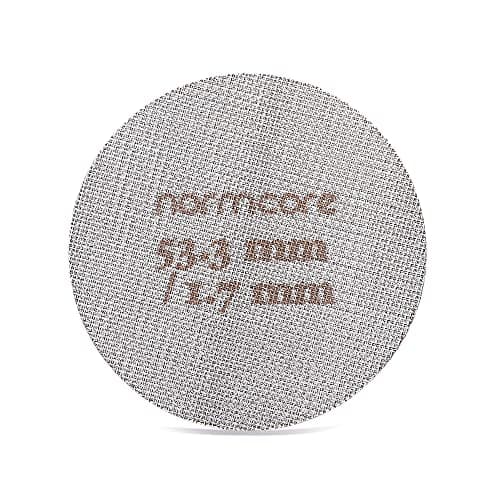
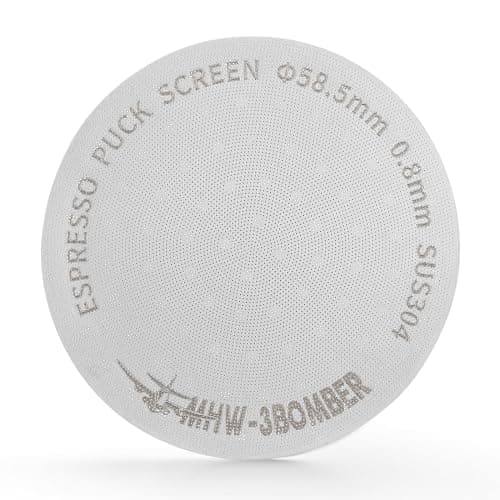
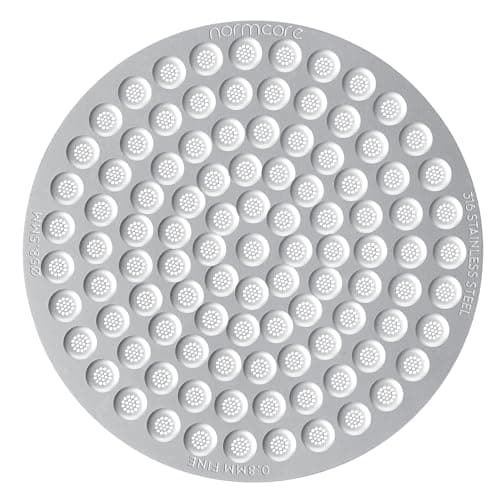
This is the whole buying decision. A 58mm machine wants a 58.5mm screen, because a nominal 58mm disc leaves a ring of gap at the basket wall for water to run down. A 54mm Breville machine wants a 53.3mm screen, because the basket’s internal diameter is smaller than its nominal size and a true 54mm disc binds. Buying the number printed on your portafilter is the most common mistake here. The same logic governs tamper sizing, which we cover in the tamper roundup.
Thickness: 0.8mm is the sensible default
Screens are sold from about 0.2mm to 1.7mm. Thin ones bend and deform when you lever them out of a spent puck. Thick ones are rigid but eat headroom in the basket, which matters if you dose 18g or more — you will feel it as a portafilter that suddenly needs force to lock in, and that force is compressing your puck unevenly. 0.8mm is the well-judged middle and is what both premium picks here use.
Does it change the taste?
Honestly: not reliably, and not much. The mechanism people cite is more even water dispersion at the start of the shot, which is real but small on a machine whose shower screen is already working. What you will notice is a cleaner group head and a slightly drier, tidier puck, and on machines with weak dispersion the first few seconds of the shot may be less disruptive. Treat a puck screen as maintenance-plus, not as an upgrade. The things that do reliably change the taste are grind consistency, dose and distribution — covered in why espresso tastes sour or bitter.
Keeping it clean, which is the actual maintenance
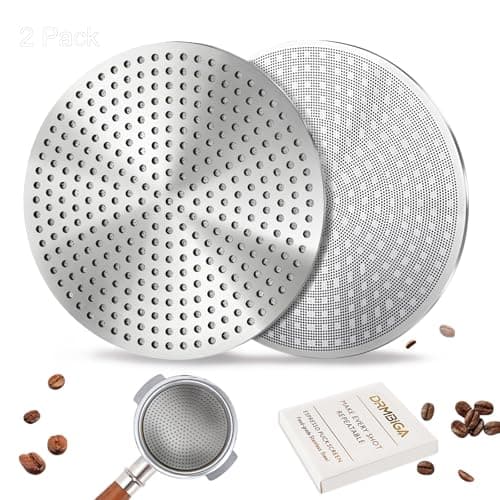
Fine metal mesh loads up with coffee oils. Rinse it after every session, and soak it in espresso machine detergent along with your basket every week or two — the same solution you backflush with. A clogged puck screen restricts flow and can genuinely make shots run slow, at which point you have created a problem rather than solved one. If you buy one, buy two, so there is always a clean one in the machine.
Who should skip it entirely
Anyone using pressurized dual-wall baskets, because the basket controls flow and the puck is not doing the work. Anyone still chasing a consistent shot, because a screen will not help and adds a variable. And anyone who finds espresso fiddly already — this adds a step to every single shot, forever, in exchange for a cleaner shower screen. That is a fair trade for some people and a bad one for others, and the honest answer depends on how much you enjoy the routine.
A puck screen will not dry your puck
The most common reason people arrive at this category is a wet, soupy puck, and a screen is the wrong tool for it. A screen sits on top ofthe coffee bed, so it gives the water standing above the puck nowhere to drain. That water stays there because the machine has no three-way solenoid valve to dump it — which is the case on the Breville Bambino and Barista range, most De’Longhi machines and nearly everything under about $500 — and on those machines a wet puck is normal and changes nothing in the cup. What a screen genuinely buys you is a clean shower screen and a tidier knock-out. The full diagnosis, including the two cases where a wet puck does signal a fault, is in why is my espresso puck wet.
How we picked
We did not lab-test this gear
Everyone in this category says they tested twenty machines. We have not lab-tested any of these, and we say so. What we did instead: compiled the published manufacturer specifications, read the manuals, ran the math where there was math to run (heat-up time, pressure, dose capacity, grind range, cost per cup), and scored each pick against a published rubric. The scores are judgments from documented research — not measurements we took, because we do not have a lab and we will not pretend we do. Where a number came from someone else's work, we name them in Sources.